
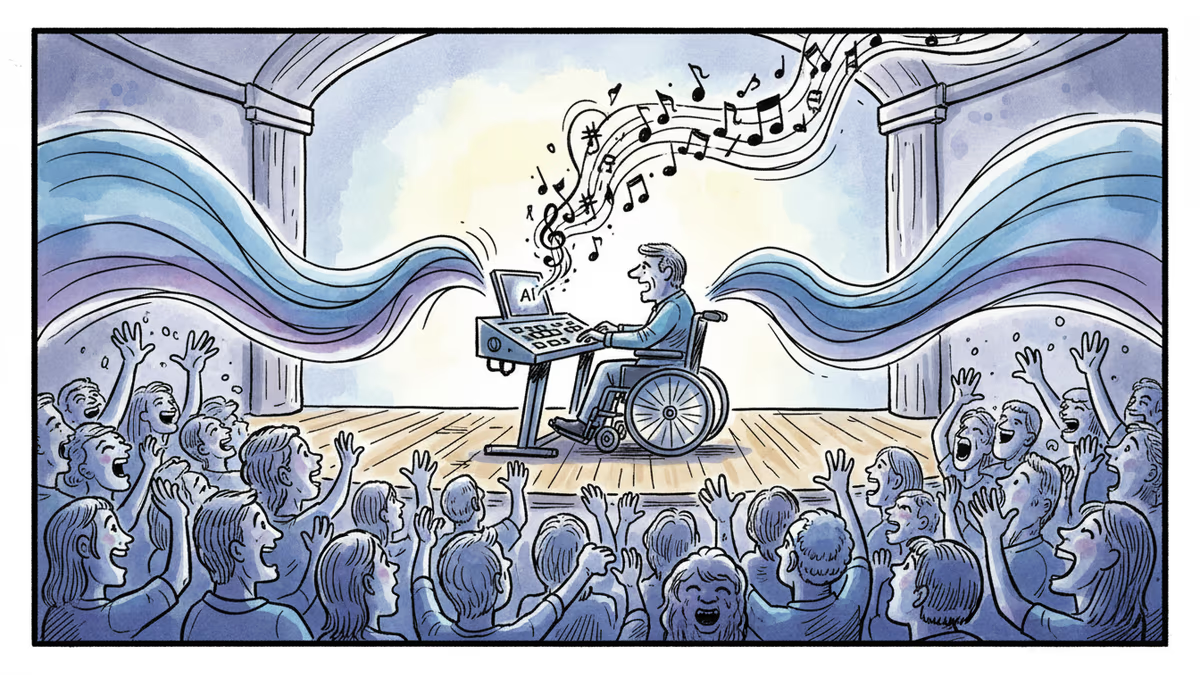
When AI Gave a Musician His Voice Back
Patrick Darling lost his voice to ALS but returned to stage using AI voice cloning. A story about technology, identity, and what makes us human.
The Voice That Came Back From the Digital Dead
Tears filled a London audience as Patrick Darling's song began. Not just because it was a heartfelt tribute to his great-grandfather, but because they were witnessing something unprecedented: a musician who lost his voice to ALS singing again—through AI.
Darling, 32, was diagnosed with amyotrophic lateral sclerosis at 29. The disease systematically destroys the nerve cells that control muscles. First, he couldn't stand while performing. Then his hands stopped working. By April 2024, his bandmates had to carry him onto stage. It was his last performance—until now.
"By that stage, my voice had already changed," Darling explained at Wednesday's event in London, speaking through his AI-generated voice. "It felt like we were saving the wrong voice."
When Perfect Audio Isn't Available
Traditional "voice banking" requires clear recordings made before speech deteriorates. Darling was too late for that. But ElevenLabs' AI voice cloning technology needed only minutes—sometimes seconds—of audio to recreate a voice.
The catch? Darling had no high-quality recordings. "We had to use audio from videos on people's phones, shot in noisy pubs, and a couple of recordings of me singing in my kitchen," he said.
It worked anyway. The first word he made his AI voice say? "I will not say what it was, but it began with 'f' and ended in 'k.'" The audience laughed—a moment of humanity breaking through the technology.
Imperfection as a Feature

Richard Cave, the speech therapist who worked with Darling, noticed something crucial: the original recordings were slightly raspy, with some off notes. The AI clone preserved these imperfections. "It doesn't sound perfect," Cave says. "It sounds human."
This wasn't a bug—it was the point. ElevenLabs provides free voice cloning services to ALS and cancer patients through its impact program. The goal isn't perfection but preservation of identity.
The Economics of Digital Voices
The technology raises complex questions about ownership and authenticity. ElevenLabs has partnered with celebrities like Michael Caine to license AI clones of their voices. The company's music generator can create songs in 74 languages within minutes.
But for patients like Darling, it's not about commercialization—it's about continuation. "We're not really improving how quickly they're able to communicate," says Gabi Leibowitz, who leads the impact program. "But what we are doing is giving them a way to create again, to thrive."
The Bittersweet Return
When bandmate Nick Cocking first heard Darling's completed track, he couldn't finish it. "I heard the first two or three words he sang, and I had to turn it off. I was just in bits, in tears."
Last Wednesday, two years after their final performance together, the band reunited on stage. Darling sat in his wheelchair, his AI voice carrying the melody while Cocking and Hari Ma played mandolin and fiddle.
"It's so bittersweet," Cocking reflects. "But getting up on stage and seeing Patrick there filled me with absolute joy."
The Limits of Digital Resurrection
Yet technology can't restore everything. Darling still struggles to breathe, can't move his hands, and faces an uncertain future. ALS doesn't pause for technological breakthroughs.
The AI gives him back his creative voice but not his physical presence. It preserves his musical identity while his body continues to fail him.
Authors
Related Articles
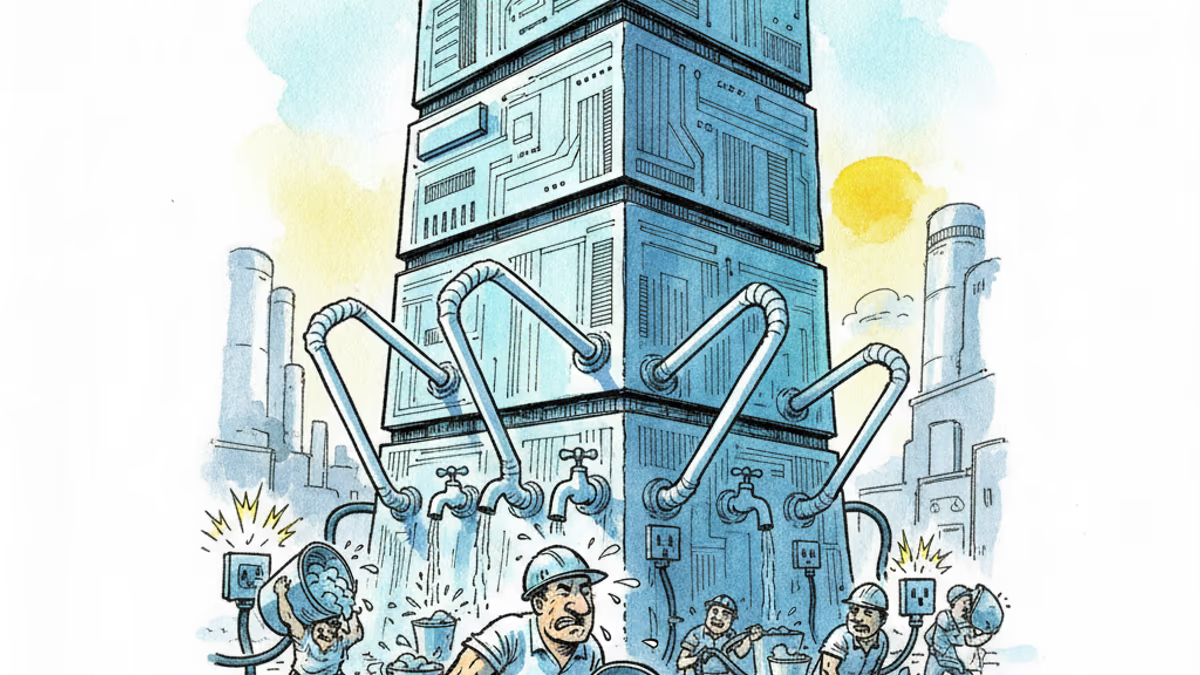
Samsung and SK unveiled a chip and AI investment package worth thousands of trillions of won on June 29. The headline number swings wildly by outlet, but the real contest isn't capital — it's water and power.
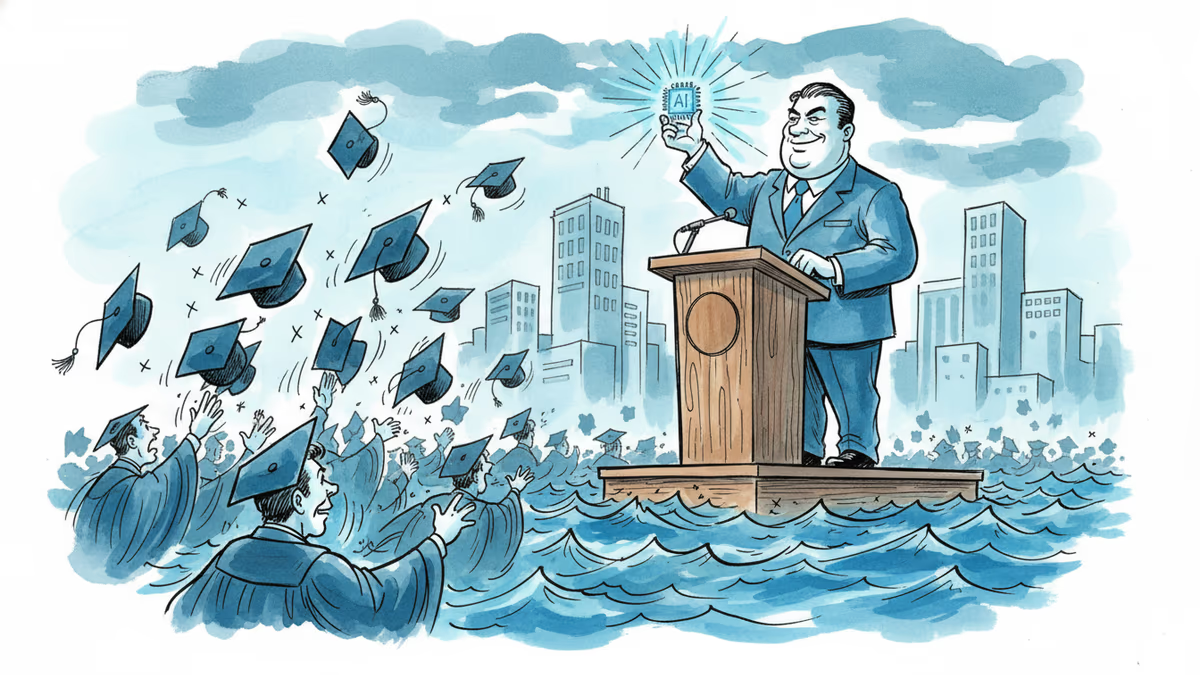
Viral videos show 2026 graduates jeering executives who praise AI at commencement ceremonies. It's not just rudeness — it's a signal about who pays for technological optimism.
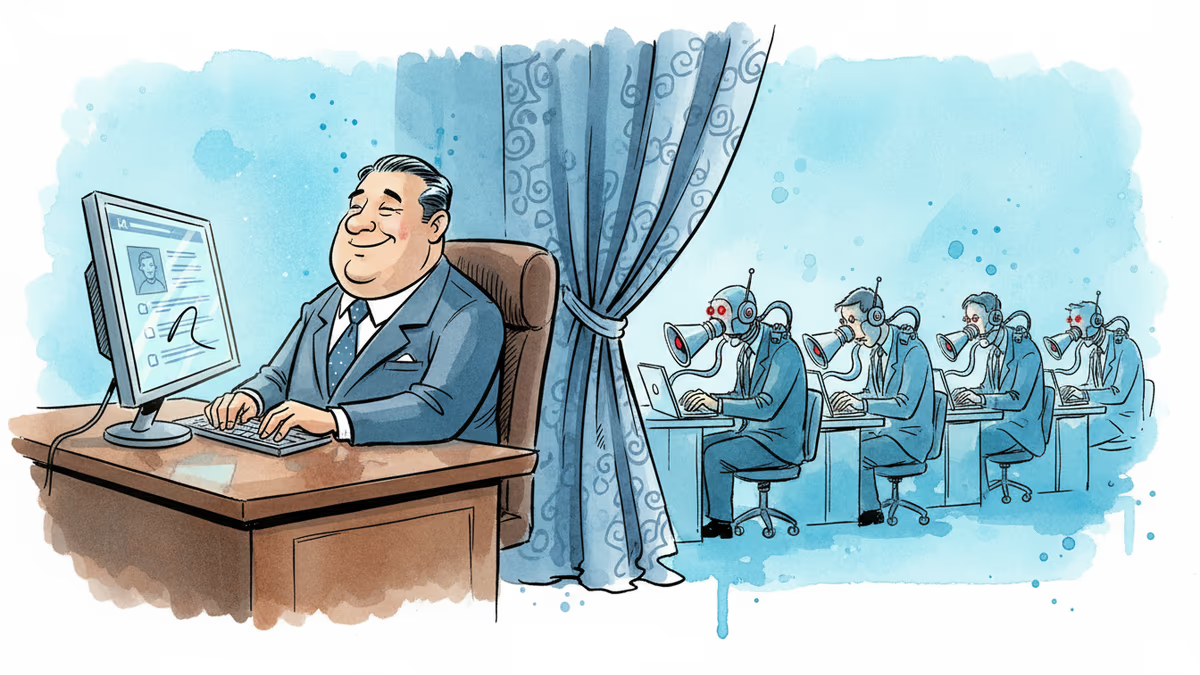
Filipino virtual assistants using AI to ghost-manage LinkedIn profiles for executives is now a structured industry. 30 comments a day, fake engagement rings, and a platform struggling to tell real from fabricated.
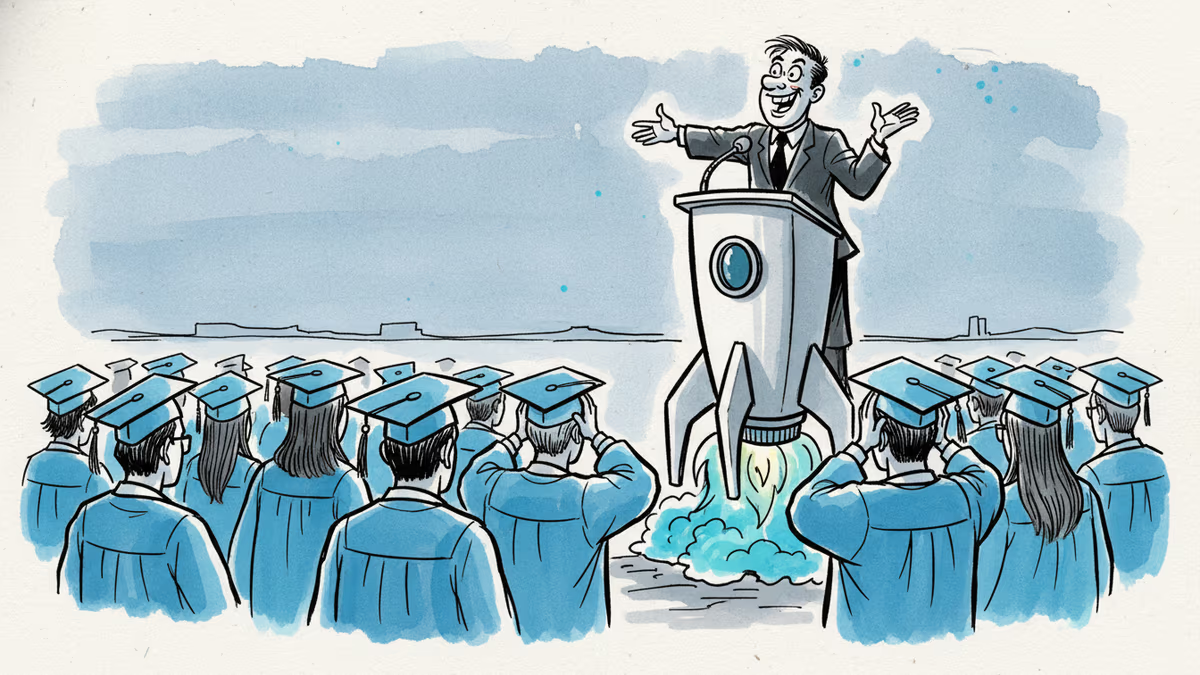
Two commencement speakers learned the hard way that AI enthusiasm doesn't land well with today's graduates. The backlash reveals a widening gap between tech optimism and Gen Z's economic reality.
Samsung and SK unveiled a chip and AI investment package worth thousands of trillions of won on June 29. The headline number swings wildly by outlet, but the real contest isn't capital — it's water and power.
Viral videos show 2026 graduates jeering executives who praise AI at commencement ceremonies. It's not just rudeness — it's a signal about who pays for technological optimism.
Filipino virtual assistants using AI to ghost-manage LinkedIn profiles for executives is now a structured industry. 30 comments a day, fake engagement rings, and a platform struggling to tell real from fabricated.
Two commencement speakers learned the hard way that AI enthusiasm doesn't land well with today's graduates. The backlash reveals a widening gap between tech optimism and Gen Z's economic reality.
Thoughts
Share your thoughts on this article
Sign in to join the conversation