
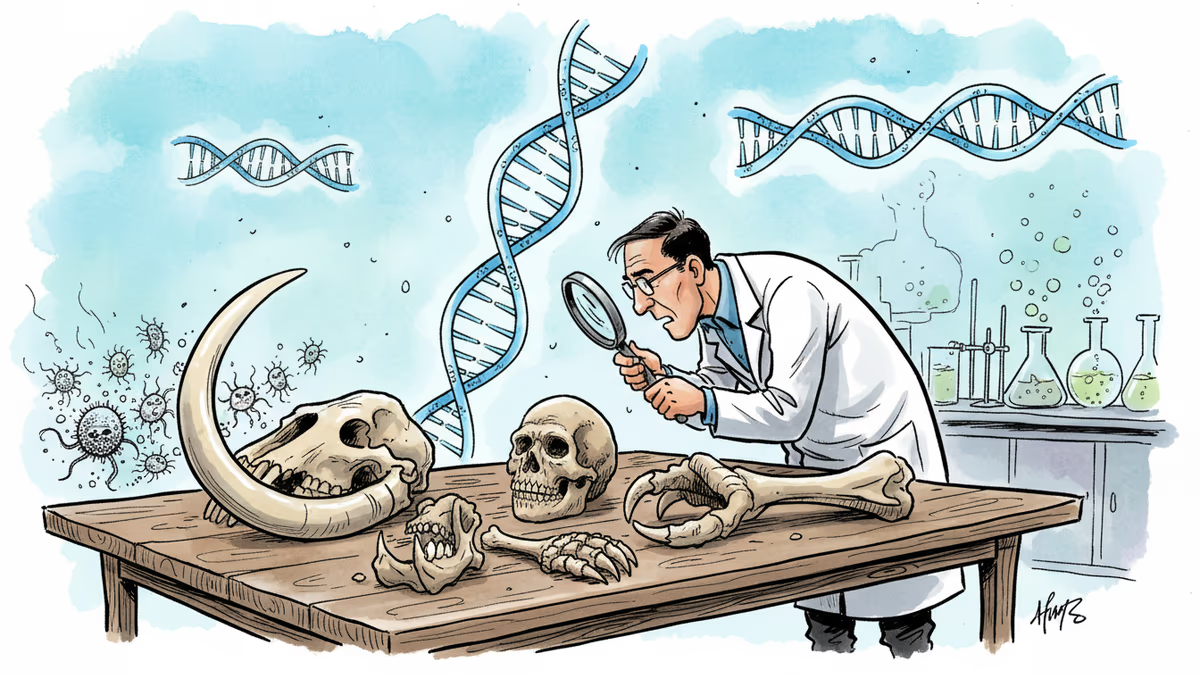
Scientists Are Mining Mammoth DNA to Fight Superbugs
Researchers use AI to discover antibiotics in extinct species' genetic code as 4 million die annually from drug-resistant infections. Could ancient DNA hold the key?
When Modern Medicine Meets Ancient Genetics
4 million people die each year from infections that laugh at our best antibiotics. By 2050, that number could hit 8 million. We're sliding backward into a "post-antibiotic era" where a simple cut could kill you—just like it did before penicillin.
But César de la Fuente isn't looking forward for solutions. He's looking back. Way back. The University of Pennsylvania bioengineer is using AI to mine the DNA of woolly mammoths, Neanderthals, and giant sloths for molecular weapons that could defeat today's superbugs.
It sounds like science fiction, but his lab has already created compounds with names like mammuthusin-2 and mylodonin-2—resurrected from genetic codes that haven't existed for thousands of years.
The Economics of Desperation
Why dig up extinct DNA when we have modern labs? Because traditional antibiotic discovery is broken. "A lot of companies that have attempted antibiotic development have ended up folding because there's no good return on investment," de la Fuente explains.
The math is brutal. Possible organic combinations that could become drugs? Around 10^60. For perspective, Earth has about 10^18 grains of sand. Finding new antibiotics through conventional methods—digging in soil, screening water samples—is like playing the worst lottery ever invented.
Meanwhile, bacteria evolve resistance faster than we can develop new drugs. The pipeline is "perilously thin," as de la Fuente and MIT's James Collins warned in a recent essay. Big Pharma has largely abandoned the field.
AI Changes the Hunting Ground

De la Fuente's breakthrough was treating biology as information. DNA uses 4 letters, proteins use 20 (each representing an amino acid). Train AI to recognize patterns in these "codes" that signal antimicrobial activity, and suddenly you can scan entire genomes in hours instead of decades.
His team's AI models have discovered promising candidates in archaea (ancient single-celled organisms), snake venom, and wasp stings. But the "molecular de-extinction" project is the most audacious: scanning published genetic sequences of extinct species for potentially functional molecules.
The logic is elegant. Over 3.8 billion years of evolution, countless organisms developed ways to fight infections. Some of those weapons might work against modern superbugs that have never encountered them.
From Digital Resurrection to Real-World Results
This isn't just computational archaeology. De la Fuente's team tested two AI-designed synthetic peptides on mice infected with drug-resistant Acinetobacter baumannii—a "critical priority" pathogen according to the WHO. Both compounds successfully treated the infection without harming the mice.
The secret weapon? Antimicrobial peptides (AMPs) work differently than conventional antibiotics. Instead of having one way to kill bacteria, they attack multiple targets simultaneously—cell walls, genetic material, and various cellular processes. It's like fighting with a Swiss Army knife instead of a single blade.
"A bacterial pathogen may evolve resistance to a conventional drug's single mode of action," de la Fuente notes, "but maybe not to a multipronged AMP attack."
The Race Against Resistance
De la Fuente isn't alone in this AI-powered hunt. James Collins at MIT discovered halicin, now in preclinical development. Jonathan Stokes at McMaster University uses generative AI to design synthesizable antibiotics from scratch. The field has moved from screening existing compounds to creating entirely new ones.
But we're still in the discovery phase. De la Fuente's current project, ApexOracle, aims to analyze new pathogens, identify genetic weaknesses, match them to effective peptides, and predict how resulting antibiotics would perform—all in one integrated system.
The irony is striking: to solve a thoroughly modern crisis, we might need to become archaeological detectives, excavating molecular treasures from species that vanished millennia ago.
Authors
Related Articles

Samsung and SK unveiled a chip and AI investment package worth thousands of trillions of won on June 29. The headline number swings wildly by outlet, but the real contest isn't capital — it's water and power.

Viral videos show 2026 graduates jeering executives who praise AI at commencement ceremonies. It's not just rudeness — it's a signal about who pays for technological optimism.

Filipino virtual assistants using AI to ghost-manage LinkedIn profiles for executives is now a structured industry. 30 comments a day, fake engagement rings, and a platform struggling to tell real from fabricated.
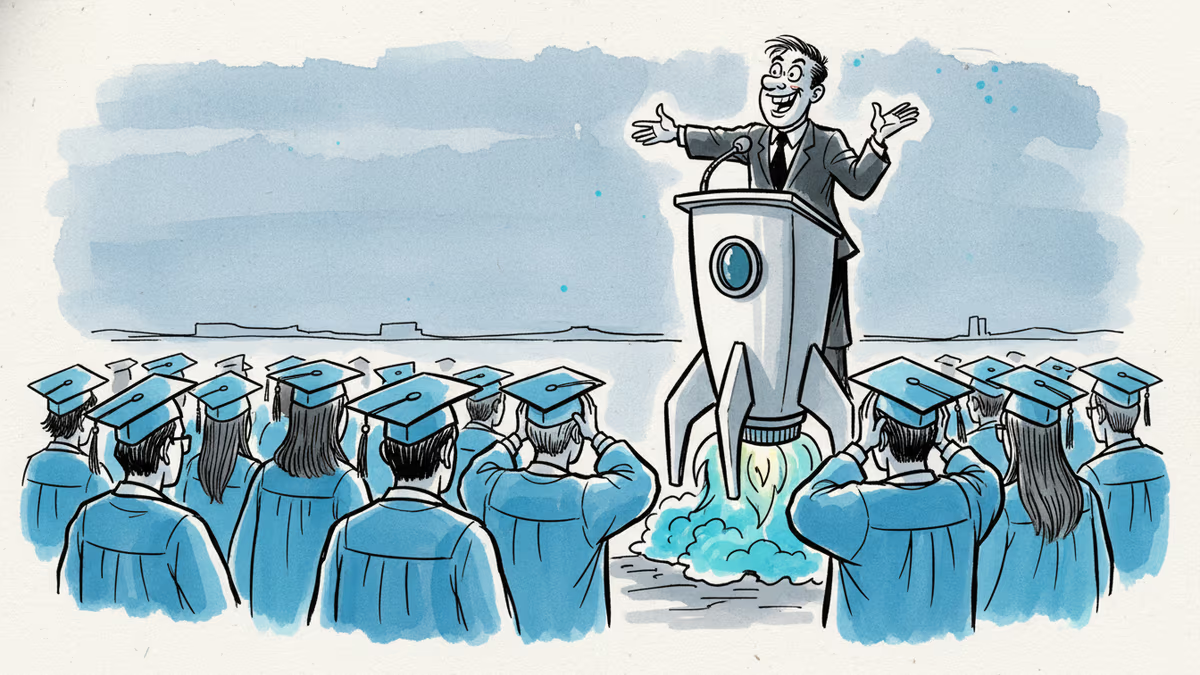
Two commencement speakers learned the hard way that AI enthusiasm doesn't land well with today's graduates. The backlash reveals a widening gap between tech optimism and Gen Z's economic reality.
Samsung and SK unveiled a chip and AI investment package worth thousands of trillions of won on June 29. The headline number swings wildly by outlet, but the real contest isn't capital — it's water and power.
Viral videos show 2026 graduates jeering executives who praise AI at commencement ceremonies. It's not just rudeness — it's a signal about who pays for technological optimism.
Filipino virtual assistants using AI to ghost-manage LinkedIn profiles for executives is now a structured industry. 30 comments a day, fake engagement rings, and a platform struggling to tell real from fabricated.
Two commencement speakers learned the hard way that AI enthusiasm doesn't land well with today's graduates. The backlash reveals a widening gap between tech optimism and Gen Z's economic reality.
Thoughts
Share your thoughts on this article
Sign in to join the conversation