
When Utility Bills Drive Americans to the Streets
Rising electricity rates across America are sparking unprecedented protests as frustrated consumers demand answers from obscure regulatory agencies. What this grassroots movement reveals about energy policy.
The Unlikely Protesters
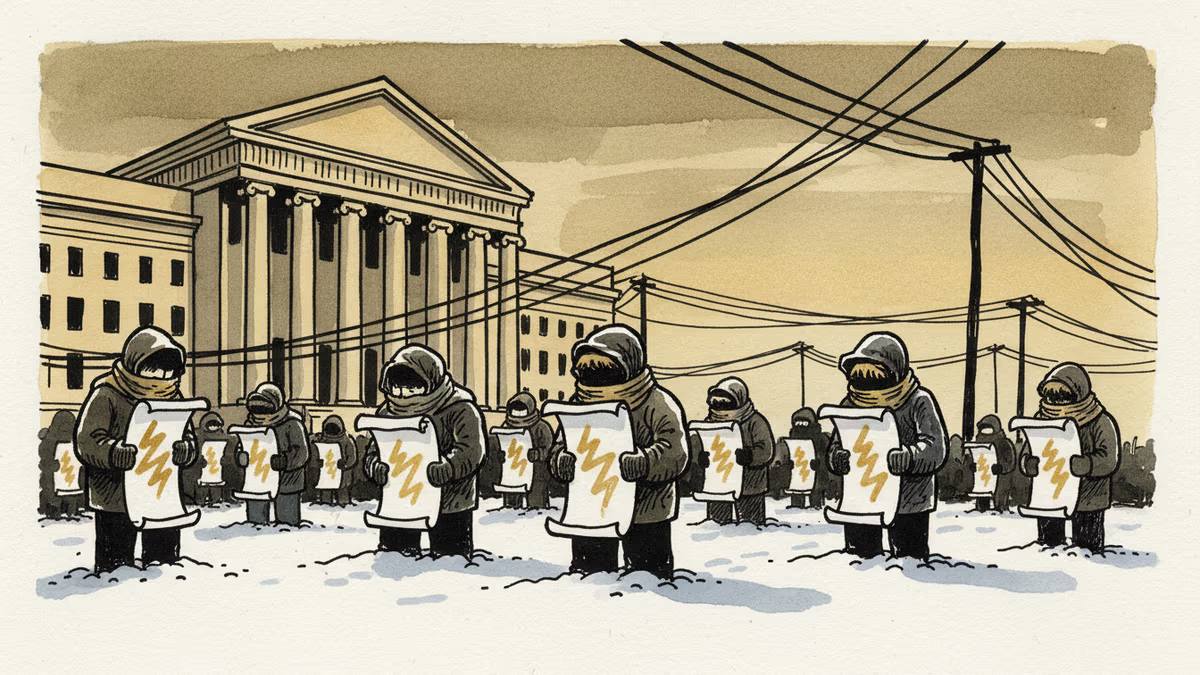
Picture this: A group of ordinary Americans standing in January snow, holding signs outside a nondescript government building in Columbus, Ohio. They're not protesting war or civil rights—they're angry about their electricity bills.
Just a few years ago, this scene would have been almost unthinkable. Utility rate structures are notoriously complex, and state regulatory agencies typically operate in relative obscurity. But across America, rising electricity costs are transforming everyday consumers into activists.
"It's just getting harder and harder now to live," said Steve Van Kuiken, a United Church of Christ pastor in Columbus who joined a community group opposing rate increases. "The working class is really getting squeezed, and everything's going up."
A National Phenomenon
Ohio isn't alone. From Texas to California, frustrated consumers are demanding answers as their monthly bills climb. In Texas, summer electricity rates jumped 35% year-over-year. In parts of California, monthly bills now average over $150—a burden that's forcing families to choose between cooling their homes and other necessities.
The protests represent something bigger than sticker shock. They're a grassroots response to what many see as a fundamental shift in how energy costs are distributed. Utility companies are passing along the expenses of renewable energy transitions and aging infrastructure upgrades directly to consumers, creating a perfect storm of rising bills and economic anxiety.

Regulators Caught in the Middle
State utility commissions find themselves in an impossible position. On one side, power companies argue that rate increases are essential for meeting carbon reduction goals and modernizing the electrical grid. On the other, constituents are demanding relief from bills they can barely afford.
The Ohio Public Utilities Commission has received 12 rate increase requests this year alone—double the number from the same period last year. "We're carefully reviewing every application," said a commission spokesperson, "but some cost increases are inevitable as we transition to cleaner energy sources."
The Ripple Effect
The impact extends far beyond household budgets. Small businesses are scaling back operations, and some manufacturers are considering relocating to states with lower energy costs. Maria Gonzalez, who runs a small bakery in Columbus, says her monthly electric bill has increased by $300. "I've had to reduce my oven hours," she explained. "It's affecting everything I can produce."
For energy-intensive industries, the stakes are even higher. Companies that once took stable electricity costs for granted are now factoring energy expenses into major business decisions, including where to locate new facilities.
The Bigger Picture
These protests reveal a critical tension in America's energy transition. While there's broad support for cleaner energy and grid modernization, there's growing resistance to bearing the costs. The traditional regulatory model—where utilities propose rate increases and commissioners approve them after public hearings—wasn't designed for the scale of investment required for decarbonization.
Some states are experimenting with alternative approaches, such as green bonds and performance-based rates that tie utility profits to customer satisfaction and environmental outcomes. But these innovations are still in their infancy.
Authors
Related Articles

AI sustainability researcher Sasha Luccioni is launching a new venture to push for energy transparency in AI. Here's why Big Tech keeps the numbers hidden—and what's starting to change.

At Milken 2026, five AI insiders—from the CEO of ASML to a quantum physicist challenging LLMs—laid out the physical, energy, and geopolitical limits the AI boom is running into.
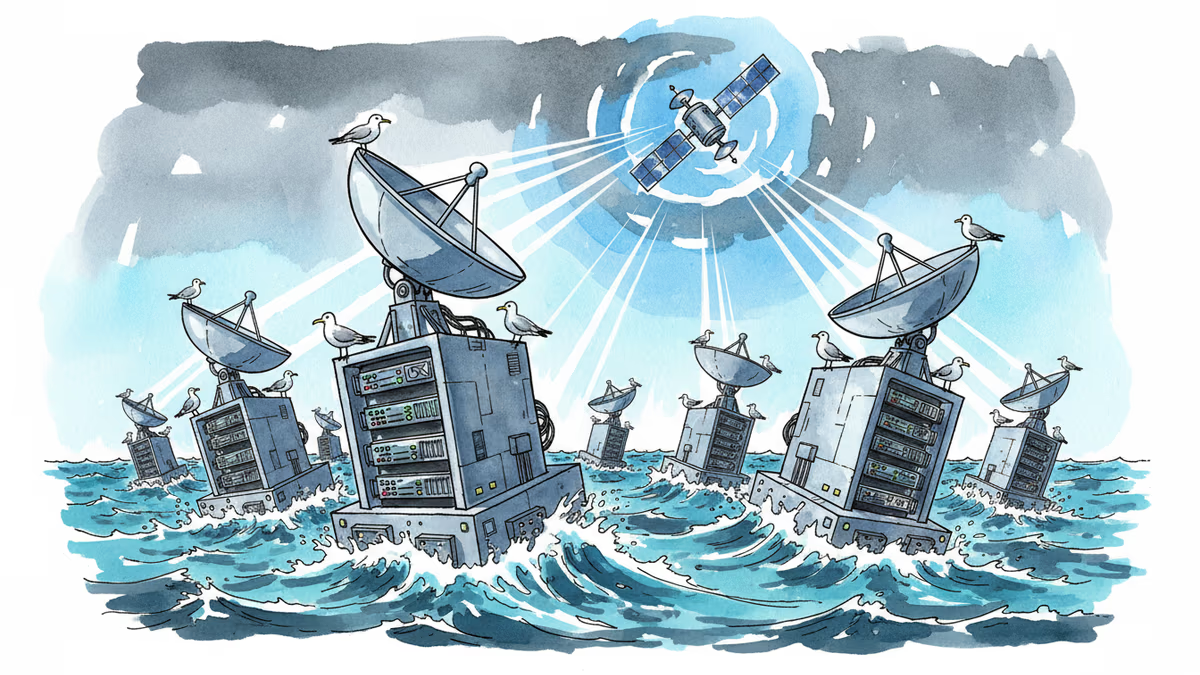
Palantir co-founder Peter Thiel and other Silicon Valley investors have poured $140 million into Panthalassa, a startup building wave-powered floating AI data centers in the open ocean. Here's what that actually means.
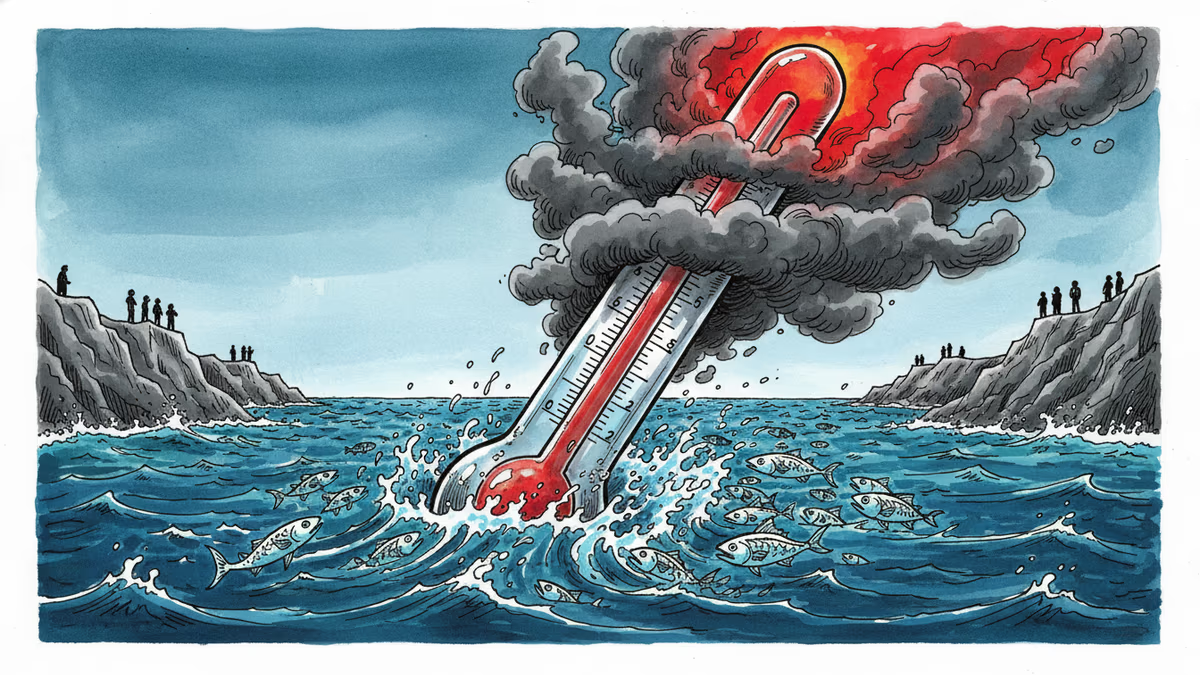
Scientists warn a strong El Niño could push Earth past the 1.5°C warming threshold within 12-18 months. What that means for weather, food, energy—and the politics of climate action.
AI sustainability researcher Sasha Luccioni is launching a new venture to push for energy transparency in AI. Here's why Big Tech keeps the numbers hidden—and what's starting to change.
At Milken 2026, five AI insiders—from the CEO of ASML to a quantum physicist challenging LLMs—laid out the physical, energy, and geopolitical limits the AI boom is running into.
Palantir co-founder Peter Thiel and other Silicon Valley investors have poured $140 million into Panthalassa, a startup building wave-powered floating AI data centers in the open ocean. Here's what that actually means.
Scientists warn a strong El Niño could push Earth past the 1.5°C warming threshold within 12-18 months. What that means for weather, food, energy—and the politics of climate action.
Thoughts
Share your thoughts on this article
Sign in to join the conversation