
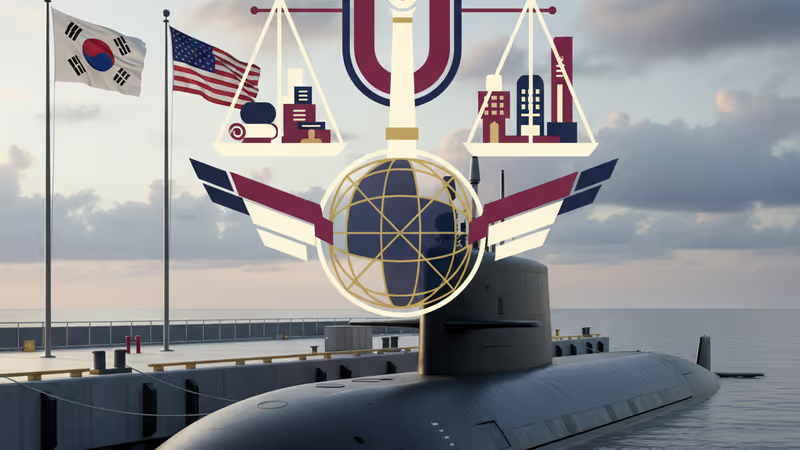
USS Greeneville Docks in Busan: US Nuclear Sub's 2025 Visit Reinforces South Korea Alliance
The U.S. nuclear submarine USS Greeneville arrived in Busan, South Korea, on Dec. 23, 2025, for a logistical stop. This visit reinforces the U.S.-South Korea defense alliance and serves as a strategic signal of deterrence in the region.
A U.S. nuclear-powered attack submarine, the USS Greeneville, arrived at a key naval base in Busan, South Korea, on Tuesday, December 23. According to South Korea's Navy, the visit is for replenishing supplies and providing rest for the crew, but the port call also serves as a potent symbol of the enduring military alliance between Washington and Seoul.
A Show of Cooperative Strength
The Los Angeles-class submarine entered the naval base in Busan, located some 330 kilometers southeast of the capital, Seoul. In a statement released to Yonhap news agency, the South Korean Navy highlighted the visit's strategic importance. "The Navy plans to boost exchanges and cooperation between the navies of South Korea and the United States and strengthen our combined defense posture on the occasion of the USS Greeneville's entry," it said.
The Los Angeles-class submarines are nuclear-powered fast attack submarines (SSNs) that form the backbone of the U.S. Navy's submarine force. They are designed for a variety of missions, including anti-submarine warfare, intelligence gathering, and strike operations.
Deterrence Amid Regional Tensions
While such port calls are part of regular military operations, the presence of high-value U.S. assets in the region is closely watched. The arrival is seen as a tangible element of Washington's 'extended deterrence' commitment to South Korea—a pledge to defend its ally using the full range of its military capabilities. These deployments aim to reassure allies and serve as a clear message of deterrence to potential adversaries, particularly North Korea, which typically views such military movements as provocative.
While the immediate focus is North Korea, the consistent deployment of U.S. strategic assets to the Korean Peninsula also sends a clear message to China. It underscores the strength and interoperability of U.S. alliances in the Indo-Pacific, reinforcing American commitment to regional stability in an era of growing great-power competition.
This content is AI-generated based on source articles. While we strive for accuracy, errors may occur. We recommend verifying with the original source.
Related Articles
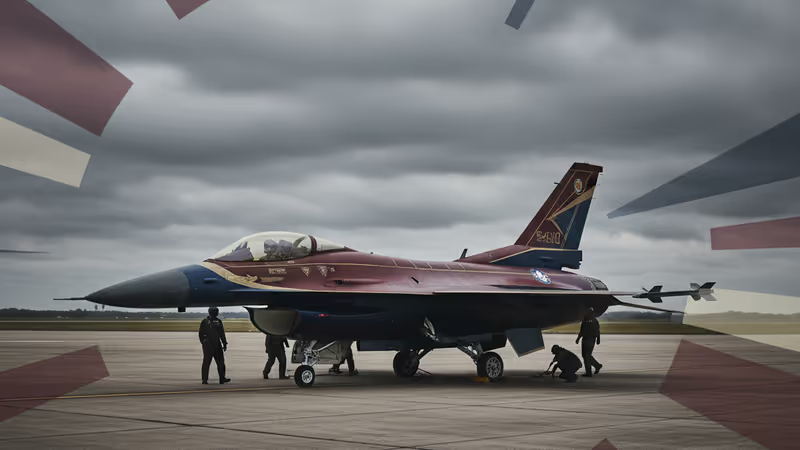
After repeated delays, Taiwan's newly ordered F-16V fighter jets have begun ground tests in the US. This marks a crucial step in bolstering Taiwan's air defense amid rising tensions with China.

U.S. President Trump warns Venezuelan President Maduro that 'it would be smart to leave' power as the U.S. seizes oil tankers, sparking condemnation from Russia and China and raising geopolitical tensions.

Analysts note a 'significant departure' in President Trump's foreign policy during the first year of his second term. PRISM explores what this 2025 strategic shift means for key global relationships with NATO and China.
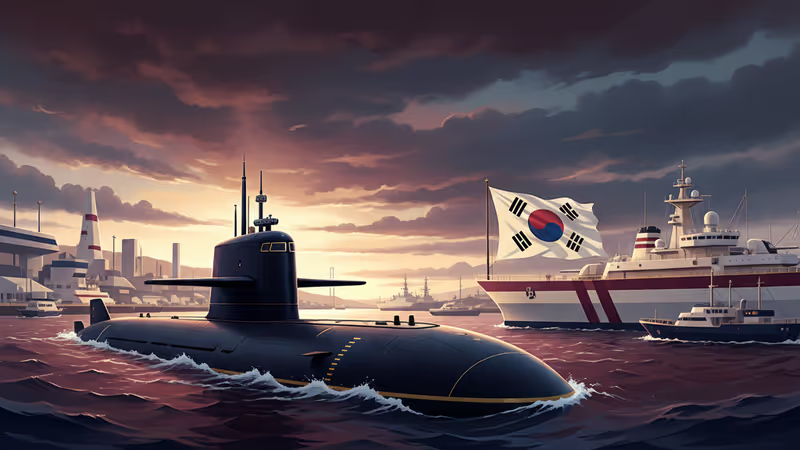
The U.S. nuclear-powered submarine USS Greeneville arrived in Busan, South Korea, on Dec. 23, 2025, for a port call aimed at strengthening the U.S.-South Korea alliance amid regional tensions with North Korea.