
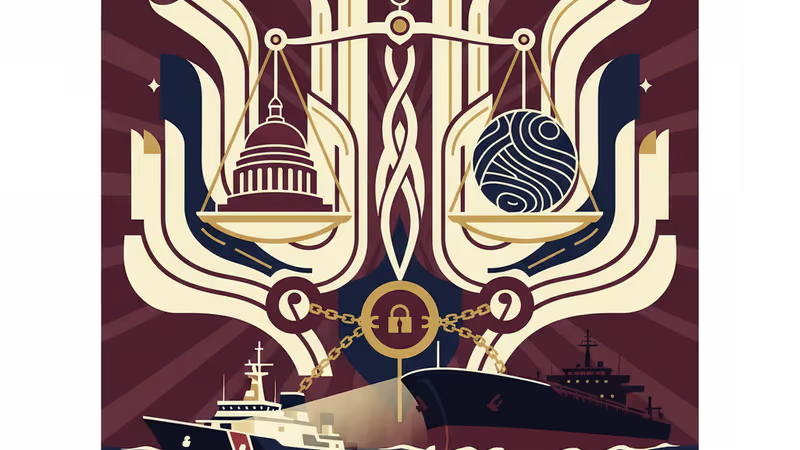
Trump to Maduro: 'It'd Be Smart to Leave' as U.S. Seizes Oil Tankers, Sparking Standoff with Russia and China
U.S. President Trump warns Venezuelan President Maduro that 'it would be smart to leave' power as the U.S. seizes oil tankers, sparking condemnation from Russia and China and raising geopolitical tensions.
United States President Donald { has issued a stark new warning to {’s Nicolas {, saying “it would be smart” for the leader to leave power as Washington escalates its pressure campaign against Caracas. The move, which includes the seizure of Venezuelan oil tankers, has drawn sharp condemnation from { and {, setting the stage for a geopolitical showdown ahead of a Security Council meeting.
Trump Escalates Pressure Campaign
Speaking at his Mar-a-Lago resort on Monday, {, { suggested he was prepared to further intensify a four-month campaign against {. “If he wants to do something, if he plays tough, it’ll be the last time he’s ever able to play tough,” told reporters, flanked by Secretary of State Marco { and Secretary of Defense Pete {.
The threat comes as the coastguard pursues a third oil tanker it describes as part of a “dark fleet” used by { to evade sanctions. The { has already seized and nearly of oil. “We’re keeping it. We’re keeping the ships also,” stated, adding the oil might be sold or used for strategic reserves.
Caracas, Moscow, and Beijing Condemn 'International Piracy'
President { fired back hours later, saying would be “better off” focusing on his own country’s problems. Caracas has condemned the seizures as acts of “international piracy” and insists Washington’s goal is to seize ’s oil reserves, the world’s largest.
The crisis has prompted a coordinated international response. {’s Foreign Minister Sergey { pledged “full support” for {’s government, warning of “serious consequences for the region.” {’s Foreign Ministry called the actions a “serious violation of international law” that infringes upon national sovereignty. has warned UN members that the blockade “will affect the supply of oil and energy” globally.
Washington's use of direct naval force to enforce sanctions is creating a clear counter-alliance, with Beijing and Moscow positioning themselves as defenders of international law against U.S. unilateralism. This transforms the Caribbean from a sanctions enforcement zone into a live chessboard for great power competition, with global energy security as a key pawn.
This content is AI-generated based on source articles. While we strive for accuracy, errors may occur. We recommend verifying with the original source.
Related Articles
China has drafted a comprehensive law to regulate all its activities in Antarctica, expanding oversight from science to tourism and fishing, aiming to bolster its role in global governance.
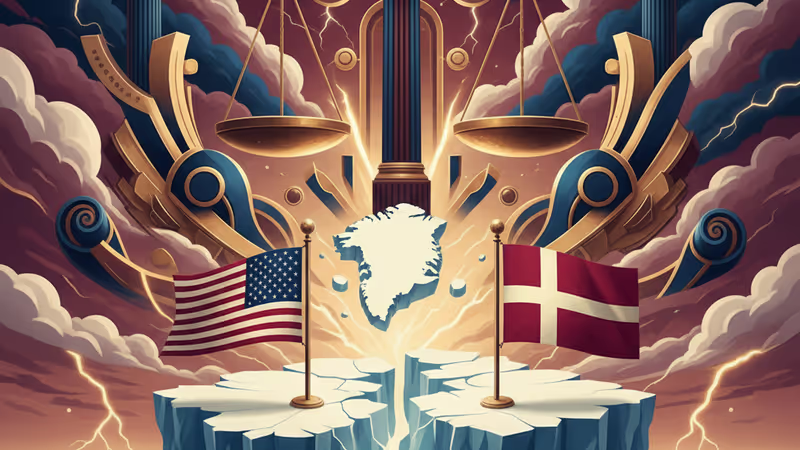
President Trump appointed a special envoy for Greenland, citing national security needs and escalating diplomatic tensions with Denmark, which called the move 'completely unacceptable.'
China has dropped electric vehicles (EVs) from its list of strategic industries for the first time in a decade, signaling a major policy shift. What does this mean for the global market, and what lessons can the U.S. learn from China's industrial playbook?
The U.S. Trump administration has paused all five offshore wind projects under construction, citing a classified DoD report. The move impacts nearly complete projects and escalates its conflict with the renewable energy sector.