
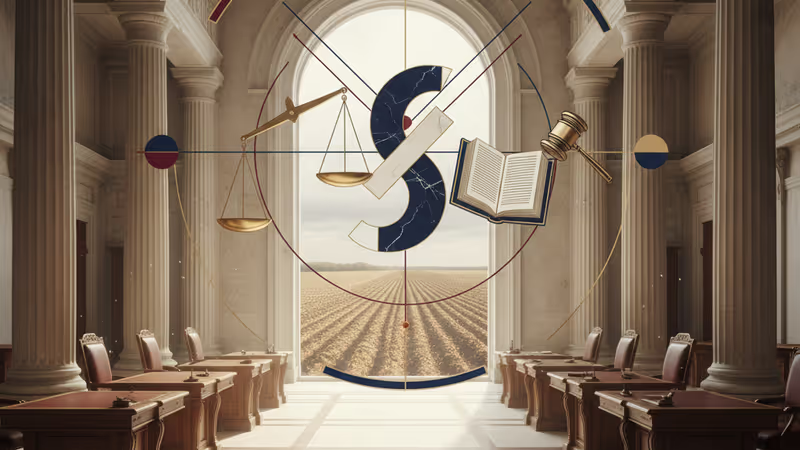
US Farm Agency Lost 20,000 Staff in First Five Months of Trump Administration
A Reuters report revealed a 20,000-person staff reduction at the USDA within the first five months of the Trump administration. This article explores the causes and potential consequences for U.S. agriculture.
The United States Department of Agriculture (USDA) saw its workforce shrink by 20,000 employees during the first five months of the Donald Trump administration, according to a report by Reuters. The sharp decline highlights the immediate impact of the administration's push to downsize the federal government on a critical agency.
Behind the Numbers: A Push for a Leaner Government
The staff reduction, which occurred between late January and June 2017, is largely seen as a direct consequence of the Trump administration's early policies. These included a federal hiring freeze, the encouragement of early retirements, and proposed budget cuts aimed at fulfilling a campaign promise to reduce the size of the federal bureaucracy.
The administration framed these moves as necessary steps to increase efficiency and cut wasteful spending. However, critics raised immediate concerns about the potential disruption to essential government services and the loss of institutional knowledge.
Potential Impacts on America's Farmland
The USDA is responsible for a vast portfolio of services crucial to the nation's agricultural sector, including food safety inspections, farm support loans, rural development programs, and scientific research. Experts warned at the time that such a rapid loss of experienced personnel could compromise the agency's ability to perform its duties effectively.
Potential consequences included delays in loan processing for farmers, gaps in regulatory oversight, and a slowdown in critical agricultural research, potentially impacting U.S. food security and rural economies. The reduction raised questions about the long-term health of the systems that support America's farmers and consumers.
The USDA's workforce reduction serves as a microcosm of the friction between a political agenda—in this case, 'draining the swamp'—and the operational realities of governance. It demonstrates how swiftly an ideological push to shrink government can affect an agency's institutional knowledge and its capacity to deliver services, raising fundamental questions about the balance between political change and administrative stability.
This content is AI-generated based on source articles. While we strive for accuracy, errors may occur. We recommend verifying with the original source.
Related Articles
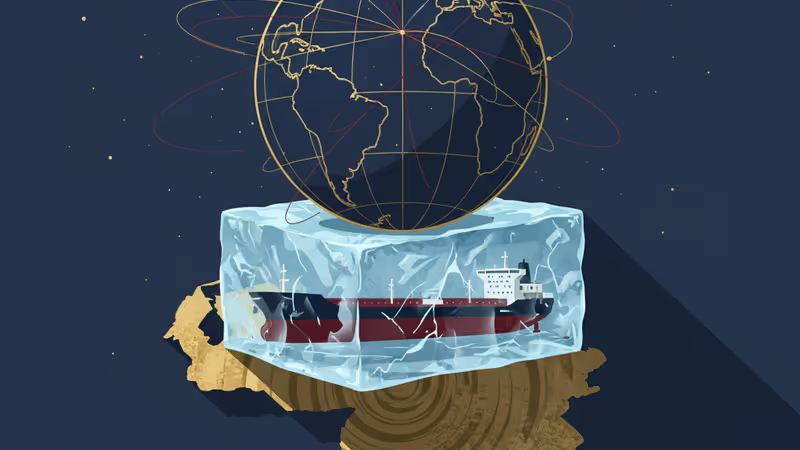
Rep. Adam Smith, the leading Democrat on the Armed Services Committee, says the Trump administration's oil blockade on Venezuela is primarily a tool for regime change against President Maduro, challenging the official U.S. justification.

After repeated delays, Taiwan's newly ordered F-16V fighter jets have begun ground tests in the US. This marks a crucial step in bolstering Taiwan's air defense amid rising tensions with China.
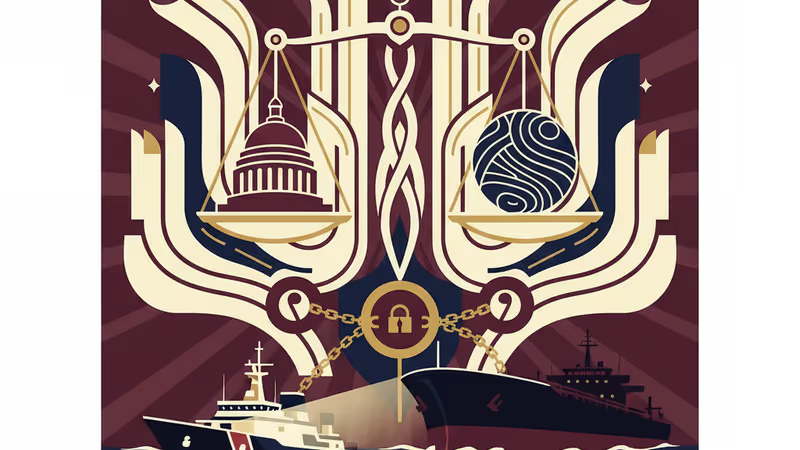
U.S. President Trump warns Venezuelan President Maduro that 'it would be smart to leave' power as the U.S. seizes oil tankers, sparking condemnation from Russia and China and raising geopolitical tensions.
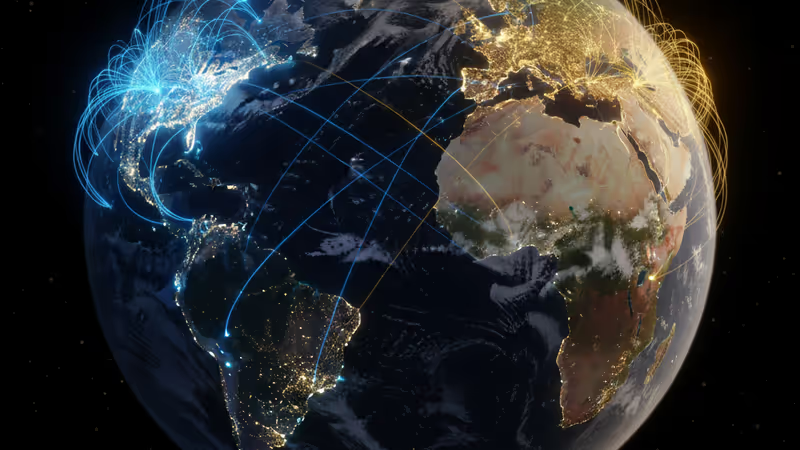
As the US dollar's dominance wanes and the world splits into US- and China-led blocs, a new analysis suggests that energy and water resources, crucial for the AI economy, will become the new arbiters of global power.