
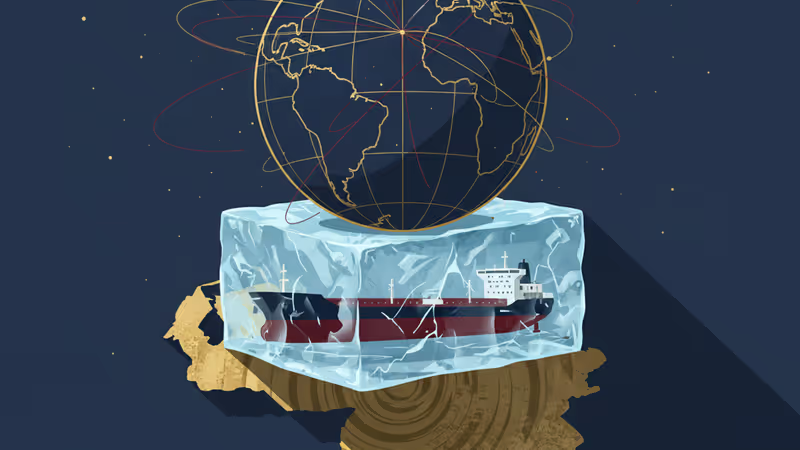
Trump's Venezuela Oil Blockade Is About Toppling Maduro, Top Democrat Says
Rep. Adam Smith, the leading Democrat on the Armed Services Committee, says the Trump administration's oil blockade on Venezuela is primarily a tool for regime change against President Maduro, challenging the official U.S. justification.
The Trump administration's oil blockade against Venezuela is primarily a tool for regime change, aimed at driving President Nicolás Maduro from power more than any other objective, according to Representative Adam Smith, the top Democrat on the House Armed Services Committee.
This blockade is about driving Venezuelan President Nicolás Maduro out of power more than anything.
Smith's assertion, made on December 22, frames the administration's hardline economic measures as a politically motivated effort rather than a strategy rooted purely in national security or humanitarian concerns. As the ranking member of the committee overseeing the U.S. military, his critique carries significant weight in the ongoing debate over the use of sanctions in American foreign policy.
For years, the U.S. has imposed escalating sanctions on Venezuela, citing democratic backsliding, human rights abuses, and corruption under the Maduro regime. The oil blockade, which targets the state-run oil company PDVSA and restricts maritime transport of crude oil, is the centerpiece of this 'maximum pressure' campaign, designed to cripple the government's main source of revenue.
The Trump administration, however, maintains that its policy is intended to support the Venezuelan people and restore democracy. Officials have consistently stated that the sanctions are designed to cut off illicit revenue streams to the regime and compel it to hold free and fair elections. "Our goal is the restoration of democracy in Venezuela through a legitimate electoral process," a State Department spokesperson recently reiterated.
This content is AI-generated based on source articles. While we strive for accuracy, errors may occur. We recommend verifying with the original source.
Related Articles
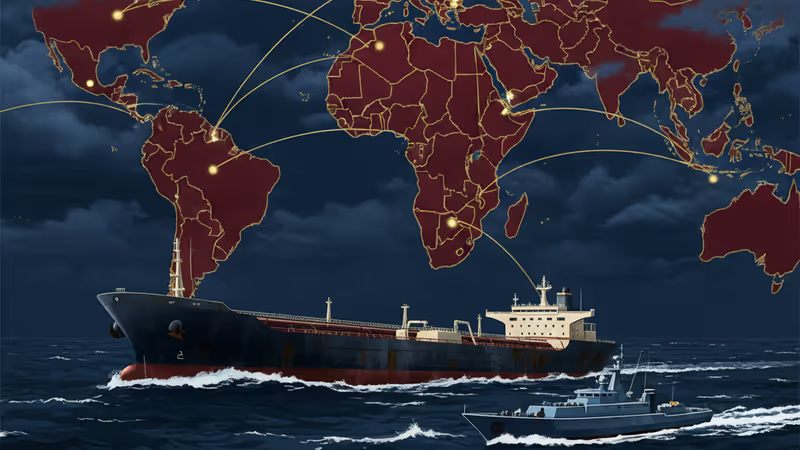
The recent U.S. seizure of a Venezuelan oil tanker has sparked a fierce debate over international law, pitting claims of legitimate sanction enforcement against accusations of state-sponsored piracy. We analyze the legal and geopolitical fallout.
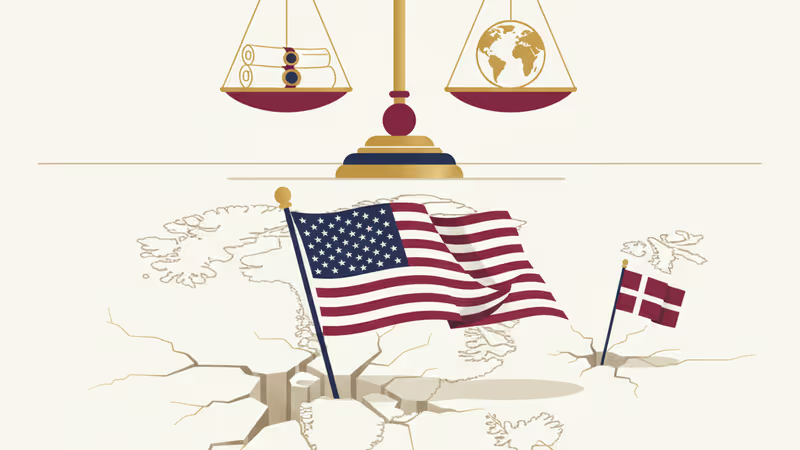
President Donald Trump's appointment of a special envoy to facilitate Greenland's annexation into the U.S. has triggered a major diplomatic conflict with Denmark, a key NATO ally.

Nigerian authorities have secured the release of the final 130 schoolchildren abducted from a Catholic school in November, ending a month-long ordeal amid a nationwide security crisis.

The U.S. Coast Guard is pursuing a third sanctioned oil tanker near Venezuela, escalating a pressure campaign that could impact global oil prices and heighten geopolitical tensions with the 'shadow fleet.'