
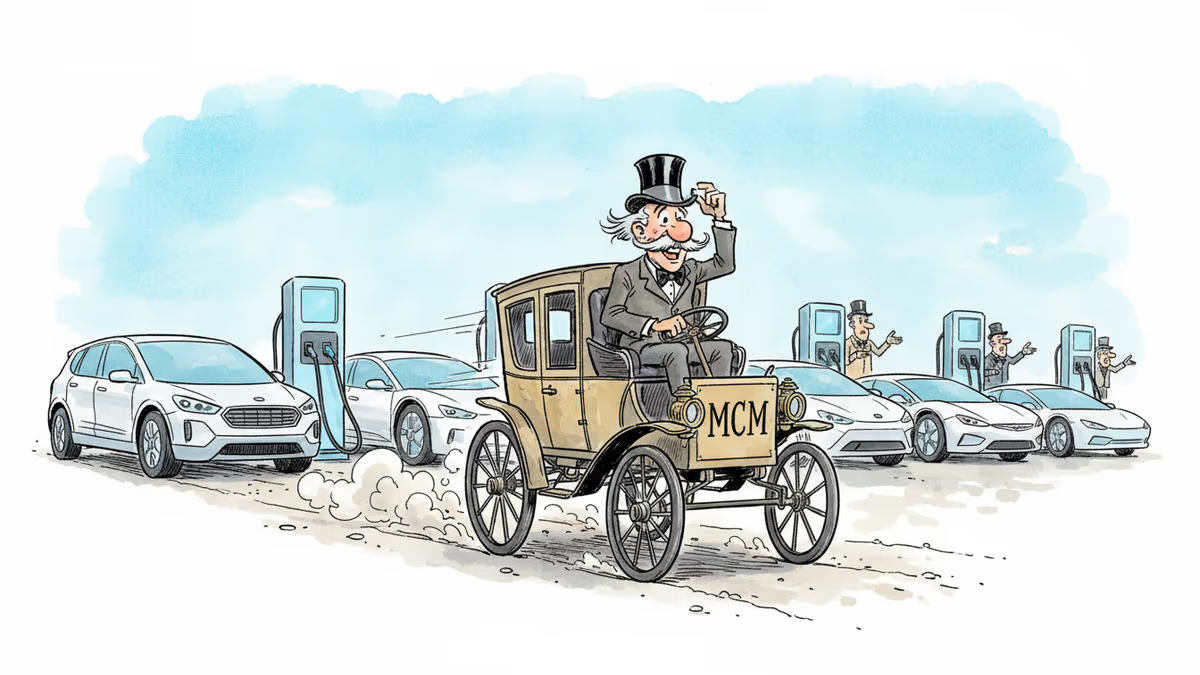
The Car Invented in 1900 Is Winning in 2026
Ferdinand Porsche built the first hybrid vehicle in 1900. Over a century later, as EV adoption stalls, hybrids are surging. What does this mean for consumers, automakers, and the green transition?
The Oldest Idea in the Room Is Winning
In 1900, Ferdinand Porsche — yes, that Porsche — built a vehicle called the Semper Vivus. Latin for "always alive." It used two combustion engines to power generators, which fed electricity to motors embedded in the wheel hubs. It was, in every meaningful sense, a hybrid car.
The world wasn't ready. The idea sat dormant for over a century.
Now, in 2026, as electric vehicle adoption hits unexpected headwinds, hybrids are surging back into the spotlight. The irony is hard to miss: the automotive industry sprinted toward an all-electric future, stumbled, and looked back to find that a 125-year-old concept might be the most practical answer we have right now.
What's Actually Happening in the EV Market
The cracks in the EV narrative have been widening for a couple of years. GM, Ford, and Volkswagen have all walked back aggressive electrification timelines. Charging infrastructure remains patchy outside major urban corridors. Battery costs, while falling, haven't dropped fast enough to make EVs price-competitive across the mass market without subsidies.
Consumers noticed. In the US, hybrid vehicle market share climbed from roughly 4% in 2021 to over 10% by 2025. Meanwhile, pure EV growth — while still positive — slowed sharply from the breakneck pace analysts had projected just three years ago.
This isn't a collapse of the EV story. It's a recalibration. And hybrids are the direct beneficiary.
Toyota's Long Game, and Everyone Else Catching Up
No company looks smarter right now than Toyota. While competitors were racing to announce all-electric futures, Toyota quietly kept investing in hybrid technology — the same technology it pioneered with the Prius nearly 30 years ago. That patience is paying off. Toyota's hybrid lineup is selling faster than its factories can produce them in several markets.
The rest of the industry is scrambling to respond. Hyundai and Kia, to their credit, maintained robust hybrid portfolios even as they pushed hard on EVs like the IONIQ 6 and EV6. That dual-track strategy now looks prescient. Stellantis and others who leaned more heavily into the EV pivot are facing harder adjustments.

The competitive question isn't whether hybrids matter — they clearly do. It's whether latecomers can close the gap with Toyota's three decades of accumulated engineering know-how.
Three Groups, Three Very Different Reactions
How you feel about the hybrid resurgence depends almost entirely on where you sit.
Environmentalists are uneasy. Hybrids still burn fossil fuels. Every year that consumers choose a hybrid over a full EV is, in their view, a year of unnecessary emissions. The fear is that hybrids become a comfortable resting point — good enough to quiet the guilt, not good enough to actually hit climate targets. The International Energy Agency has been clear: a full transition away from combustion engines is necessary, and hybrids delay that transition.
Automakers and investors are relieved. The hybrid middle ground gives them breathing room — time to improve battery technology, build out supply chains, and let infrastructure catch up without hemorrhaging market share to competitors who kept their options open. For shareholders who watched EV-heavy bets underperform, hybrids represent stability.
Consumers are mostly just pragmatic. Range anxiety is real. Charging deserts outside cities are real. Resale value uncertainty on EVs is real. A hybrid asks nothing of you that a gasoline car doesn't already ask — and gives you meaningfully better fuel economy in return. For the average buyer, that's a compelling deal.
The Infrastructure Gap No One Fixed
Underlying all of this is a problem that policy makers promised to solve and largely haven't: charging infrastructure at scale. The US has made progress — the Bipartisan Infrastructure Law allocated $7.5 billion for EV charging — but deployment has been slow and uneven. Rural and lower-income areas remain severely underserved.
Until that gap closes, the hybrid isn't just a consumer preference. It's a structural necessity for anyone who can't reliably access a charger. Framing hybrid adoption purely as a failure of consumer ambition misses this point entirely.
Technology Doesn't Move in Straight Lines
The Semper Vivus story is a useful reminder. Good ideas don't always arrive at the right moment. Porsche's hybrid drivetrain was technically sound in 1900 — the world simply lacked the context to use it. A century later, that same fundamental concept is the pragmatic bridge between where we are and where we're trying to go.
The EV future isn't cancelled. Battery costs are still falling. Charging networks are still expanding, if slowly. Younger consumers still rank sustainability as a purchase priority. But the timeline has stretched, and in that stretched timeline, hybrids have found their moment.
The real question for the industry — and for policymakers — is whether this moment becomes a permanent detour or a temporary on-ramp.
Authors
Related Articles

The Heatbit Maxi Pro heats your room, filters your air, and mines bitcoin simultaneously. At $1,499, it's an ingenious idea with a brutal payback math. Here's the full breakdown.
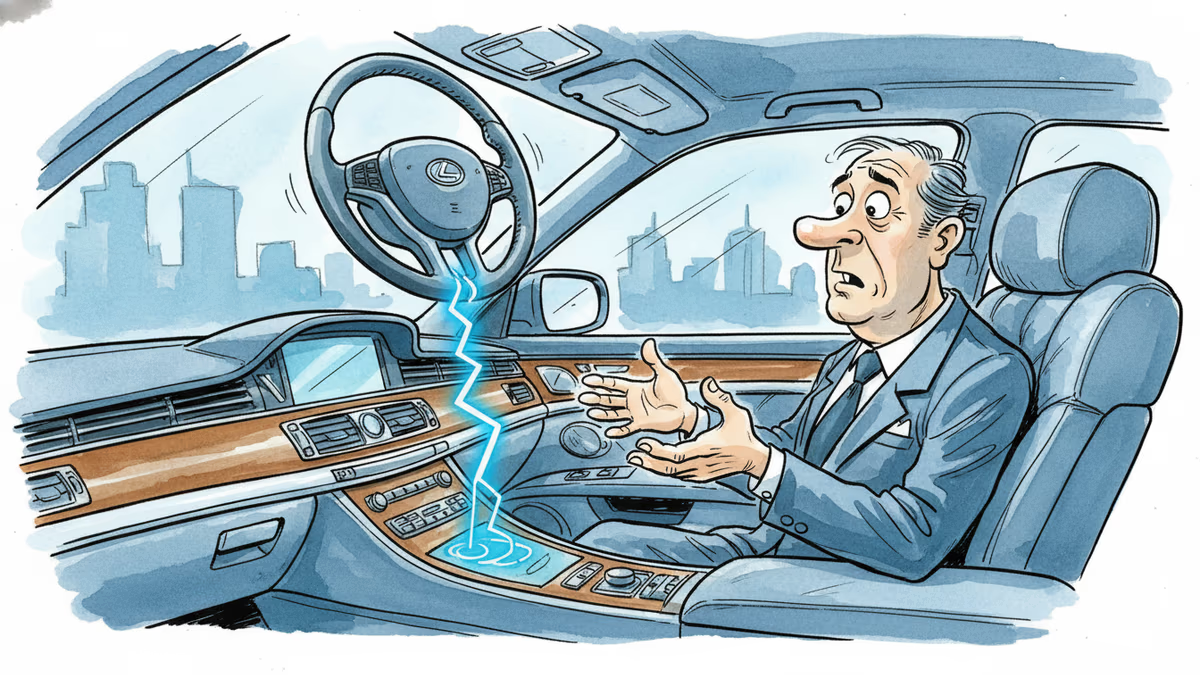
Mercedes-Benz is bringing steer-by-wire to the refreshed EQS sedan, eliminating the physical link between steering wheel and wheels. Here's what that actually means for drivers, safety, and the future of the car.
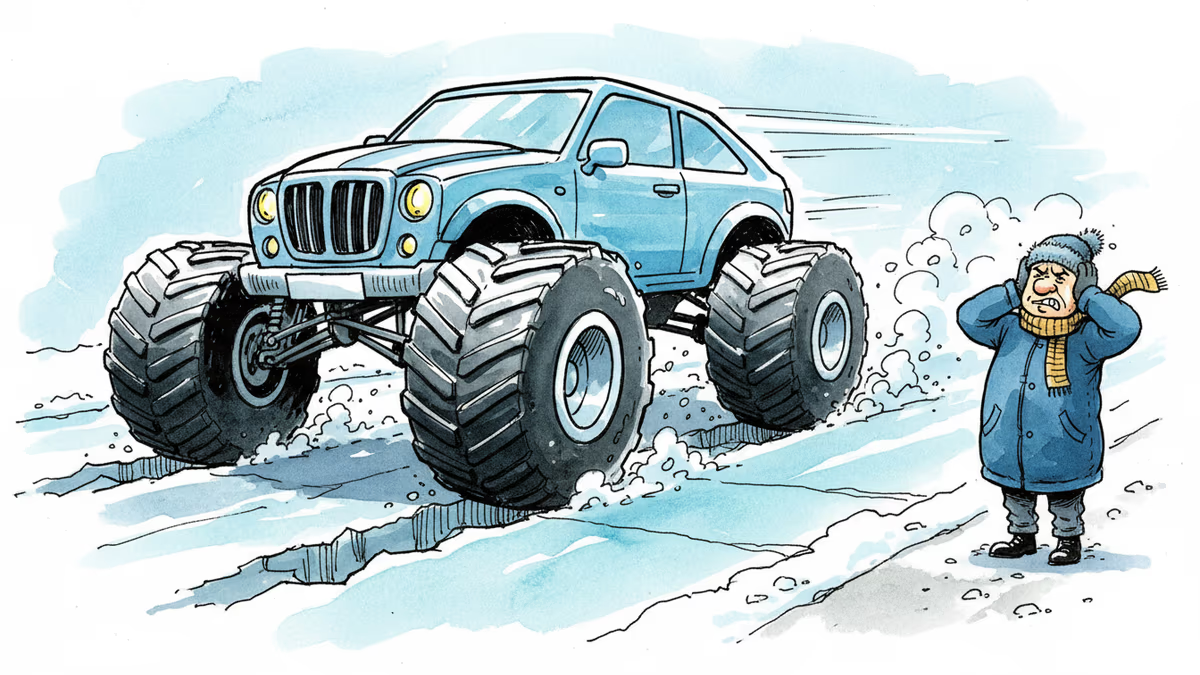
Studded snow tires offer unmatched grip on ice, but they're banned or restricted in many countries due to road damage and air quality concerns. What's the real trade-off?
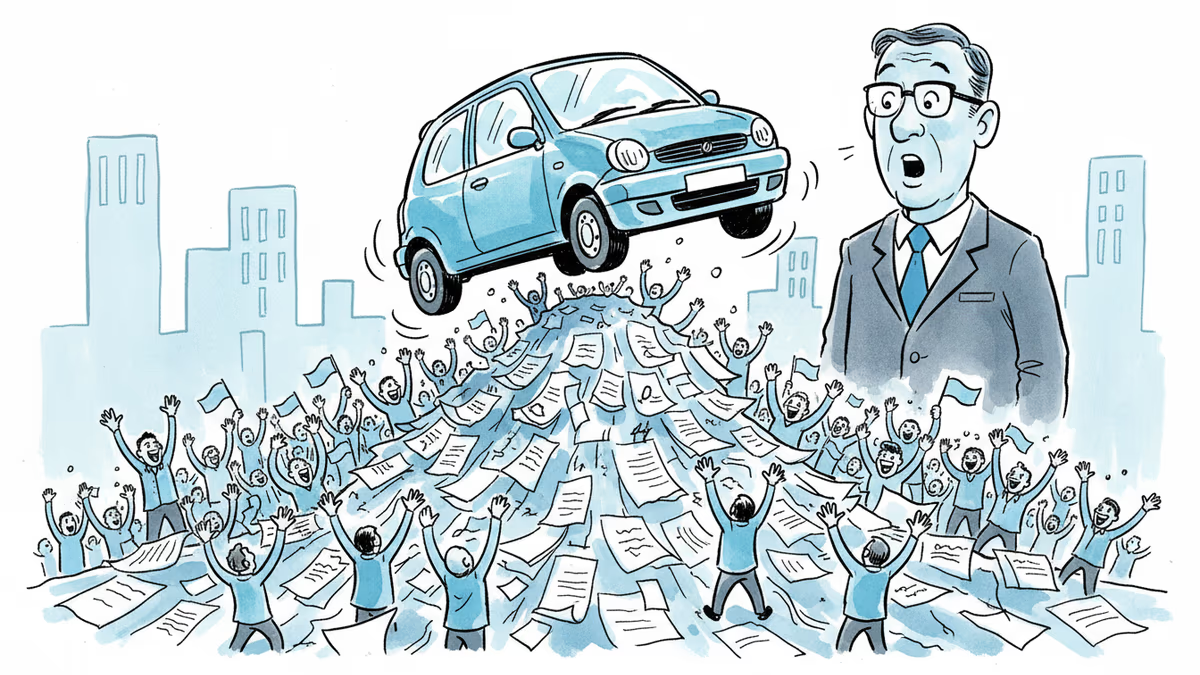
Chevrolet revived the Bolt EV after fan backlash forced GM's hand. With an LFP battery and Android Automotive OS, the new Bolt asks a harder question about the EV market.
The Heatbit Maxi Pro heats your room, filters your air, and mines bitcoin simultaneously. At $1,499, it's an ingenious idea with a brutal payback math. Here's the full breakdown.
Mercedes-Benz is bringing steer-by-wire to the refreshed EQS sedan, eliminating the physical link between steering wheel and wheels. Here's what that actually means for drivers, safety, and the future of the car.
Studded snow tires offer unmatched grip on ice, but they're banned or restricted in many countries due to road damage and air quality concerns. What's the real trade-off?
Chevrolet revived the Bolt EV after fan backlash forced GM's hand. With an LFP battery and Android Automotive OS, the new Bolt asks a harder question about the EV market.
Thoughts
Share your thoughts on this article
Sign in to join the conversation