
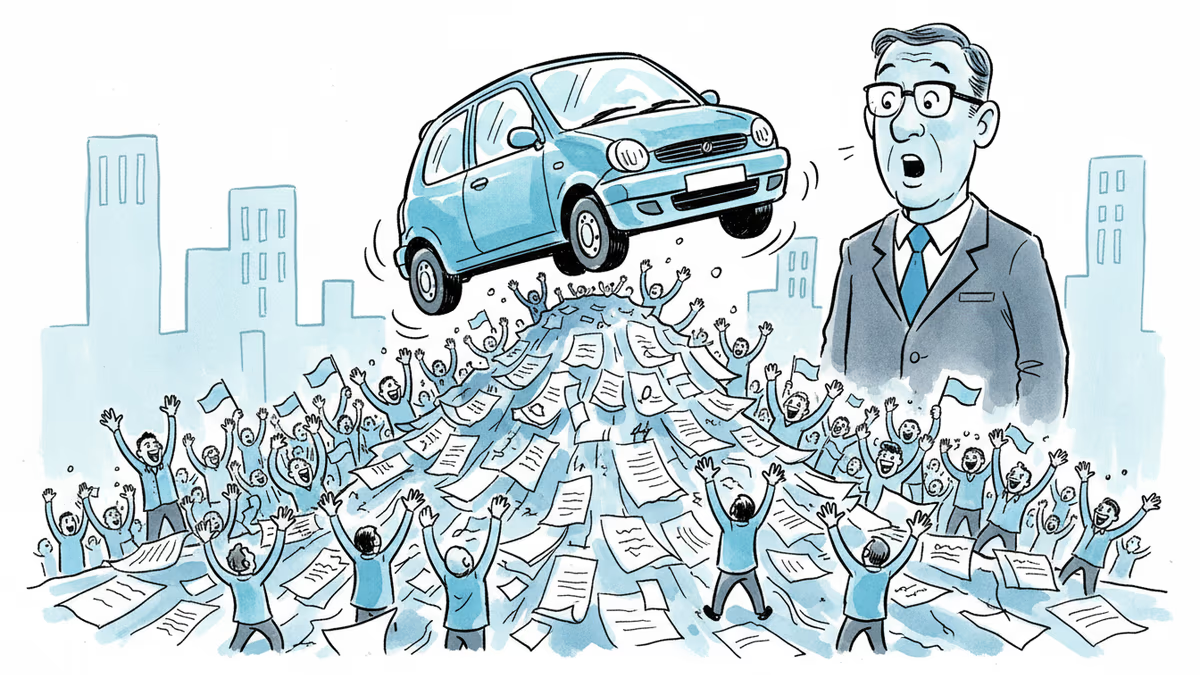
GM Killed the Bolt, Then Brought It Back. Here's Why That Matters
Chevrolet revived the Bolt EV after fan backlash forced GM's hand. With an LFP battery and Android Automotive OS, the new Bolt asks a harder question about the EV market.
What does it take to un-cancel a car? Apparently, a lot of angry emails and a botched bet on electric pickup trucks.
In 2022, GM CEO Mary Barra announced the Chevrolet Bolt was done. The Orion Township plant would be retooled for the Silverado EV—a full-size electric pickup that, the thinking went, Americans would rush to buy. They didn't. And the Bolt? It came back.
The Car That Refused to Die
When the Bolt launched in 2017, it was genuinely different. Over 200 miles of range at less than half the price of a Tesla Model S—at a time when affordable long-range EVs were essentially nonexistent. It wasn't perfect. A battery fire risk triggered a recall of more than 142,000 vehicles, costing GM roughly $1.8 billion to replace every pack. COVID pushed back its mid-cycle refresh. Prices got cut—multiple times.
And yet, through all of it, the Bolt became GM's best-selling EV by a significant margin. That's the part that makes the original cancellation decision so puzzling in retrospect.
The logic, at the time, was factory economics. GM wanted to convert the Bolt's assembly plant to build the Silverado EV, wagering that American consumers were ready to pay a premium for electric full-sizers. That bet hasn't paid off. Meanwhile, Bolt fans organized, lobbied, and made enough noise that by CES 2023, Barra was back at a podium announcing the Bolt's return.
What's Actually New
The revived Bolt isn't just a warmed-over version of the old one. The most significant change is under the floor: the old lithium-ion pack is gone, replaced by a lithium iron phosphate (LFP) battery. LFP chemistry trades some energy density for better thermal stability, longer cycle life, and lower raw material costs—a direct response to the fire recall that haunted the original.

The drive motor is borrowed from the Equinox EV, and the infotainment system has been swapped for Android Automotive OS. It's a smart parts-bin strategy: leverage GM's existing EV component ecosystem to keep costs down and development risk low. Nothing here is bleeding-edge, and that's probably the point.
Three Ways to Read This
For the EV buyer, the Bolt's return is straightforwardly good news. Affordable, practical electric hatchbacks with real-world range are still rare. The Bolt occupies a segment where competition remains thin—Tesla has moved upmarket, and most legacy automakers are still figuring out how to make EVs pencil out at lower price points.
For the battery industry, the LFP shift is worth watching closely. Chinese manufacturers like CATL dominate LFP production, while South Korean suppliers LG Energy Solution and Samsung SDI have built their businesses around higher-density chemistries. As more automakers follow GM's lead toward LFP for cost-sensitive models, the competitive dynamics in battery supply chains could shift meaningfully.
For GM itself, the Bolt revival is a quiet admission. The company spent years betting that American consumers wanted bigger, more expensive EVs. The Bolt's return suggests the market for accessible, no-frills electric transportation is more durable than GM's strategy assumed.
The Bigger Pattern
The Bolt story isn't just about one car. It's a test case for a question the entire auto industry is wrestling with: can you build a profitable mass-market EV without racing to the premium end?
Tesla started expensive and has slowly moved down. Most legacy OEMs started at the top and are struggling to come down. Chinese automakers—BYD chief among them—built from the bottom up and are now moving into every segment. The Bolt, with its LFP battery and borrowed parts, is GM's attempt to hold a position in the middle.
Whether that's enough to compete long-term against manufacturers who have industrialized low-cost EV production is a genuinely open question.
Authors
Related Articles

The 2027 Chevy Bolt returns with LFP battery, 150kW charging, and Super Cruise under $30K. Here's what it means for the affordable EV market and who should care.
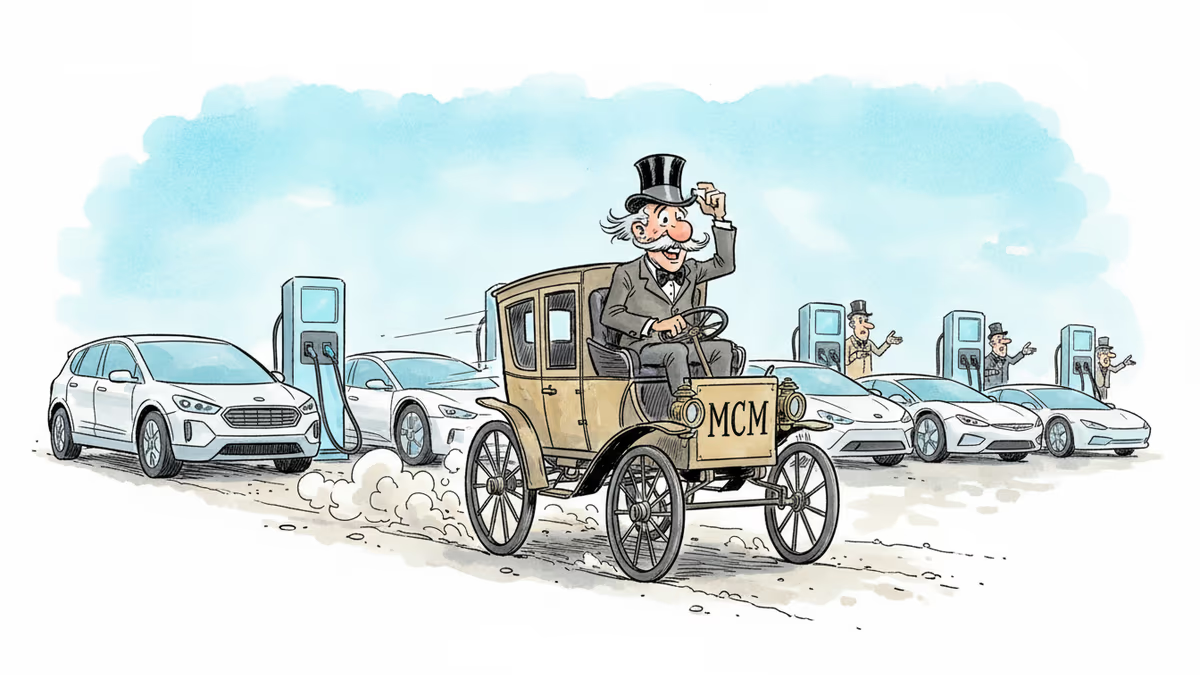
Ferdinand Porsche built the first hybrid vehicle in 1900. Over a century later, as EV adoption stalls, hybrids are surging. What does this mean for consumers, automakers, and the green transition?
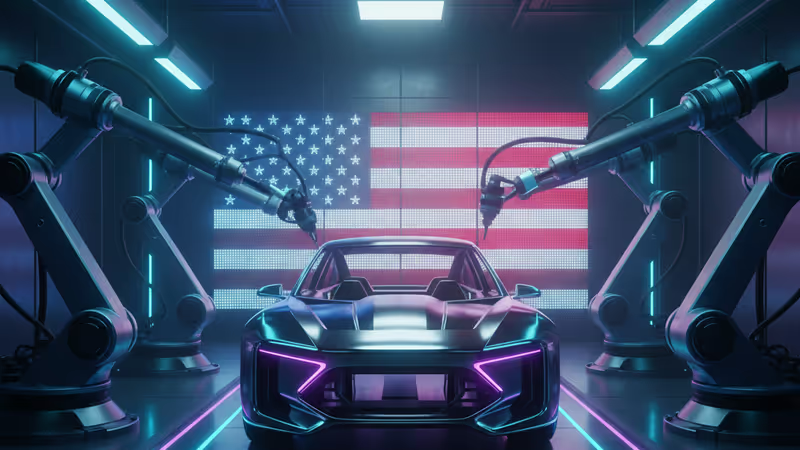
GM is shifting production from China and Mexico to its Kansas plant due to new U.S. tariffs. The $29,990 Chevrolet Bolt EV will be discontinued by mid-2027.

GM adds Apple Music to offset its controversial removal of CarPlay. Our analysis shows why this isn't a victory, but a strategic concession in a losing war.
The 2027 Chevy Bolt returns with LFP battery, 150kW charging, and Super Cruise under $30K. Here's what it means for the affordable EV market and who should care.
Ferdinand Porsche built the first hybrid vehicle in 1900. Over a century later, as EV adoption stalls, hybrids are surging. What does this mean for consumers, automakers, and the green transition?
GM is shifting production from China and Mexico to its Kansas plant due to new U.S. tariffs. The $29,990 Chevrolet Bolt EV will be discontinued by mid-2027.
GM adds Apple Music to offset its controversial removal of CarPlay. Our analysis shows why this isn't a victory, but a strategic concession in a losing war.
Thoughts
Share your thoughts on this article
Sign in to join the conversation