
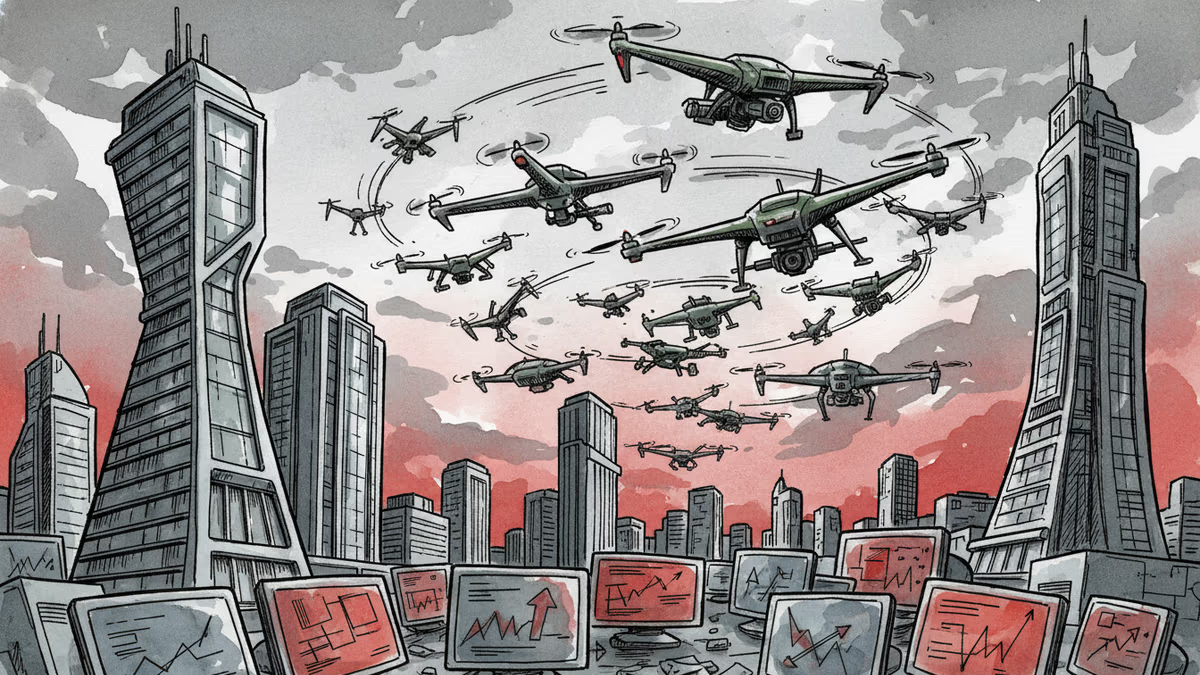
When War Meets AI: The Middle East Crisis Reshaping Silicon Valley
The Iran-US conflict has thrust AI companies into an unexpected spotlight, raising questions about military partnerships, disinformation, and the ethics of prediction markets.
4 Million Views in 48 Hours—All Fake
Two days into the escalating Iran-US conflict, Silicon Valley found itself fighting an unexpected battle. Not over market share or patents, but over something far more consequential: the role of AI in warfare and the spread of disinformation.
Anthropic pushed back hard after the US military labeled it a "supply chain risk." The company insisted it doesn't develop AI for military purposes, but the damage was already spreading through the industry like wildfire.
The Disinformation Deluge
Meanwhile, X became a playground for fabricated content. AI-generated images, video game footage masquerading as combat scenes, and countries being mistaken for each other—all racking up millions of views before anyone could fact-check them.
The math is brutal: By the time community notes flag misinformation, 4 million people have already seen it. X's monetization model rewards viral content regardless of accuracy, creating a perfect storm for chaos during breaking news.
When Prediction Becomes Exploitation

Perhaps most troubling is what's happening on prediction markets like Polymarket and Kalshi. Betting on war outcomes has surged, raising uncomfortable questions: Is it ethical to gamble on human suffering?
Worse, insider trading allegations are mounting. Officials with access to military intelligence may be profiting from tragedy, turning classified information into personal gain.
The Defense Department's AI Dilemma
The Pentagon faces its own contradiction. It needs cutting-edge AI to maintain military superiority, but many of the best AI companies explicitly refuse defense contracts. This creates a strange dynamic where the military courts companies that don't want to be courted.
OpenAI reversed its military ban last year. Google employees famously protested Project Maven. Anthropic maintains its civilian-only stance. Each company draws different ethical lines, leaving the defense establishment to navigate a patchwork of corporate consciences.
The Global Ripple Effect
This isn't just an American story. European data centers are reconsidering Middle Eastern partnerships. Asian semiconductor manufacturers are hedging their bets. The conflict is reshaping global AI supply chains in real-time.
Even entertainment is affected—Paramount's potential acquisition of Warner Bros faces new scrutiny as content companies grapple with their role in information warfare.
Authors
Related Articles
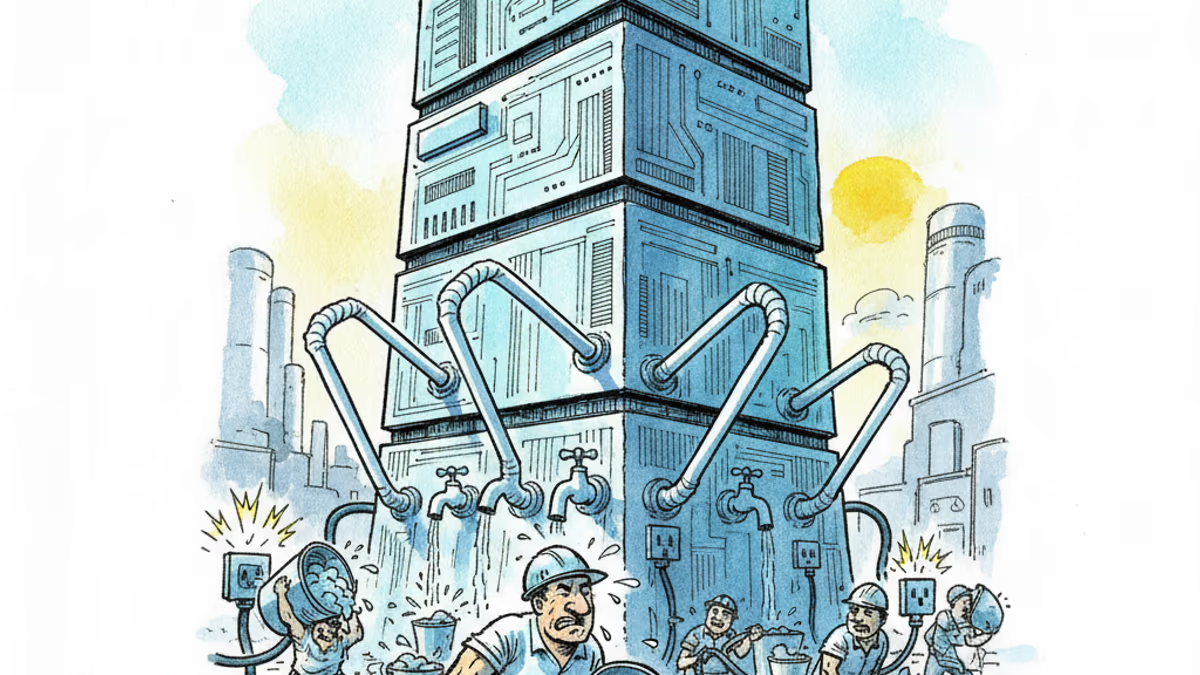
Samsung and SK unveiled a chip and AI investment package worth thousands of trillions of won on June 29. The headline number swings wildly by outlet, but the real contest isn't capital — it's water and power.
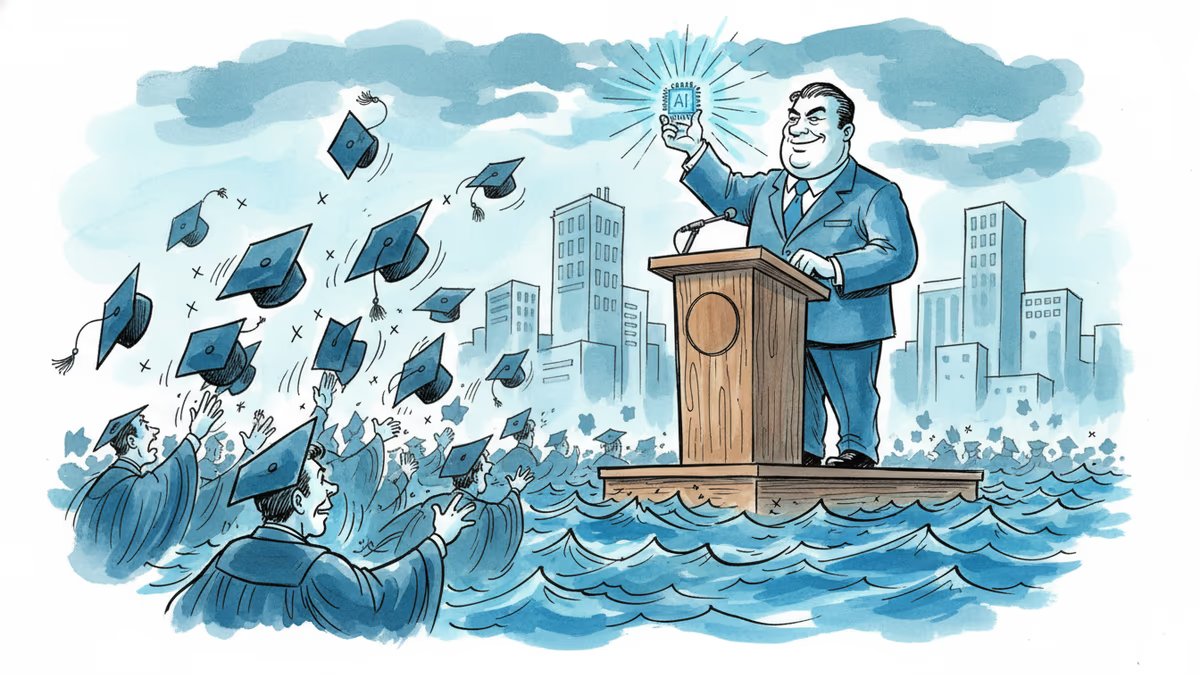
Viral videos show 2026 graduates jeering executives who praise AI at commencement ceremonies. It's not just rudeness — it's a signal about who pays for technological optimism.
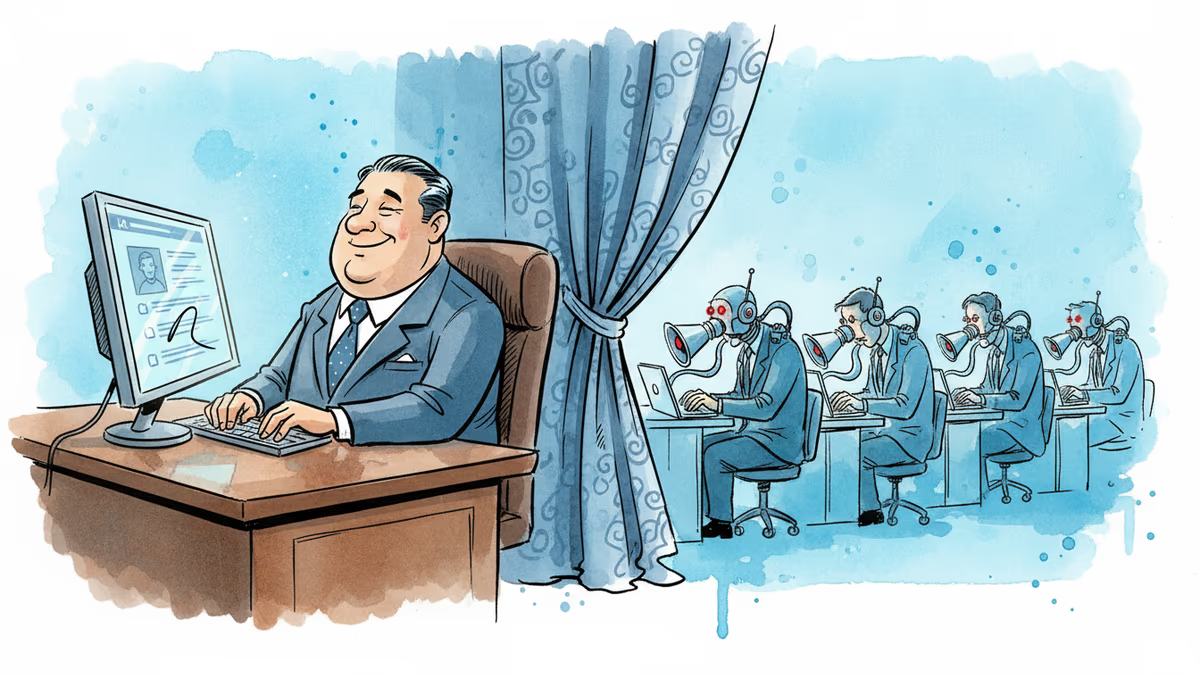
Filipino virtual assistants using AI to ghost-manage LinkedIn profiles for executives is now a structured industry. 30 comments a day, fake engagement rings, and a platform struggling to tell real from fabricated.
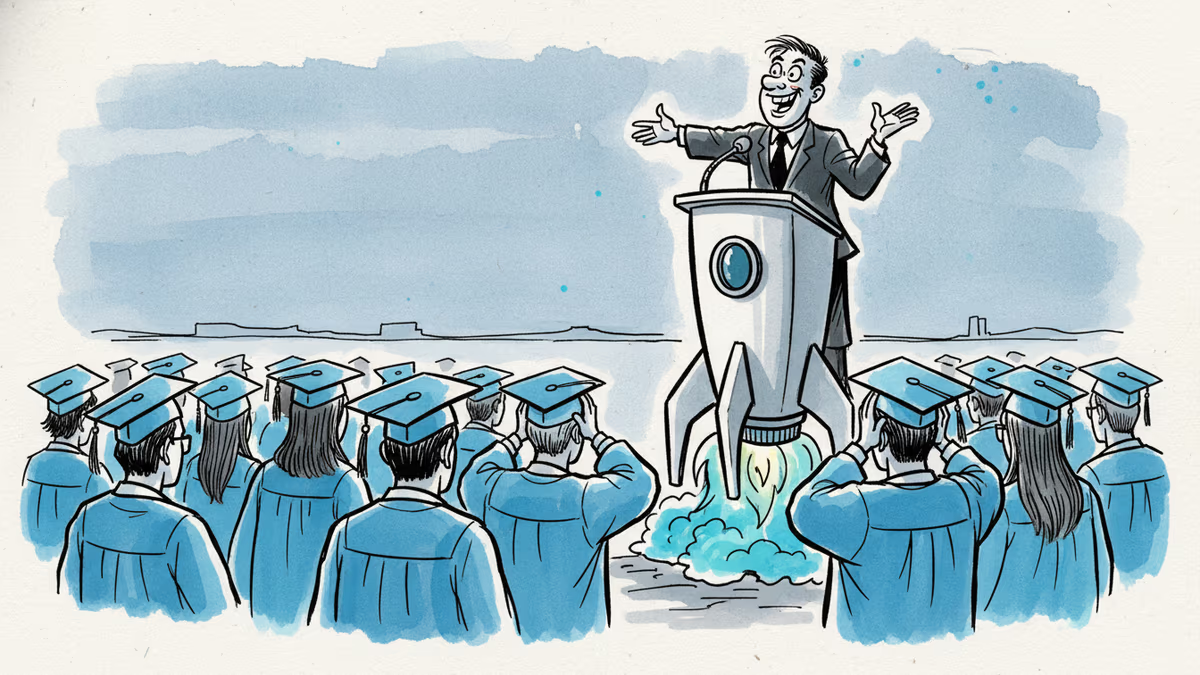
Two commencement speakers learned the hard way that AI enthusiasm doesn't land well with today's graduates. The backlash reveals a widening gap between tech optimism and Gen Z's economic reality.
Samsung and SK unveiled a chip and AI investment package worth thousands of trillions of won on June 29. The headline number swings wildly by outlet, but the real contest isn't capital — it's water and power.
Viral videos show 2026 graduates jeering executives who praise AI at commencement ceremonies. It's not just rudeness — it's a signal about who pays for technological optimism.
Filipino virtual assistants using AI to ghost-manage LinkedIn profiles for executives is now a structured industry. 30 comments a day, fake engagement rings, and a platform struggling to tell real from fabricated.
Two commencement speakers learned the hard way that AI enthusiasm doesn't land well with today's graduates. The backlash reveals a widening gap between tech optimism and Gen Z's economic reality.
Thoughts
Share your thoughts on this article
Sign in to join the conversation