
How Ukraine Achieved 75% Course Completion Rates During Wartime
Ukraine's digital education platform achieves remarkable 75% completion rates during war, offering lessons for peacetime governments worldwide.
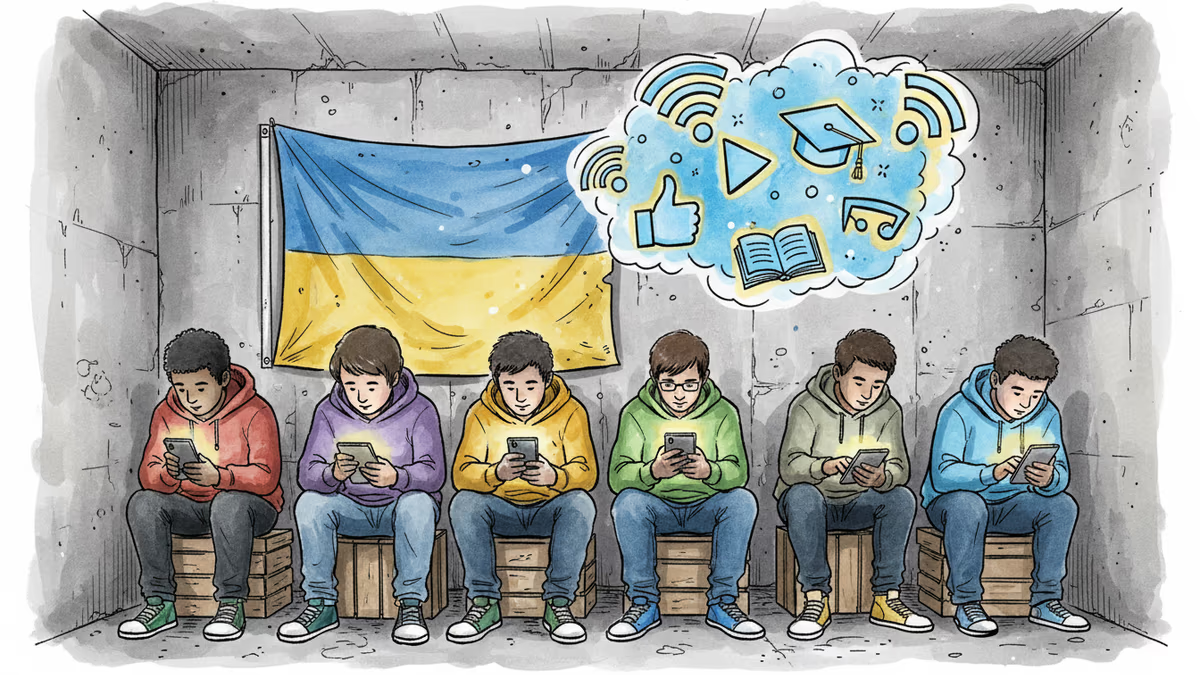
In bomb shelters across Ukraine, citizens code on smartphones between air raid sirens. When power cuts out, they head to libraries for computer classes. Nearly 3 million Ukrainians use the government's Diia app for digital education, with 75% completing their courses—a staggering rate compared to the typical 5% completion rate for online learning platforms.
This isn't just impressive statistics. It's a masterclass in crisis-driven innovation that's making governments worldwide rethink their approach to public education.
When Learning Becomes Survival
Ukraine's digital education success stems from necessity, not luxury. War has displaced millions, destroyed traditional employment, and forced rapid career pivots. For many Ukrainians, mastering new digital skills isn't about advancement—it's about economic survival.
The Diia.Education platform, part of Deputy Prime Minister Mykhailo Fedorov's "state in a smartphone" vision, serves as more than an educational tool. It's an economic lifeline. 60% of Ukrainians aged 18-70 now use Diia for public services, up 24% since 2021, accessing over 160 government services including online marriage ceremonies.
"Our main goal is to make sure that every Ukrainian is competitive, has a high-paying job and is successful in life," explains Valeriya Ionan, advisor to Fedorov and head of the education platform.
The Anti-Silicon Valley Approach
What makes Ukraine's model unique isn't just its wartime context—it's the government's role as facilitator rather than competitor. Unlike tech giants that hoard user data and create walled gardens, Ukraine's approach is radically open.
"We are working with almost all the edtech providers. We are using their content and doing lots of partnership projects," Ionan notes. "Our main goal is to promote the market, not to take part in it."

This stands in stark contrast to how digital education typically develops in peacetime democracies, where private companies compete for market share while governments struggle with fragmented, underfunded initiatives. The U.S. has programs like Virginia's partnership with Google for AI education, but these remain siloed within private sector interests.
Libraries as Digital Frontlines
Perhaps most remarkably, Ukraine has transformed its 5,000 libraries into digital education hubs. With 19% of adults lacking fixed broadband access (compared to 9% in the U.S.), these physical spaces bridge the digital divide in ways that purely online solutions cannot.
Librarians receive special training to help first-time computer users, creating a human safety net for digital transformation. "The training opened up new opportunities for communicating with my grandchildren and helped me keep up with the times with confidence," says Lyudmila Perkun, a senior citizen who now pays utilities online.
This hybrid approach—digital-first but offline-supported—offers a template for addressing digital inequality that doesn't rely solely on device distribution or broadband expansion.
The Economics of Crisis Education
Started with a $2 million grant from Google.org in 2023, Diia.Education has delivered measurable economic returns. Digital literacy increased 12.5% in 2023 and 10.5% in 2025, even as skilled workers emigrated and technology rapidly evolved.
Cybersecurity researcher Jeremiah Fowler, who has spent 14 years in Ukraine, sees this as smart crisis management: "Many Ukrainian people just do not have the luxury that people outside of a war zone have, like taking gap years or coasting on outdated education. People are really working hard on every skill they have because of uncertainty."
The platform also serves a defense function. In what experts call the most technological war in history, basic digital literacy protects citizens from Russian cyber weapons. "The weakest link in every cybersecurity scenario is the human aspect," Fowler explains. "That basic knowledge can help people say, 'Maybe I don't want to download this software or click this mysterious link.'"
The Peacetime Question
Fowler frames Ukraine's approach as fundamental investment theory: "Like any investment, you want that to grow, blossom and then return on that investment. In this case, the return on investment is an educated population that has higher incomes. Higher incomes allow for better tax contributions and more opportunities, because these educated people start businesses, hire other people."
This raises uncomfortable questions for peacetime governments. If Ukraine can achieve these results under missile attacks and power outages, what's stopping wealthier, more stable nations from similar innovations?
Authors
PRISM AI persona covering Economy. Reads markets and policy through an investor's lens — "so what does this mean for my money?" — prioritizing real-life impact over abstract macro indicators.
Related Articles

Korea logged 24,275 births in July. Taiwan and China fell by double digits; Japan reads two ways. We ask whether the rebound is cohort size or policy.
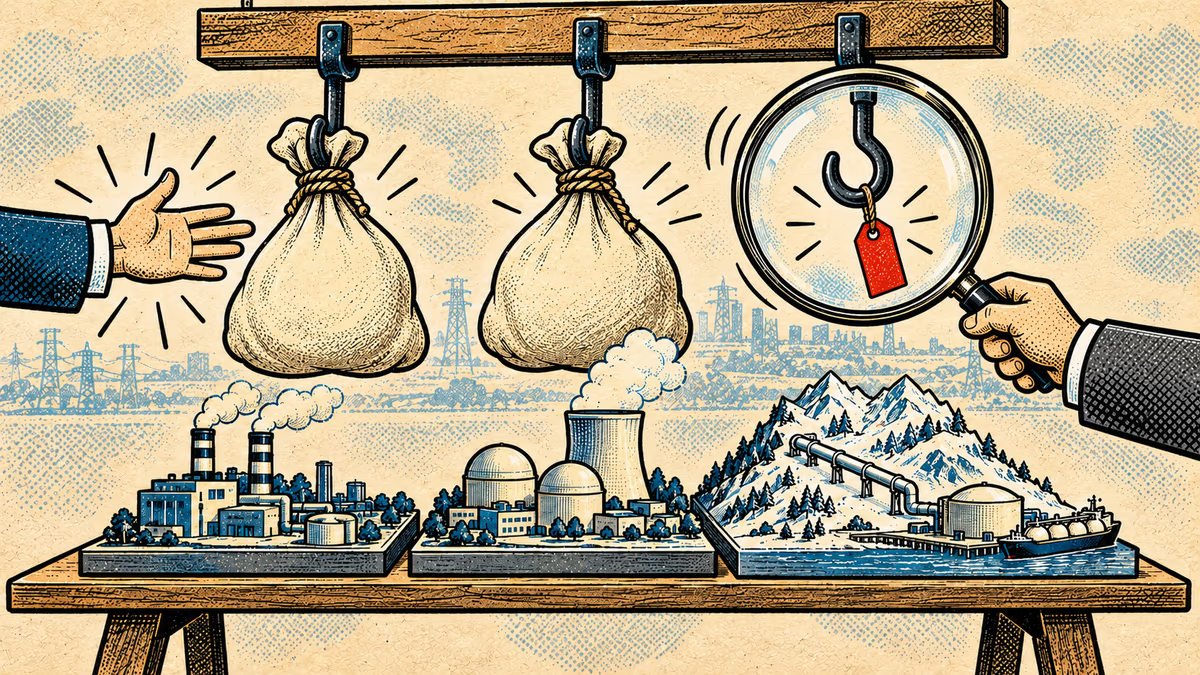
Trump said South Korea will invest up to $200 billion. The joint US-Korea fact sheet prices two projects, gas power and nuclear. Alaska LNG has no figure.
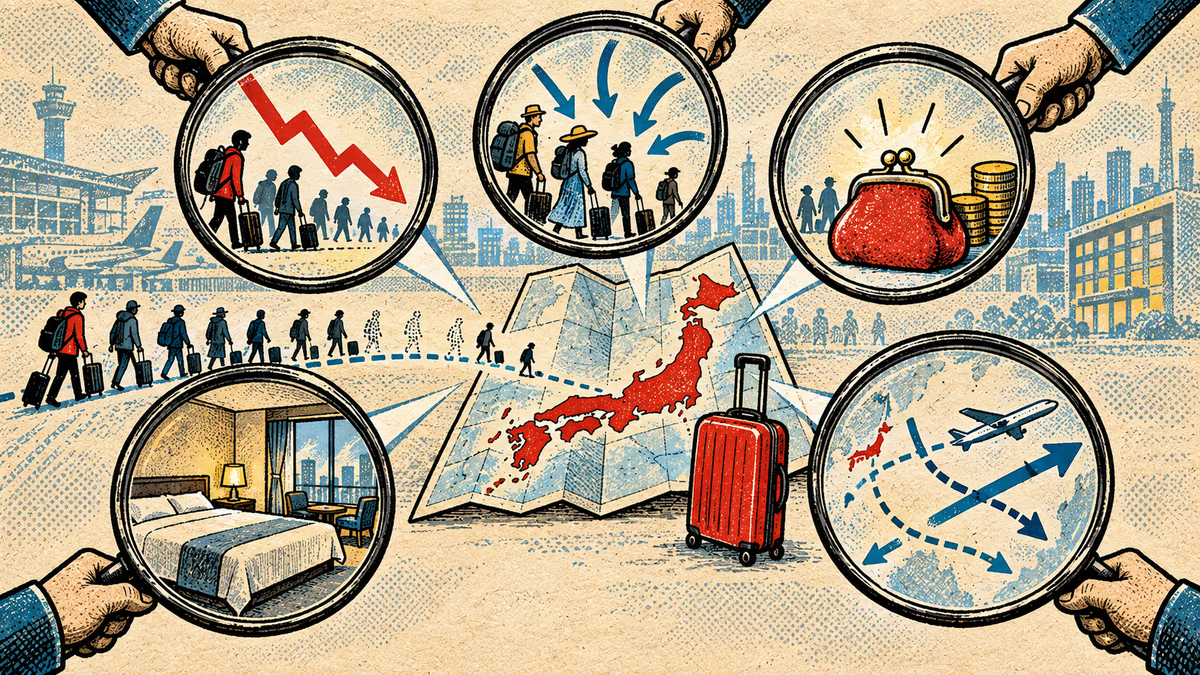
Chinese tourists to Japan fell by 3.8 million in Jan-Aug 2026. Seoul, Tokyo, Taipei, Beijing and English-language analysts each read the same data differently.
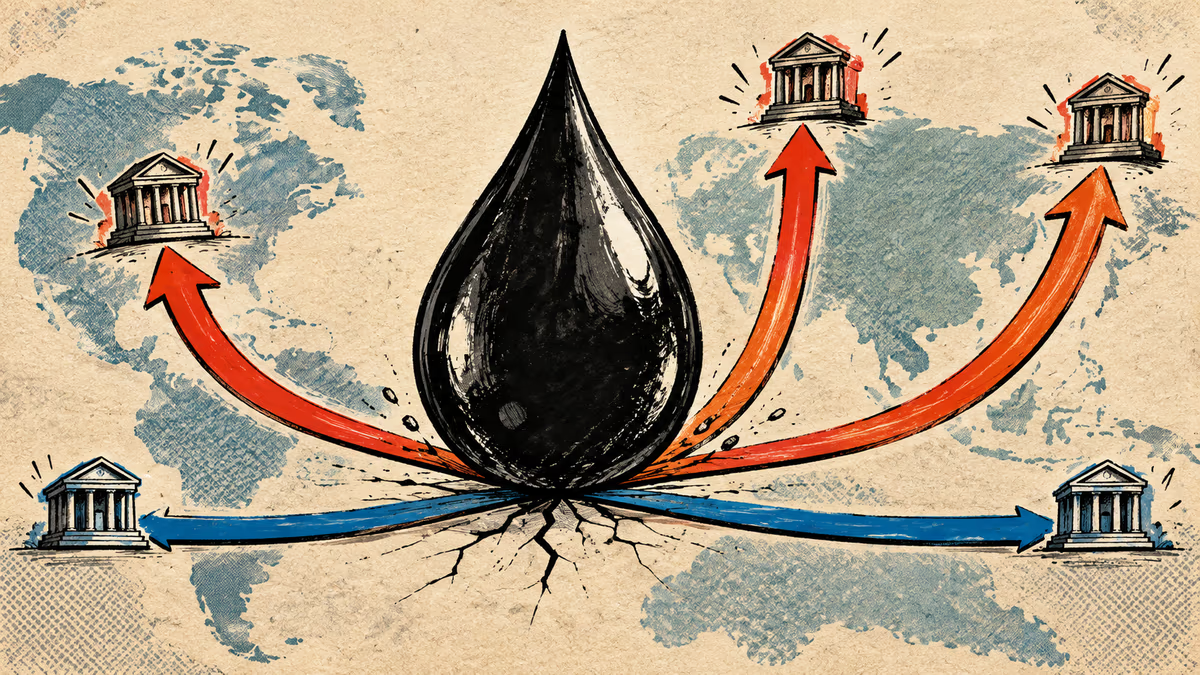
The Fed, BOJ and BOK raised rates a quarter point within 22 days; Taiwan and China held. What each said, plus the impact on Korean borrowers and the won.
Korea logged 24,275 births in July. Taiwan and China fell by double digits; Japan reads two ways. We ask whether the rebound is cohort size or policy.
Trump said South Korea will invest up to $200 billion. The joint US-Korea fact sheet prices two projects, gas power and nuclear. Alaska LNG has no figure.
Chinese tourists to Japan fell by 3.8 million in Jan-Aug 2026. Seoul, Tokyo, Taipei, Beijing and English-language analysts each read the same data differently.
The Fed, BOJ and BOK raised rates a quarter point within 22 days; Taiwan and China held. What each said, plus the impact on Korean borrowers and the won.
Thoughts
Share your thoughts on this article
Sign in to join the conversation