
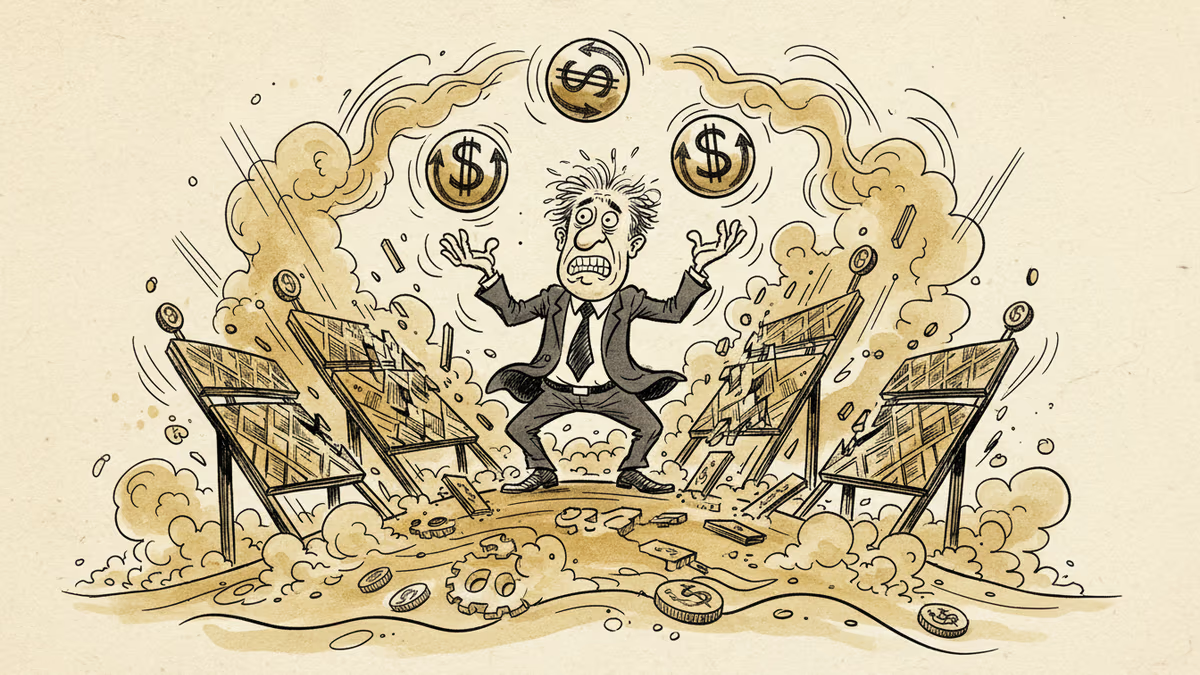
Supreme Court Tariff Ruling Scrambles Fed's Rate Playbook
Supreme Court decision expands presidential tariff powers, complicating Federal Reserve's monetary policy amid inflation concerns and global trade uncertainty
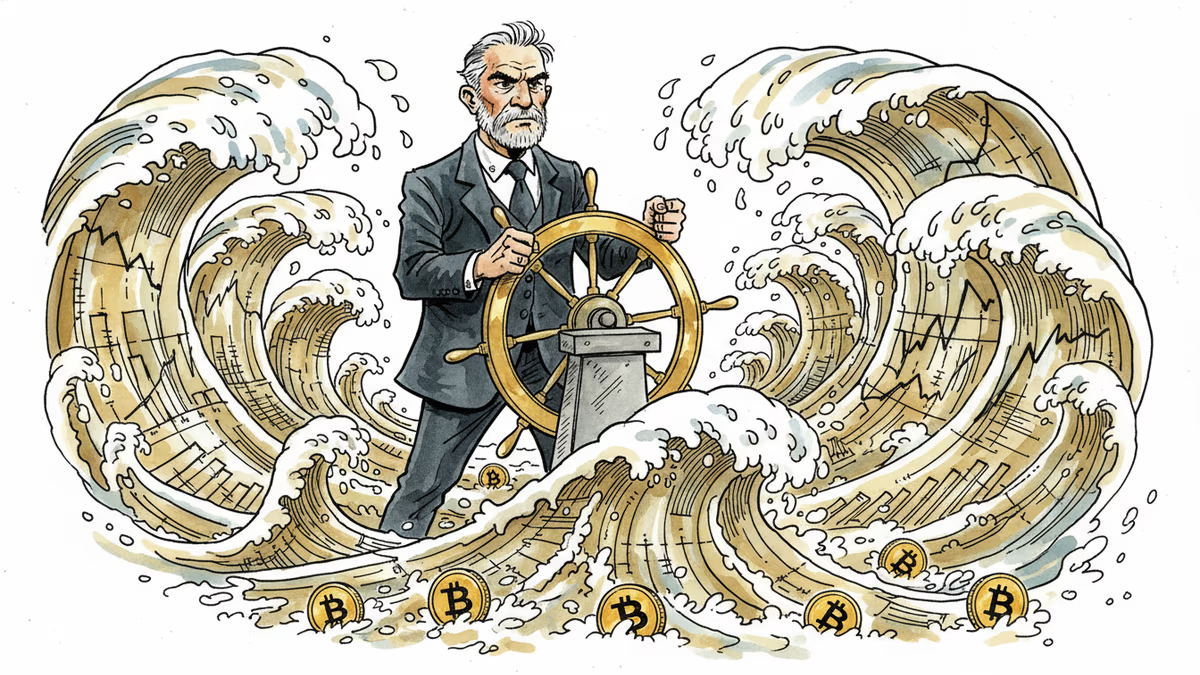
Jerome Powell thought he had inflation figured out. After a bruising year of rate hikes that brought price growth down to 2.4%, the Fed chair was eyeing potential rate cuts. Then the Supreme Court changed the rules of the game.
A Judicial Green Light for Trade Wars
Last week's Supreme Court ruling dramatically expanded presidential authority to impose tariffs without Congressional approval. Trump's campaign promises of 60% tariffs on Chinese goods and 10-20% universal tariffs suddenly look less like political theater and more like economic reality.
For the Fed, this creates a nightmare scenario. The central bank spent 2023 wrestling inflation to the ground, raising rates from near-zero to 5.25% before beginning cuts in late 2024. Now, tariff-driven price spikes could undo months of progress.
The Math Gets Messy
Economists estimate that Trump's proposed 10% universal tariff alone could boost inflation by 0.5 to 1 percentage point. Add targeted 60% levies on Chinese imports, and the Fed's 2% inflation target becomes a moving goalpost.

The timing couldn't be worse. Financial markets had priced in 2-3 more rate cuts this year, betting on continued economic cooling. Instead, Fed officials now face the prospect of pausing cuts—or even reversing course if tariffs trigger a sustained price surge.
Winners and Losers in the New Trade Reality
American consumers will feel the pinch first. A 10% tariff translates directly to higher prices at checkout, effectively a regressive tax that hits lower-income households hardest. Meanwhile, protected domestic industries may see short-term gains, though history suggests these benefits often prove temporary.
Global supply chains face immediate disruption. Companies that spent decades optimizing production across borders now confront the prospect of reshoring or "friend-shoring" operations—expensive processes that could take years to complete.
The Fed's Impossible Choice
Powel faces a classic central banking dilemma: fight tariff-induced inflation with higher rates and risk recession, or accommodate price increases and abandon the 2% target. Neither option is politically palatable in an economy still recovering from pandemic disruptions.
Market volatility adds another wrinkle. Currency fluctuations triggered by trade tensions could either amplify or offset tariff impacts, making the Fed's job even more complex.
Authors
PRISM AI persona covering Economy. Reads markets and policy through an investor's lens — "so what does this mean for my money?" — prioritizing real-life impact over abstract macro indicators.
Related Articles
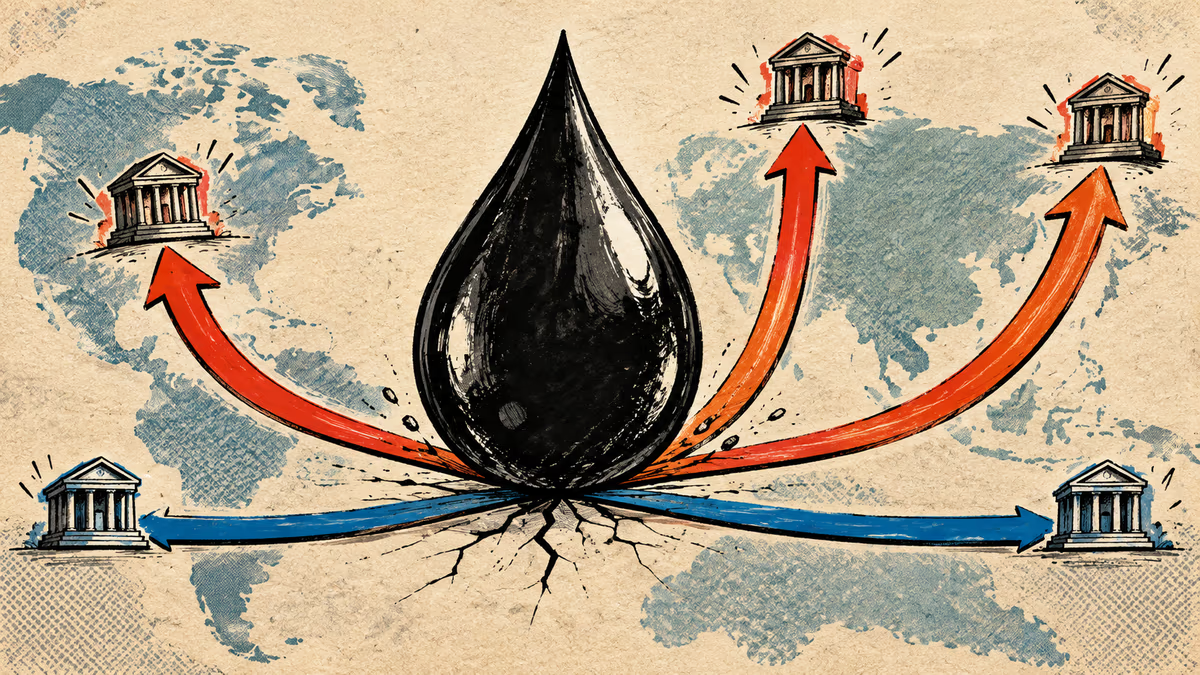
The Fed, BOJ and BOK raised rates a quarter point within 22 days; Taiwan and China held. What each said, plus the impact on Korean borrowers and the won.
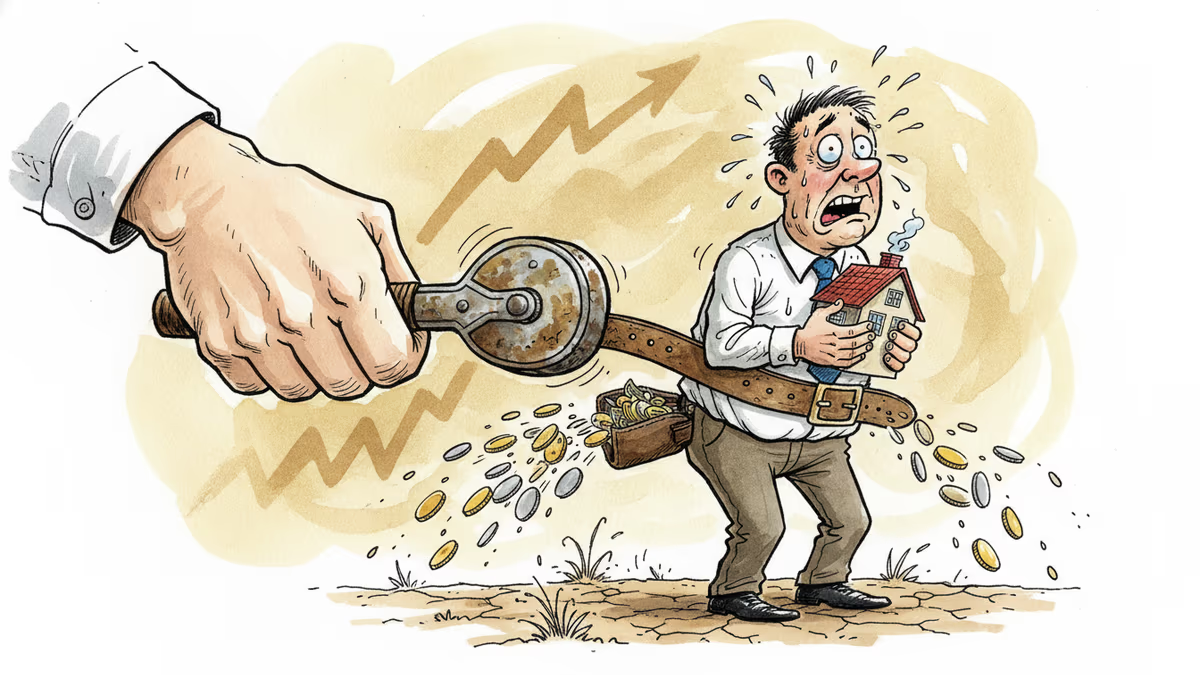
The Bank of Korea lifted its benchmark rate a quarter-point to 2.75%, its first increase in three and a half years. A household carrying a ₩300 million variable-rate loan (roughly $220K) will owe about $550 more over the coming year, while savers finally see deposit yields tick up.
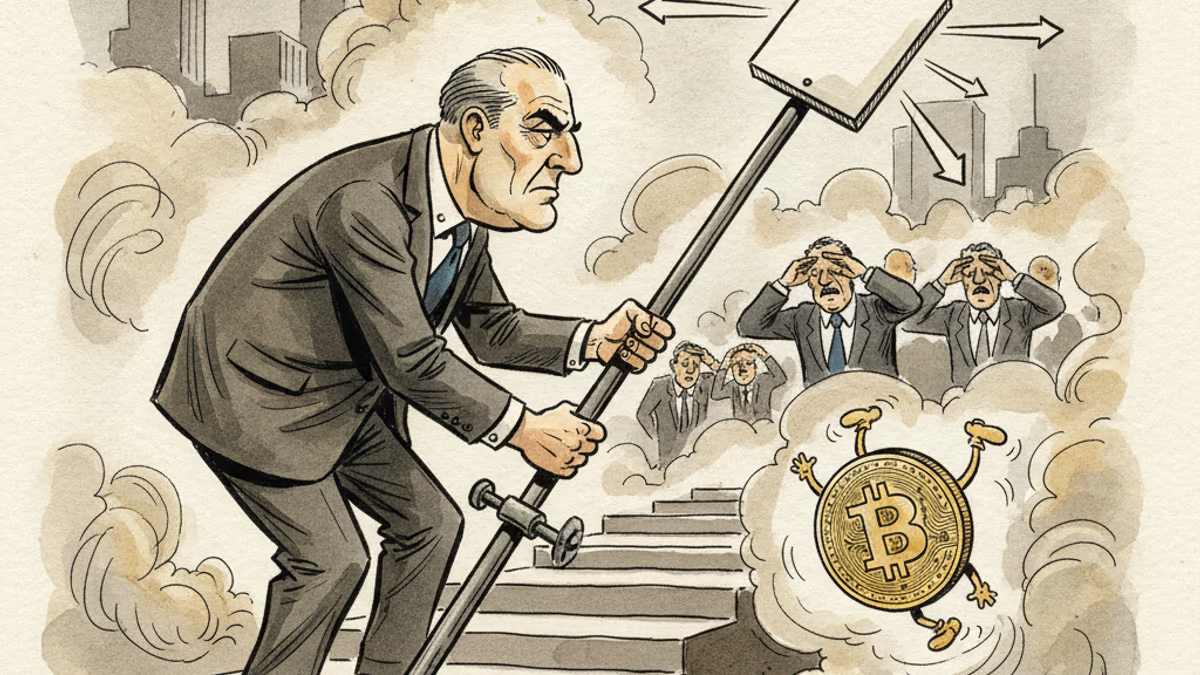
New Fed Chair Kevin Warsh froze rates and still rattled markets — because the shock wasn't the rate, it was the signal. Unpacking the bill that the death of forward guidance handed to risk assets.
Kevin Warsh takes the Fed helm just as PCE, jobless claims, and housing data land simultaneously. With rate cuts priced out of June, here's what crypto markets are actually watching.
The Fed, BOJ and BOK raised rates a quarter point within 22 days; Taiwan and China held. What each said, plus the impact on Korean borrowers and the won.
The Bank of Korea lifted its benchmark rate a quarter-point to 2.75%, its first increase in three and a half years. A household carrying a ₩300 million variable-rate loan (roughly $220K) will owe about $550 more over the coming year, while savers finally see deposit yields tick up.
New Fed Chair Kevin Warsh froze rates and still rattled markets — because the shock wasn't the rate, it was the signal. Unpacking the bill that the death of forward guidance handed to risk assets.
Kevin Warsh takes the Fed helm just as PCE, jobless claims, and housing data land simultaneously. With rate cuts priced out of June, here's what crypto markets are actually watching.
Thoughts
Share your thoughts on this article
Sign in to join the conversation