

UBTech's $237M Deal Signals a New War in Humanoid Robotics: The Supply Chain
Chinese humanoid robot maker UBTech is acquiring component maker Zhejiang Fenglong for $237M to secure its supply chain. The move signals a shift in the robotics race from AI to manufacturing at scale.
The race for humanoid robots isn't just about code anymore—it's about securing the nuts and bolts. China's leading humanoid robot maker, UBTech Robotics, is making a major move to lock down its supply chain, signaling a critical shift in the rapidly evolving industry.
UBTech has agreed to a deal worth nearly 1.7 billion yuan (US$237 million) in cash to take control of Zhejiang Fenglong, a Shenzhen-listed mechanical component maker. The move is a clear bid to secure key manufacturing capacity as the company pushes to scale up humanoid robot production for a mass market.
A Calculated Two-Stage Acquisition

The acquisition is structured in two parts. First, UBTech will acquire a 29.99 per cent stake in Fenglong from existing shareholders for 1.16 billion yuan. This will be followed by a voluntary partial offer to buy an additional 13.02 per cent. This strategy will give UBTech direct control over a crucial source of the precision mechanical components essential for building sophisticated robots.
The Shift from R&D to Mass Production
This move is a strong indicator that the humanoid robot industry is maturing beyond prototypes and into the era of mass manufacturing. While competitors like Tesla with its Optimus robot and Figure AI have captured headlines with impressive AI demonstrations, UBTech's focus is on the gritty reality of production. A single component shortage can halt an entire assembly line, and this acquisition is a strategic hedge against that very risk.
Authors
Related Articles
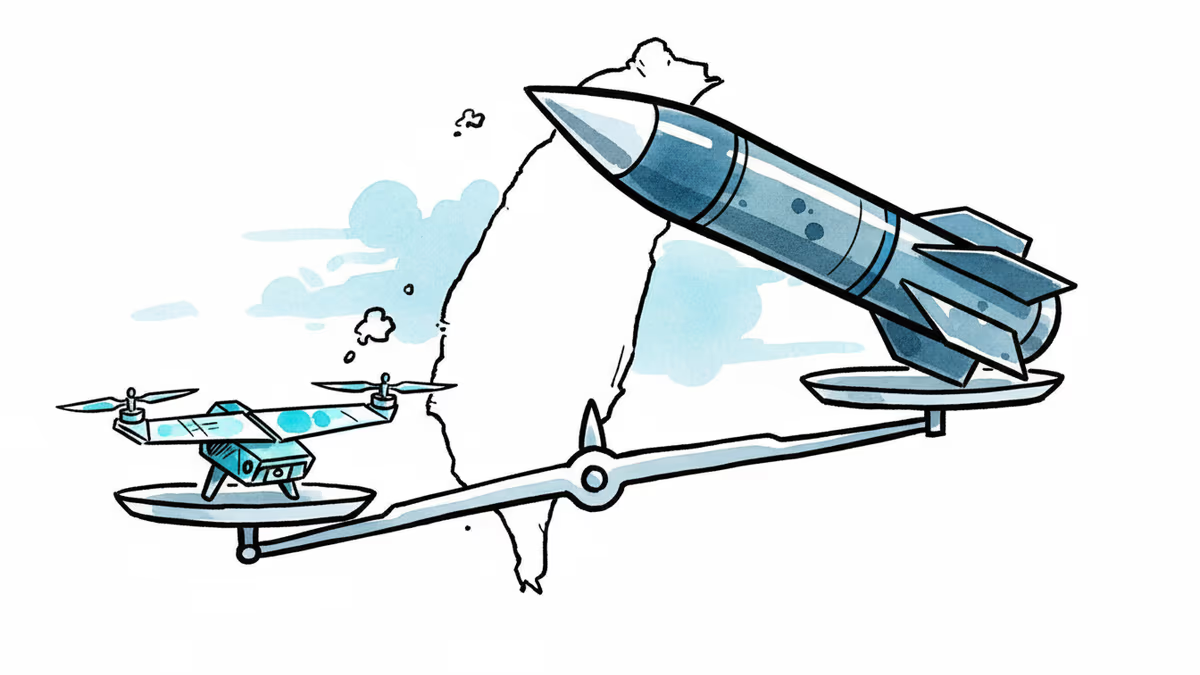
Taiwan's Thunder Tiger became the first Asian firm to win US military drone clearance with a China-free supply chain. As Trump meets Xi, the drone arithmetic reshapes defense strategy.
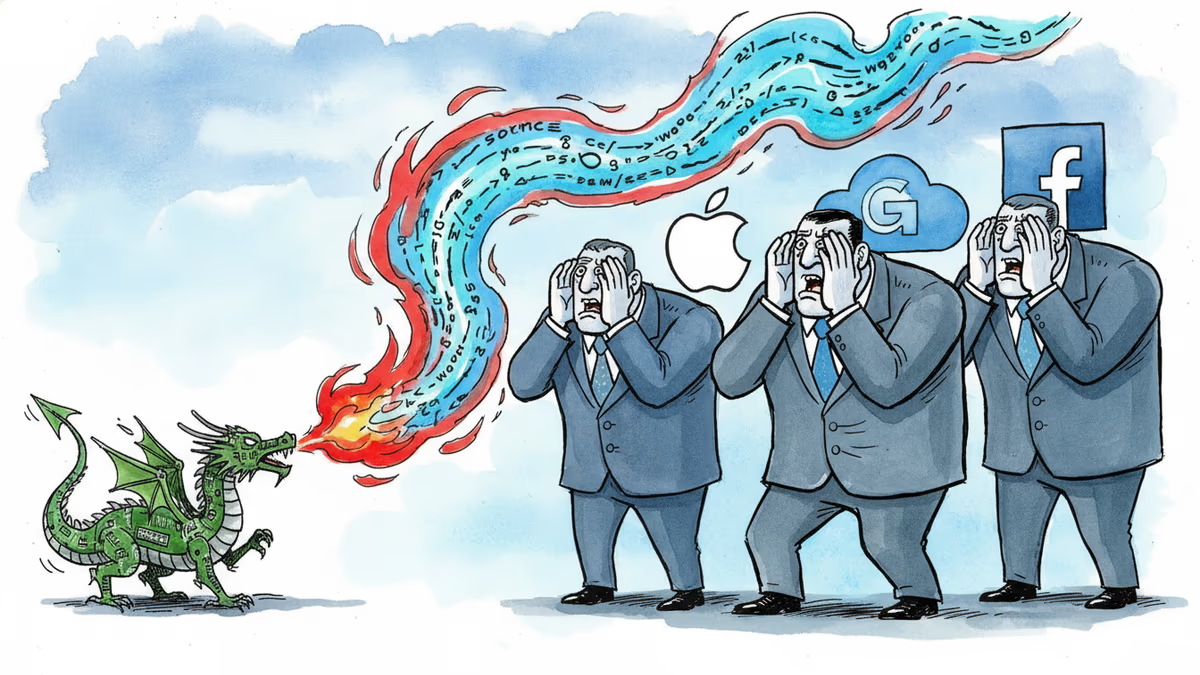
Moonshot AI raised $2B at a $20B valuation. Its Kimi models rank second on OpenRouter. What China's open-weight AI surge means for the global LLM market.

Apple quietly removed the entry-level $599 Mac Mini, raising the starting price to $799 — just one day after Tim Cook warned of chip supply constraints on the earnings call.
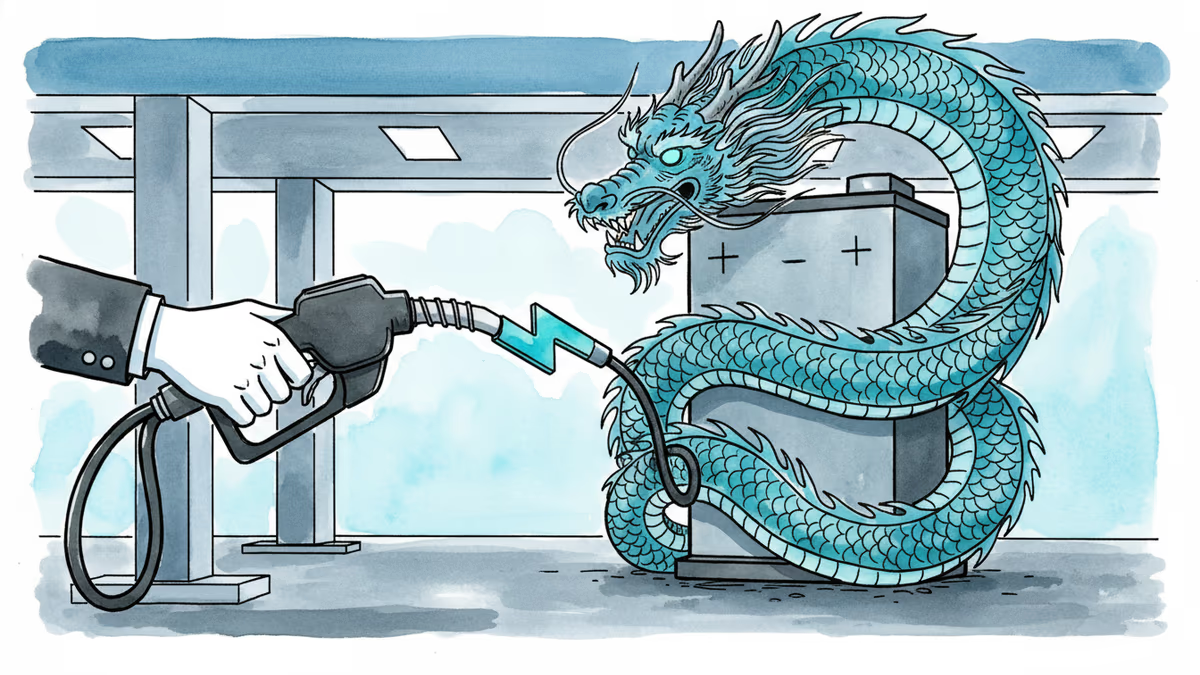
CATL's third-gen Shenxing LFP battery claims charging speeds nearly 5x faster than Hyundai or Porsche's best 800V systems. Here's what that really means.
Taiwan's Thunder Tiger became the first Asian firm to win US military drone clearance with a China-free supply chain. As Trump meets Xi, the drone arithmetic reshapes defense strategy.
Moonshot AI raised $2B at a $20B valuation. Its Kimi models rank second on OpenRouter. What China's open-weight AI surge means for the global LLM market.
Apple quietly removed the entry-level $599 Mac Mini, raising the starting price to $799 — just one day after Tim Cook warned of chip supply constraints on the earnings call.
CATL's third-gen Shenxing LFP battery claims charging speeds nearly 5x faster than Hyundai or Porsche's best 800V systems. Here's what that really means.
Thoughts
Share your thoughts on this article
Sign in to join the conversation