
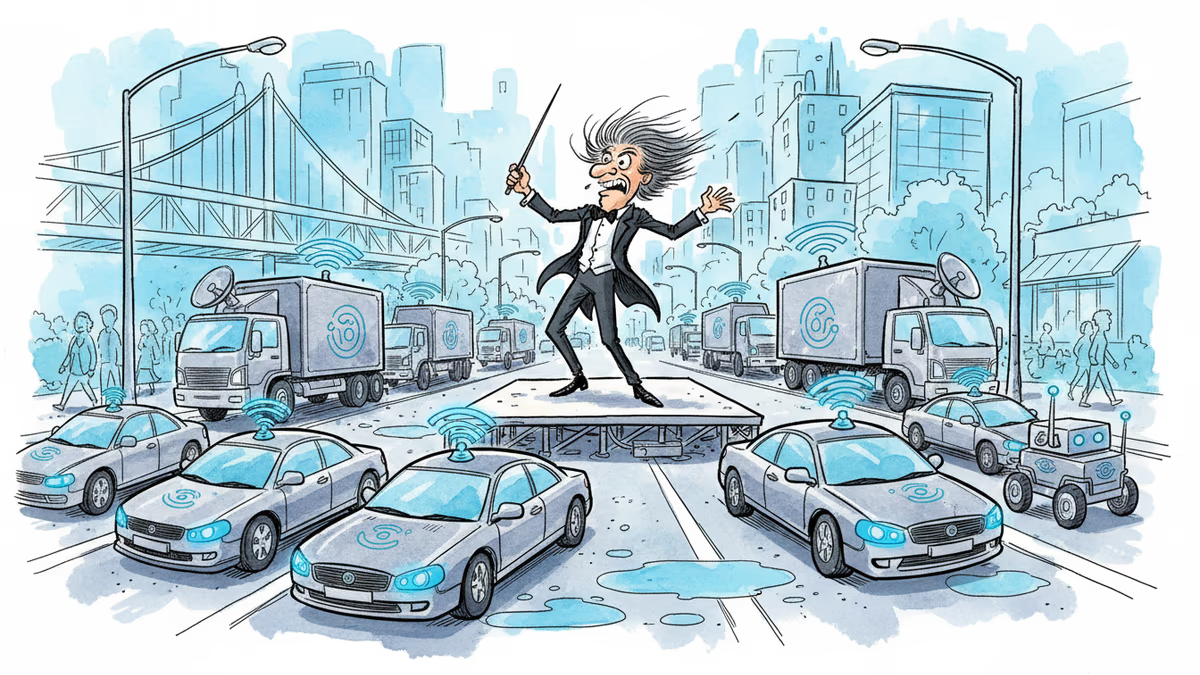
Why Uber Wants to Be the Operations Manager for Self-Driving Cars
Uber launches Uber Autonomous Solutions to handle everything except the tech development. But can this 'build vs. operate' split actually work in autonomous vehicles?
Nearly two dozen partnerships with autonomous vehicle companies. $100 million invested in charging infrastructure. Now Uber's making its boldest bet yet: becoming the operations backbone for the entire self-driving industry.
The ride-hailing giant launched Uber Autonomous Solutions on Monday, a division designed to handle everything except the actual technology development. Think of it as "you build it, we'll run it" for robotaxis, self-driving trucks, and delivery robots.
The Great Unbundling of Autonomous Vehicles
"AV tech teams should focus on what they do best: building software that can safely power an autonomous world," said Sarfraz Maredia, Uber's global head of autonomous mobility. Everything else—demand generation, customer support, fleet management, regulatory compliance—that's where Uber wants to step in.
This isn't just business expansion. It reflects a fundamental shift in how the industry thinks about autonomous vehicles. The consensus is emerging: building the technology and operating the service are completely different skill sets.
Waymo excels at self-driving software but struggles with scaling operations. Tesla has manufacturing down but customer service remains hit-or-miss. Uber's betting that specialization wins over vertical integration.
Survival Strategy Disguised as Innovation

Uber's move is equal parts opportunistic and existential. After selling its in-house AV development unit in 2020 following a fatal accident, the company has been playing defense through partnerships. It operates robotaxi services with Waymo in Atlanta and Austin, has deals with Chinese firms like Baidu and Pony.ai, and partnerships spanning delivery bots to autonomous trucks.
But partnerships offer protection, not growth. As autonomous vehicles mature, they threaten Uber's core business of human drivers. The company needs to become indispensable to the autonomous future, not just adjacent to it.
"What's going to determine the success or failure of autonomous in the world is whether it can be commercialized," said Uber President Andrew MacDonald. "Uber is going to be the thing that makes autonomy commercially viable."
The Operations Challenge Nobody Talks About
Here's what most people miss about autonomous vehicles: the technology is only half the battle. Managing a fleet of robotaxis involves remote assistance when cars get confused, handling insurance claims, training customer service reps for edge cases, and navigating local regulations that vary by city block.
Waymo recently faced scrutiny from federal lawmakers over using overseas workers for remote assistance. These operational complexities don't make headlines, but they determine whether autonomous vehicles succeed or fail in the real world.
Uber's betting it can solve these unglamorous but crucial problems better than tech companies can. The question is whether operational expertise can be separated from technical development.
Authors
Related Articles
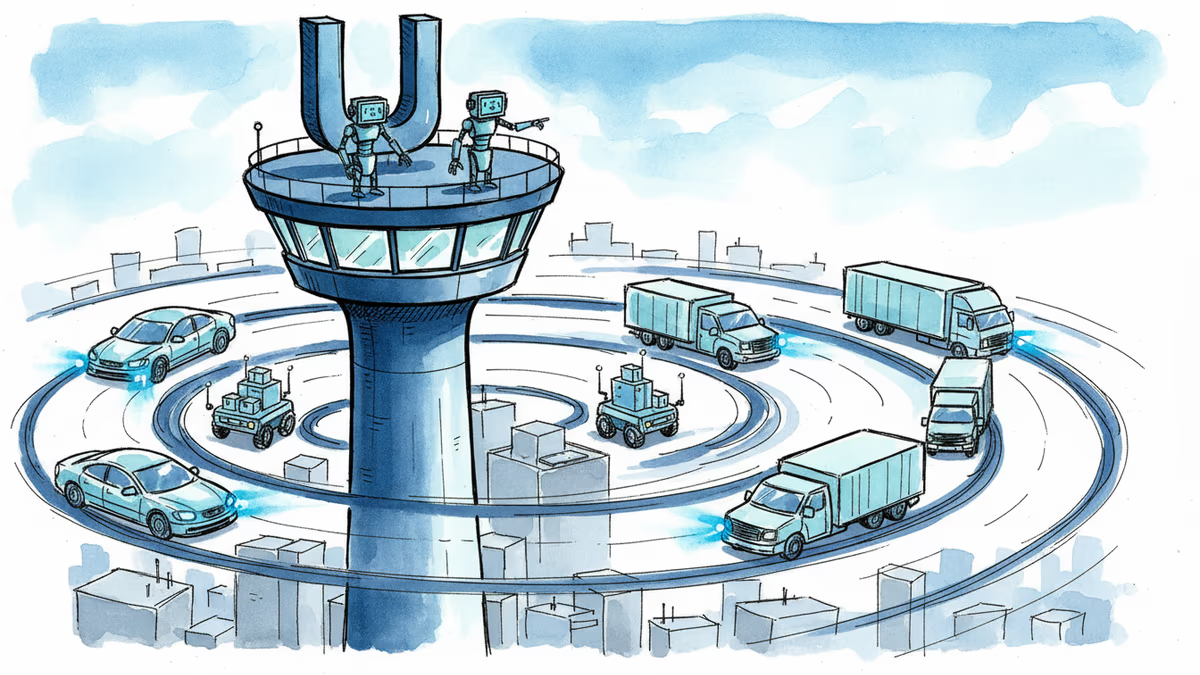
Uber launches Autonomous Solutions division to handle operations for self-driving companies. Is this the missing piece for AV commercialization or Uber's survival strategy?
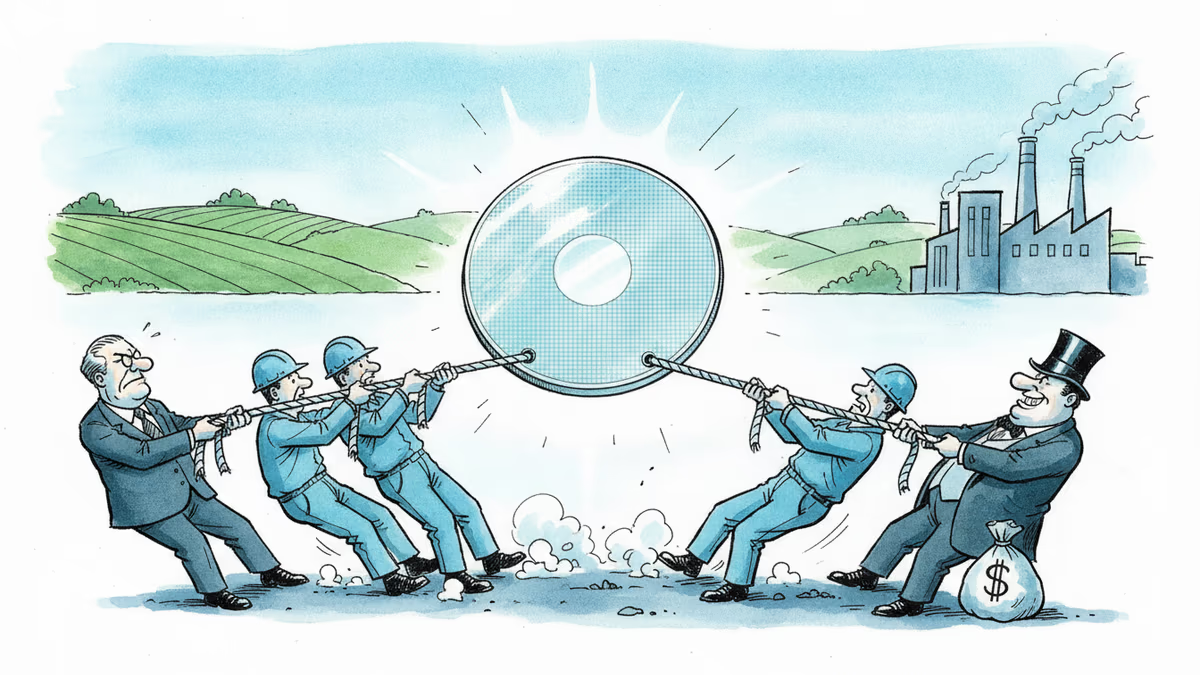
Samsung Electronics' union branch revealed that 84% of survey respondents oppose the government's roughly $290 billion (₩400 trillion) semiconductor megaproject in Gwangju. Government, management, the union and shareholders are all reading the same national project in sharply different ways.
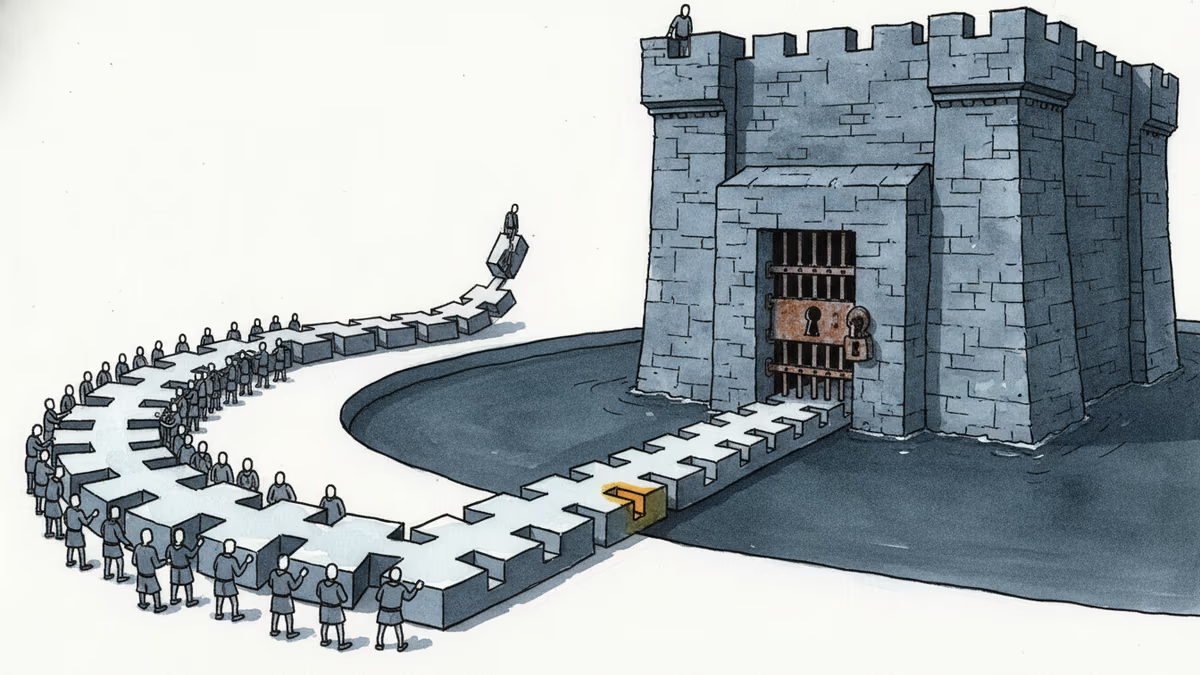
Nvidia shipped roughly a billion RISC-V cores in 2024, then announced it would run CUDA on the open standard. We break down how royalty-free instruction sets and open software stacks are trying to route around CUDA's lock-in. Part 2 of the Semiconductor Sovereignty series.
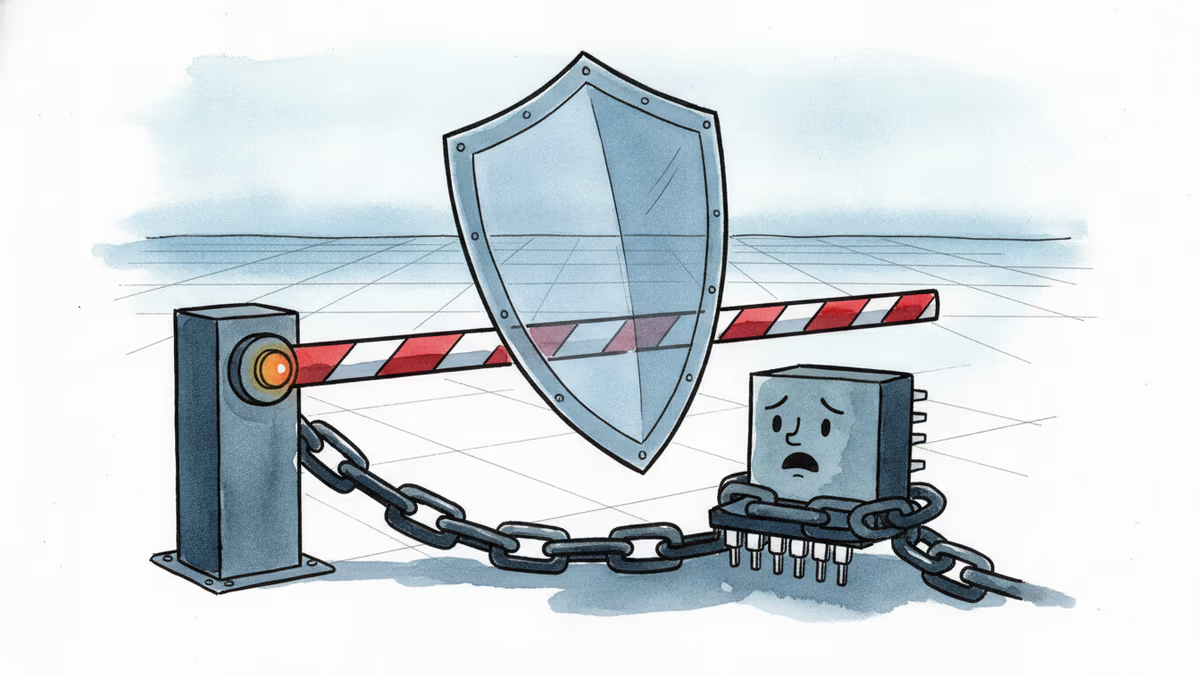
US AI-chip export controls split into three layers in the first half of 2026 — January easing, a May crackdown on circumvention, and a pending bill. Nvidia erased China from its guidance and still posted a record $81.6 billion quarter. A look at the export policy that both shields and cages it.
Uber launches Autonomous Solutions division to handle operations for self-driving companies. Is this the missing piece for AV commercialization or Uber's survival strategy?
Samsung Electronics' union branch revealed that 84% of survey respondents oppose the government's roughly $290 billion (₩400 trillion) semiconductor megaproject in Gwangju. Government, management, the union and shareholders are all reading the same national project in sharply different ways.
Nvidia shipped roughly a billion RISC-V cores in 2024, then announced it would run CUDA on the open standard. We break down how royalty-free instruction sets and open software stacks are trying to route around CUDA's lock-in. Part 2 of the Semiconductor Sovereignty series.
US AI-chip export controls split into three layers in the first half of 2026 — January easing, a May crackdown on circumvention, and a pending bill. Nvidia erased China from its guidance and still posted a record $81.6 billion quarter. A look at the export policy that both shields and cages it.
Thoughts
Share your thoughts on this article
Sign in to join the conversation