
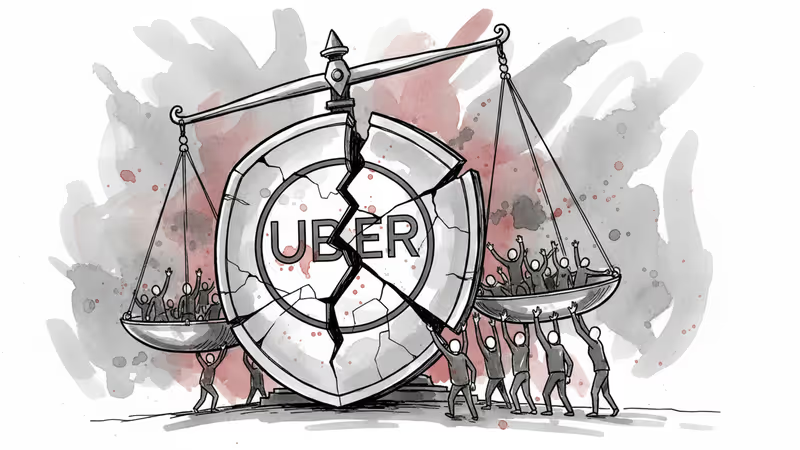
Uber Loses $8.5M Sexual Assault Case: A Crack in Big Tech's Armor?
Federal jury holds Uber liable for driver's sexual assault of passenger, potentially affecting 3,000+ similar cases. What this means for gig economy accountability.
A Phoenix federal jury just delivered a verdict that could reshape how we think about corporate responsibility in the gig economy. Uber has been ordered to pay $8.5 million in damages to Jaylynn Dean, who was sexually assaulted by her Uber driver in November 2023. But the money isn't the real story here—it's what this verdict means for over 3,000 similar cases waiting in the wings.
The Foundation: What Actually Happened
Dean was traveling to her hotel when her Uber driver diverted from the route and sexually assaulted her. The case hinged on a fundamental question that has plagued the gig economy since its inception: Is Uber just a technology platform connecting riders with independent contractors, or does it bear responsibility for the actions of drivers using its service?
For years, Uber has maintained its position as a neutral intermediary. The company argued it cannot be held liable for criminal acts committed by drivers who are technically independent contractors, not employees. This defense has been Uber's shield against countless safety-related lawsuits, allowing it to operate with relatively limited liability exposure.
The Phoenix jury disagreed. Their verdict suggests that Uber's control over the platform—from driver screening to ride routing—creates a duty of care that extends beyond simply providing an app.
The Bigger Picture: Why This Matters Now
This isn't just about one case or even one company. The verdict arrives at a critical moment when regulators worldwide are scrutinizing big tech's approach to user safety. From Facebook's content moderation failures to Amazon's marketplace counterfeit problems, there's growing pressure on platforms to take responsibility for what happens on their services.
The timing is particularly significant given the 3,000+ similar cases consolidated in federal court. If this verdict sets a precedent, Uber could face billions in potential damages. More importantly, it might force fundamental changes to how gig economy companies operate.

Consider the ripple effects: Enhanced background checks, real-time monitoring systems, mandatory safety training, or even direct employment relationships with drivers. Each change would increase costs but potentially improve safety outcomes.
Multiple Stakeholders, Multiple Perspectives
From Uber's perspective, this verdict threatens the entire gig economy model. If platforms become liable for contractor actions, the economic advantages of the independent contractor classification diminish significantly. The company will likely appeal, arguing that holding platforms responsible for criminal acts by third parties creates an impossible standard.
Passenger advocates see this differently. They argue that companies profiting from facilitating interactions between strangers have a responsibility to ensure reasonable safety measures. The verdict validates their position that corporate profits shouldn't come at the expense of user safety.
Drivers occupy a complex middle ground. While enhanced safety measures might protect them from false accusations, increased oversight and costs could reduce earning opportunities or force companies to limit driver flexibility.
Legal experts are watching closely because this case could influence platform liability across industries. If Uber can be held responsible for driver actions, what about Airbnb hosts, TaskRabbit workers, or DoorDash deliverers?
The International Context
Different jurisdictions are already moving in various directions on platform liability. The European Union's Digital Services Act places greater responsibility on platforms for content and user safety. Meanwhile, some US states are pushing for reclassification of gig workers as employees, which would naturally increase company liability.
This verdict might accelerate similar legal challenges globally, particularly in markets where Uber faces existing regulatory pressure. It also raises questions about how American legal precedents might influence international platform regulation.
Authors
Related Articles
Uber and WeRide have launched fully driverless robotaxi service in Dubai — no safety operator, real fares. Here's what it means for the global AV race and your next ride.
Uber partners with China's Pony AI and Croatia's Verne to launch Europe's first commercial robotaxi service. Is this a survival strategy or a sign that the ride-hail giant is ceding its future to others?
Nine-month-old Pronto hits $100M valuation by bringing India's informal domestic services online. With 18,000 daily bookings and 10-minute dispatch times, it's reshaping how households access help.
Uber launches Autonomous Solutions division to handle operations for self-driving companies. Is this the missing piece for AV commercialization or Uber's survival strategy?
Uber and WeRide have launched fully driverless robotaxi service in Dubai — no safety operator, real fares. Here's what it means for the global AV race and your next ride.
Uber partners with China's Pony AI and Croatia's Verne to launch Europe's first commercial robotaxi service. Is this a survival strategy or a sign that the ride-hail giant is ceding its future to others?
Nine-month-old Pronto hits $100M valuation by bringing India's informal domestic services online. With 18,000 daily bookings and 10-minute dispatch times, it's reshaping how households access help.
Uber launches Autonomous Solutions division to handle operations for self-driving companies. Is this the missing piece for AV commercialization or Uber's survival strategy?
Thoughts
Share your thoughts on this article
Sign in to join the conversation