
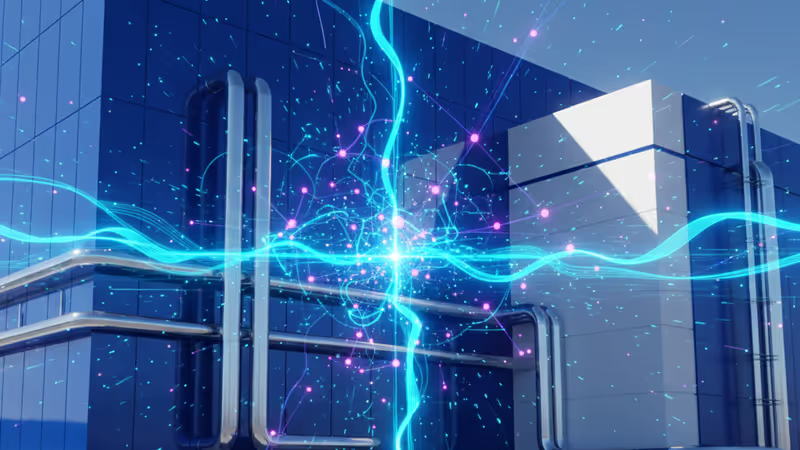
TSMC Arizona Gigafab Expansion: A $165B Bet on the AI Mega-Trend
TSMC accelerates its Arizona gigafab expansion with a $165B investment plan. Driven by AI demand and supported by a new U.S.-Taiwan trade deal, the move reshapes global chip supply.
The heart of the global semiconductor supply chain is pumping faster in the American desert. TSMC is doubling down on its Arizona footprint, signaling a massive ramp-up in spending to ride the AI wave. With a commitment totaling $165 billion in the U.S., the chip giant isn't just building factories—it's constructing a strategic 'gigafab cluster.'
TSMC Arizona Gigafab Expansion and Capex Surge
According to CNBC, TSMC's CFO Wendell Huang expressed a strong conviction regarding the AI trend. He noted the company's stepping up capital expenditures to narrow the supply-demand gap. For 2026, the firm forecasts its capex will rise by over 30% at the midpoint. CEO C.C. Wei also confirmed the purchase of an additional 900 acres in Arizona, ensuring enough space for future flexibility beyond the original six-fab plan.

Trade Agreements and Manufacturing Progress
The expansion coincides with a landmark U.S.-Taiwan trade deal signed on Thursday. The agreement caps tariffs at 15%, down from 20%, and secures $250 billion in direct investments from Taiwanese firms into the U.S. sector. While TSMC denies its plans are a direct result of these government talks, the alignment highlights the deepening tech alliance between Washington and Taipei.
| Facility | Status | Tech/Focus |
|---|---|---|
| Fab 1 | Mass Production | Comparable to Taiwan yields |
| Fab 2 | H2 2027 | Production timeline accelerated |
| Fab 3/4 | Permitting/Construction | Gigafab cluster expansion |
Authors
Related Articles
Samsung and SK unveiled a chip and AI investment package worth thousands of trillions of won on June 29. The headline number swings wildly by outlet, but the real contest isn't capital — it's water and power.

Viral videos show 2026 graduates jeering executives who praise AI at commencement ceremonies. It's not just rudeness — it's a signal about who pays for technological optimism.

Filipino virtual assistants using AI to ghost-manage LinkedIn profiles for executives is now a structured industry. 30 comments a day, fake engagement rings, and a platform struggling to tell real from fabricated.
Two commencement speakers learned the hard way that AI enthusiasm doesn't land well with today's graduates. The backlash reveals a widening gap between tech optimism and Gen Z's economic reality.
Samsung and SK unveiled a chip and AI investment package worth thousands of trillions of won on June 29. The headline number swings wildly by outlet, but the real contest isn't capital — it's water and power.
Viral videos show 2026 graduates jeering executives who praise AI at commencement ceremonies. It's not just rudeness — it's a signal about who pays for technological optimism.
Filipino virtual assistants using AI to ghost-manage LinkedIn profiles for executives is now a structured industry. 30 comments a day, fake engagement rings, and a platform struggling to tell real from fabricated.
Two commencement speakers learned the hard way that AI enthusiasm doesn't land well with today's graduates. The backlash reveals a widening gap between tech optimism and Gen Z's economic reality.
Thoughts
Share your thoughts on this article
Sign in to join the conversation