
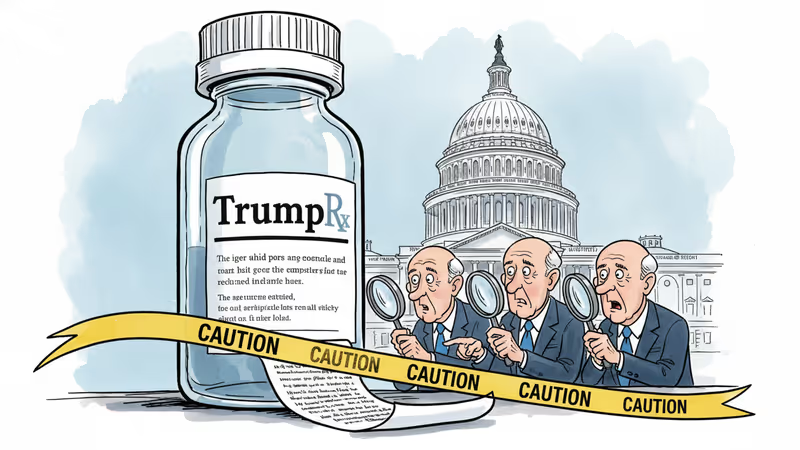
Trump's Prescription Drug Platform Hits Regulatory Roadblock
TrumpRx platform launch delayed as Democratic senators question legality and safety of direct-to-consumer prescription drug sales from pharmaceutical companies.
The Trump administration has quietly pumped the brakes on TrumpRx, its ambitious online platform designed to let Americans buy prescription drugs directly from pharmaceutical companies at discounted prices. The sudden delay comes just as Democratic senators are raising pointed questions about whether the platform would even be legal under federal law.
The Platform That Promised Too Much?
According to Politico, the administration hasn't explained why TrumpRx is being delayed, but the timing is telling. The platform was designed as a direct-to-consumer (DTC) marketplace where patients could bypass traditional pharmacy channels and purchase medications straight from manufacturers—potentially at significant savings.
The concept sounds appealing: cut out the middlemen, reduce costs, and give patients more control over their healthcare spending. But three Democratic senators aren't buying it.
Legal Landmines Ahead
Sens. Dick Durbin (D-Ill.), Elizabeth Warren (D-Mass.), and Peter Welch (D-Vt.) sent a sharp letter Thursday to the Department of Health and Human Services' Office of Inspector General, demanding answers about how the platform would comply with federal anti-kickback laws.
Their concern centers on a fundamental question: When pharmaceutical companies offer direct discounts to patients, does that create an improper incentive that could influence doctors' prescribing decisions? Under federal anti-kickback statutes, it's illegal to offer financial incentives that might sway medical judgment.

"Legitimate concerns about inappropriate prescribing, conflicts of interest, and inadequate care have been raised about the exact types of DTC platforms to which TrumpRx would route patients," the senators wrote.
The Bigger Healthcare Disruption Dilemma
This isn't just about one platform—it's about the collision between healthcare innovation and patient safety regulations. The same tensions are playing out across the industry, from telemedicine platforms to AI-powered diagnostic tools. Every breakthrough that promises to make healthcare more accessible or affordable must navigate a maze of regulations designed to protect patients from exploitation.
The irony is stark: a platform designed to help patients afford their medications might be derailed by laws meant to prevent pharmaceutical companies from improperly influencing treatment decisions. It's the classic regulatory catch-22 that has long plagued American healthcare innovation.
What This Means for Patients
For the millions of Americans struggling with prescription drug costs—some rationing medications or skipping doses entirely—the delay represents another setback in the search for relief. Yet the senators' concerns aren't trivial. Direct-to-consumer pharmaceutical sales could create a system where patients' treatment options are influenced more by discount availability than medical necessity.
The questions extend beyond TrumpRx: How do we balance innovation with safety? Can regulatory frameworks keep pace with technological possibilities? And who ultimately bears the risk when new models fail?
Authors
Related Articles
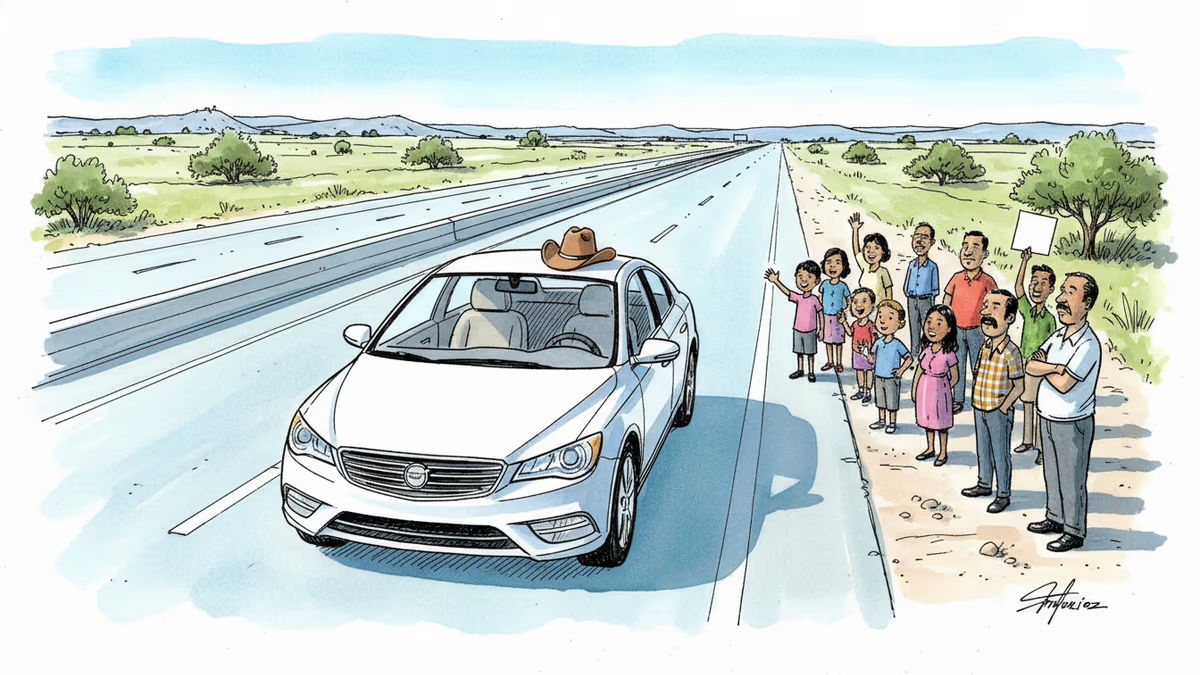
Tesla expanded its driverless robotaxi to Dallas and Houston, even after reporting 14 crashes in Austin. What does this tell us about how autonomous vehicles actually get built?
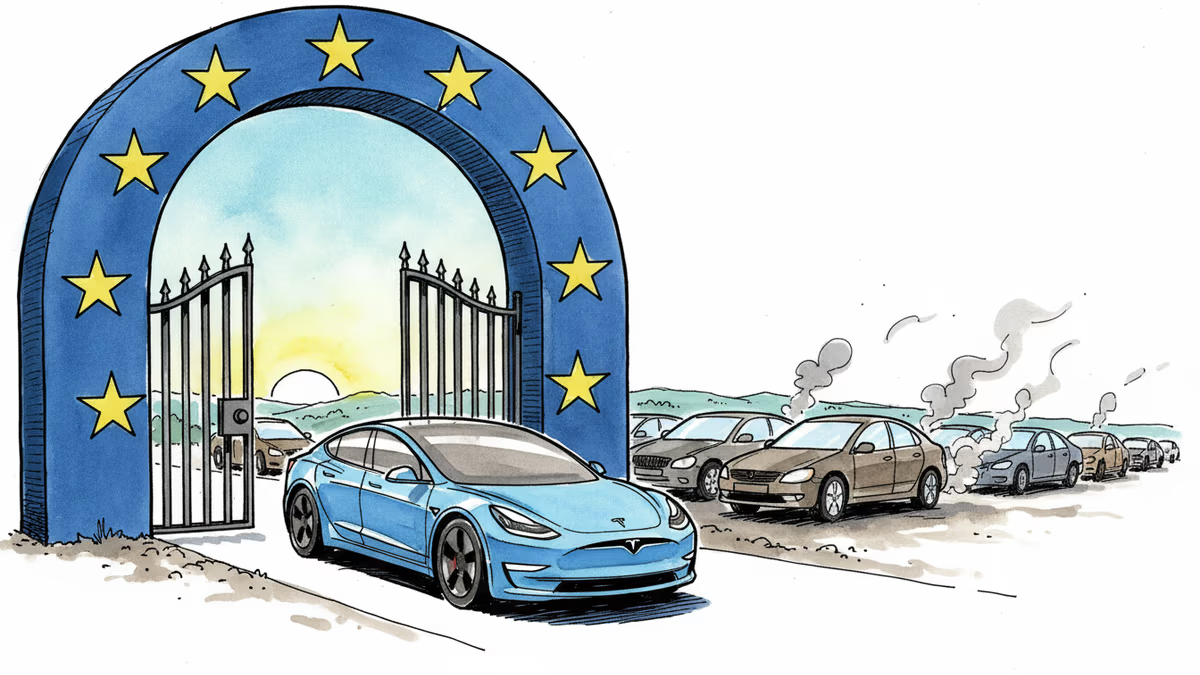
The Netherlands became the first European country to officially approve Tesla's FSD Supervised. With EU's type-approval framework, this could ripple across 27 member states fast.
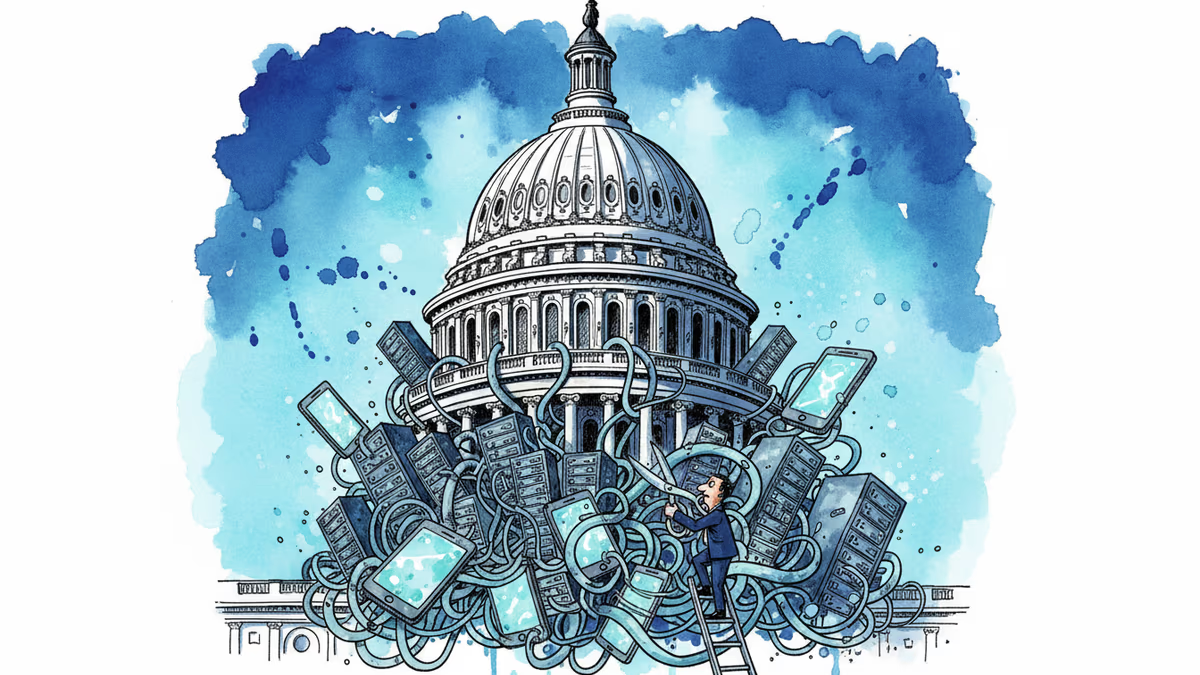
As Washington D.C. enters another political spring, the battle over Big Tech regulation is heating up — and the stakes extend far beyond Silicon Valley.
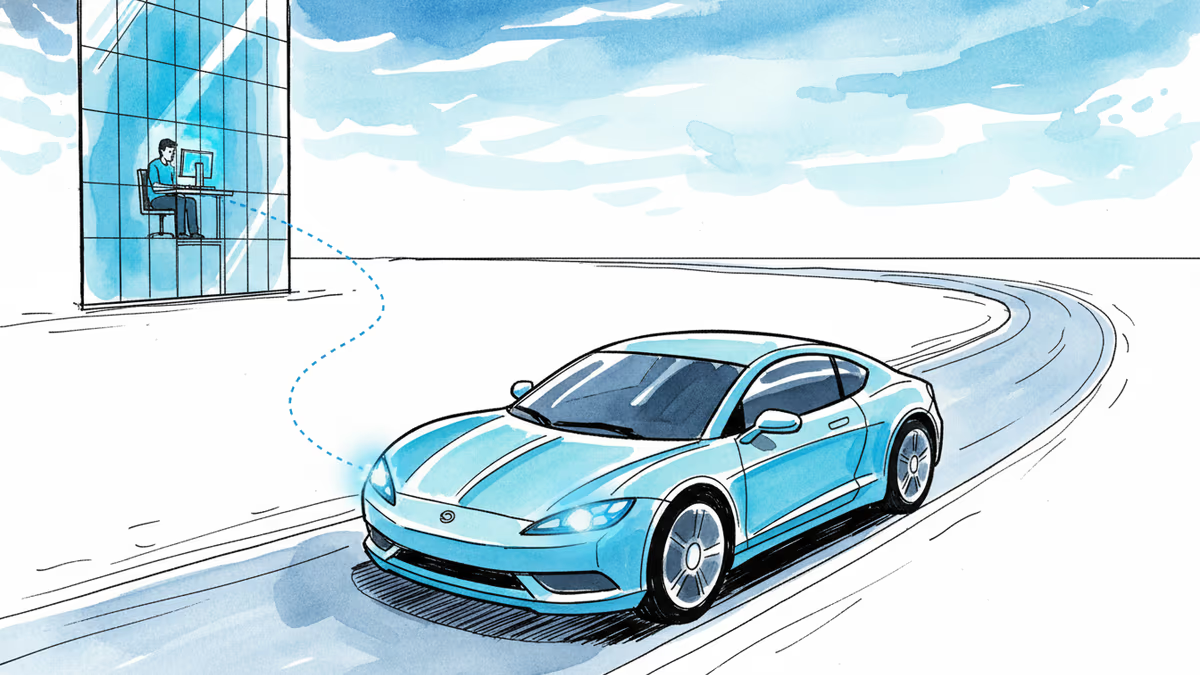
A U.S. Senate investigation found that seven autonomous vehicle companies — including Waymo and Tesla — refused to disclose how often remote operators intervene in their vehicles. Here's why that silence matters.
Tesla expanded its driverless robotaxi to Dallas and Houston, even after reporting 14 crashes in Austin. What does this tell us about how autonomous vehicles actually get built?
The Netherlands became the first European country to officially approve Tesla's FSD Supervised. With EU's type-approval framework, this could ripple across 27 member states fast.
As Washington D.C. enters another political spring, the battle over Big Tech regulation is heating up — and the stakes extend far beyond Silicon Valley.
A U.S. Senate investigation found that seven autonomous vehicle companies — including Waymo and Tesla — refused to disclose how often remote operators intervene in their vehicles. Here's why that silence matters.
Thoughts
Share your thoughts on this article
Sign in to join the conversation