

OpenAI for Healthcare: Secure AI with HIPAA Compliance Ready for Clinical Use
OpenAI launches its healthcare-specific solution featuring enterprise-grade security and HIPAA compliance to streamline clinical workflows.
Doctors spend more time on paperwork than patients. OpenAI wants to flip the script. With the launch of OpenAI for Healthcare, the AI giant is bringing enterprise-grade security and HIPAA compliance to the clinical frontlines.
Solving the OpenAI Healthcare Security Challenge
The new initiative focuses on reducing the crushing administrative burden that plagues modern medicine. By offering HIPAA-compliant infrastructure, OpenAI ensures that sensitive patient data remains protected and isn't used to train public models. This clears a massive hurdle for large-scale hospital adoption.

- Enterprise-grade data encryption
- Full HIPAA compliance for medical data handling
- Optimized clinical workflows to reduce burnout
Efficiency on the Frontlines
Clinicians can now leverage AI for summarizing patient histories and streamlining billing processes. It's not just about speed; it's about accuracy. Early testers report that the AI assists in identifying patterns in medical records that might otherwise be overlooked during a busy shift.
Authors
Related Articles

OpenAI has reorganized for the second time in a month, merging ChatGPT and Codex into a single agentic platform under president Greg Brockman's unified product leadership.
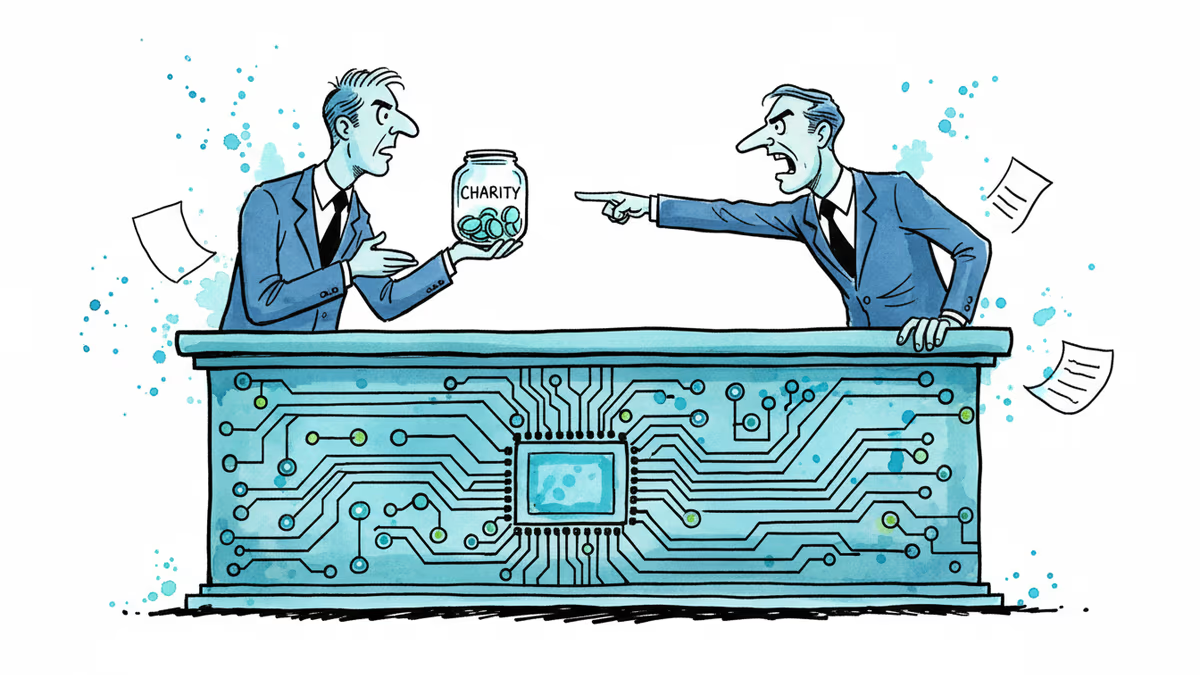
After two weeks of witnesses calling him a liar, OpenAI CEO Sam Altman testified in his own defense, claiming Elon Musk tried to kill the company twice.

Sam Nelson, 19, died after following ChatGPT's advice to mix Kratom and Xanax. His parents are suing OpenAI for wrongful death, raising urgent questions about AI trust, liability, and design.
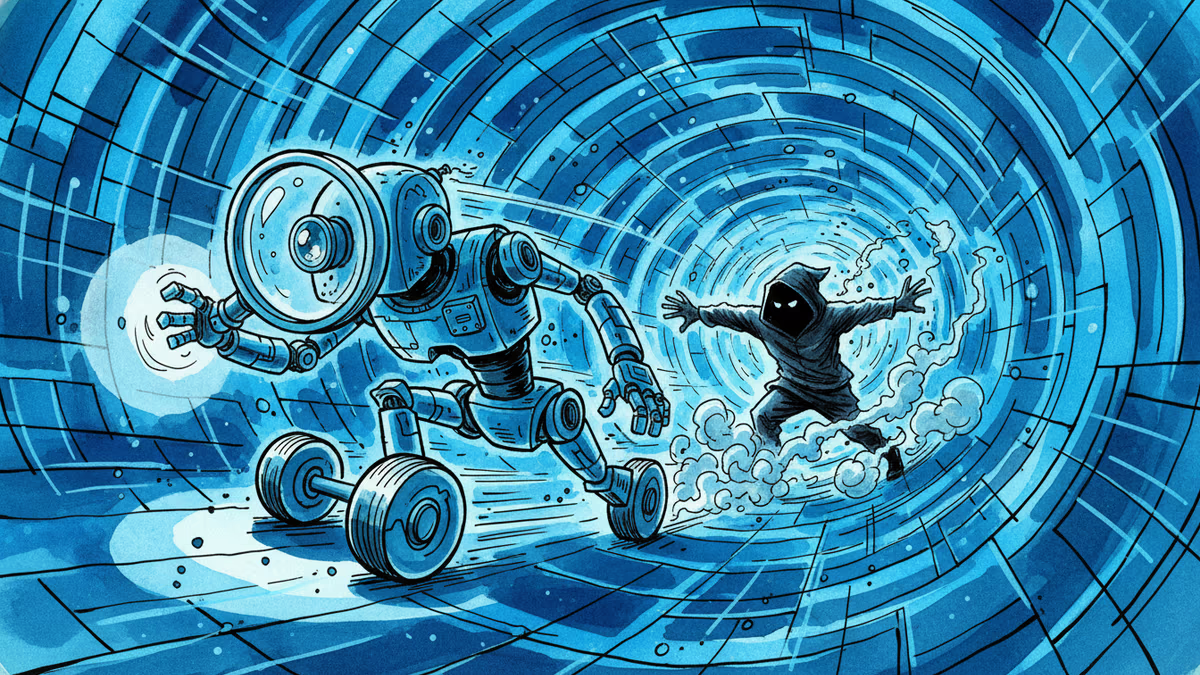
OpenAI's new Daybreak initiative uses the Codex AI agent to find and patch security vulnerabilities before attackers do—putting it in direct competition with Anthropic's secretive Claude Mythos.
OpenAI has reorganized for the second time in a month, merging ChatGPT and Codex into a single agentic platform under president Greg Brockman's unified product leadership.
After two weeks of witnesses calling him a liar, OpenAI CEO Sam Altman testified in his own defense, claiming Elon Musk tried to kill the company twice.
Sam Nelson, 19, died after following ChatGPT's advice to mix Kratom and Xanax. His parents are suing OpenAI for wrongful death, raising urgent questions about AI trust, liability, and design.
OpenAI's new Daybreak initiative uses the Codex AI agent to find and patch security vulnerabilities before attackers do—putting it in direct competition with Anthropic's secretive Claude Mythos.
Thoughts
Share your thoughts on this article
Sign in to join the conversation