
Why Tesla Really Killed Autopilot After 10 Years
Tesla scrapped its decade-old Autopilot system and moved all customers to FSD subscriptions. The move reveals a calculated strategy to boost revenue while dodging regulatory heat.
After 10 years, Tesla just killed Autopilot — the name that put autonomous driving on the map. The basic driver-assistance system that came standard in Tesla vehicles since 2014 is now gone, replaced by a mandatory subscription to Full Self-Driving (FSD).
What looks like simple rebranding is actually a calculated move that kills two birds with one stone: maximize revenue and dodge regulatory bullets.
The Subscription Math That Changes Everything
Last week, Tesla eliminated the $8,000 one-time purchase option for FSD software, pushing all customers toward monthly subscriptions. Previously, buyers got basic Autopilot features (lane-keeping, adaptive cruise control) for free with their vehicle. Now, every autonomous driving feature requires a paid subscription.
The revenue implications are massive. A monthly FSD subscription at $99 generates $1,188 annually per customer. Over a typical 5-year ownership period, that's $5,940 — and potentially much more if customers keep subscribing longer. The one-time $8,000 fee suddenly looks like leaving money on the table.
This shift aligns perfectly with Tesla's repositioning as an AI and robotics company rather than just an automaker. Recurring software revenue is the holy grail for tech valuations, and Tesla needs to prove it can generate predictable income streams beyond vehicle sales.
The timing wasn't coincidental either. This week, Tesla began offering fully driverless robotaxi rides in Austin — no safety driver in the front seat. While still limited and shadowed by chase vehicles, it sends a clear message: Tesla is advancing while competitors struggle.

Regulatory Heat Meets Strategic Retreat
But there's another reason for killing Autopilot, and it's not pretty. In December, a California judge ruled that Tesla engaged in deceptive marketing by overstating Autopilot and FSD capabilities. The company faces a 30-day suspension of its manufacturing and dealer licenses, currently stayed for 60 days to allow compliance.
The "Autopilot" name was always problematic. It implied full automation when the system actually required constant driver attention and hands on the wheel. Consumer confusion led to accidents and regulatory scrutiny that Tesla can no longer ignore.
By retiring the controversial Autopilot brand and consolidating everything under FSD, Tesla hopes to satisfy regulators while simultaneously converting every customer into a paying subscriber. It's a bold gamble that the DMV will accept this olive branch.
The Broader Industry Implications
This move signals a fundamental shift in how automakers will monetize autonomous driving technology. Traditional car companies like Ford, GM, and BMW are watching closely. If Tesla succeeds with this subscription-first approach, expect others to follow.
For consumers, it means the cost of car ownership is about to get more complicated. Beyond the purchase price, monthly software subscriptions could become as routine as paying for Netflix or Spotify. The question is whether customers will accept paying continuously for features they once expected to own outright.
The regulatory angle is equally important. If rebranding helps Tesla avoid sanctions, other companies facing similar scrutiny might adopt the same playbook. But regulators aren't easily fooled — substance matters more than semantics.
Authors
Related Articles
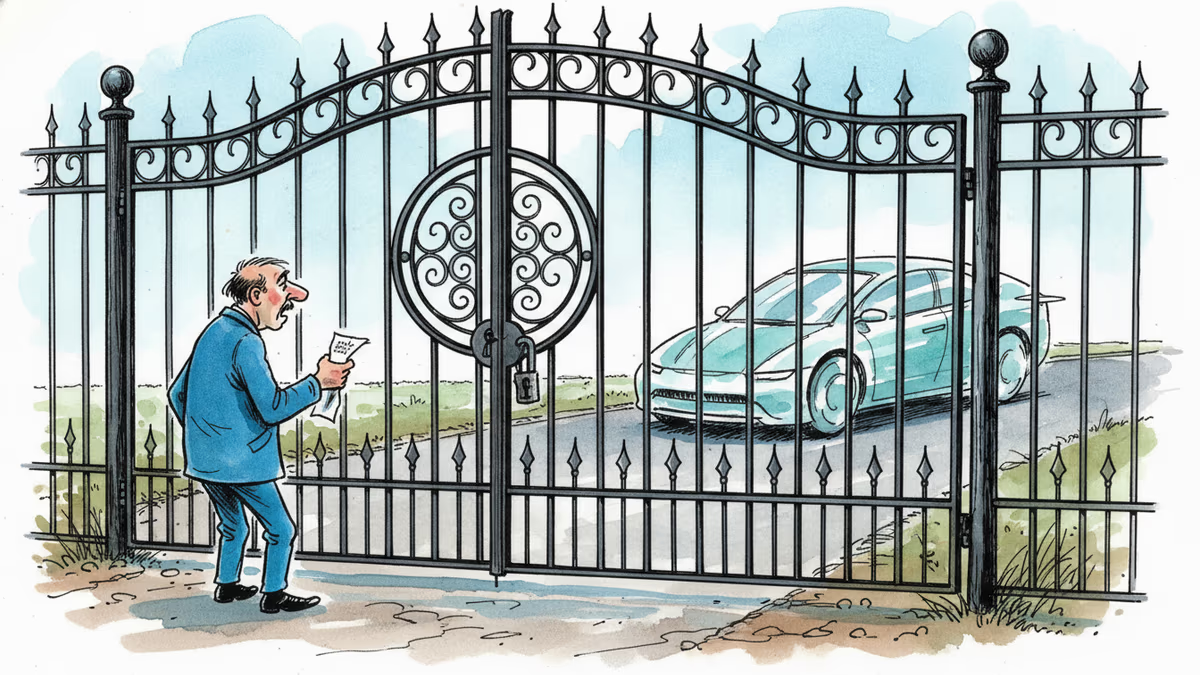
Elon Musk confirmed on Tesla's Q1 2026 earnings call that Hardware 3 vehicles will never receive unsupervised Full Self-Driving — locking out millions who paid for the feature.
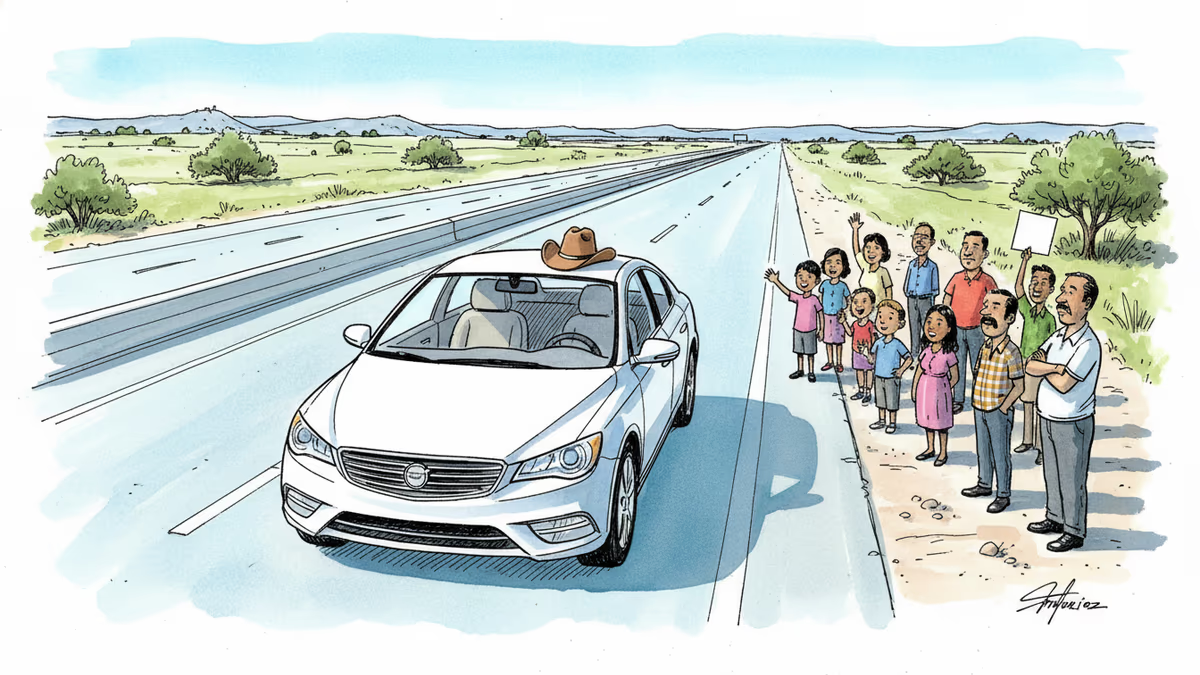
Tesla expanded its driverless robotaxi to Dallas and Houston, even after reporting 14 crashes in Austin. What does this tell us about how autonomous vehicles actually get built?
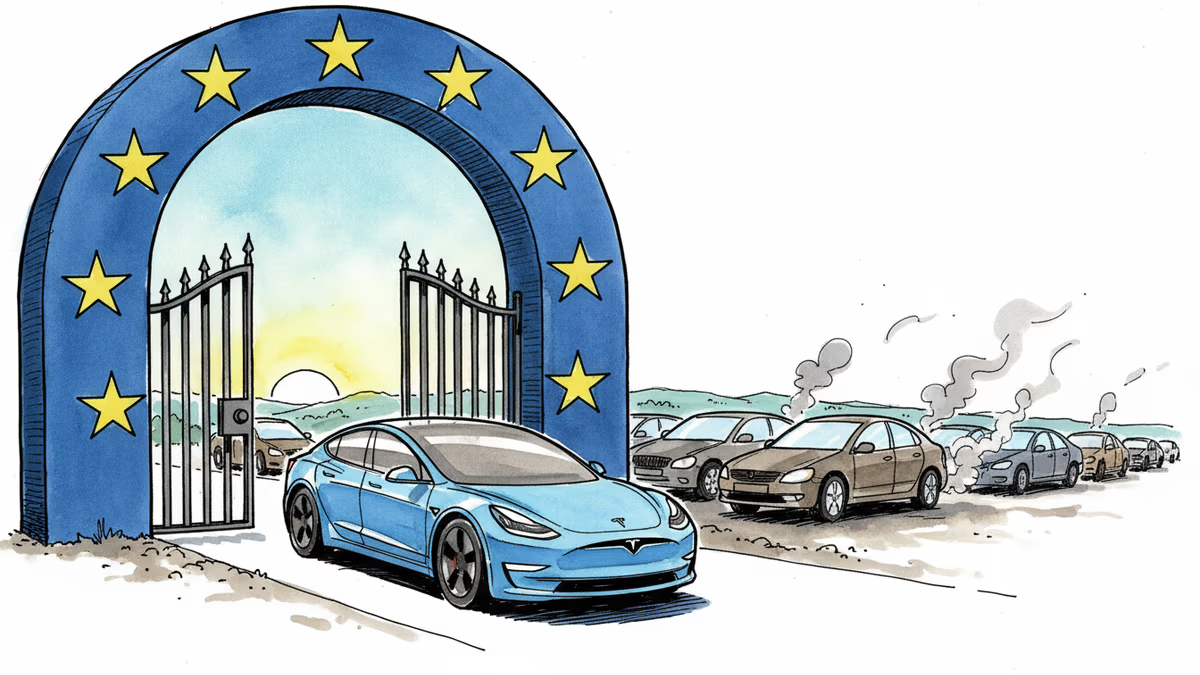
The Netherlands became the first European country to officially approve Tesla's FSD Supervised. With EU's type-approval framework, this could ripple across 27 member states fast.
As Washington D.C. enters another political spring, the battle over Big Tech regulation is heating up — and the stakes extend far beyond Silicon Valley.
Elon Musk confirmed on Tesla's Q1 2026 earnings call that Hardware 3 vehicles will never receive unsupervised Full Self-Driving — locking out millions who paid for the feature.
Tesla expanded its driverless robotaxi to Dallas and Houston, even after reporting 14 crashes in Austin. What does this tell us about how autonomous vehicles actually get built?
The Netherlands became the first European country to officially approve Tesla's FSD Supervised. With EU's type-approval framework, this could ripple across 27 member states fast.
As Washington D.C. enters another political spring, the battle over Big Tech regulation is heating up — and the stakes extend far beyond Silicon Valley.
Thoughts
Share your thoughts on this article
Sign in to join the conversation