
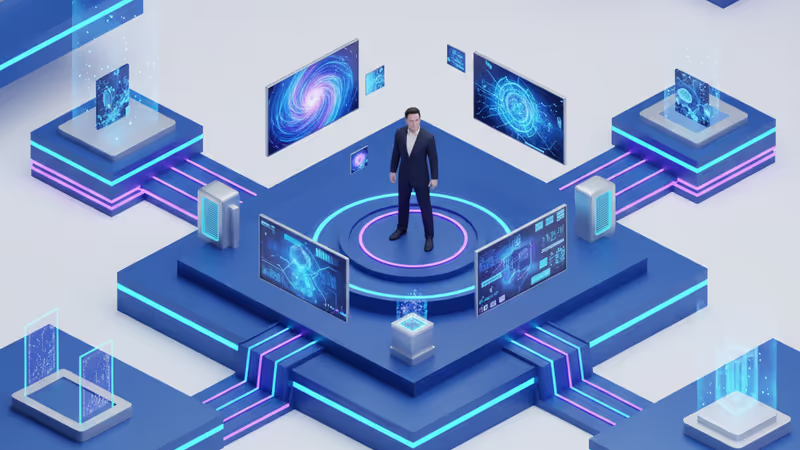
Elon Musk Davos 2026 Predictions: "Better to be an Optimist and Wrong"
Explore Elon Musk's Davos 2026 predictions. From Optimus robot sales in 2027 to AI's super-intelligence by 2035, see how Musk's vision challenges the tech industry's status quo.
"Generally, for quality of life, it's better to err on the side of being an optimist and wrong than a pessimist and right." That's how Elon Musk, CEO of Tesla and SpaceX, summed up his philosophy during his debut at the World Economic Forum in Davos on Thursday, January 22, 2026. While his track record with deadlines is mixed, his ability to move markets remains unmatched.
Elon Musk Davos 2026 Predictions: The Rise of Super-Intelligence
Musk didn't hold back on his AI forecasts. He predicted that AI would become smarter than any individual human by the end of this year or next. By 2035, he claims AI will surpass the collective intelligence of all humanity. This stands in stark contrast to the views of Nvidia CEO Jensen Huang, who recently remarked that "God AI" capable of doing everything is still a biblical scale away.

The transition to a robotics-first company is also accelerating. Musk announced that Tesla's humanoid robot, Optimus, will officially go on sale in 2027. He envisions a future where billions of robots saturate all human needs, creating an "abundance of goods and services" that would expand the global economy beyond any historical precedent.
Starship Reusability and the Robotaxi Push
In the realm of space, Musk repeated his promise that SpaceX's Starship would achieve full reusability by the end of 2026. This breakthrough is expected to slash space travel costs by a "factor of 100," potentially making space freight competitive with air transport. Meanwhile, he expects Tesla's Robotaxi service to be widespread in the US by the end of this year, despite ongoing regulatory hurdles and previous delays.
Authors
Related Articles

Samsung and SK unveiled a chip and AI investment package worth thousands of trillions of won on June 29. The headline number swings wildly by outlet, but the real contest isn't capital — it's water and power.
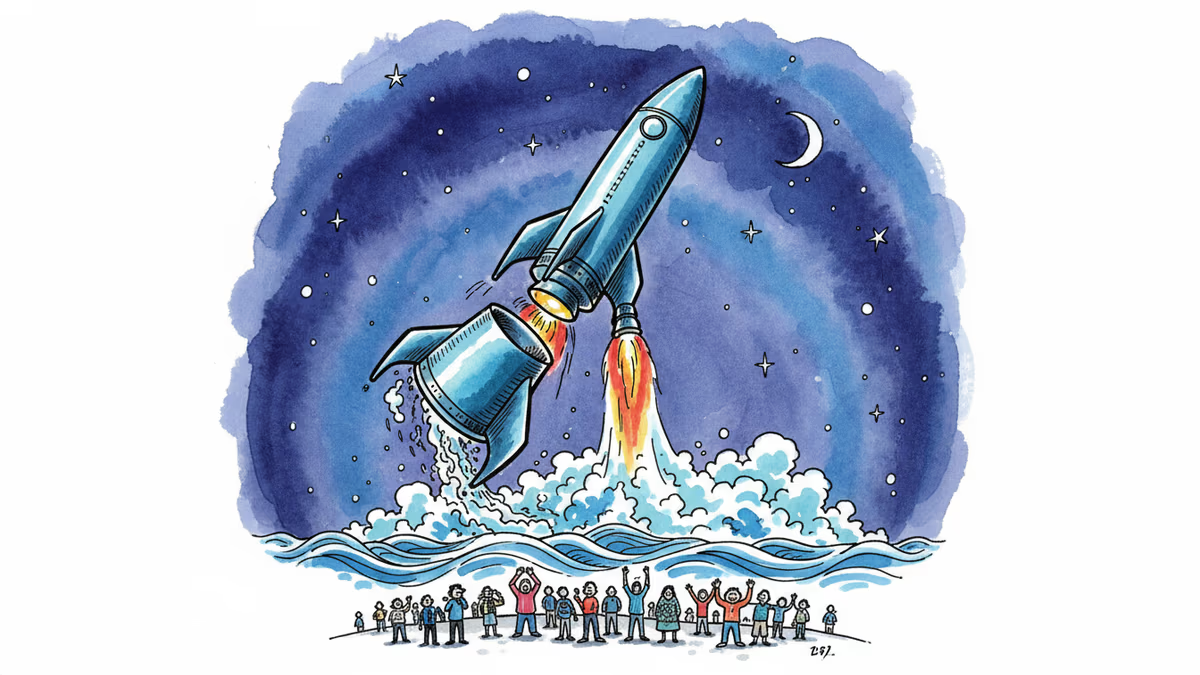
SpaceX's upgraded Starship V3 completed its first test flight, deploying 20 Starlink simulators but losing the Super Heavy booster. With an IPO weeks away, the stakes just got higher.

Viral videos show 2026 graduates jeering executives who praise AI at commencement ceremonies. It's not just rudeness — it's a signal about who pays for technological optimism.
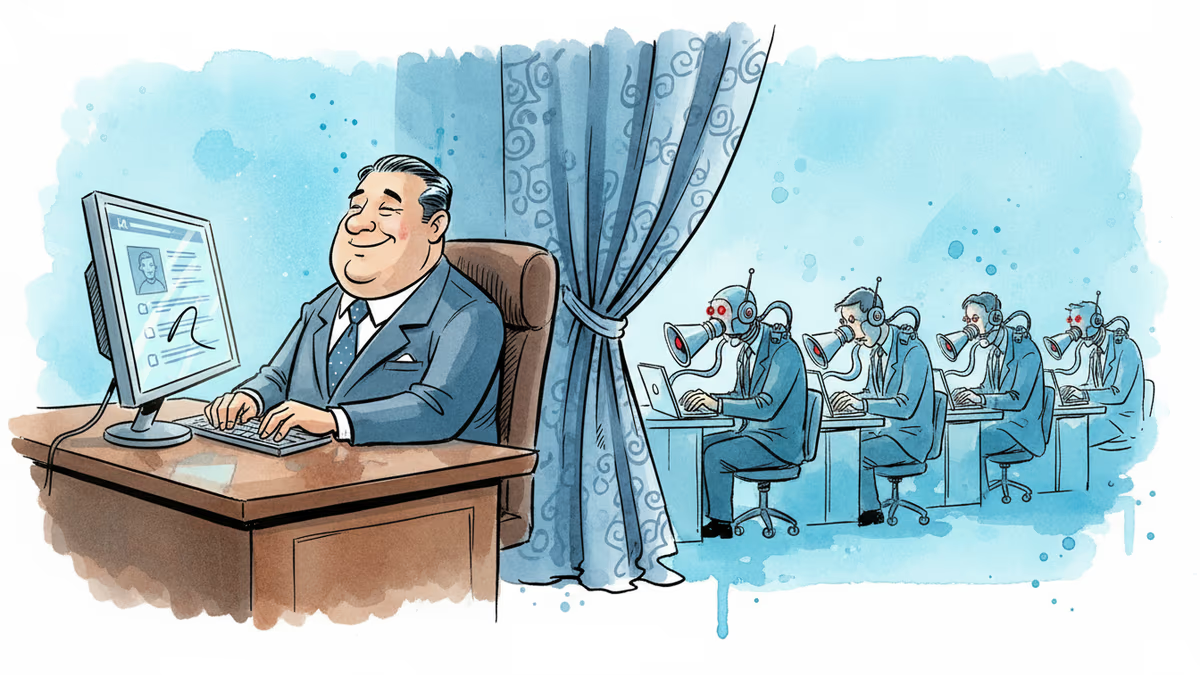
Filipino virtual assistants using AI to ghost-manage LinkedIn profiles for executives is now a structured industry. 30 comments a day, fake engagement rings, and a platform struggling to tell real from fabricated.
Samsung and SK unveiled a chip and AI investment package worth thousands of trillions of won on June 29. The headline number swings wildly by outlet, but the real contest isn't capital — it's water and power.
SpaceX's upgraded Starship V3 completed its first test flight, deploying 20 Starlink simulators but losing the Super Heavy booster. With an IPO weeks away, the stakes just got higher.
Viral videos show 2026 graduates jeering executives who praise AI at commencement ceremonies. It's not just rudeness — it's a signal about who pays for technological optimism.
Filipino virtual assistants using AI to ghost-manage LinkedIn profiles for executives is now a structured industry. 30 comments a day, fake engagement rings, and a platform struggling to tell real from fabricated.
Thoughts
Share your thoughts on this article
Sign in to join the conversation