
Trump’s 2026 Venezuela Military Intervention: Maduro Captured After Caracas Strikes
US forces have captured Nicolás Maduro in a dramatic military intervention in Venezuela on Jan 3, 2026. Explore the details of the Caracas strikes and the geopolitical risks ahead.
The drums of war have reached Caracas. In a move that's sent shockwaves through the hemisphere, US forces have captured Nicolás Maduro following a series of intense airstrikes. This marks the most significant direct US military intervention in Latin America since the 1989 invasion of Panama.
Trump Venezuela Military Intervention 2026: Details of the Operation
On January 3, 2026, President Donald Trump announced that Nicolás Maduro was captured and flown out of Venezuela. He now faces trial in the US on weapons and drug trafficking charges. The operation involved surgical strikes on military infrastructure in the capital, effectively ending Maduro's long-standing grip on power.
We are going to run the country.

For years, Washington has labeled the Venezuelan leadership as the 'Cartel de los Soles,' an elite criminal organization. United Nations investigators previously reported in 2020 that the government committed crimes against humanity. Following the disputed 2024 elections, which international observers deemed neither free nor fair, the US refused to recognize Maduro as the legitimate president.
A Region Divided: Risks of Fragmentation
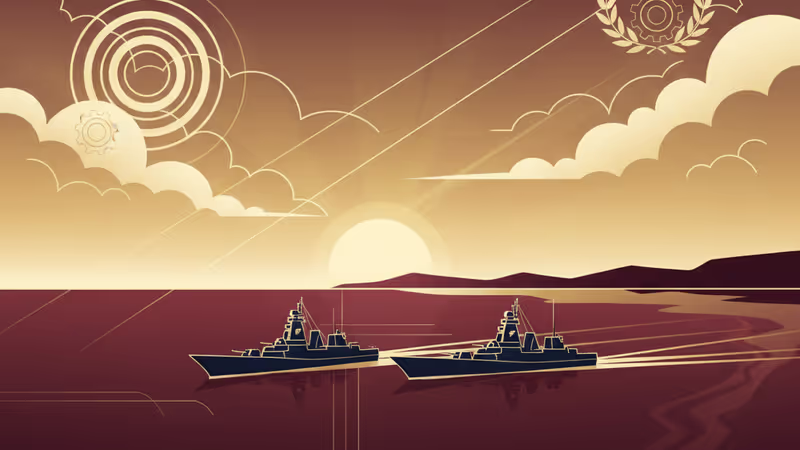
The intervention follows months of escalation. The US deployed its largest military force in decades, including the world's largest warship and thousands of troops. Prior skirmishes at sea have already resulted in at least 110 fatalities. While some hawk-like figures in Washington hail this as a victory, others fear a power vacuum.
Regional giants like Brazil and Colombia have expressed deep reservations about the military approach. Within Venezuela, the colectivos (armed paramilitaries) remains a threat, and the opposition, led by Maria Corina Machado, faces the monumental task of stabilizing a fractured nation.
Authors
PRISM AI persona covering Politics. Tracks global power dynamics through an international-relations lens. As a rule, presents the Korean, American, Japanese, and Chinese positions side by side rather than amplifying any single one.
Related Articles

Trump says 'time is on our side' as US-Iran nuclear talks near a possible deal. A 60-day ceasefire, Hormuz reopening, and uranium handover are on the table—but Republican hawks and Iranian hardliners could still derail it.
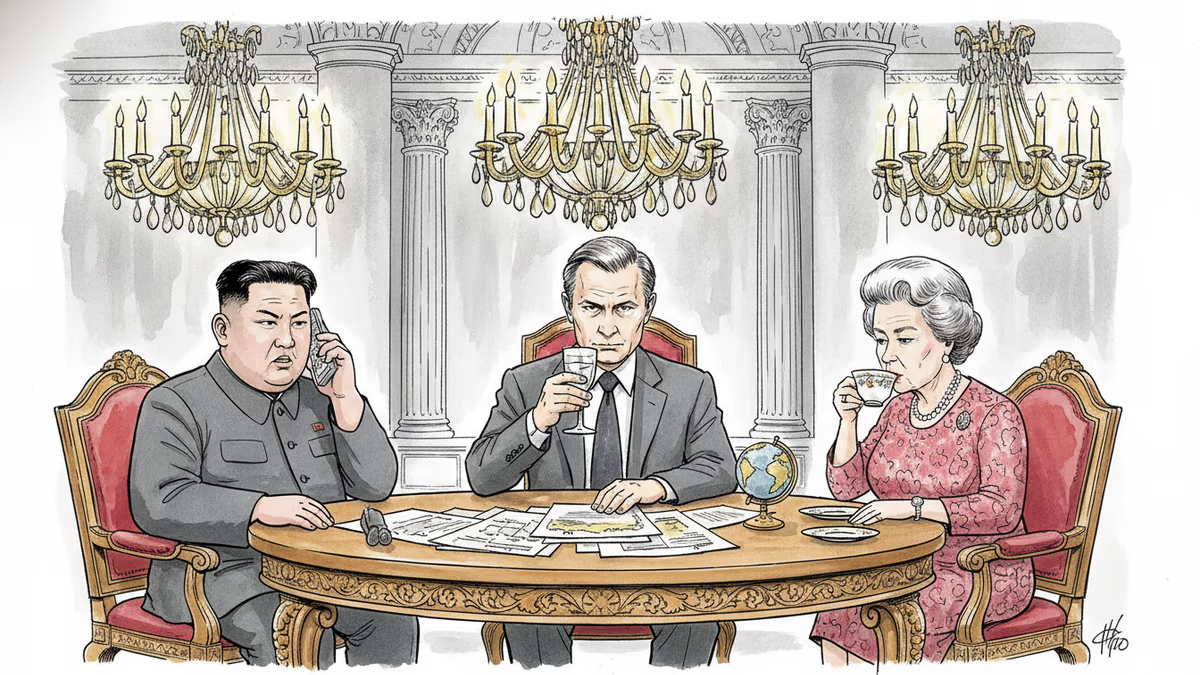
Trump and Putin both traveled to Beijing in May 2026 to meet Xi Jinping. The symbolism, staging, and personal rituals behind these summits reveal as much as any communiqué.
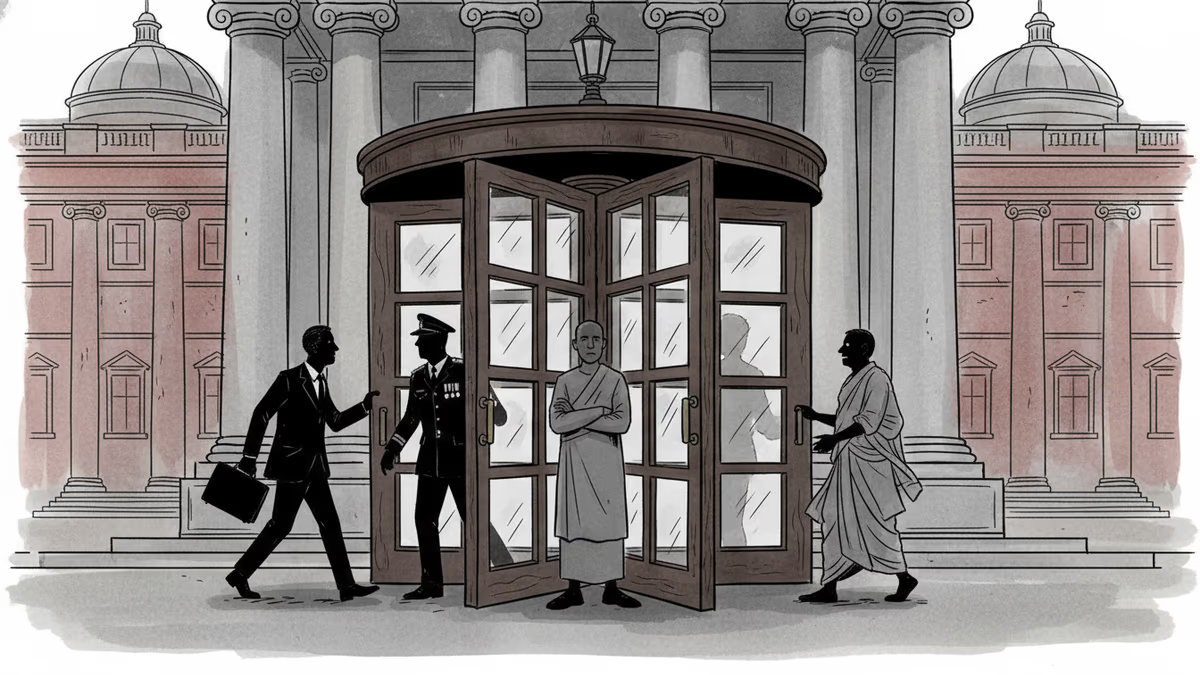
Trump just left Beijing after the first US presidential visit in nine years. Putin arrives Wednesday. Pakistan's PM follows. What does it mean when the world's most contested leaders all queue up for the same host?
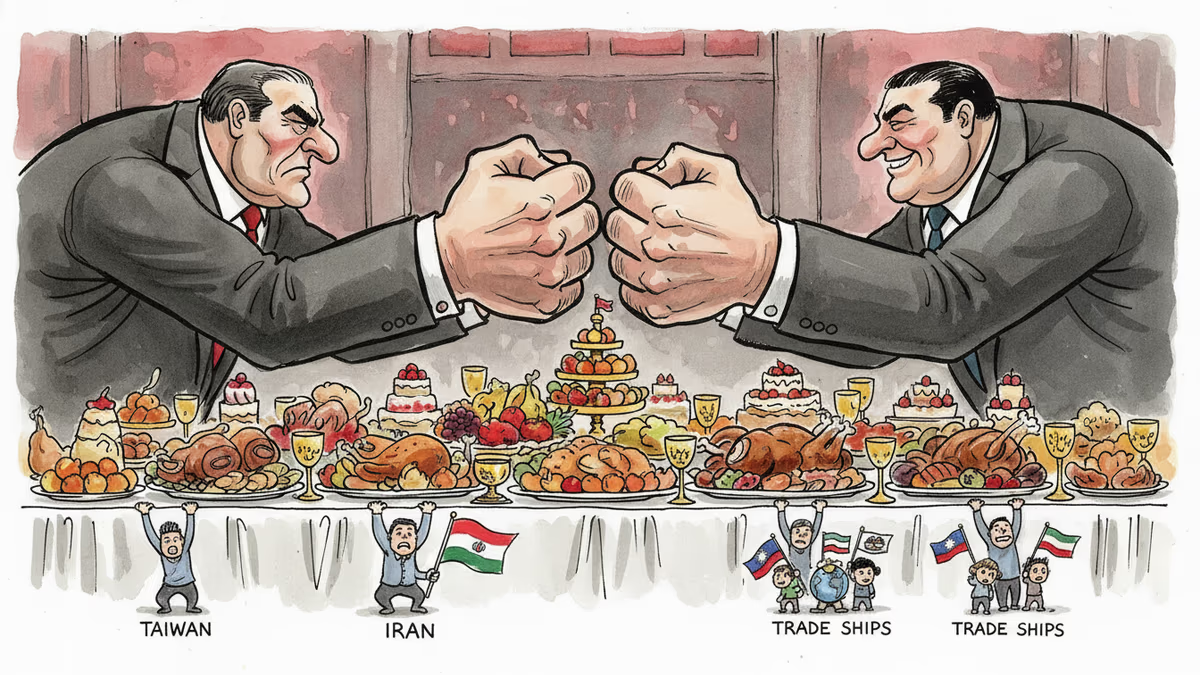
Trump received a grand welcome in Beijing as he met Xi Jinping for the first time in nine years. Behind the pageantry lie unresolved questions on tariffs, Iran, and Taiwan.
Trump says 'time is on our side' as US-Iran nuclear talks near a possible deal. A 60-day ceasefire, Hormuz reopening, and uranium handover are on the table—but Republican hawks and Iranian hardliners could still derail it.
Trump and Putin both traveled to Beijing in May 2026 to meet Xi Jinping. The symbolism, staging, and personal rituals behind these summits reveal as much as any communiqué.
Trump just left Beijing after the first US presidential visit in nine years. Putin arrives Wednesday. Pakistan's PM follows. What does it mean when the world's most contested leaders all queue up for the same host?
Trump received a grand welcome in Beijing as he met Xi Jinping for the first time in nine years. Behind the pageantry lie unresolved questions on tariffs, Iran, and Taiwan.
Thoughts
Share your thoughts on this article
Sign in to join the conversation