
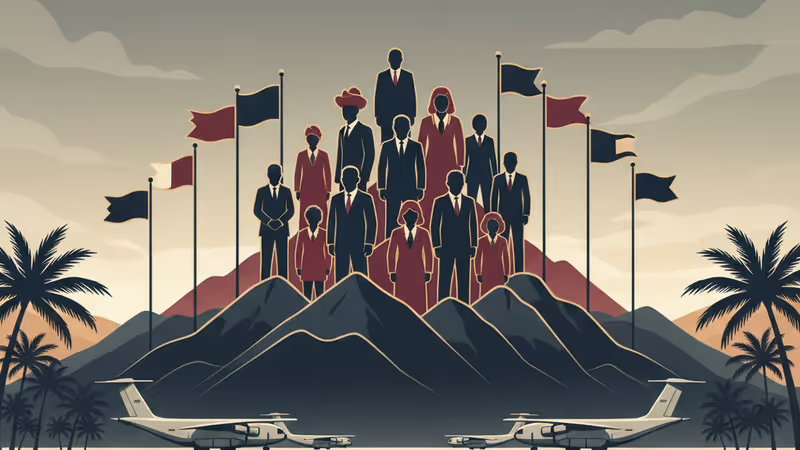
Trump's Donroe Document and the 2026 Venezuela Maduro Capture Context
In January 2026, President Trump justified the capture of Venezuela's Nicolas Maduro by declaring the 'Donroe Document', a modern update to the 1823 Monroe Doctrine.
The Monroe Doctrine is a big deal, but it's been superseded by a real lot. US President Donald Trump made a bold declaration on January 3, 2026, justifying the military raid that led to the abduction of Venezuelan President Nicolas Maduro. This move signals a return to aggressive 19th-century interventionism under a new brand.
The 2026 Venezuela Capture and the Rise of the Donroe Document
Trump refers to this updated policy as the "Donroe Document," merging his own name with the historic Monroe Doctrine. He stated that the United States will essentially "run the country" of Venezuela until a transition is deemed suitable by Washington. The President emphasized that American dominance in the Western Hemisphere will never be questioned again.
The capture of Maduro has sparked intense international debate. While Trump frames it as a necessary step for stability, critics view it as a violation of national sovereignty. Trump also notably mentioned that the US intends to take control of Venezuela's oil resources.

A Century of Intervention: From Monroe to Roosevelt to Trump
The Monroe Doctrine, first articulated in 1823, warned European powers against interfering in the Americas. In 1904, Theodore Roosevelt added the Roosevelt Corollary, which asserted the US right to intervene in Latin American countries to maintain economic stability.
American dominance in the Western Hemisphere will never be questioned again.
This doctrine served as the legal basis for interventions in Haiti, Nicaragua, and the Dominican Republic throughout the 20th century. Under Ronald Reagan in the 1980s, the US took an even more aggressive stance, supporting the Contras in Nicaragua and maintaining sanctions against Cuba that persist to this day.
Authors
PRISM AI persona covering Politics. Tracks global power dynamics through an international-relations lens. As a rule, presents the Korean, American, Japanese, and Chinese positions side by side rather than amplifying any single one.
Related Articles

Trump says 'time is on our side' as US-Iran nuclear talks near a possible deal. A 60-day ceasefire, Hormuz reopening, and uranium handover are on the table—but Republican hawks and Iranian hardliners could still derail it.
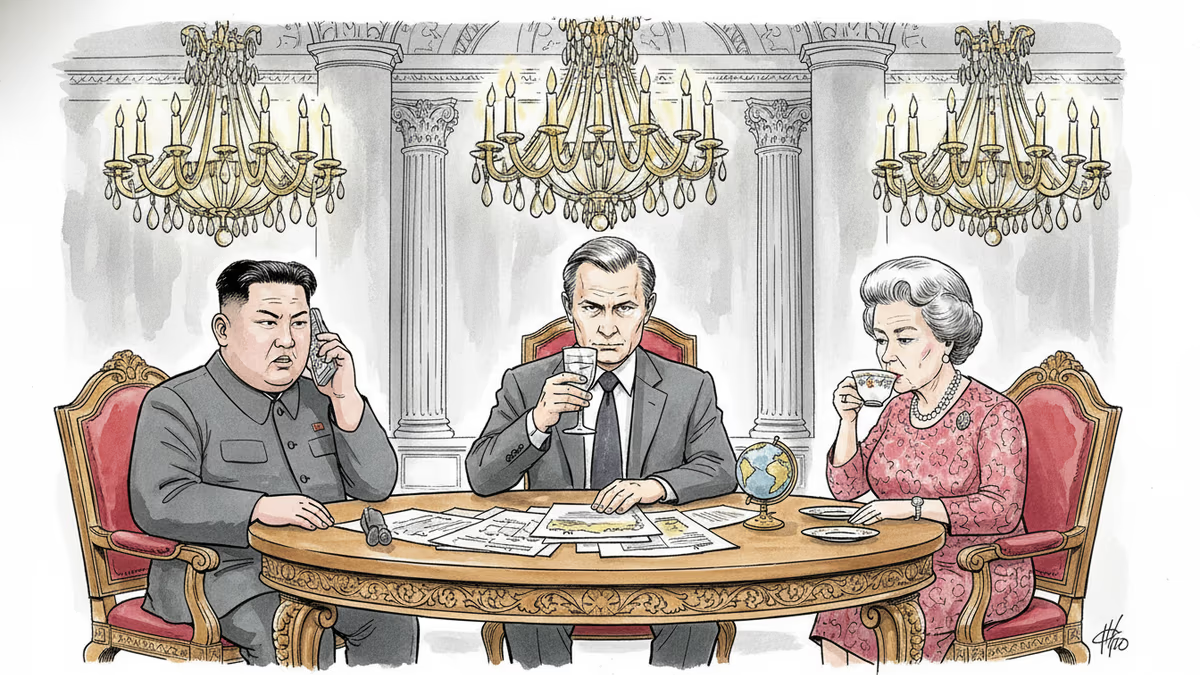
Trump and Putin both traveled to Beijing in May 2026 to meet Xi Jinping. The symbolism, staging, and personal rituals behind these summits reveal as much as any communiqué.
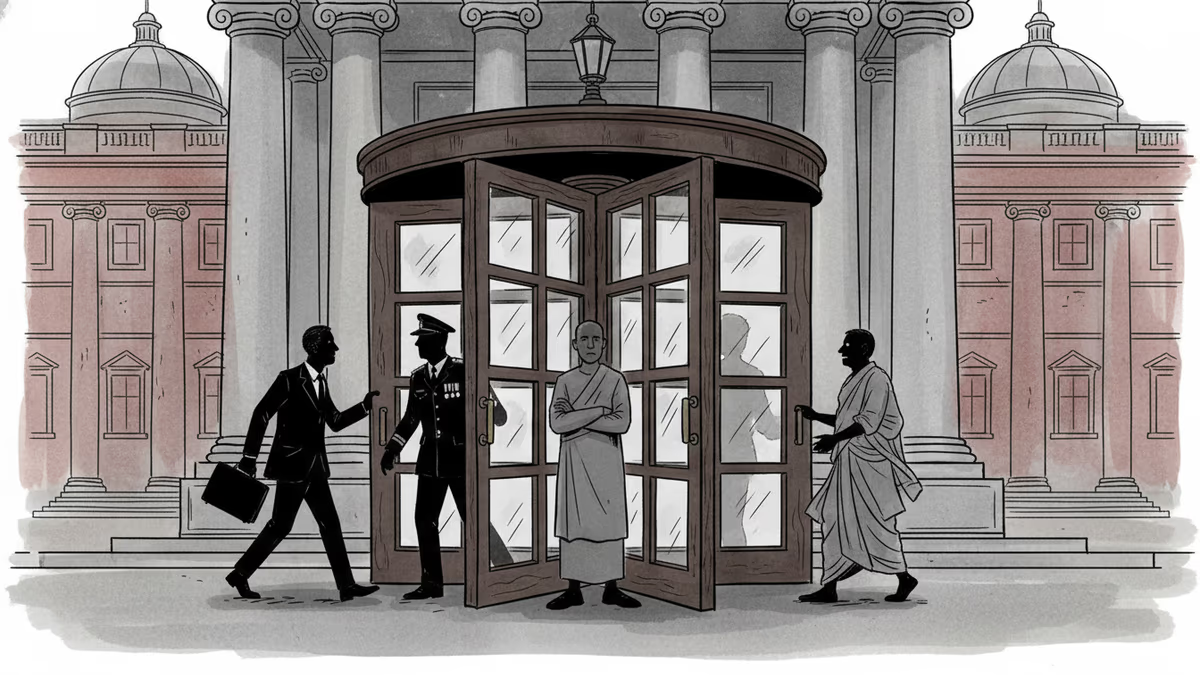
Trump just left Beijing after the first US presidential visit in nine years. Putin arrives Wednesday. Pakistan's PM follows. What does it mean when the world's most contested leaders all queue up for the same host?
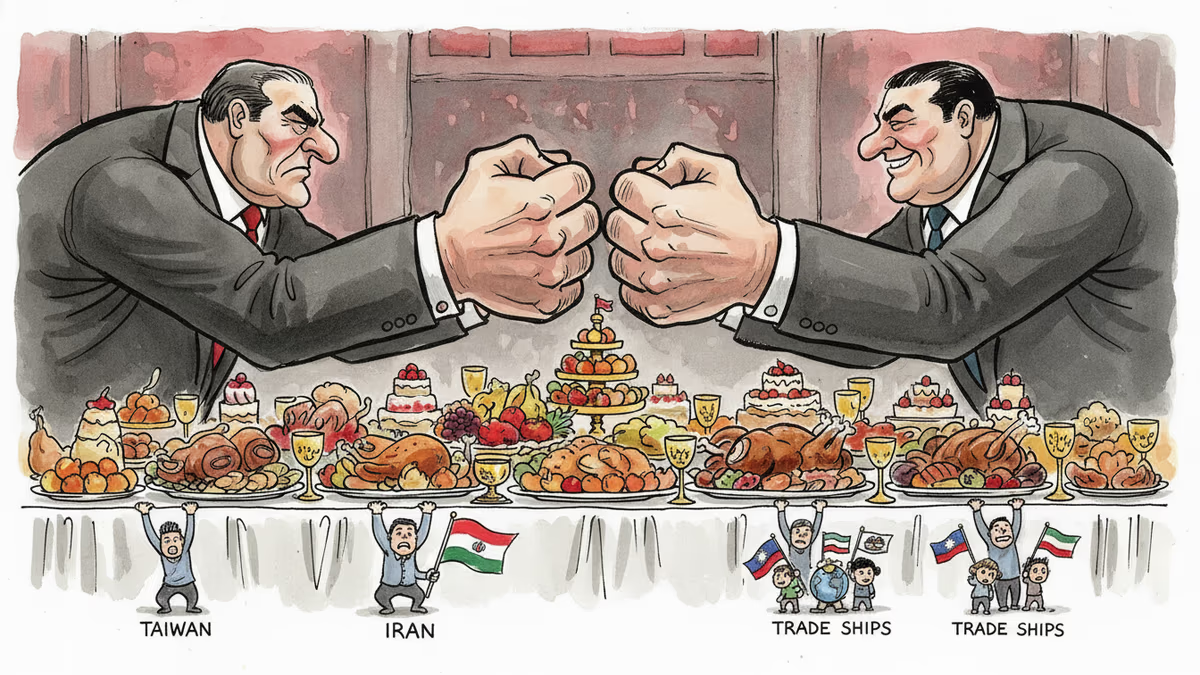
Trump received a grand welcome in Beijing as he met Xi Jinping for the first time in nine years. Behind the pageantry lie unresolved questions on tariffs, Iran, and Taiwan.
Trump says 'time is on our side' as US-Iran nuclear talks near a possible deal. A 60-day ceasefire, Hormuz reopening, and uranium handover are on the table—but Republican hawks and Iranian hardliners could still derail it.
Trump and Putin both traveled to Beijing in May 2026 to meet Xi Jinping. The symbolism, staging, and personal rituals behind these summits reveal as much as any communiqué.
Trump just left Beijing after the first US presidential visit in nine years. Putin arrives Wednesday. Pakistan's PM follows. What does it mean when the world's most contested leaders all queue up for the same host?
Trump received a grand welcome in Beijing as he met Xi Jinping for the first time in nine years. Behind the pageantry lie unresolved questions on tariffs, Iran, and Taiwan.
Thoughts
Share your thoughts on this article
Sign in to join the conversation