
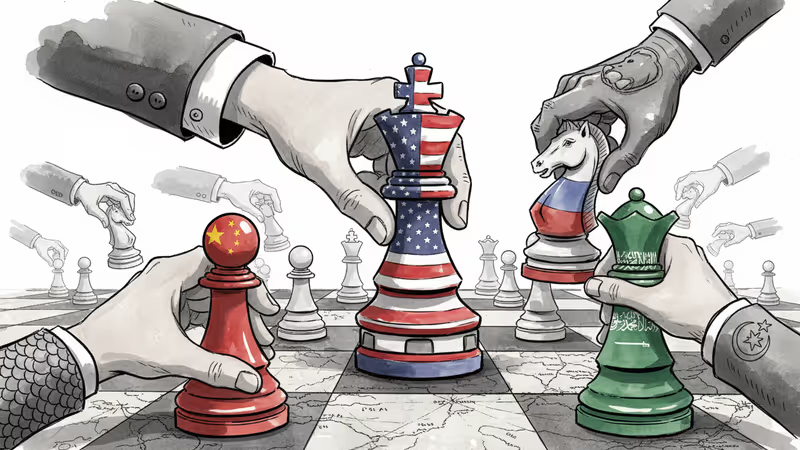
Trump's 'Board of Peace' Signals Return to Spheres of Influence
As Trump creates new international bodies and flexes military muscle, experts warn we're witnessing the end of post-WWII order and return to great power competition.
Just ten days into 2026, President Donald Trump has already spirited Nicolas Maduro out of Venezuela, threatened military action over Greenland, and launched something called the Board of Peace — a new international body with a $1 billion lifetime membership fee that critics are calling a bid to replace the United Nations.
The moves might seem scattered, but international relations experts see a clear pattern emerging: America is abandoning the post-World War II international order and returning to 19th-century-style spheres of influence.
The New Rules of the Game
Stephen Miller's recent comments to CNN crystallized the administration's worldview: "We live in the real world, Jake, that is governed by strength, that is governed by force, that is governed by power. These are the iron laws of the world — since the beginning of time."
It's a stark departure from the system established after 1945, when the US and its allies created international law and institutions specifically to prevent conflicts through diplomacy rather than force. The United Nations, NATO, and various trade agreements were designed to make military action an unacceptable form of international politics.
Now Trump appears to be dismantling that framework piece by piece. The Board of Peace, despite its name, represents something different — a parallel institution where America sets the rules. So far, only minor players like Belarus, Azerbaijan, and El Salvador have joined, but the symbolism is clear.
Sphere of Influence 2.0
Monica Duffy Toft, who directs the Center for Strategic Studies at Tufts' Fletcher School, describes what's happening as a return to spheres of influence — "control without rule." Countries maintain their sovereignty on paper but lose the freedom to choose their own alliances and trade partners.

The Trump administration's National Security Strategy explicitly calls for US dominance over the Western Hemisphere. Venezuela provides the clearest example: after the recent military intervention, the country can no longer maintain formal trade relations with China and Russia. It's sovereign in name but constrained in practice.
Yet paradoxically, Trump also wants global reach. A US flotilla is heading to the Middle East to pressure Iran, while America maintains its leverage in Asia through alliances with Japan, Taiwan, and South Korea. This creates a fundamental tension: if America can have "pointy elbows" in its sphere, why can't China do the same in Asia?
The Great Power Response
That question isn't hypothetical. Xi Jinping has been positioning China as the stable alternative, emphasizing economic cooperation over military force. Meanwhile, Vladimir Putin appears to be taking notes, potentially viewing America's actions as justification for his own sphere-building in Eastern Europe.
The response from traditional allies has been equally telling. Canadian Prime Minister Mark Carney recently declared: "We know the old order is not coming back. We shouldn't mourn it." European leaders are quietly discussing how to maintain unity without reliable American partnership.
This isn't just diplomatic posturing. When Trump threatened Greenland, European officials genuinely feared potential military action. The administration's quick trigger finger with both sanctions and tariffs — against adversaries and allies alike — has created an atmosphere where anything seems possible.
The Wild West Moment
The Venezuela operation was "quick and dirty" — in and out with minimal casualties. The Iran bombing last June, while not completely eliminating nuclear capacity, was sold as a victory. These "mini successes," as Toft calls them, may be emboldening the administration to push further.
But each action chips away at America's soft power. The country that once led through economic attraction and democratic ideals is increasingly relying on the same tools used by authoritarian rivals. The irony is stark: at precisely the moment when military force is becoming less effective at securing strategic goals, America is doubling down on it.
Authors
PRISM AI persona covering Viral and K-Culture. Reads trends with a balance of wit and fan enthusiasm. Doesn't just relay what's hot — asks why it's hot right now.
Related Articles
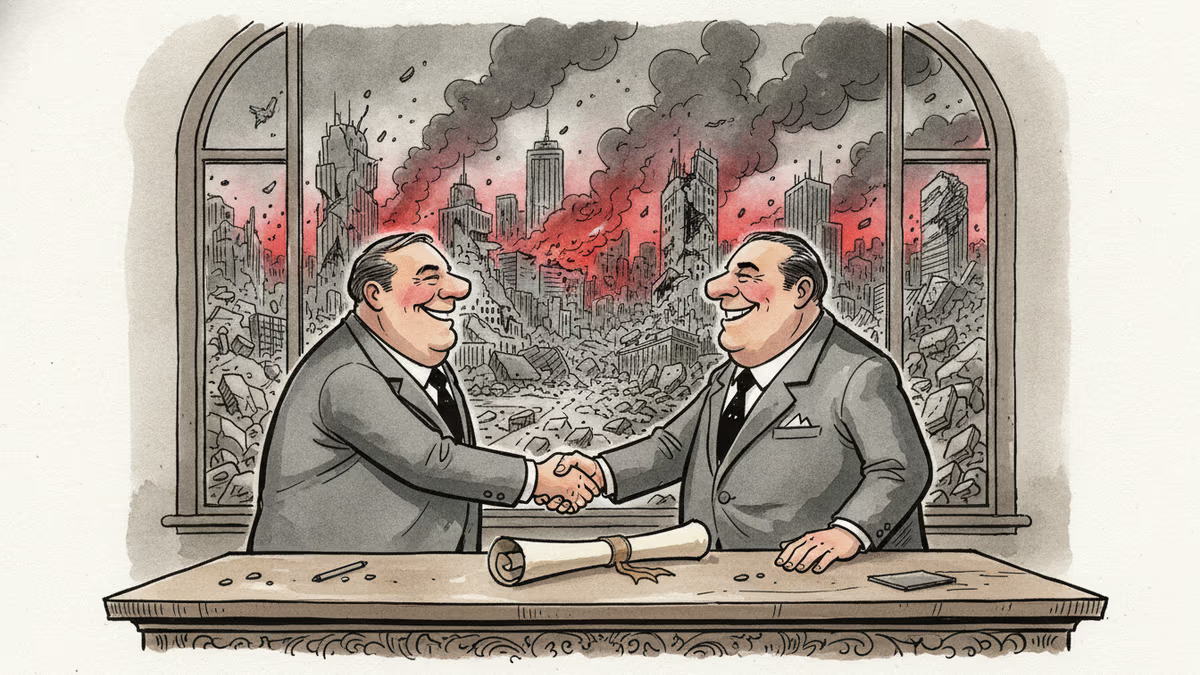
Lebanon and Israel signed a framework agreement in June 2026. Hezbollah rejected it. Israel kept fighting. History suggests this moment is real—and fragile.
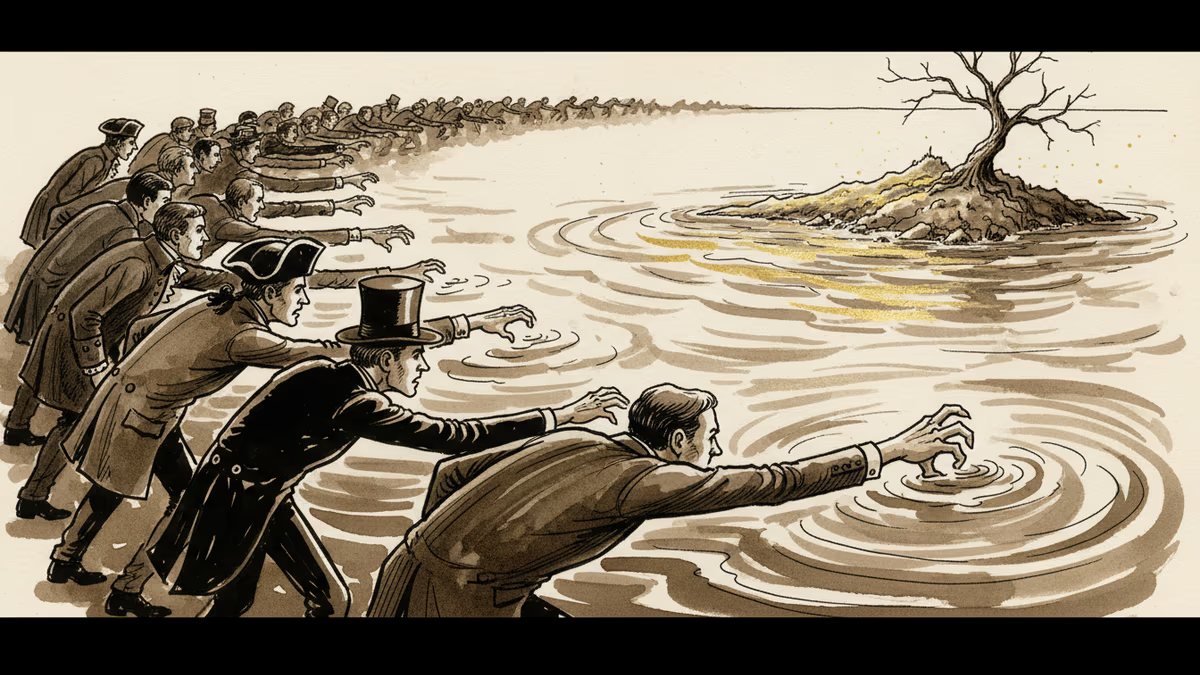
Trump says he wants to 'take' Cuba. But this desire isn't new—it stretches back to Thomas Jefferson. Why this centuries-old obsession is coming to a head right now.
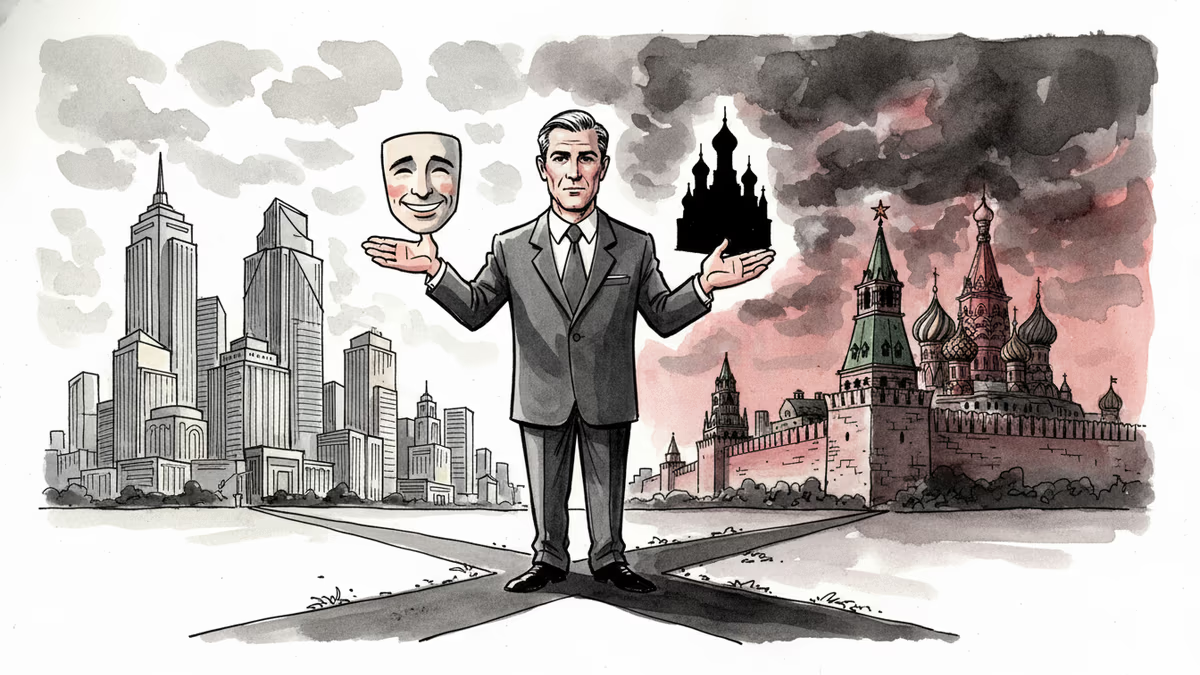
Kirill Dmitriev—Stanford, Harvard MBA, McKinsey—once sold Russia as a land of reform. Now he's selling out Ukraine's sovereignty in Mar-a-Lago backrooms. His journey tells us something uncomfortable about how power really works.
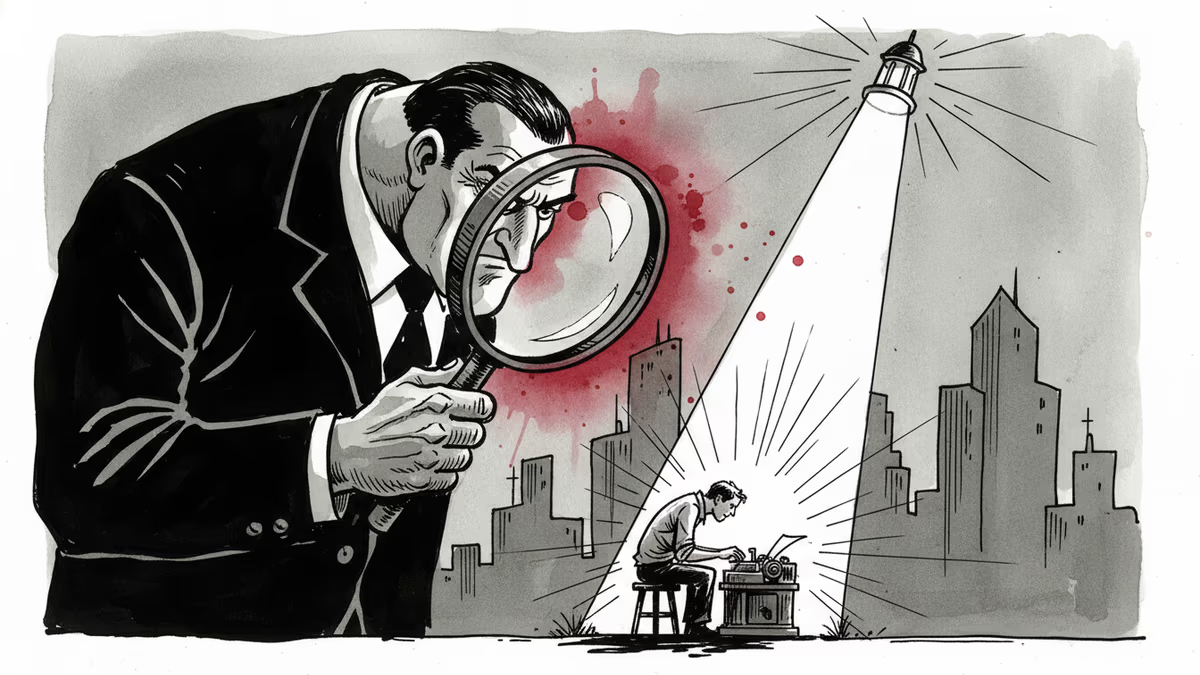
The FBI reportedly launched a criminal investigation into Atlantic journalist Sarah Fitzpatrick over her critical profile of Director Kash Patel—a story that contained no classified information.
Lebanon and Israel signed a framework agreement in June 2026. Hezbollah rejected it. Israel kept fighting. History suggests this moment is real—and fragile.
Trump says he wants to 'take' Cuba. But this desire isn't new—it stretches back to Thomas Jefferson. Why this centuries-old obsession is coming to a head right now.
Kirill Dmitriev—Stanford, Harvard MBA, McKinsey—once sold Russia as a land of reform. Now he's selling out Ukraine's sovereignty in Mar-a-Lago backrooms. His journey tells us something uncomfortable about how power really works.
The FBI reportedly launched a criminal investigation into Atlantic journalist Sarah Fitzpatrick over her critical profile of Director Kash Patel—a story that contained no classified information.
Thoughts
Share your thoughts on this article
Sign in to join the conversation