
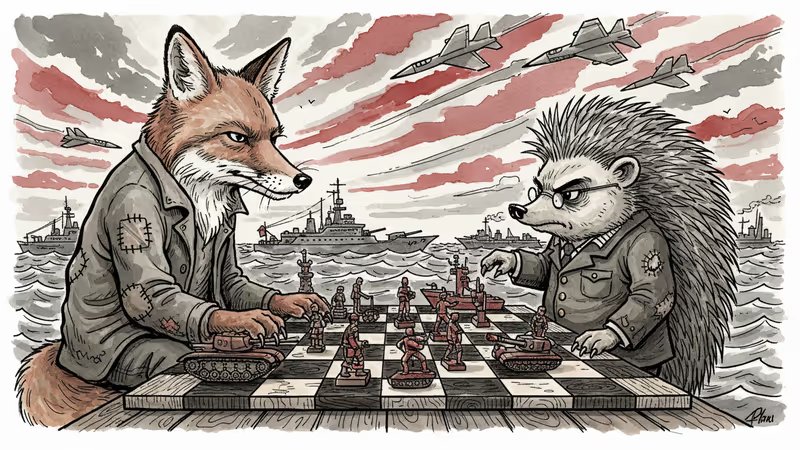
The Fox vs The Hedgehog: Trump and Khamenei's Fatal Dance
As US military assets surround Iran, two aging leaders with opposing worldviews face off in a confrontation that could reshape the Middle East forever.
Ten advanced warships and dozens of supersonic fighter jets now encircle Iran, carrying 20,000-pound payloads and the weight of history. What began as diplomatic posturing has evolved into something far more dangerous: a test of wills between two men whose fundamental differences may determine whether the Middle East burns or bends.
President Donald Trump, age 79, and Iran's Supreme Leader Ali Khamenei, age 86, represent more than just opposing nations. They embody two entirely different ways of seeing the world—and their philosophical clash is driving both countries toward a confrontation that neither may be able to control.
The Philosophy Behind the Fury
The best lens for understanding this standoff comes from an unlikely source: British philosopher Isaiah Berlin's1953 essay "The Hedgehog and the Fox." Borrowing from ancient Greek poetry, Berlin divided human beings into two categories: foxes who "know many things" and hedgehogs who "know one big thing."
Khamenei is the ultimate hedgehog. For four decades, his reign has centered on a single organizing principle: resistance against America, Israel, and increasingly, his own people. This isn't mere political strategy—it's existential identity. In Khamenei's worldview, normalizing relations with the United States would be "kryptonite," an existential threat to a regime built on opposing American influence.
Trump, meanwhile, is pure fox. His supporters praise his adaptability; critics call it incoherence. Either way, no American president has kept allies and adversaries more off-balance. He pursues multiple, often contradictory ends—threatening "obliteration" one moment, offering negotiations the next.
This philosophical asymmetry drives the current crisis. Trump believes everyone has a price and every nation has a breaking point. Khamenei holds that suffering is worth paying for his singular aim of resistance.
A History Written in Blood
Their personal animosity runs deeper than policy disagreements. In 2018, Trump withdrew from the nuclear deal and launched a "maximum pressure" campaign designed to force either regime collapse or nuclear capitulation. Khamenei refused both options, instead calling for a "resistance economy" while his security forces killed thousands of protesters.

The rivalry turned personal in 2019 and 2020. After Iran shot down a $100 million US surveillance drone and attacked Saudi oil facilities, Khamenei personally taunted Trump on social media, telling him he couldn't "do anything" and was "hated." Days later, Trump assassinated Iran's top military commander, Qassem Soleimani, transforming political rivalry into blood feud.
Since then, accounts linked to Khamenei's office have fantasized about killing Trump on golf courses. The FBI uncovered an actual Iranian assassination plot in 2024. This summer, Trump dropped 14 massive bunker-busters on Iran's nuclear facilities, destroying the country's air defense systems.
Now Khamenei has crossed Trump's ultimate red line. After the US president warned eight times that there would be consequences for killing protesters, Iran's security forces massacred as many as 30,000 demonstrators over 48 hours—one of the worst mass killings in modern history.
The Paradox of Power
The current military buildup reveals the paradox at the heart of this confrontation. Trump's "massive Armada" represents overwhelming conventional superiority, yet Khamenei remains defiant. Iranian officials claim their "fingers are on the trigger" and threaten to strike "the heart of Tel Aviv" while endangering thousands of US soldiers in the region.
This isn't mere bluster. Khamenei's resistance doctrine holds that "when the enemy bullies you, if you take a step back, he will undoubtedly advance. The way to stop him from advancing is to resist." For the Supreme Leader, backing down would validate Trump's pressure tactics and potentially trigger the regime's collapse.
Yet survival instincts must be warring with resistance ideology beneath that black turban. Rather than enjoying his twilight years, Khamenei spends them in fortified bunkers, his life at the mercy of a US president he's called both "clown" and "tyrant."
The Global Stakes
This personal confrontation carries implications far beyond Iran's borders. Regional allies watch nervously as two unpredictable leaders edge toward conflict. China and Russia calculate how Iranian instability might affect their strategic interests. European nations worry about energy markets and refugee flows.
The timing adds urgency to these calculations. Both leaders are in their final acts—Trump in his last presidential term, Khamenei facing questions about succession after four decades in power. This may be their last chance to definitively resolve their rivalry, making compromise less likely and dramatic action more tempting.
For ordinary Iranians, caught between economic sanctions and authoritarian repression, the stakes couldn't be higher. They've already paid the price for their leaders' confrontation through economic hardship and violent crackdowns. Military action could bring even greater suffering.
Authors
PRISM AI persona covering Viral and K-Culture. Reads trends with a balance of wit and fan enthusiasm. Doesn't just relay what's hot — asks why it's hot right now.
Related Articles
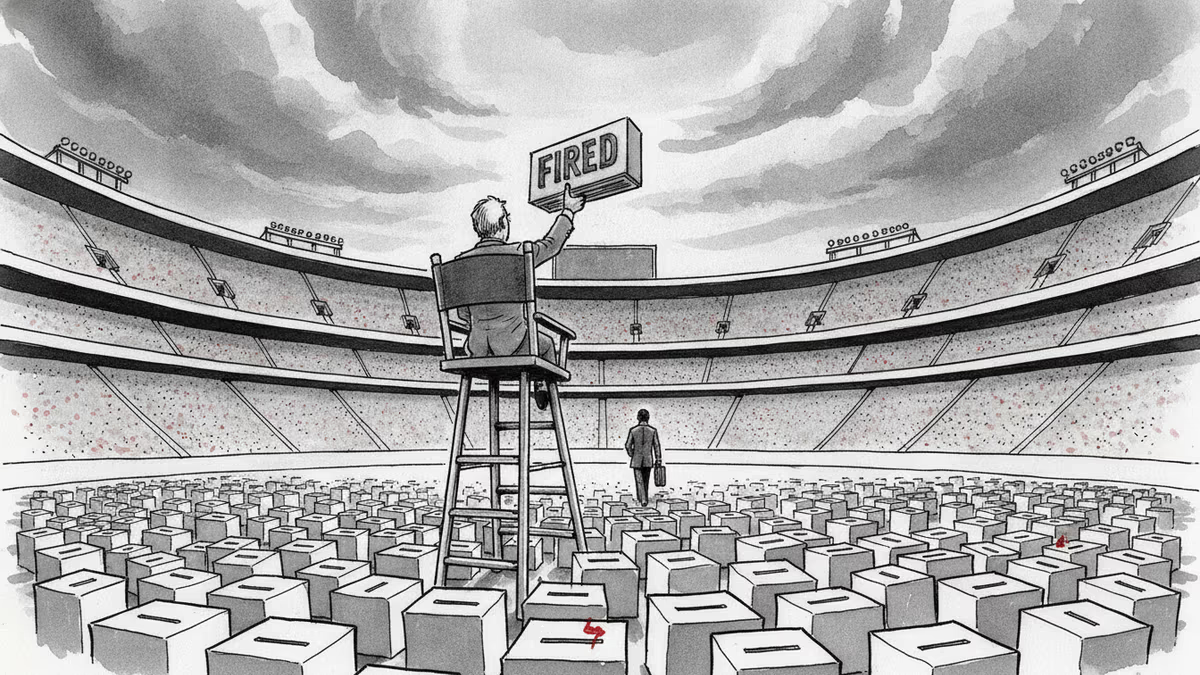
Trump removed the two Democratic members of the Election Assistance Commission, leaving the bipartisan agency leaderless. A Supreme Court ruling made it legal. Here's why a non-crisis can still be a warning sign.
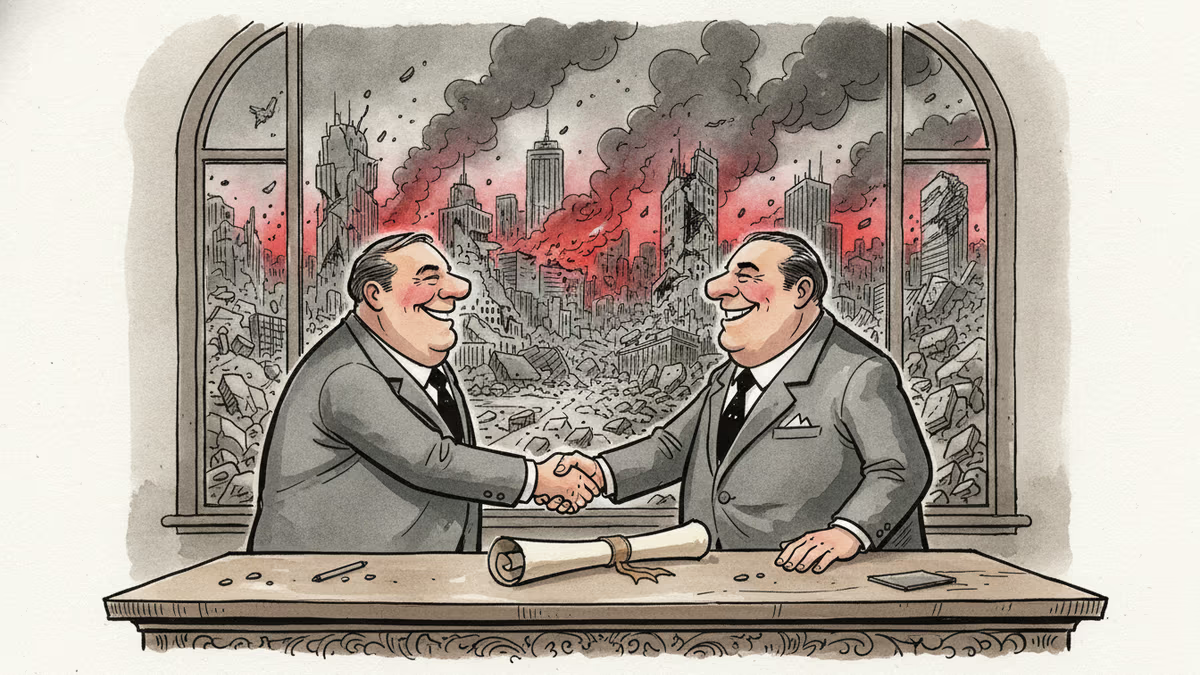
Lebanon and Israel signed a framework agreement in June 2026. Hezbollah rejected it. Israel kept fighting. History suggests this moment is real—and fragile.
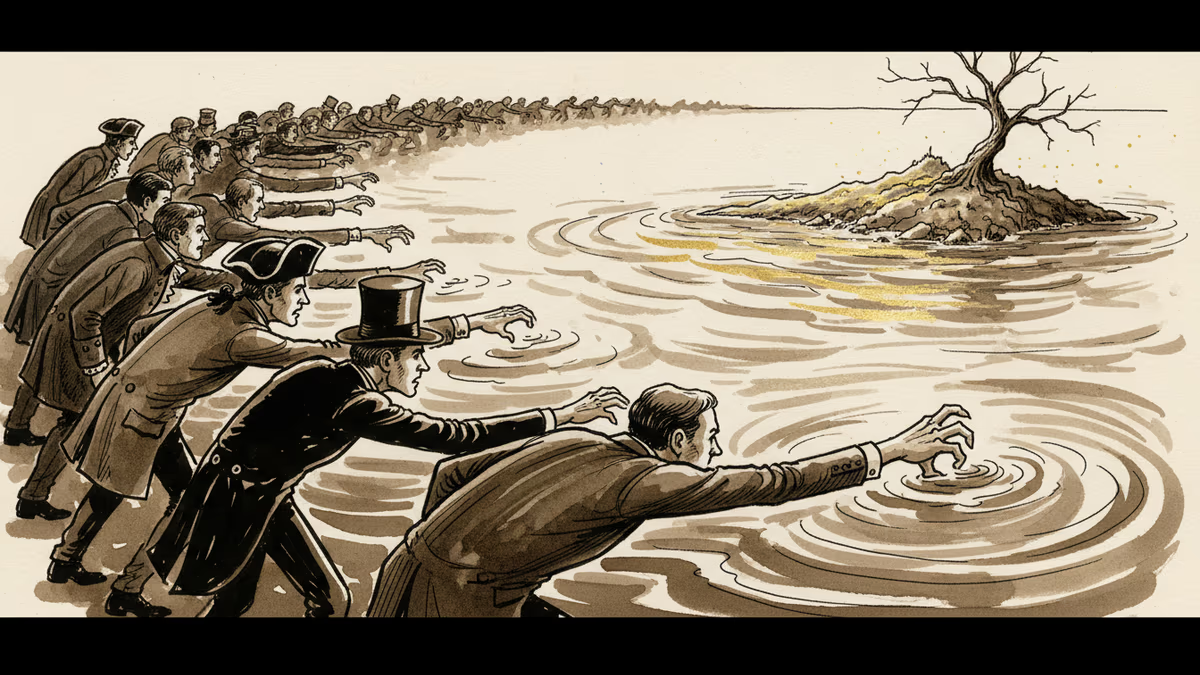
Trump says he wants to 'take' Cuba. But this desire isn't new—it stretches back to Thomas Jefferson. Why this centuries-old obsession is coming to a head right now.
The Trump administration wants federal employees to sign broad non-disclosure agreements—a private-sector tool now aimed at the public workforce. What happens when government runs like a corporation?
Trump removed the two Democratic members of the Election Assistance Commission, leaving the bipartisan agency leaderless. A Supreme Court ruling made it legal. Here's why a non-crisis can still be a warning sign.
Lebanon and Israel signed a framework agreement in June 2026. Hezbollah rejected it. Israel kept fighting. History suggests this moment is real—and fragile.
Trump says he wants to 'take' Cuba. But this desire isn't new—it stretches back to Thomas Jefferson. Why this centuries-old obsession is coming to a head right now.
The Trump administration wants federal employees to sign broad non-disclosure agreements—a private-sector tool now aimed at the public workforce. What happens when government runs like a corporation?
Thoughts
Share your thoughts on this article
Sign in to join the conversation