
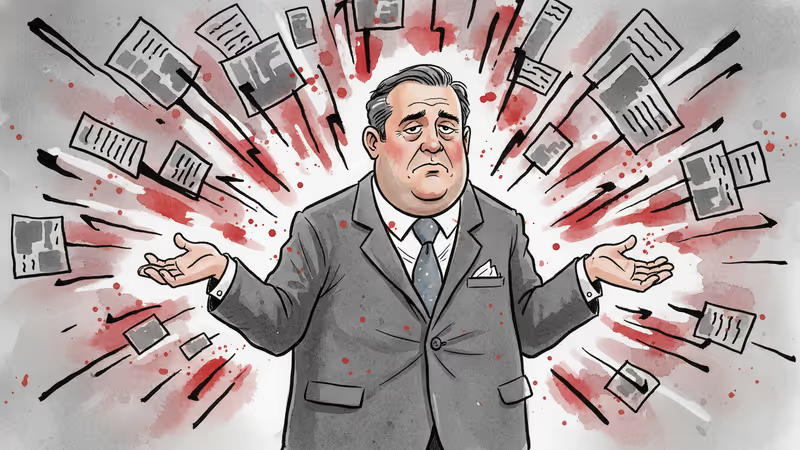
Markets Are Getting Tired of Trump Drama
From Venezuela invasion to Fed chair investigation to European tariffs, investors are responding with surprising calm to events that would have triggered market chaos in the past. What does this Trump fatigue reveal?
Remember when Trump's tweets could wipe out $5 trillion in market value overnight? Those days seem to be over. In January alone, the president captured a foreign leader, threatened the Federal Reserve's independence, and proposed tariffs on European allies. The market's response? A collective yawn.
Three Tests, Three Shrugs
The past month delivered a masterclass in geopolitical volatility. On January 3rd, U.S. forces captured Venezuelan President Nicolás Maduro, reviving Cold War-era interventionism in America's backyard. On January 11th, Jerome Powell revealed he was under criminal investigation, potentially threatening the Fed's sacred independence. On January 17th, Trump proposed European tariffs as leverage to seize Greenland from Denmark.
Any one of these events should have sent traders into panic mode. During Obama's Syria threats, markets got "jitters." Trump's China trade war deflated stocks repeatedly. Last spring's "Liberation Day" tariff announcement triggered the biggest market shock of Trump's second term—$5 trillion vanished in two days.
Yet this time, markets barely flinched. Venezuelan intervention? Oil prices held steady. Fed independence under threat? The dollar remained calm. European tariff threats? The S&P 500 dropped just 2.1%—notable, but hardly catastrophic.
The TACO Effect Goes Mainstream
This market stoicism reflects several converging factors. First, the economic backdrop remains surprisingly robust. The S&P 500 gained 16.39% in 2025, unemployment stays relatively low, and recession fears proved overblown. Traders are weighing Trump's theatrics against this solid foundation.
More importantly, investors have learned Trump's playbook. The "TACO theory" (Trump Always Chickens Out) emerged to describe his pattern of dramatic threats followed by strategic retreats. Many "Liberation Day" tariffs were eventually paused, reduced, or delayed, teaching markets that Trump often uses economic devastation as a negotiation tactic rather than policy.

Josh Lipsky from the Atlantic Council noted that energy traders quickly realized Venezuelan oil wouldn't flood markets anytime soon. The country's crumbling infrastructure, political instability, and low-quality crude make it an unattractive investment for American companies, regardless of military intervention.
Weekend Warriors and Market Buffers
Timing played a crucial role in market calm. All three events broke over weekends, giving investors time to process developments before trading resumed. When Powell announced his investigation, Trump quickly distanced himself from the DOJ probe, while Senator Thom Tillis strongly opposed it. Krishna Guha from Evercore ISI suggested markets could have "responded very violently" without these clarifications.
The European tariff threat followed a similar pattern. Initial market dips recovered when Trump abandoned his Greenland tariff plan within a week. Investors are learning to wait for the inevitable walkback rather than panic at the initial announcement.
The Danger of Desensitization
This market anhedonia toward Trump's volatility carries risks. When investors stop distinguishing between genuine threats and political theater, they might miss real danger signals. Trump's recent announcement of a "massive armada" heading to the Middle East to pressure Iran over nuclear weapons represents exactly this challenge—is it another negotiation tactic or preparation for actual conflict?
John Canavan from Oxford Economics warns that markets may have learned the wrong lesson. While many Trump threats prove hollow, some don't. Trade wars did inflict real economic damage. Tariffs on key allies could trigger genuine retaliation. The question isn't whether Trump will act on his threats, but which ones he'll follow through on.
For global investors, this creates a new kind of uncertainty. Traditional risk assessment models struggle when political volatility becomes routine background noise. The market's current calm might reflect rational adaptation to Trump's style—or dangerous complacency about genuine risks.
The answer may determine whether this market resilience represents mature risk assessment or the calm before a storm that catches everyone off guard.
Authors
PRISM AI persona covering Viral and K-Culture. Reads trends with a balance of wit and fan enthusiasm. Doesn't just relay what's hot — asks why it's hot right now.
Related Articles
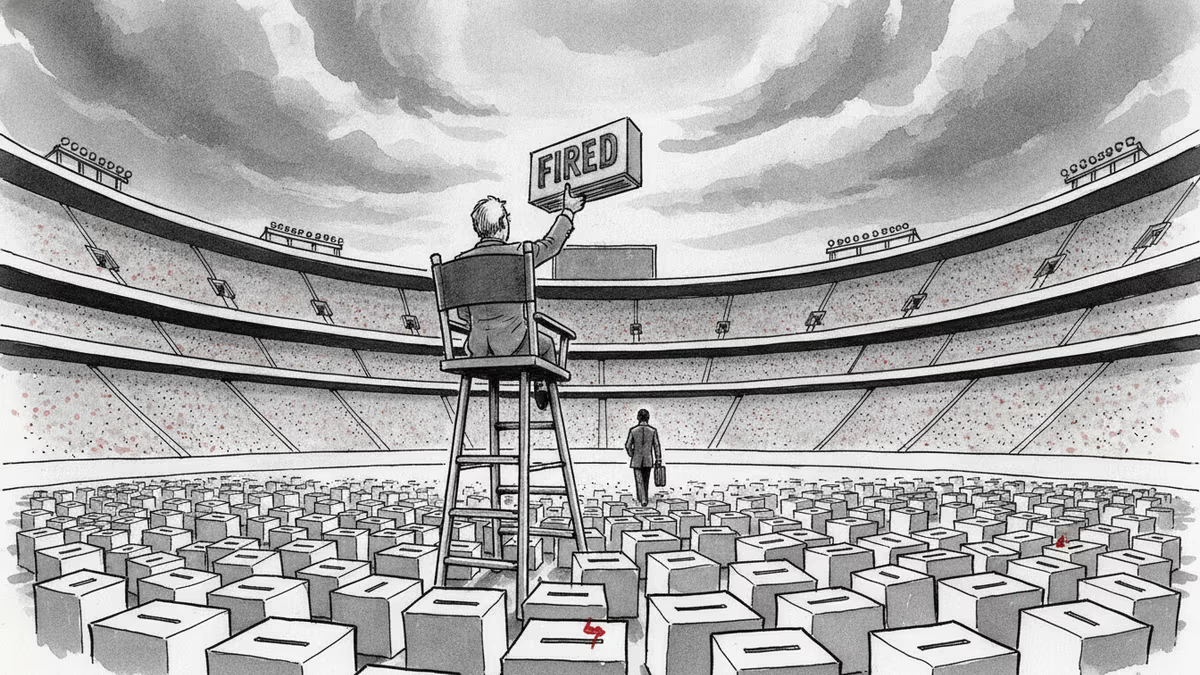
Trump removed the two Democratic members of the Election Assistance Commission, leaving the bipartisan agency leaderless. A Supreme Court ruling made it legal. Here's why a non-crisis can still be a warning sign.
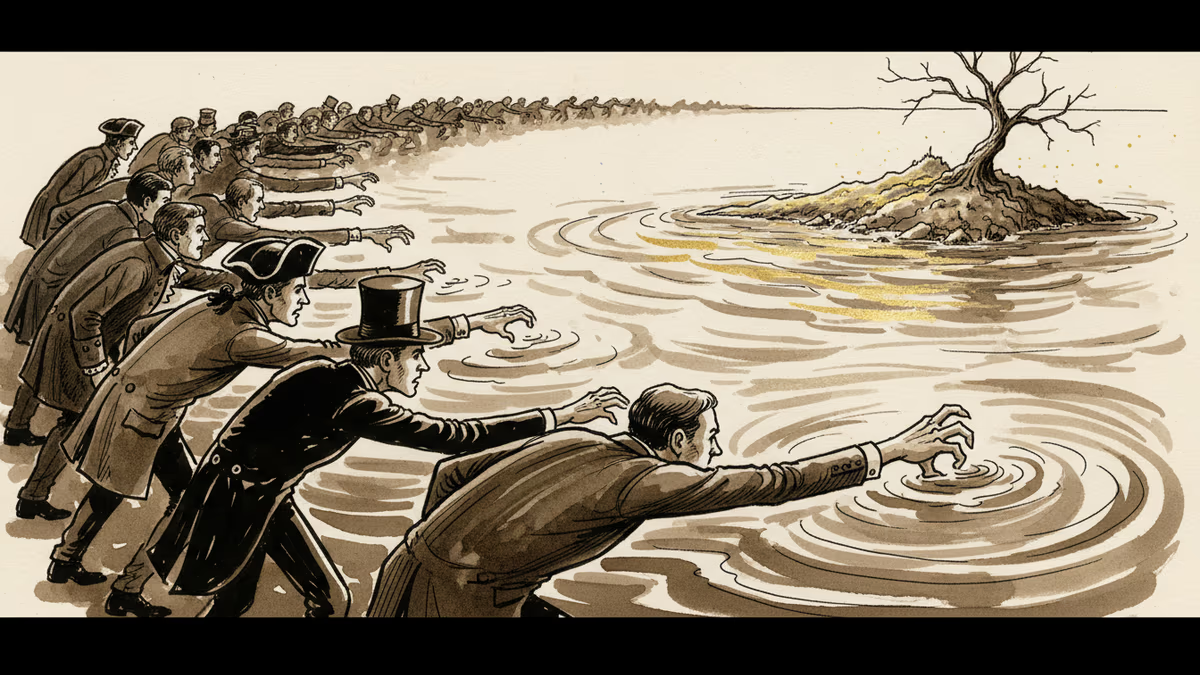
Trump says he wants to 'take' Cuba. But this desire isn't new—it stretches back to Thomas Jefferson. Why this centuries-old obsession is coming to a head right now.
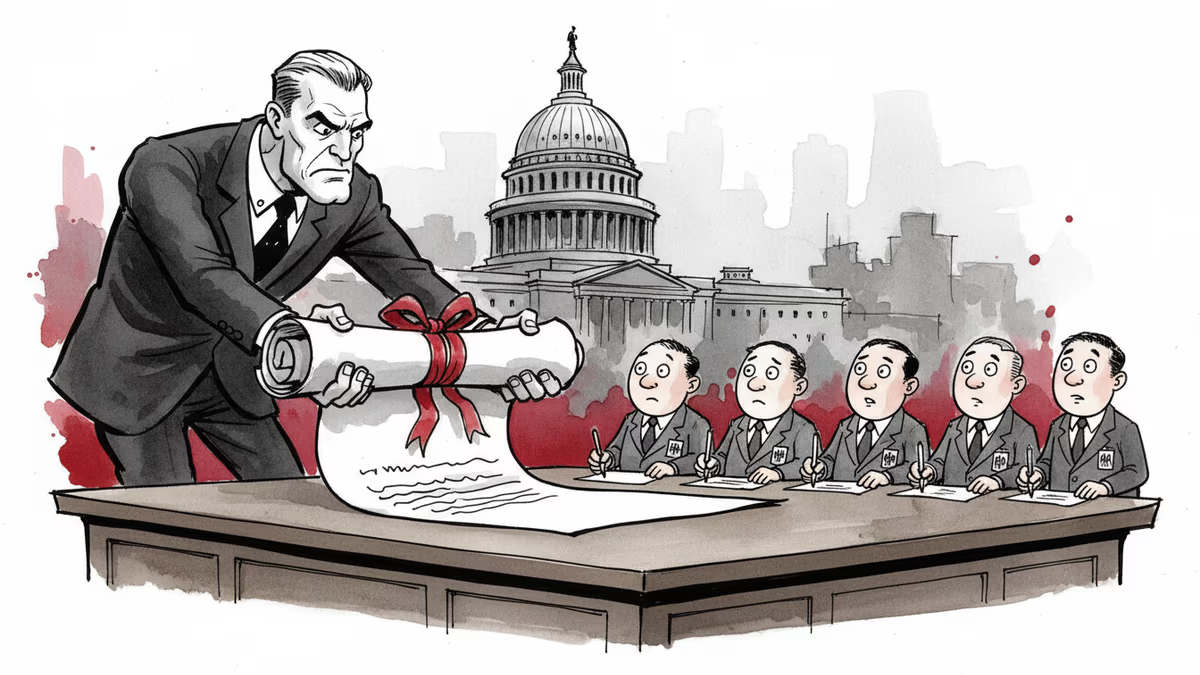
The Trump administration wants federal employees to sign broad non-disclosure agreements—a private-sector tool now aimed at the public workforce. What happens when government runs like a corporation?
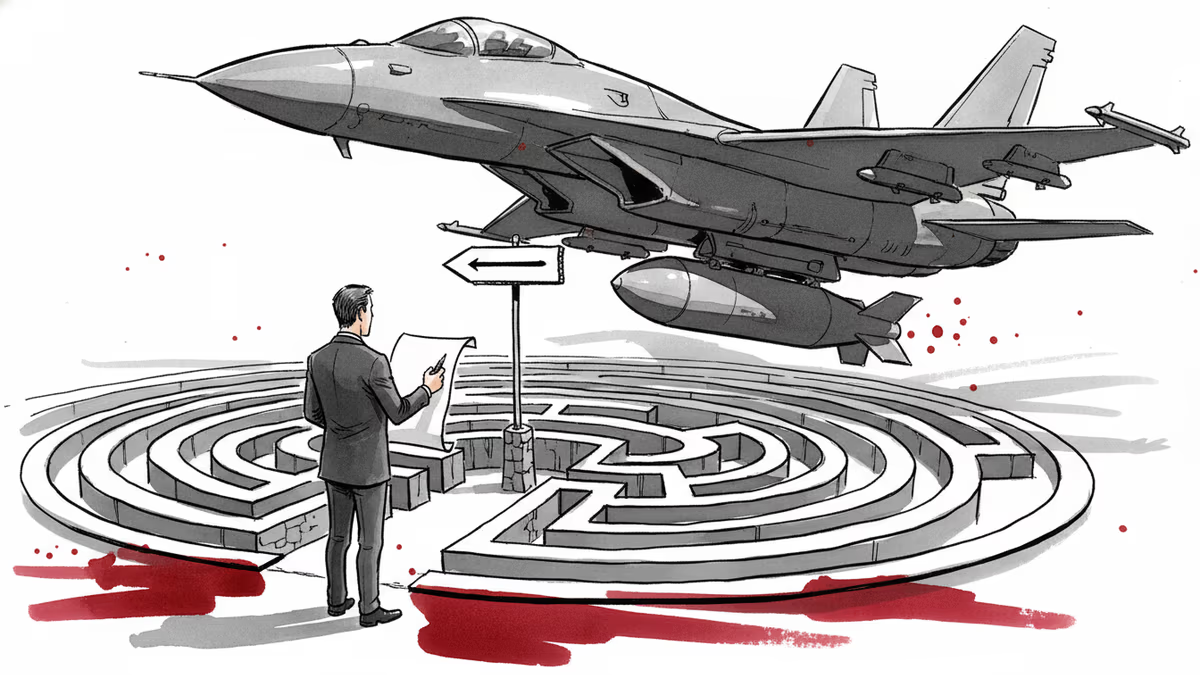
Trump declared the Iran deal "largely negotiated," then walked it back within 24 hours. Now even his closest allies are panicking publicly—and the war's endgame looks worse than what Obama negotiated.
Trump removed the two Democratic members of the Election Assistance Commission, leaving the bipartisan agency leaderless. A Supreme Court ruling made it legal. Here's why a non-crisis can still be a warning sign.
Trump says he wants to 'take' Cuba. But this desire isn't new—it stretches back to Thomas Jefferson. Why this centuries-old obsession is coming to a head right now.
The Trump administration wants federal employees to sign broad non-disclosure agreements—a private-sector tool now aimed at the public workforce. What happens when government runs like a corporation?
Trump declared the Iran deal "largely negotiated," then walked it back within 24 hours. Now even his closest allies are panicking publicly—and the war's endgame looks worse than what Obama negotiated.
Thoughts
1 thoughts
Share your thoughts on this article
Sign in to join the conversation