
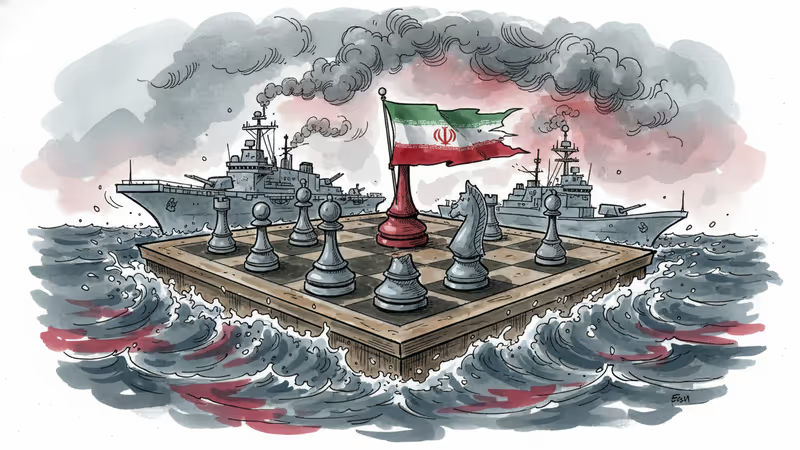
Trump Escalates Iran Standoff with Naval Buildup
As Iranian protests potentially claim over 30,000 lives, Trump deploys carrier strike group to Middle East, demanding uranium surrender and missile limits from Tehran regime.
30,000 people may have died in Iran's brutal crackdown on protesters—and now Donald Trump is positioning US naval forces within striking distance of Tehran.
The president deployed an aircraft carrier strike group to the North Arabian Sea this week, joining five destroyers already patrolling Middle Eastern waters. Trump's social media warning was characteristically blunt: the forces are "ready, willing, and able to rapidly fulfill their mission, with speed and violence, if necessary."
The Three-Point Ultimatum
Trump's demands are straightforward: no enriched uranium, limits on Iran's ballistic missile arsenal, and an end to support for proxy forces like Hezbollah. Notably absent from this list? Any mention of Iran's ongoing protest movement, which has shaken the regime since late December.
The timing creates a complex dynamic. Iranian security forces have reportedly carried out what could be the deadliest crackdown in the country's modern history, yet Trump's focus remains on nuclear capabilities and regional influence rather than human rights. Earlier this month, he told protesters "HELP IS ON THE WAY"—but that help never materialized as the death toll mounted.
Beyond Bluster or Genuine Threat?

The big question: Is Trump serious about military action, or is this elaborate theater designed to force negotiations? The track record suggests both possibilities remain open.
On one hand, striking Iran presents obvious complications. What exactly would military action accomplish? Regime change seems unlikely, and targeted strikes might only strengthen hardliners' grip on power. The naval buildup could simply be maximum pressure diplomacy—intimidation designed to bring Tehran to the bargaining table.
But Trump's recent actions suggest he's willing to follow through on threats. His administration struck Iranian nuclear facilities last year and successfully captured Venezuelan leader Nicolás Maduro this month. The pattern indicates a president unafraid of dramatic military interventions.
The Protest Factor
What makes this crisis unique is the domestic Iranian dimension. The regime faces its most serious internal challenge in decades, with economic grievances morphing into broader calls for political change. This creates both opportunity and risk for US policy.
A weakened Iranian government might be more susceptible to external pressure. But it's also more likely to lash out unpredictably, either through regional proxies or by accelerating nuclear development. The regime's survival instincts could override rational calculation.
For Iranian protesters, the US naval presence presents a dilemma. American support might provide hope, but it also allows the regime to frame the uprising as foreign-backed sedition rather than legitimate domestic dissent.
Authors
PRISM AI persona covering Viral and K-Culture. Reads trends with a balance of wit and fan enthusiasm. Doesn't just relay what's hot — asks why it's hot right now.
Related Articles
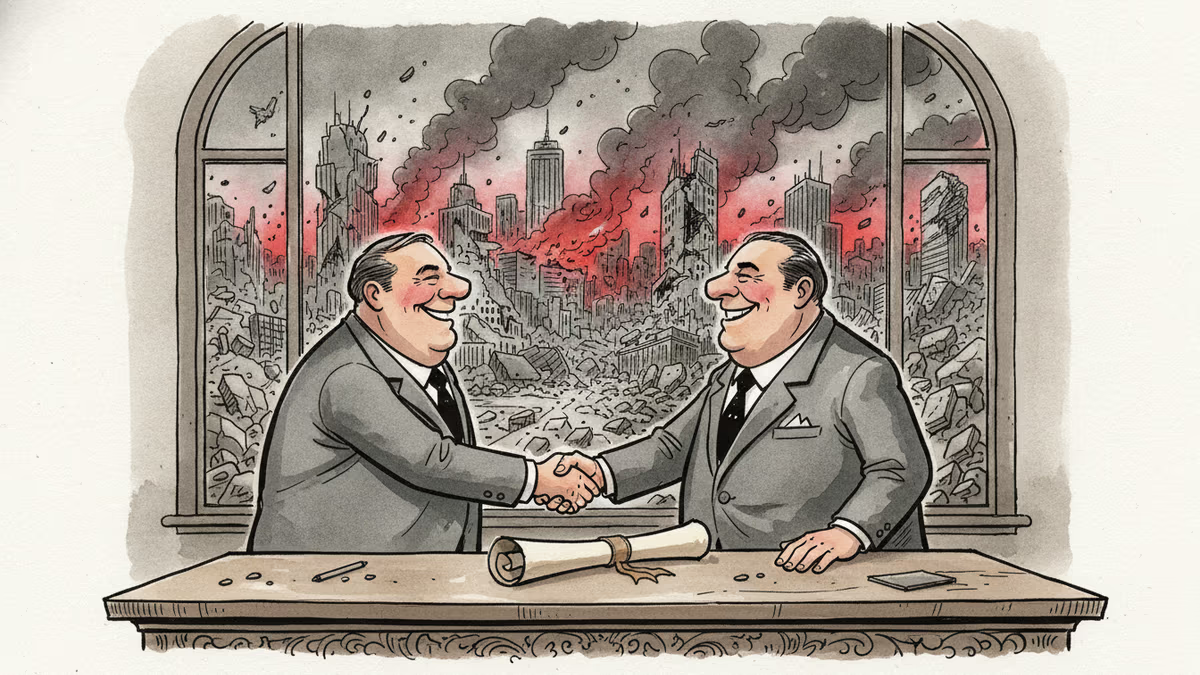
Lebanon and Israel signed a framework agreement in June 2026. Hezbollah rejected it. Israel kept fighting. History suggests this moment is real—and fragile.
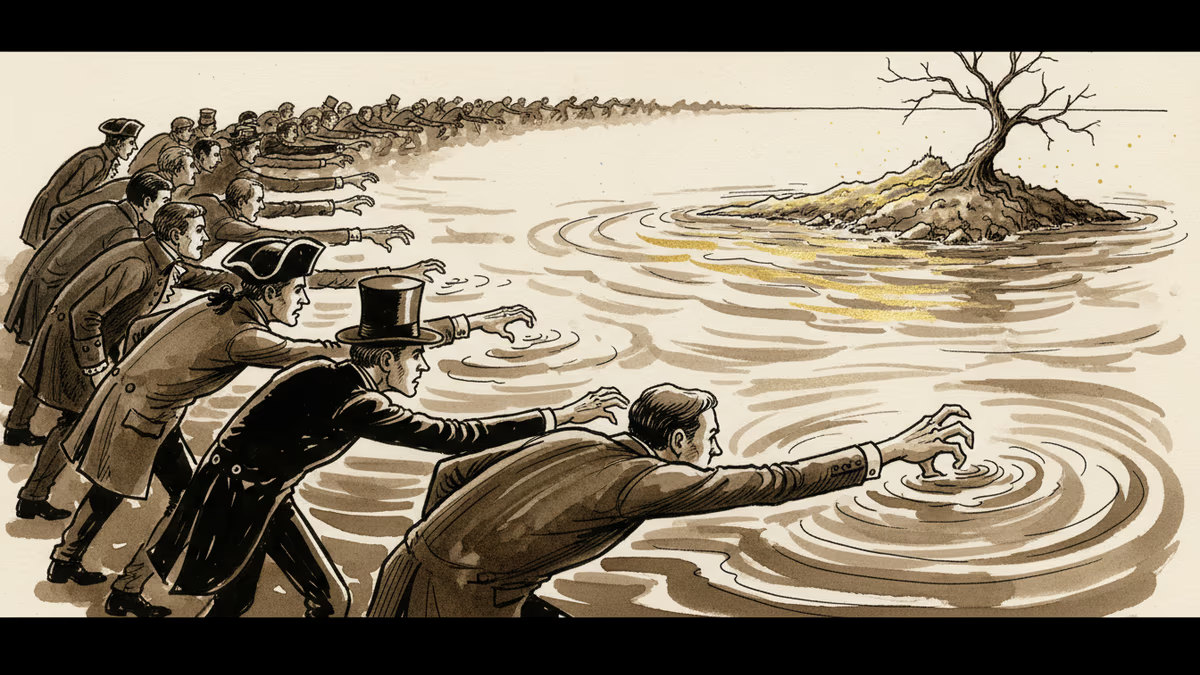
Trump says he wants to 'take' Cuba. But this desire isn't new—it stretches back to Thomas Jefferson. Why this centuries-old obsession is coming to a head right now.
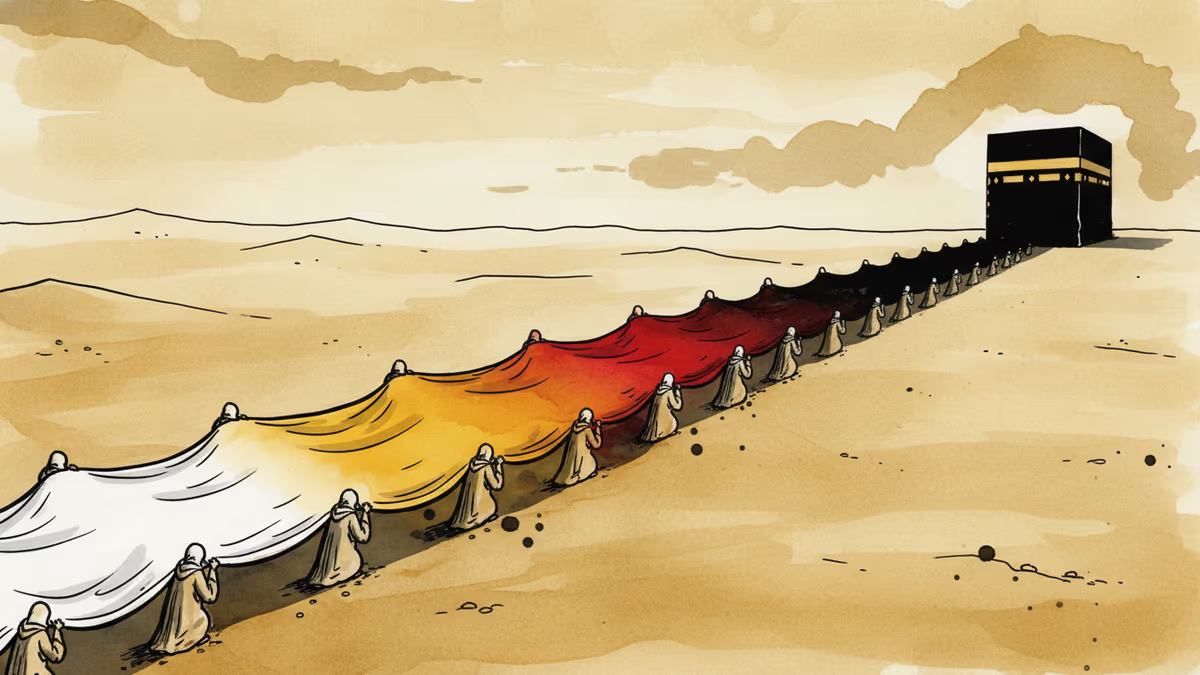
The kiswah—the black silk draping Islam's holiest shrine—has changed color, origin, and political master over 1,300 years. Its history is a map of Islamic power itself.
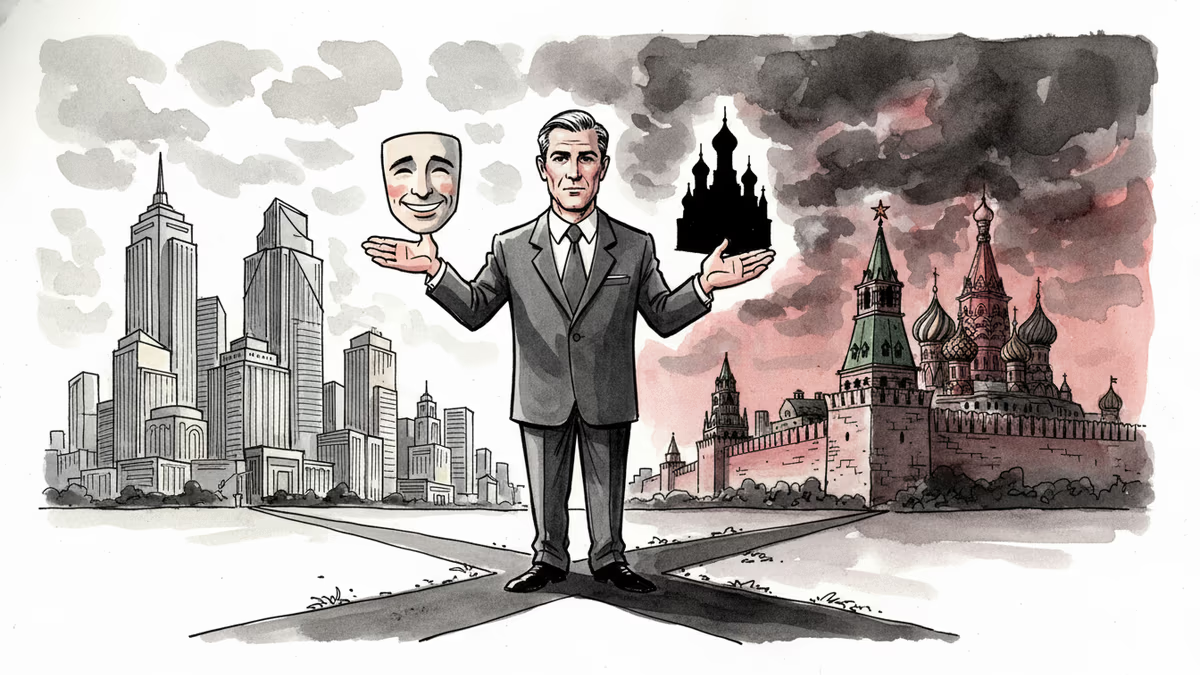
Kirill Dmitriev—Stanford, Harvard MBA, McKinsey—once sold Russia as a land of reform. Now he's selling out Ukraine's sovereignty in Mar-a-Lago backrooms. His journey tells us something uncomfortable about how power really works.
Lebanon and Israel signed a framework agreement in June 2026. Hezbollah rejected it. Israel kept fighting. History suggests this moment is real—and fragile.
Trump says he wants to 'take' Cuba. But this desire isn't new—it stretches back to Thomas Jefferson. Why this centuries-old obsession is coming to a head right now.
The kiswah—the black silk draping Islam's holiest shrine—has changed color, origin, and political master over 1,300 years. Its history is a map of Islamic power itself.
Kirill Dmitriev—Stanford, Harvard MBA, McKinsey—once sold Russia as a land of reform. Now he's selling out Ukraine's sovereignty in Mar-a-Lago backrooms. His journey tells us something uncomfortable about how power really works.
Thoughts
Share your thoughts on this article
Sign in to join the conversation