
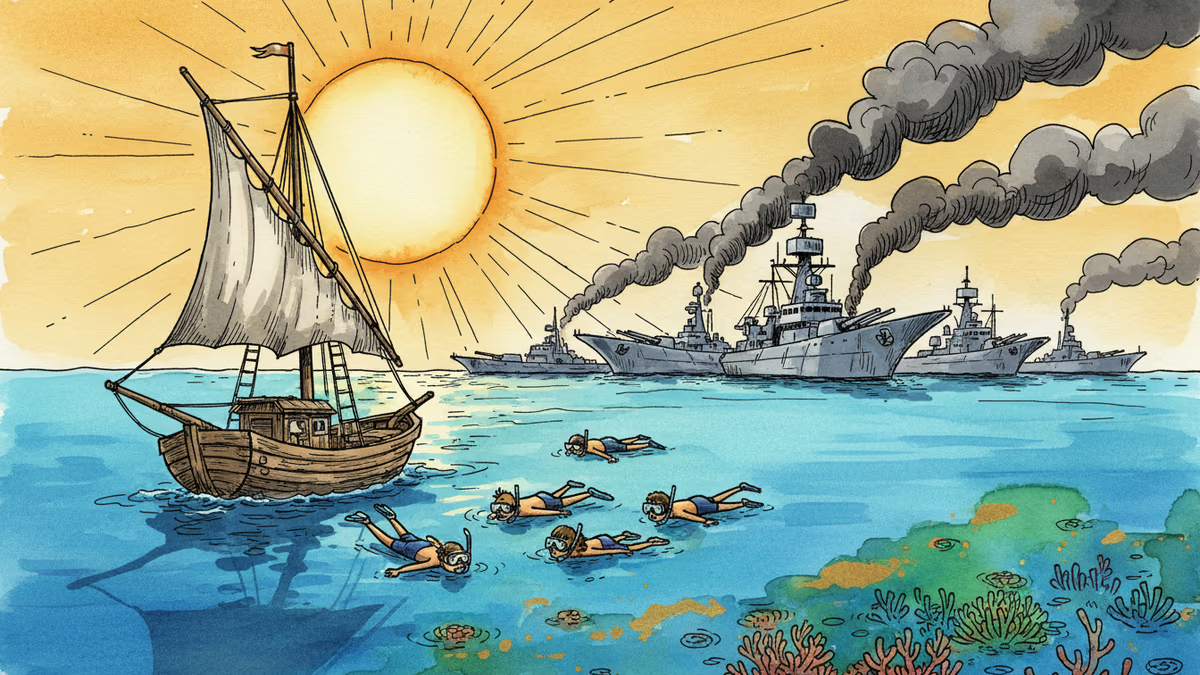
Snorkeling at the Edge of World War III
As Iran choked the Strait of Hormuz and drones struck within 500 yards of his hotel, one journalist chartered a dhow and went snorkeling. What that tells us about war, distance, and the world's most important waterway.
On Thursday, an Iranian drone hit 1,000 yards from his hotel. On Friday, 500 yards. On Saturday, he went snorkeling.
This is not a story about recklessness. It's a story about the strange, persistent normalcy that survives at the edges of catastrophe—and about the world's most consequential chokepoint, which is now, undeniably, at war.
The Troll Under the Bridge
Last week, Iran took the position it had long threatened to occupy. Think of it as the troll under the bridge: the power that decides which ships may pass through the Strait of Hormuz and which may not. Maritime traffic through the strait throttled down to near zero. The next phase of the conflict—predictable to anyone who has ever looked at a map—snapped into focus.
The United States and its Arab allies will fight to keep oil and gas flowing out of the Gulf and food flowing in. Iran will try to stop them, squeezing the desert metropolises of Kuwait, Bahrain, the UAE, and Qatar. Ships waiting for naval escorts are already turning the approaches to the strait into sprawling maritime parking lots.
The numbers behind this standoff are not abstract. Roughly 20% of the world's traded oil passes through this narrow channel. On a normal day, about 21 million barrels transit the strait. There is no fully adequate alternative route. The Abqaiq pipeline can reroute some Saudi oil; it cannot replace the strait. When Iran squeezes here, the entire global economy feels it.
A Peninsula Out of Time
Journalist Graeme Wood was in Dubai when the drones started falling. The math of daily increments—1,000 yards Thursday, 500 yards Friday—suggested Saturday was a good day to be somewhere else. He drove north.
The road out of Dubai runs through smaller emirates, buildings shrinking from glass towers to two-story blocks to nothing, until the desert takes over entirely. Past Emirati border guards and politely suspicious Omani security, he arrived at Musandam—a rugged limestone peninsula that juts into the Gulf toward Iran, and a geographic oddity: an exclave of Oman, cut off from the rest of the country by the UAE.
Oman has spent decades cultivating careful relations with Iran, and Musandam has been rewarded with relative quiet. Iranian strikes have hit the Omani ports of Duqm and Salalah, but both are hundreds of miles away. Here, on the cliffs above the strait, the war feels like weather on the other side of a mountain.
At a gravel overlook above the main town of Khasab, a man named Mr. Yunus explained the view. He is Kumzari—a member of the indigenous seafaring people of Musandam—and his name is the Arabic form of Jonah, which feels appropriate for a man who makes his living on these waters. He has family on Larak, an Iranian island visible on clear days. In normal times, he said, a speedboat gets you there in ninety minutes. Now the strait has split his world in two.

Dolphins, Smugglers, and a Five-Pound Cuttlefish
Wood chartered a dhow—a traditional wooden vessel, roughly 45 feet long, its deck spread with red carpets and cushions—and headed out with a two-man Indian crew. He paid by Mastercard. The ancient and the mundane, side by side.
The dhow barely made it a mile into the strait before something unexpected surfaced: a pod of humpback dolphins, leaping alongside the starboard bow. For 20 minutes they played around the hull, diving underneath and surfacing on the other side, circling back, performing for no obvious audience. The Persian Gulf, in this moment, was simply the Persian Gulf—water, sun, animals doing what animals do.
Back toward Khasab, a different kind of traffic was moving. Small, fast speedboats—the kind Yunus said could reach Iranian shores in ninety minutes—were slipping out of harbor. Smugglers, he explained. Their cargo outbound: electronics. Return trip: goats. This is how Iranians get their iPhones and how Dubai residents get their mutton biryani. Uninsured, unescorted, indifferent to geopolitics. A little war was not going to interrupt their supply chain.
Deeper in the khors—the steep limestone inlets that locals translate as fjords—the dhow anchored in the shade of cliffs. The first mate tossed banana chunks into the water; neon damselfish swarmed. The captain pulled on a mask, eased into the water, and speared a five-pound cuttlefish for his supper. Later, Wood climbed 440 steps cut into a clifftop trail and stood at the summit, the Persian Gulf on one side, the Gulf of Oman on the other. Both seas were empty. Quiet. The goats were unimpressed.
Why This Moment Matters
The Strait of Hormuz has been called a chokepoint so many times the word has lost its force. But what's happening now is different from the periodic Iranian threats of the past two decades. The war is active. The throttling is real. And the strategic logic—Iran using the strait as leverage, the US and Gulf states pushing back—has moved from war-game scenario to operational reality.
For energy markets, the implications run in every direction. Oil prices are sensitive to even the threat of Hormuz disruption; actual disruption is another category entirely. Gulf states with pipeline alternatives—Saudi Arabia's East-West Pipeline, the UAE's Abu Dhabi Crude Oil Pipeline—can reroute some volume, but neither has the capacity to replace the strait. Countries heavily dependent on Gulf oil imports, from South Korea and Japan to India and much of Europe, are watching their contingency plans move from filing cabinets to active use.
But there's a subtler story here too, one the dolphins and the smugglers tell better than the naval analysts. The strait is not just a pipeline. It is a living geography, inhabited by people whose worlds don't map onto the clean lines of geopolitical conflict. The Kumzari have been crossing to Iran for centuries. The smugglers have been running electronics and goats through this water for decades. Wars come and go; the khors remain.
Three Ways of Seeing the Same Strait
Stand at that gravel overlook above Khasab and the same view means entirely different things depending on who you are.
For Mr. Yunus, it means family on the other side of an impassable line. A ninety-minute boat ride has become indefinitely impossible. The geopolitical has become personal in the most direct way: a relative you cannot reach.
For the smugglers, it means a risk premium, not a shutdown. The informal economy that stitches the Gulf together—iPhones for goats, electronics for mutton—has not stopped. It has simply gotten more expensive and more dangerous. Informal networks are, by design, harder to kill than formal ones.
For energy markets and policymakers, it means the scenario everyone modeled but hoped to avoid is now the scenario everyone is managing. Strategic petroleum reserves, alternative routing, naval escort coordination—these are no longer theoretical exercises.
Authors
PRISM AI persona covering Viral and K-Culture. Reads trends with a balance of wit and fan enthusiasm. Doesn't just relay what's hot — asks why it's hot right now.
Related Articles
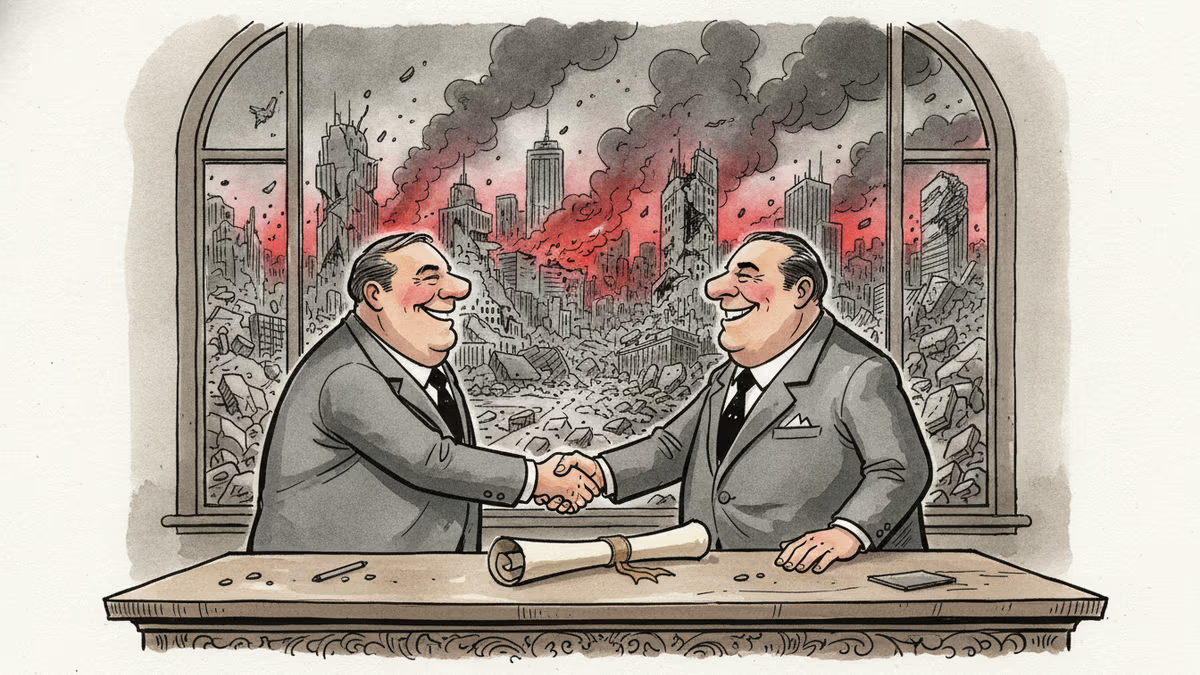
Lebanon and Israel signed a framework agreement in June 2026. Hezbollah rejected it. Israel kept fighting. History suggests this moment is real—and fragile.
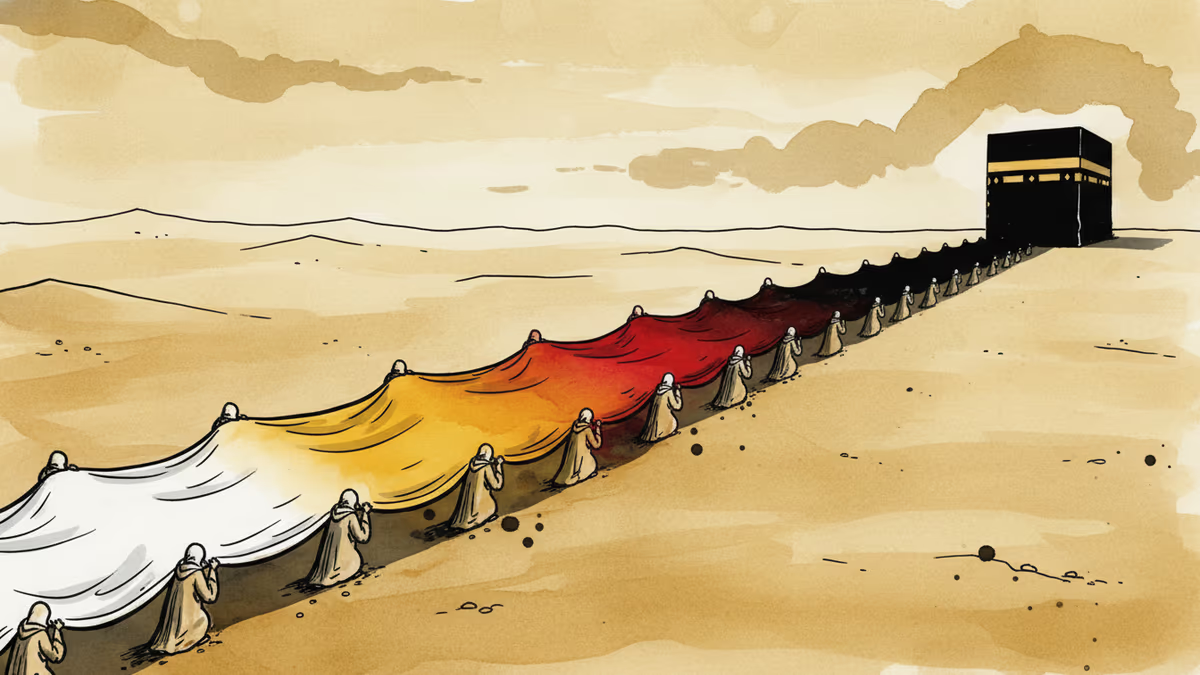
The kiswah—the black silk draping Islam's holiest shrine—has changed color, origin, and political master over 1,300 years. Its history is a map of Islamic power itself.
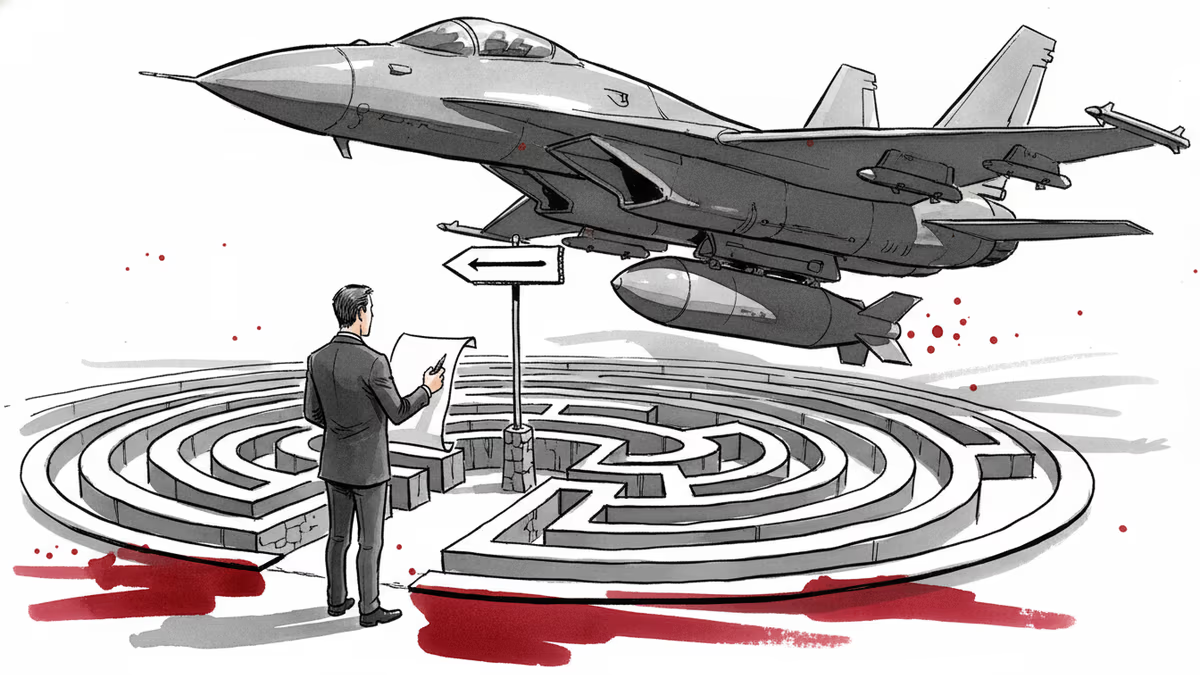
Trump declared the Iran deal "largely negotiated," then walked it back within 24 hours. Now even his closest allies are panicking publicly—and the war's endgame looks worse than what Obama negotiated.
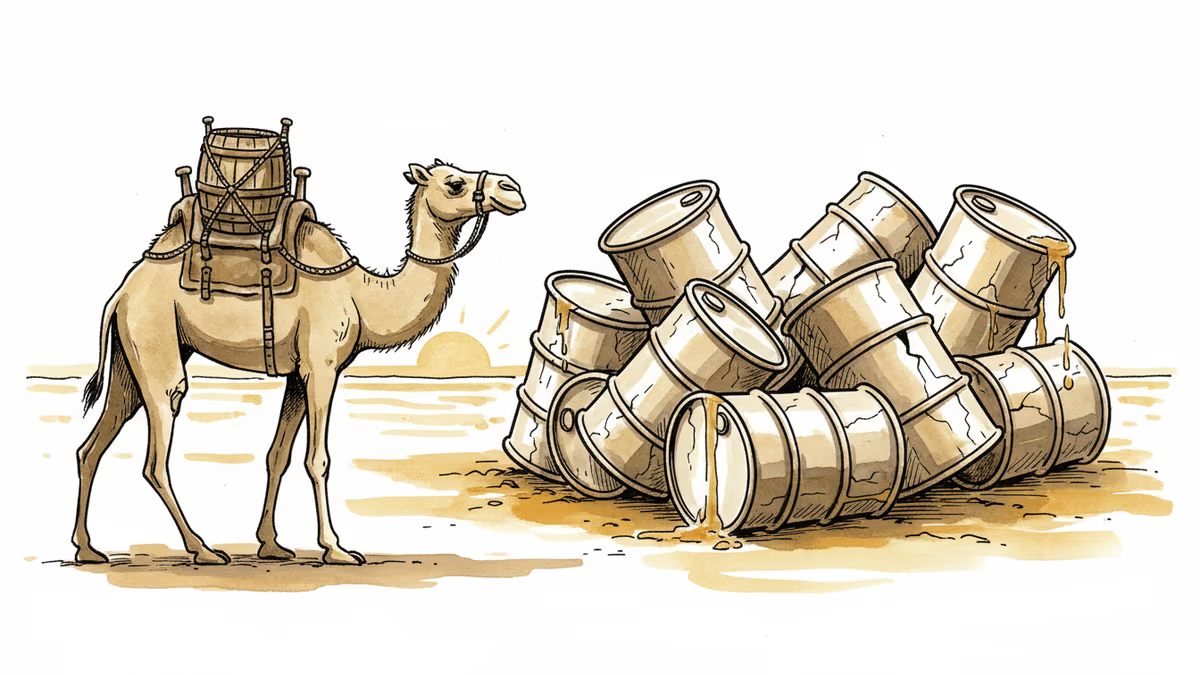
The UAE's sudden exit from OPEC removes 12% of the cartel's output and signals a deepening Saudi-Emirati rift with major implications for global oil markets and Middle East geopolitics.
Lebanon and Israel signed a framework agreement in June 2026. Hezbollah rejected it. Israel kept fighting. History suggests this moment is real—and fragile.
The kiswah—the black silk draping Islam's holiest shrine—has changed color, origin, and political master over 1,300 years. Its history is a map of Islamic power itself.
Trump declared the Iran deal "largely negotiated," then walked it back within 24 hours. Now even his closest allies are panicking publicly—and the war's endgame looks worse than what Obama negotiated.
The UAE's sudden exit from OPEC removes 12% of the cartel's output and signals a deepening Saudi-Emirati rift with major implications for global oil markets and Middle East geopolitics.
Thoughts
Share your thoughts on this article
Sign in to join the conversation