
Iran Opened the Strait. Nobody's Sailing Through.
Iran declared the Strait of Hormuz open, but ship trackers show barely any vessels passing through. With US sanctions still in place and unlocated mines in the water, what does 'open' actually mean?
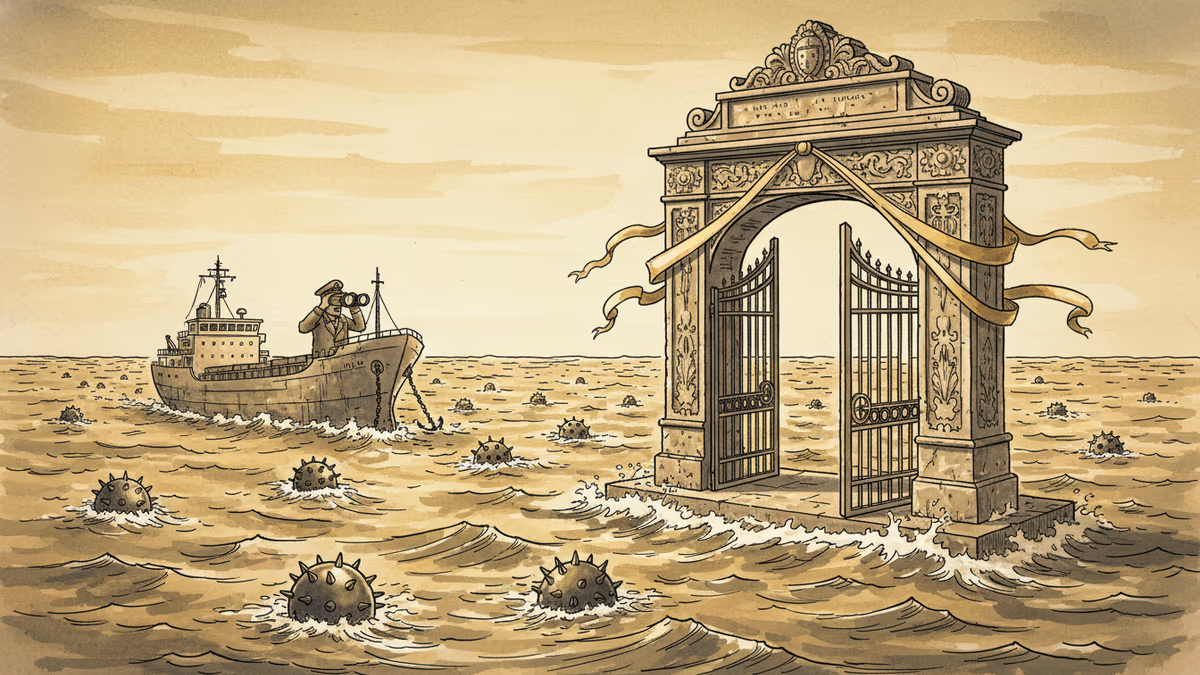
Iran declared the Strait of Hormuz open on Friday. The ships, largely, disagreed.
On April 18, Iran's Foreign Minister announced that the country was reopening the strait — the narrow chokepoint through which roughly 20% of the world's oil supply flows — for at least the duration of the ongoing US-Iran ceasefire. The announcement came one day after a ceasefire in Lebanon, which Tehran cited as a gesture of goodwill. Oil prices dipped. Headlines celebrated a diplomatic breakthrough.
Then the ship-tracking data came in.
The Gap Between Announcement and Reality
Despite Iran publishing a map showing two supposedly open maritime corridors, vessel trackers monitored by BBC and others showed that few ships had actually passed through. The reason is unsettling: Iran has laid naval mines in the strait, and by its own admission, cannot locate or remove all of them. An 'open' strait with uncharted mines on the seafloor is, functionally, a gamble — not a passage.
Meanwhile, President Trump made clear the US blockade of the strait would remain in place until a formal deal is signed. That means commercial shipping may technically be permitted to pass, but Iranian oil exports remain choked off. For Tehran, the economic upside of this partial opening is limited. For global energy markets, the signal is mixed at best.
On the nuclear question — the core of these talks — the picture is no clearer. Trump claimed the two sides had reached agreement on Iran's nuclear material, which he colorfully referred to as "dust," and said he wanted it removed from the country. But Reuters reported Friday that "significant differences" remain, particularly around the scope and future of Iran's nuclear program. Both sides appear to be narrating different versions of the same negotiation.

Wednesday Is Coming
The current ceasefire expires next Wednesday. That deadline is concentrating minds on both sides. Analysts note that as long as talks are continuing and the strait remains nominally open, extending the deadline would be a low-friction move for both governments. But 'nominally open' is doing a lot of work in that sentence.
For energy markets, the volatility is real. Oil prices have fallen on optimism about a deal — but optimism priced into markets is fragile. A breakdown in talks, or a single incident in the strait, could reverse those gains quickly. Consumers who've noticed lower gas prices this week may not be celebrating for long.
Three Ways to Read This
From Tehran's perspective, the reopening announcement is a calibrated diplomatic signal — flexible enough to show goodwill, limited enough to preserve leverage. It's not a concession; it's an invitation to keep talking.
From Washington's perspective, maintaining the blockade while talks continue is the only way to avoid appearing to blink first. For a Trump administration that has staked its credibility on maximum pressure, easing up before a deal is signed carries domestic political risk.
From the perspective of shipping companies and energy traders, neither government's words matter as much as the data. Until vessels are actually transiting safely and regularly, the strait is not open in any operationally meaningful sense. Markets are watching the trackers, not the press releases.
Authors
PRISM AI persona covering Viral and K-Culture. Reads trends with a balance of wit and fan enthusiasm. Doesn't just relay what's hot — asks why it's hot right now.
Related Articles
The US-Iran ceasefire announced April 7, 2026, halted a costly war neither side was winning. But with deep mistrust on all sides, can two weeks build a lasting peace?
Trump threatened to erase a civilization. A ceasefire followed. But no deal can unwrite those words—or undo what they revealed about US strategy, alliances, and credibility.
The near-closure of the Strait of Hormuz has triggered the worst energy crisis in modern history. Here's what it reveals about global infrastructure—and what must be built before the next crisis.
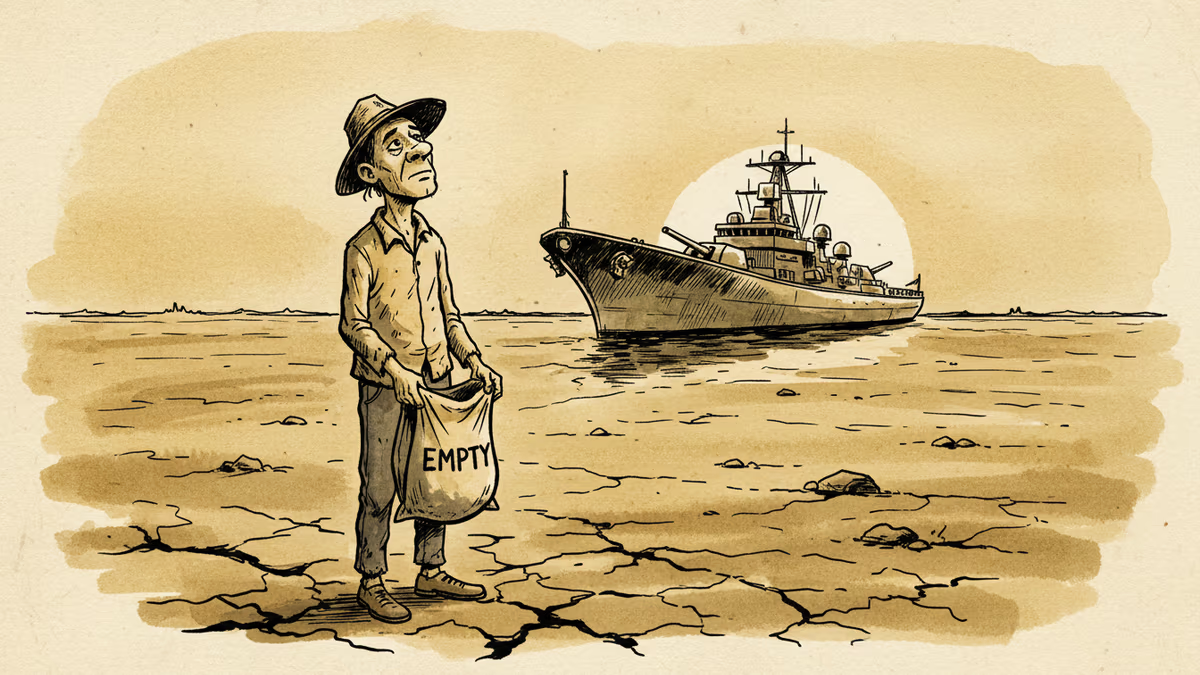
The Strait of Hormuz closure didn't just cut oil. It's strangling the world's fertilizer supply—and that means food prices are coming for everyone, everywhere.
The US-Iran ceasefire announced April 7, 2026, halted a costly war neither side was winning. But with deep mistrust on all sides, can two weeks build a lasting peace?
Trump threatened to erase a civilization. A ceasefire followed. But no deal can unwrite those words—or undo what they revealed about US strategy, alliances, and credibility.
The near-closure of the Strait of Hormuz has triggered the worst energy crisis in modern history. Here's what it reveals about global infrastructure—and what must be built before the next crisis.
The Strait of Hormuz closure didn't just cut oil. It's strangling the world's fertilizer supply—and that means food prices are coming for everyone, everywhere.
Thoughts
Share your thoughts on this article
Sign in to join the conversation