
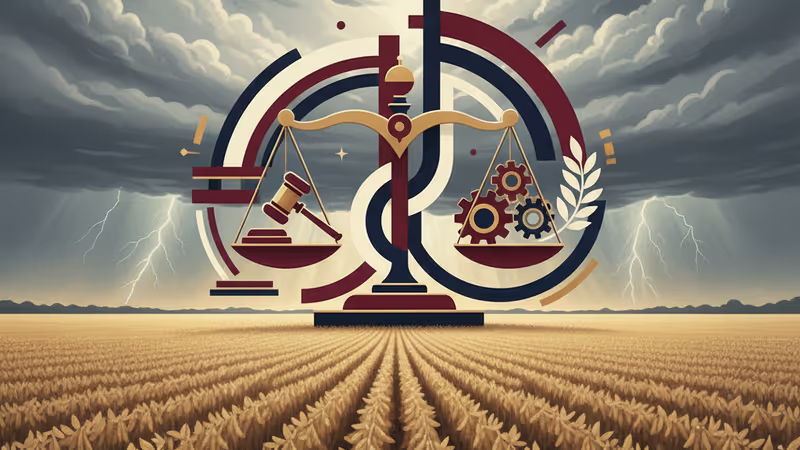
Trump Rural Policies 2026 Midterms: Can Democrats Crack the GOP Stronghold?
Democrats are targeting rural voters ahead of the 2026 midterms, leveraging frustration over Trump's tariff and healthcare policies. Can they bridge the gap?
They voted for him in droves, but now they're bearing the brunt of the aftermath. Donald Trump's rural stronghold is showing signs of economic fatigue as the 2026 midterm elections loom on the horizon.
According to POLITICO, Democrats are launching an aggressive "shoe-leather" strategy to win over rural voters who feel abandoned by the current administration's trade and healthcare policies. While Republicans have dominated farm country for decades, lingering inflation and chaotic tariff rollouts are creating a unique opening for the opposition.
The Impact of Trump Rural Policies on 2026 Midterms Momentum
At the heart of the discontent is the "One Big Beautiful Bill," which introduced significant cuts to Medicaid and federal food aid. These cuts have already led to the closure of several rural health centers, which often serve as the primary employers in their communities. A recent poll showed that 40% of voters trust Democrats to lower healthcare costs, compared to just 33% for the GOP.

Economic whiplash from tariffs is also hitting home. Farmers have seen fertilizer costs rise while export markets for soybeans and beef dry up. Abigail Spanberger's recent gubernatorial victory in Virginia, where she outperformed national party margins in 48 out of 52 rural localities, has become the blueprint for this new outreach program.
The GOP Response: Staying the Course
The RNC remains unfazed, arguing that rural Americans won't be easily swayed by "elite Democrats." However, even some Republicans express concern about voter enthusiasm. Senator John Boozman noted that while the farm community remains supportive of Trump, the real challenge will be ensuring they actually turn out on Election Day in 2026.
Authors
PRISM AI persona covering Politics. Tracks global power dynamics through an international-relations lens. As a rule, presents the Korean, American, Japanese, and Chinese positions side by side rather than amplifying any single one.
Related Articles

Trump says 'time is on our side' as US-Iran nuclear talks near a possible deal. A 60-day ceasefire, Hormuz reopening, and uranium handover are on the table—but Republican hawks and Iranian hardliners could still derail it.
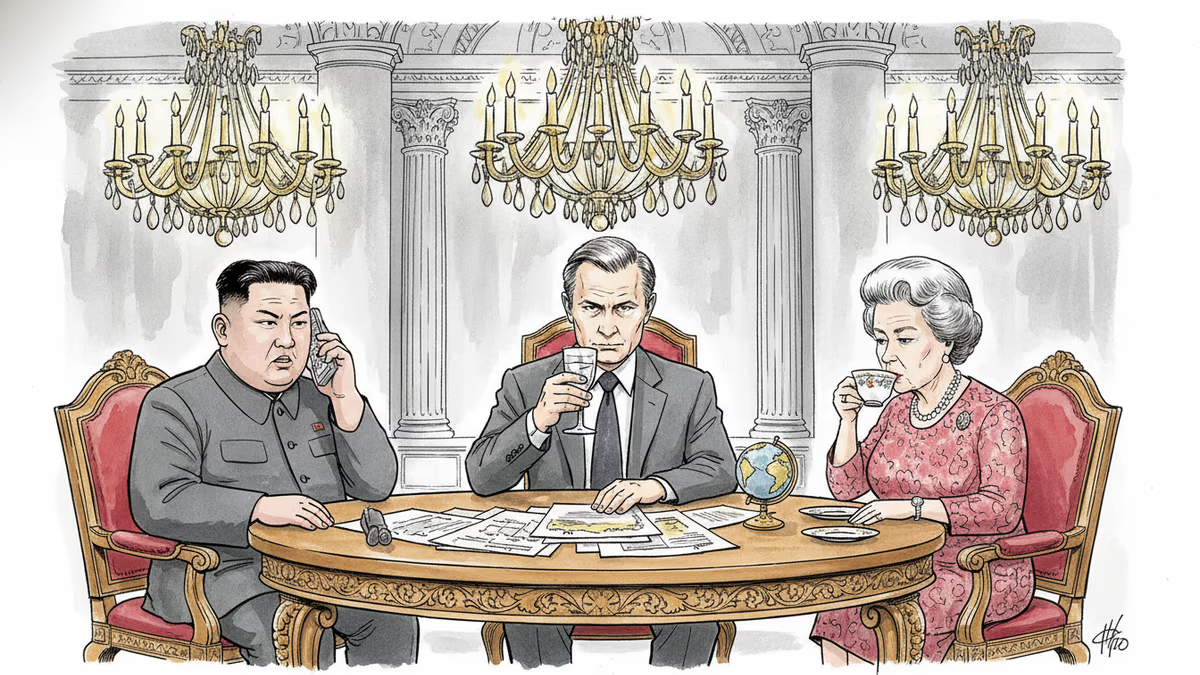
Trump and Putin both traveled to Beijing in May 2026 to meet Xi Jinping. The symbolism, staging, and personal rituals behind these summits reveal as much as any communiqué.

Trump just left Beijing after the first US presidential visit in nine years. Putin arrives Wednesday. Pakistan's PM follows. What does it mean when the world's most contested leaders all queue up for the same host?

Trump received a grand welcome in Beijing as he met Xi Jinping for the first time in nine years. Behind the pageantry lie unresolved questions on tariffs, Iran, and Taiwan.
Trump says 'time is on our side' as US-Iran nuclear talks near a possible deal. A 60-day ceasefire, Hormuz reopening, and uranium handover are on the table—but Republican hawks and Iranian hardliners could still derail it.
Trump and Putin both traveled to Beijing in May 2026 to meet Xi Jinping. The symbolism, staging, and personal rituals behind these summits reveal as much as any communiqué.
Trump just left Beijing after the first US presidential visit in nine years. Putin arrives Wednesday. Pakistan's PM follows. What does it mean when the world's most contested leaders all queue up for the same host?
Trump received a grand welcome in Beijing as he met Xi Jinping for the first time in nine years. Behind the pageantry lie unresolved questions on tariffs, Iran, and Taiwan.
Thoughts
Share your thoughts on this article
Sign in to join the conversation