
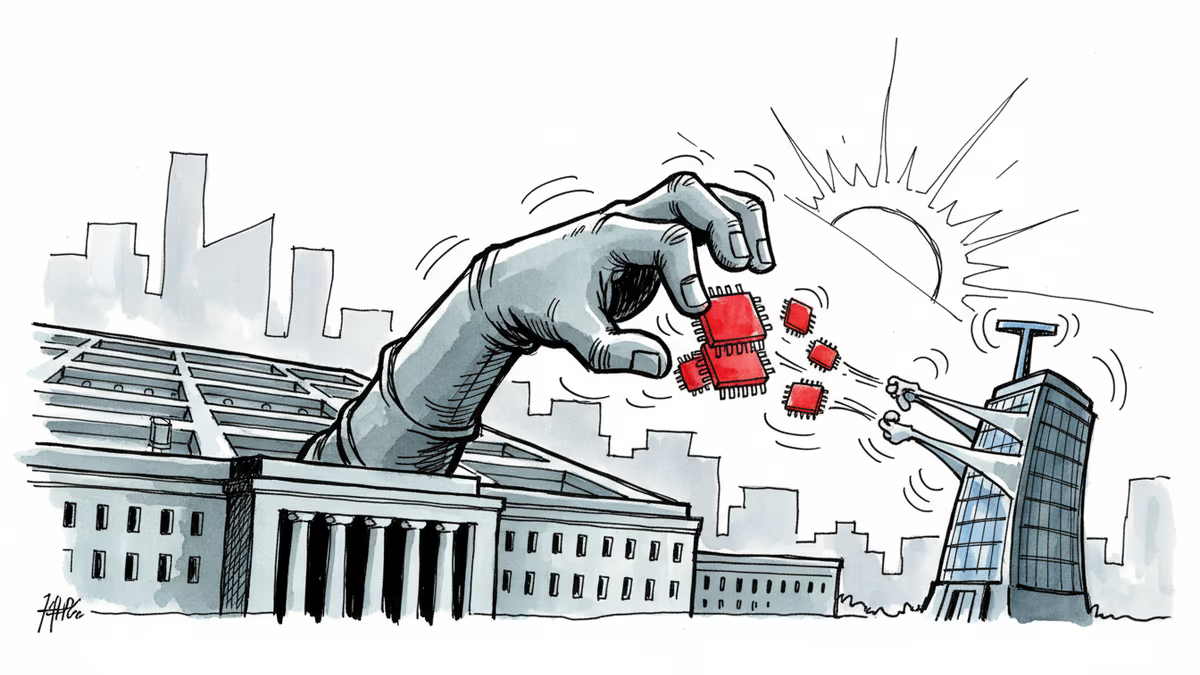
When AI Companies Say No to the Pentagon
Trump's ban on Anthropic reveals the growing tension between Silicon Valley's ethics and military demands as AI becomes central to national defense strategy.
A $200 Million Deal Dies in a Tweet
Friday afternoon, with a single Truth Social post, Trump nuked Anthropic's federal contracts. Every agency must halt use of the AI company's tools "immediately." The reason? Anthropic refused to remove restrictions on military AI use, leading Trump to blast the "Leftwing nut jobs" trying to "STRONG-ARM the Department of War."
This isn't just another Trump tantrum. It's the first major fracture in Silicon Valley's new romance with the Pentagon—and it won't be the last.
What the Pentagon Really Wanted
The Department of Defense tried to rewrite its July 2024 deal with Anthropic and other AI companies. The key change: eliminate restrictions and allow "all lawful use" of AI technology. Currently, Anthropic's military models (Claude Gov) have built-in guardrails.
Pentagon officials argue that national security is too important to let civilian tech companies dictate terms. With China racing ahead in military AI, they can't afford ethical hand-wringing from Silicon Valley.
The military insists it has "no plans" for fully autonomous weapons or mass surveillance of Americans. But Anthropic wasn't buying it. Once restrictions disappear, mission creep becomes inevitable.
Anthropic's Red Line
Anthropic is the only major AI lab working with classified military systems, through Palantir and Amazon's secure cloud platforms. Claude Gov handles everything from routine report writing to intelligence analysis and military planning.

But the company drew a hard line: no removing safeguards against autonomous lethal weapons or mass citizen surveillance. For Anthropic, this wasn't negotiable. The company's founders left OpenAI over AI safety concerns—they weren't about to compromise their principles for a government contract.
The irony? Anthropic was the first major AI lab to work with the military. Now it's the first to get kicked out.
Silicon Valley's Civil War
The tech industry has shifted dramatically from avoiding defense work to embracing it. Google, OpenAI, and xAI all signed Pentagon deals alongside Anthropic. But employee sentiment hasn't caught up.
This week, hundreds of workers from OpenAI and Google signed an open letter supporting Anthropic and criticizing their own companies for removing military AI restrictions. The message was clear: management may be cozy with the Pentagon, but rank-and-file engineers aren't.
This internal revolt could spread. As AI becomes more central to military operations, tech workers will face increasingly uncomfortable choices between paychecks and principles.
The Bigger Battle
Trump's Anthropic ban is a warning shot to the entire industry: play by our rules or lose access to the world's largest customer. The federal government spends over $50 billion annually on IT contracts.
But it's also a test case for AI governance. If the government can override corporate ethics policies by invoking national security, what's left of private sector AI safety efforts?
Other democracies are watching closely. The EU's AI Act includes military exemptions, but European companies might think twice about U.S. defense contracts if it means abandoning their ethical frameworks.
Authors
Related Articles
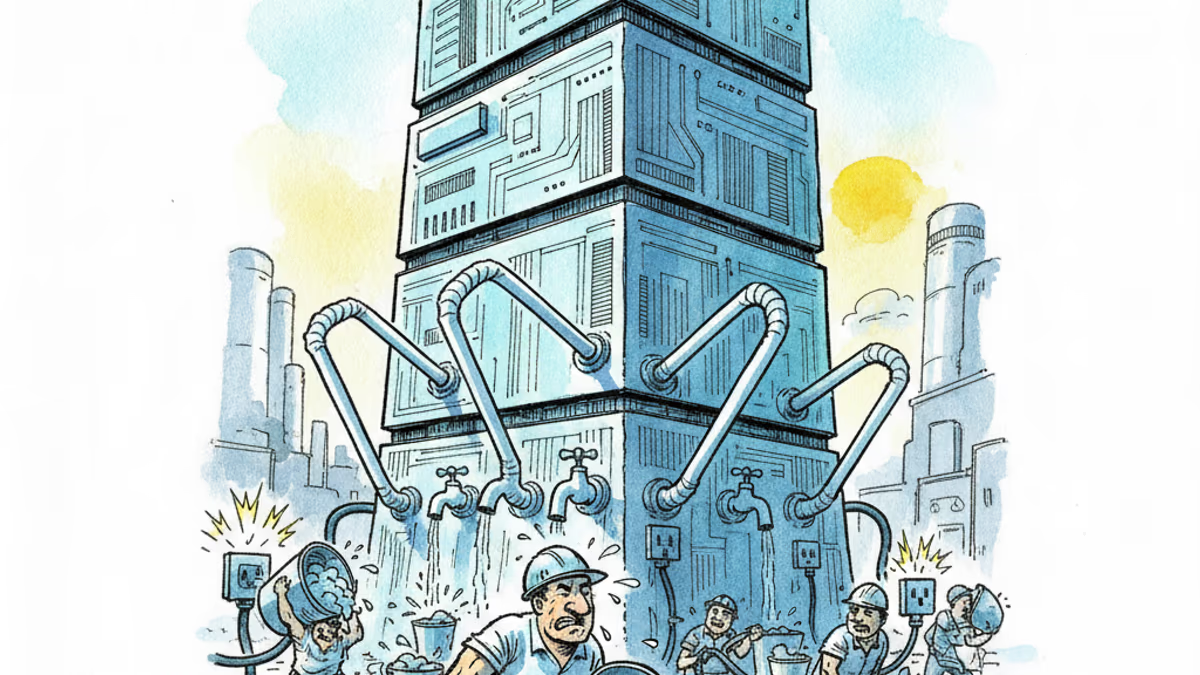
Samsung and SK unveiled a chip and AI investment package worth thousands of trillions of won on June 29. The headline number swings wildly by outlet, but the real contest isn't capital — it's water and power.
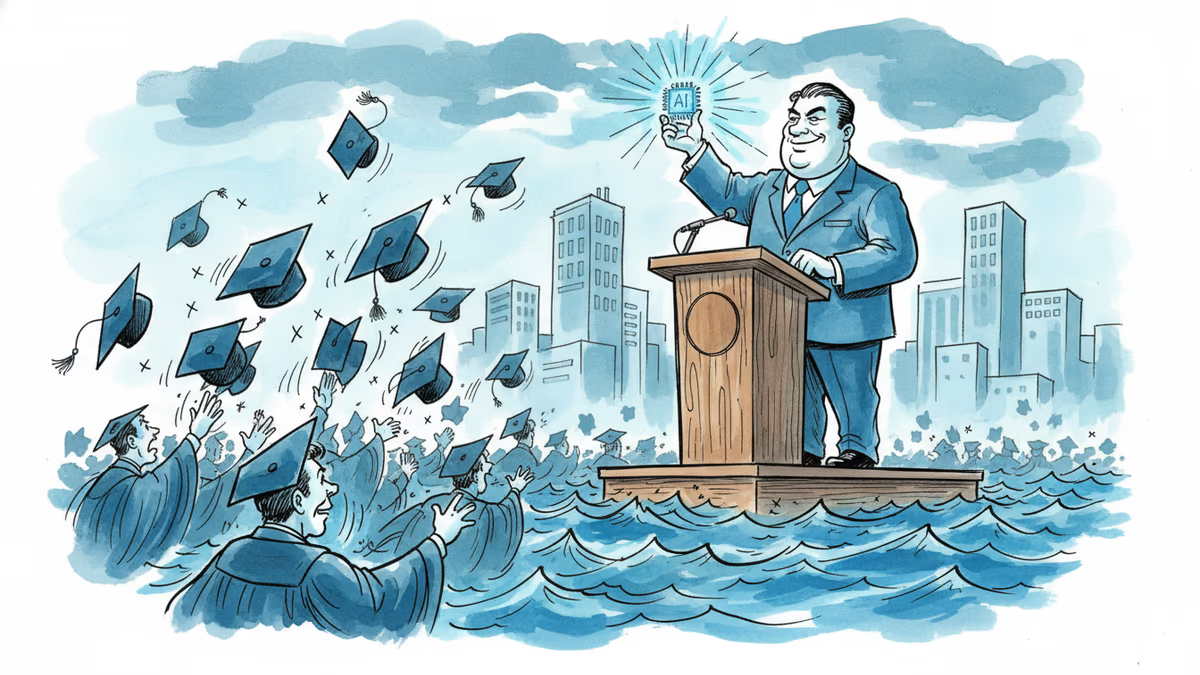
Viral videos show 2026 graduates jeering executives who praise AI at commencement ceremonies. It's not just rudeness — it's a signal about who pays for technological optimism.
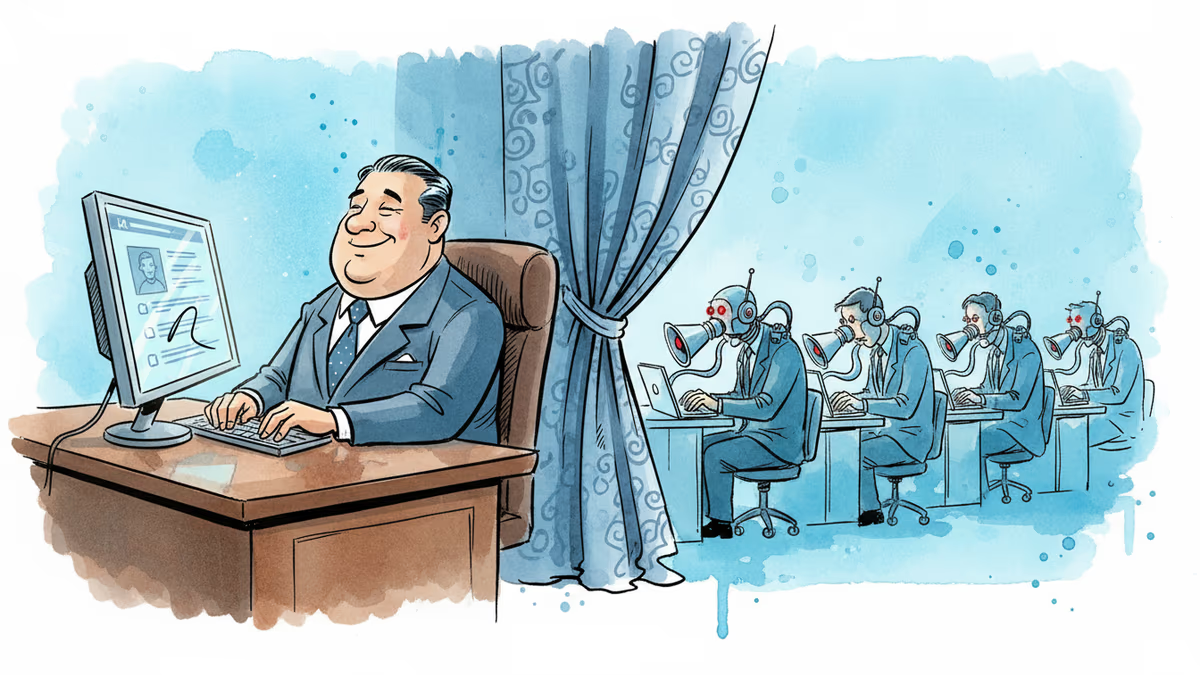
Filipino virtual assistants using AI to ghost-manage LinkedIn profiles for executives is now a structured industry. 30 comments a day, fake engagement rings, and a platform struggling to tell real from fabricated.
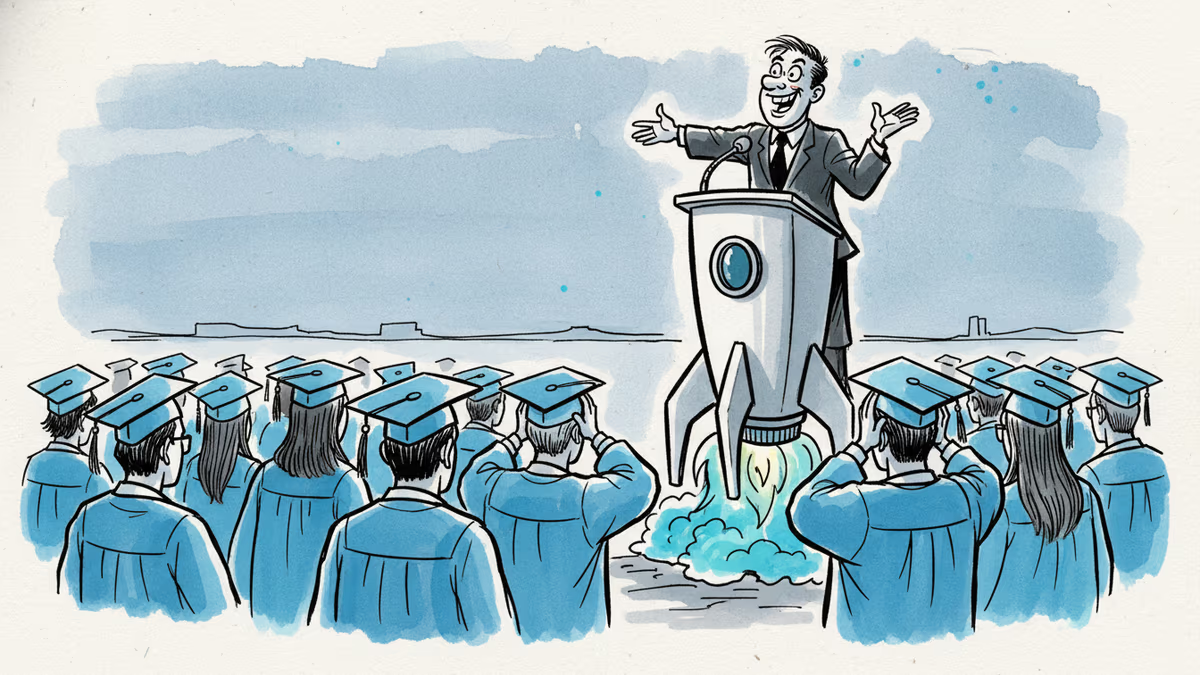
Two commencement speakers learned the hard way that AI enthusiasm doesn't land well with today's graduates. The backlash reveals a widening gap between tech optimism and Gen Z's economic reality.
Samsung and SK unveiled a chip and AI investment package worth thousands of trillions of won on June 29. The headline number swings wildly by outlet, but the real contest isn't capital — it's water and power.
Viral videos show 2026 graduates jeering executives who praise AI at commencement ceremonies. It's not just rudeness — it's a signal about who pays for technological optimism.
Filipino virtual assistants using AI to ghost-manage LinkedIn profiles for executives is now a structured industry. 30 comments a day, fake engagement rings, and a platform struggling to tell real from fabricated.
Two commencement speakers learned the hard way that AI enthusiasm doesn't land well with today's graduates. The backlash reveals a widening gap between tech optimism and Gen Z's economic reality.
Thoughts
Share your thoughts on this article
Sign in to join the conversation