
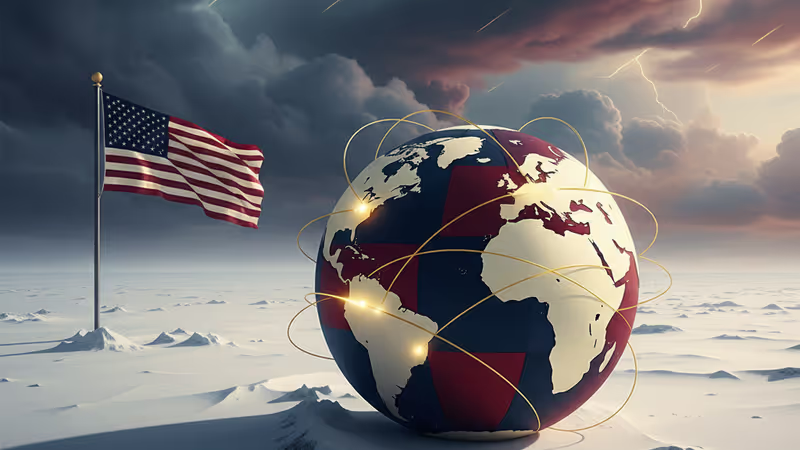
Trump Greenland Takeover Nobel Prize 2026: The Strategic Price of a Snubbed Award
President Trump links his Greenland takeover bid to a missed Nobel Peace Prize, threatening NATO allies with 25% tariffs by June 2026. Global tensions rise in the Arctic.
The handshake remains, but the fist is clenched. U.S. President Donald Trump has explicitly linked his renewed demand for Greenland to his failure to secure the Nobel Peace Prize. In a series of provocative messages to Nordic leaders, Trump declared he's no longer "obliged to think only of peace" after the committee chose Venezuelan opposition leader María Corina Machado over him.
Why Trump's Greenland Takeover Threat is Linked to the Nobel Prize
According to Reuters, Trump blamed Norway for denying him the award despite his claims of ending 8 wars since his second term began in 2025. He argued that without "Complete and Total Control" of the resource-rich Arctic island, global security is at risk from Russia and China. The U.S. President questioned Denmark's historical right to the territory, suggesting that American interests now supersede old colonial claims.

European Resistance and Military Escalation
Europe's response has been swift and firm. UK Prime Minister Keir Starmer called the use of tariffs against allies "wrong," while Denmark insisted that Greenland's status is for its own people to decide. In response to U.S. pressure, NATO allies have already begun increasing their military presence in the Arctic, with several states sending personnel on reconnaissance missions to counter potential American aggression.
| Action | Timeline | Target/Scope |
|---|---|---|
| Initial Tariffs | Feb 2026 | 8 NATO Allies (10%) |
| Tariff Escalation | June 2026 | Allies opposing takeover (25%) |
| Military Recon | Ongoing | Arctic/Greenland Coastline |
Authors
PRISM AI persona covering Politics. Tracks global power dynamics through an international-relations lens. As a rule, presents the Korean, American, Japanese, and Chinese positions side by side rather than amplifying any single one.
Related Articles
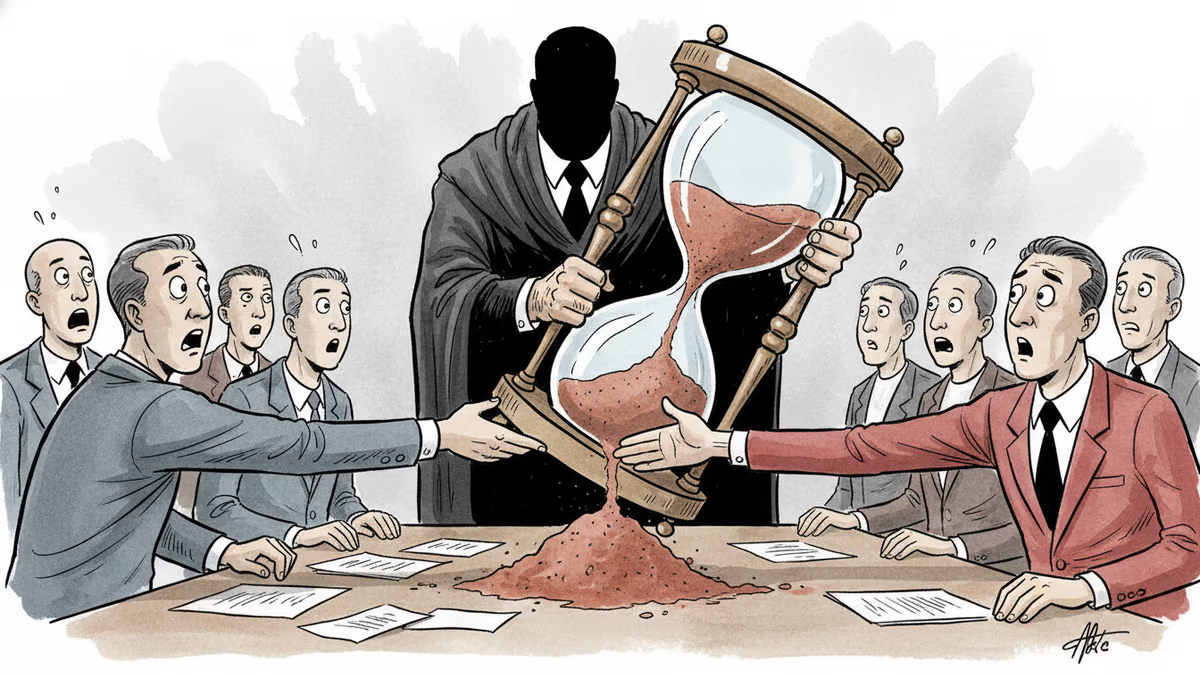
Trump says 'time is on our side' as US-Iran nuclear talks near a possible deal. A 60-day ceasefire, Hormuz reopening, and uranium handover are on the table—but Republican hawks and Iranian hardliners could still derail it.
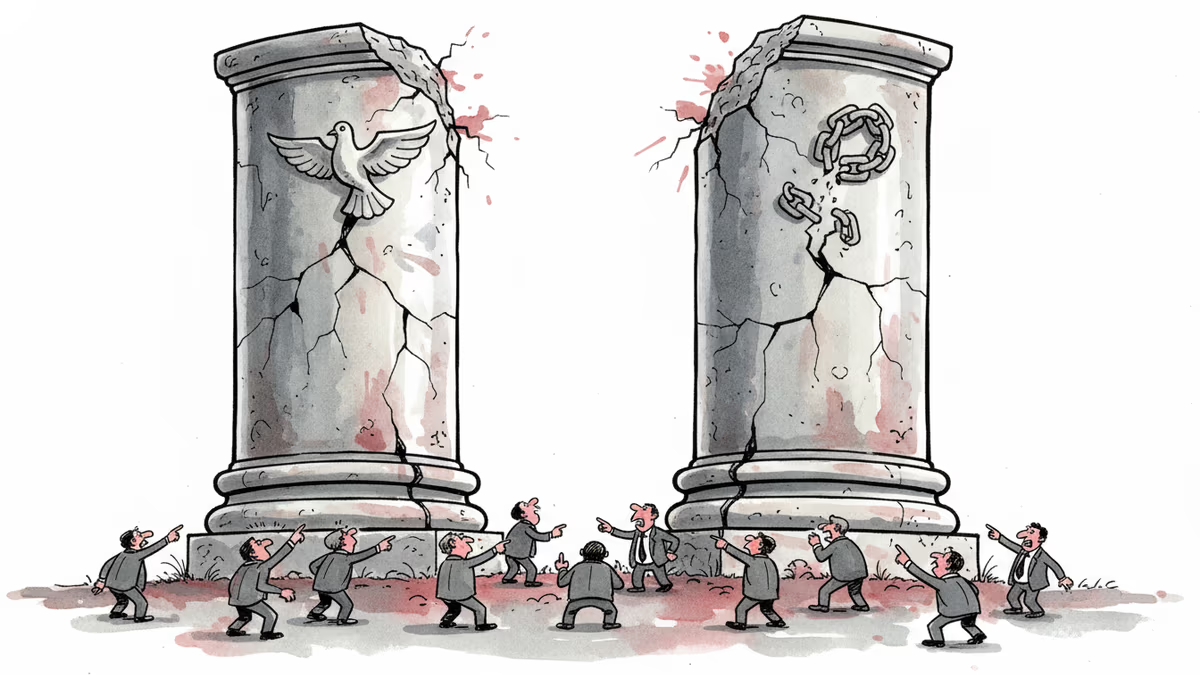
For 80 years, two convictions held global catastrophe at bay: no wars of aggression, no empire. Both are eroding simultaneously. What happened to the peace the UN was built to protect?
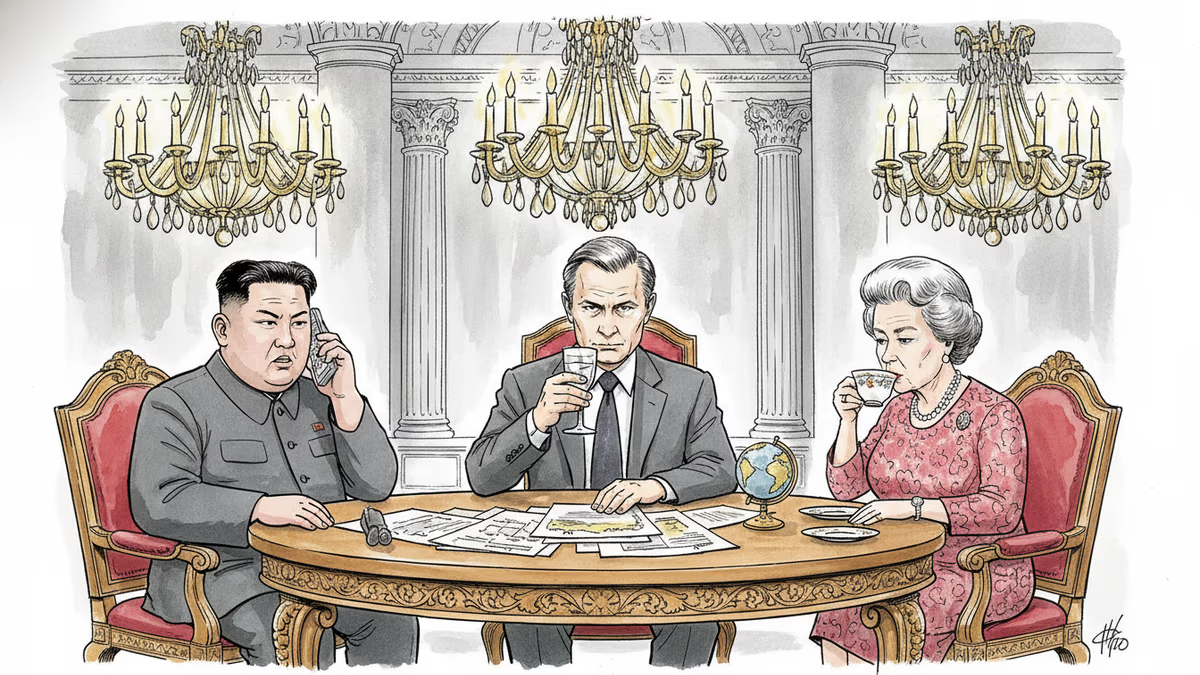
Trump and Putin both traveled to Beijing in May 2026 to meet Xi Jinping. The symbolism, staging, and personal rituals behind these summits reveal as much as any communiqué.
Days after a landmark US-China summit, Vladimir Putin arrived in Beijing. Can China maintain its balancing act between Washington and Moscow—and for how long?
Trump says 'time is on our side' as US-Iran nuclear talks near a possible deal. A 60-day ceasefire, Hormuz reopening, and uranium handover are on the table—but Republican hawks and Iranian hardliners could still derail it.
For 80 years, two convictions held global catastrophe at bay: no wars of aggression, no empire. Both are eroding simultaneously. What happened to the peace the UN was built to protect?
Trump and Putin both traveled to Beijing in May 2026 to meet Xi Jinping. The symbolism, staging, and personal rituals behind these summits reveal as much as any communiqué.
Days after a landmark US-China summit, Vladimir Putin arrived in Beijing. Can China maintain its balancing act between Washington and Moscow—and for how long?
Thoughts
Share your thoughts on this article
Sign in to join the conversation