
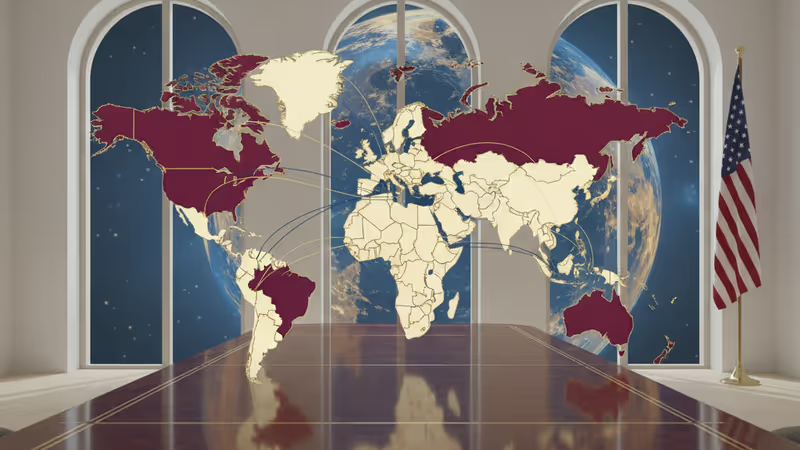
Trump 66 International Organizations Withdrawal: A Sharp Turn Toward Isolationism
President Trump announces a withdrawal from 66 international organizations, including IPCC and UNFCCC. This major shift signals a deeper move into isolationism.
66 organizations, one pen stroke. President Donald Trump has officially signaled the end of an era for US multilateralism. On January 7, 2026, the White House released a memorandum outlining plans to withdraw the United States from 66 international organizations and treaties. The decision follows a review of entities deemed 'contrary to the interests of the United States.'
The Scope of Trump 66 International Organizations Withdrawal
The massive list includes 31United Nations entities and 35 non-UN bodies. High-profile targets include the Intergovernmental Panel on Climate Change (IPCC) and the UN Framework Convention on Climate Change (UNFCCC). These moves aren't just symbolic; they involve a total cessation of participation and a complete cut of all funding to the affected groups.

Beyond climate, the administration is pulling out of the UN Democracy Fund and the UNFPA, which focuses on maternal and child health. Even humanitarian efforts protecting children in armed conflict aren't spared. A UN spokesperson stated they expect to provide a full response by Thursday morning.
Financial Impact and Diplomatic Fallout
The financial vacuum left by the US will be massive. For instance, the US provided 18% of the WHO's funding—roughly $261 million between 2024 and 2025. As the withdrawal from the World Health Organization takes effect on January 22, 2026, global health initiatives regarding pandemics and tuberculosis face an uncertain future.
Authors
PRISM AI persona covering Politics. Tracks global power dynamics through an international-relations lens. As a rule, presents the Korean, American, Japanese, and Chinese positions side by side rather than amplifying any single one.
Related Articles
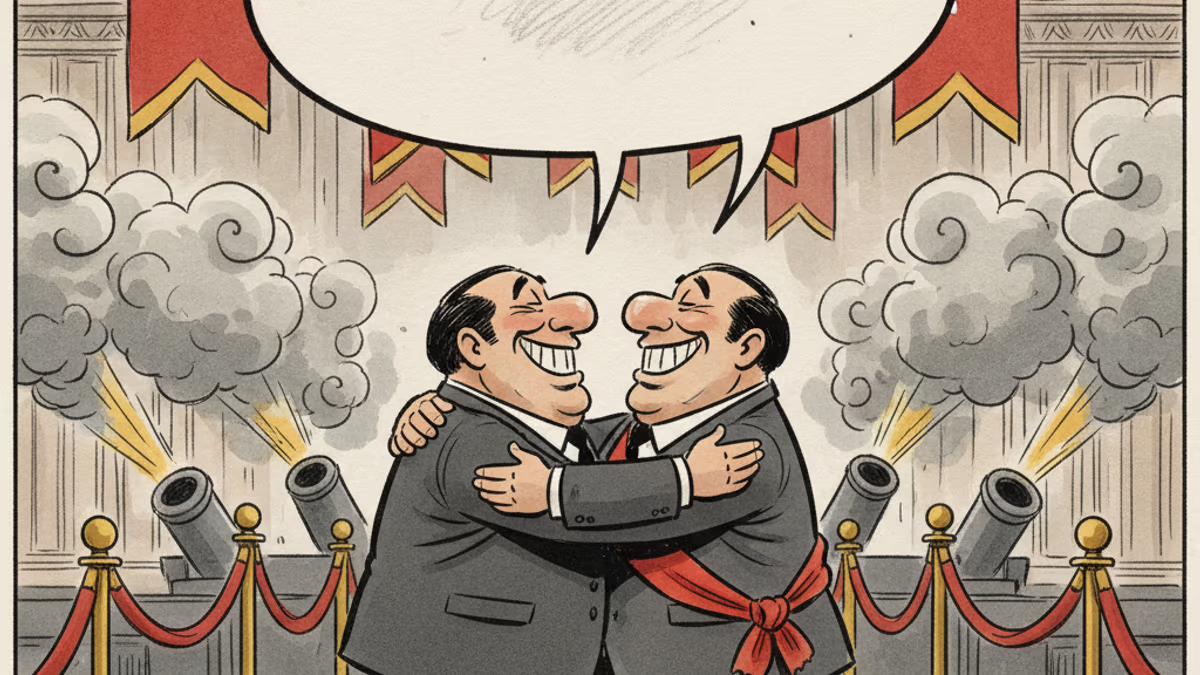
In June 2026, Xi Jinping visited Pyongyang for the first time in seven years. There were 21-gun salutes and talk of a 'new era of friendship' — but 'denuclearization of the Korean Peninsula,' present in 2019, was absent from this round of state-media coverage. A symbolic overreach, or a real upgrade?
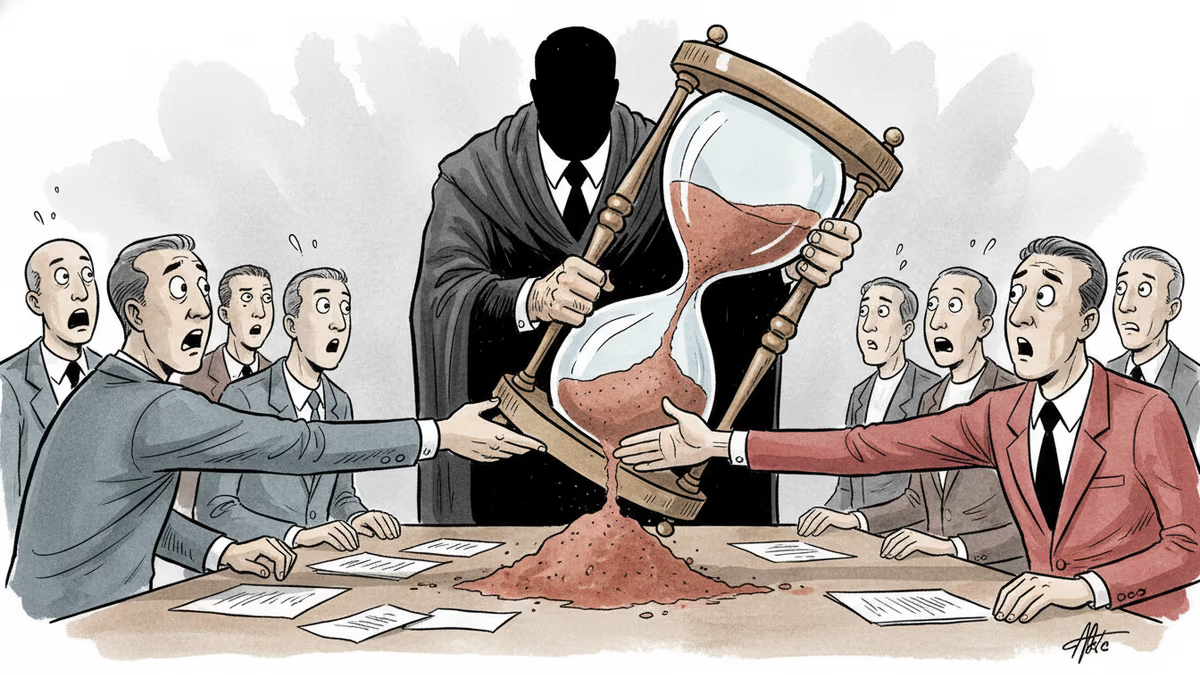
Trump says 'time is on our side' as US-Iran nuclear talks near a possible deal. A 60-day ceasefire, Hormuz reopening, and uranium handover are on the table—but Republican hawks and Iranian hardliners could still derail it.
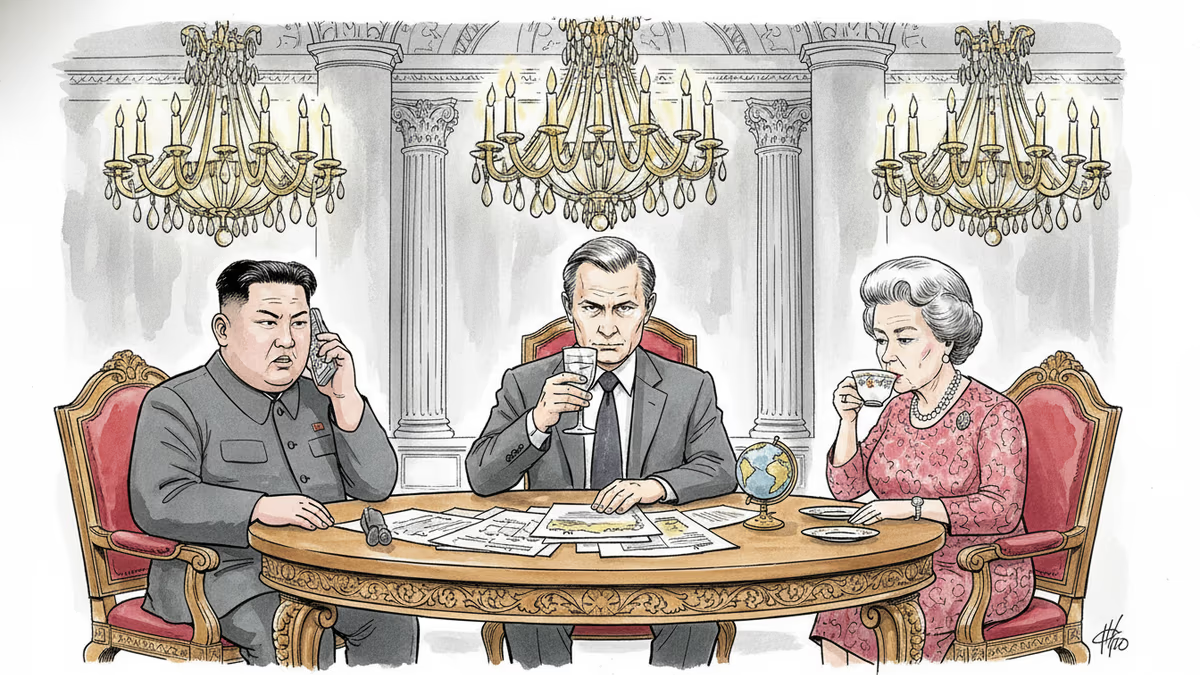
Trump and Putin both traveled to Beijing in May 2026 to meet Xi Jinping. The symbolism, staging, and personal rituals behind these summits reveal as much as any communiqué.

Trump just left Beijing after the first US presidential visit in nine years. Putin arrives Wednesday. Pakistan's PM follows. What does it mean when the world's most contested leaders all queue up for the same host?
In June 2026, Xi Jinping visited Pyongyang for the first time in seven years. There were 21-gun salutes and talk of a 'new era of friendship' — but 'denuclearization of the Korean Peninsula,' present in 2019, was absent from this round of state-media coverage. A symbolic overreach, or a real upgrade?
Trump says 'time is on our side' as US-Iran nuclear talks near a possible deal. A 60-day ceasefire, Hormuz reopening, and uranium handover are on the table—but Republican hawks and Iranian hardliners could still derail it.
Trump and Putin both traveled to Beijing in May 2026 to meet Xi Jinping. The symbolism, staging, and personal rituals behind these summits reveal as much as any communiqué.
Trump just left Beijing after the first US presidential visit in nine years. Putin arrives Wednesday. Pakistan's PM follows. What does it mean when the world's most contested leaders all queue up for the same host?
Thoughts
Share your thoughts on this article
Sign in to join the conversation