
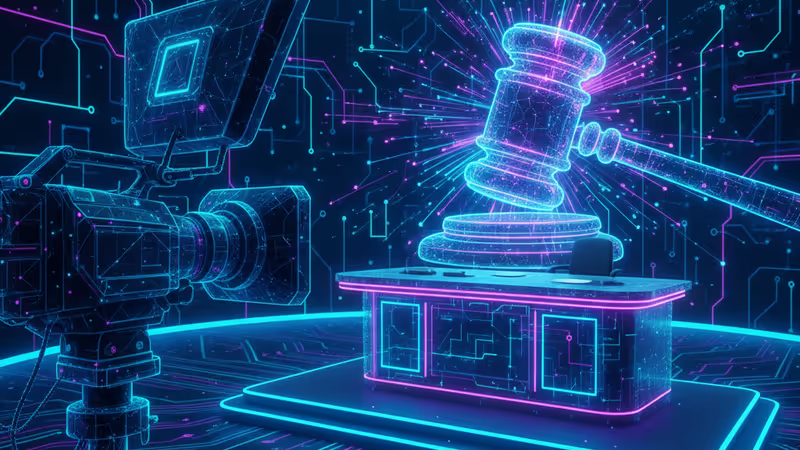
FCC Equal-Time Rule Talk Shows 2026: A New Era of Regulatory Pressure
The FCC, led by Brendan Carr, warns talk shows about losing their equal-time rule exemption. Explore the FCC equal-time rule talk shows 2026 policy shift.
The era of free-wheeling political satire on late-night TV just hit a regulatory wall. On January 22, 2026, the Federal Communications Commission (FCC) issued a stern warning to talk shows, signaling they might lose their long-standing exemption from the 'equal-time rule.'
Inside the FCC Equal-Time Rule Talk Shows 2026 Guidance
Chaired by Brendan Carr, a vocal supporter of the Trump administration, the FCC's latest move is being viewed as a campaign against alleged liberal bias on broadcast TV. The public notice emphasizes that broadcast stations, which use the public spectrum, must not "unfairly put their thumbs on the scale" for any specific political candidate.

Carr's past actions provide critical context; he's previously targeted ABC's 'Jimmy Kimmel Live' and 'The View.' This new guidance suggests that if these shows feature a Democratic candidate, they may be legally obligated to offer equivalent airtime to Republican opponents, fundamentally changing the production of entertainment media.
Public Interest vs. Partisan Bias
The FCC argues that stations have an obligation to operate in the public interest, not in a "narrow partisan" manner. However, critics argue this move erodes the agency's historical independence from the White House and could lead to a "chilling effect" where networks avoid political topics altogether to escape regulatory headaches.
Authors
Related Articles
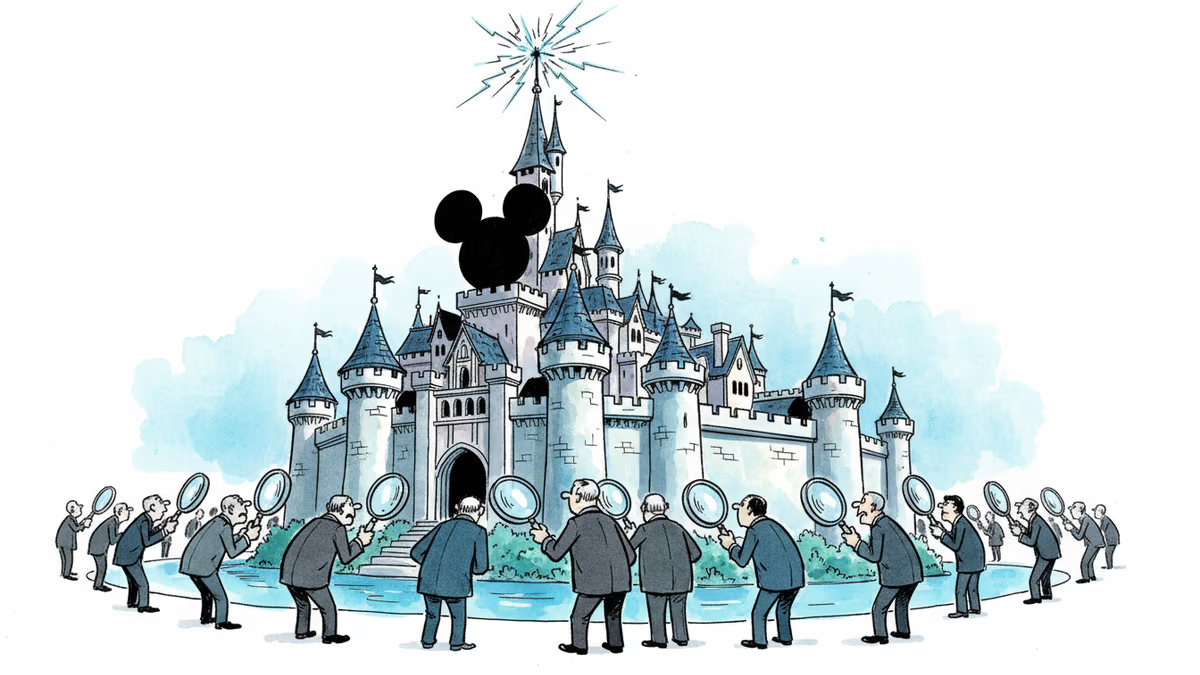
Josh D'Amaro took over Disney with a bold Disney Plus vision. Days later, he's in a First Amendment fight with the Trump administration over The View. What does this mean for media freedom?
Wisconsin Governor Tony Evers vetoed an age verification bill for adult sites, citing privacy concerns. With 25+ states going the other way, the debate cuts to the heart of online freedom vs. child protection.
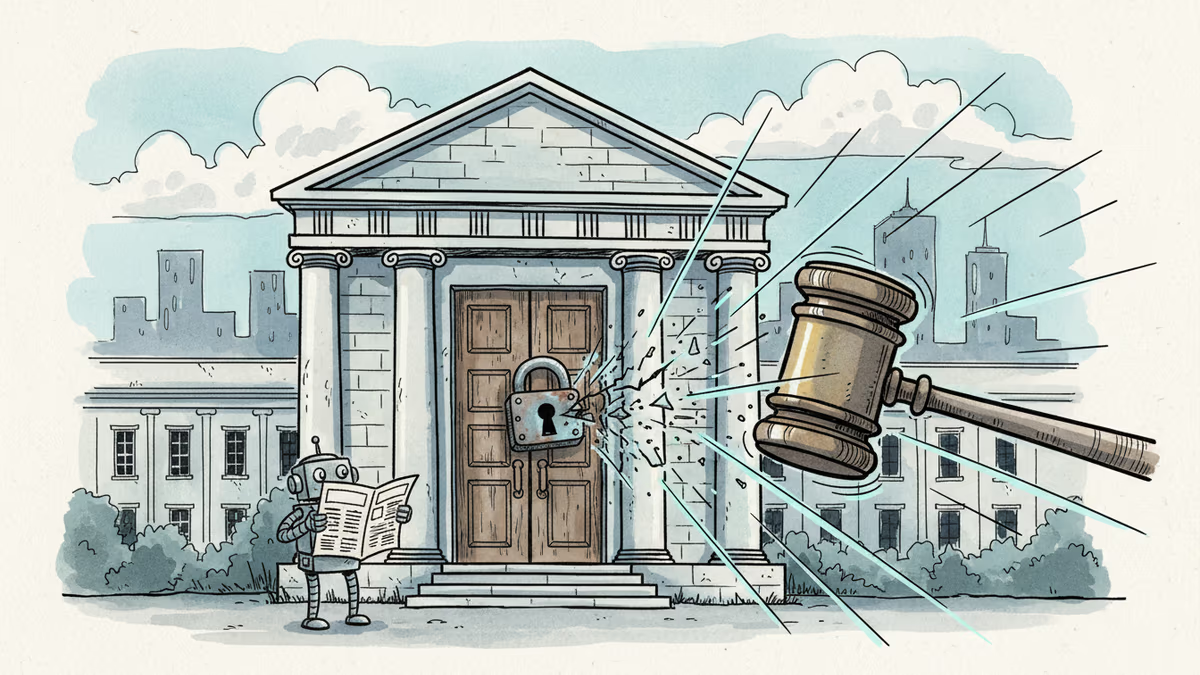
A federal judge blocked the Pentagon's blacklisting of Anthropic, ruling that punishing a company for public criticism of government policy is a textbook First Amendment violation.
The FCC has banned new foreign-made consumer routers, citing cyberattacks linked to China. Every major brand is affected. Here's what it means for your home, your wallet, and the future of internet hardware.
Josh D'Amaro took over Disney with a bold Disney Plus vision. Days later, he's in a First Amendment fight with the Trump administration over The View. What does this mean for media freedom?
Wisconsin Governor Tony Evers vetoed an age verification bill for adult sites, citing privacy concerns. With 25+ states going the other way, the debate cuts to the heart of online freedom vs. child protection.
A federal judge blocked the Pentagon's blacklisting of Anthropic, ruling that punishing a company for public criticism of government policy is a textbook First Amendment violation.
The FCC has banned new foreign-made consumer routers, citing cyberattacks linked to China. Every major brand is affected. Here's what it means for your home, your wallet, and the future of internet hardware.
Thoughts
Share your thoughts on this article
Sign in to join the conversation