

Washington Post Hannah Natanson Device Search Halt: A Win for Press Freedom?
A federal judge has halted the US government's search of devices seized from Washington Post reporter Hannah Natanson. Read about the clash over press freedom.
Can the government legally sift through a reporter's entire digital life? A federal judge just issued a critical "pause" on that very question. On January 22, 2026, the court ordered the US government to immediately stop searching devices seized from Washington Post reporter Hannah Natanson.
Legal Battle Over Washington Post Hannah Natanson Device Search Halt
The conflict began one week ago when the FBI executed a search warrant at Natanson’s home. The raid was part of a probe into alleged leaks by a Pentagon contractor. While Natanson herself isn't the target, her work and personal devices were hauled away. The Post filed a motion today, arguing that "almost none" of the data is responsive to the warrant and much of it is protected by the First Amendment and attorney-client privilege.

Privacy vs. National Security
This standstill is a temporary reprieve. The court will soon hold further proceedings to decide if the search can resume or if the devices must be returned. It’s a classic tug-of-war: the government claims it needs the data for national security, while journalists argue that such broad seizures threaten the very core of investigative reporting. The outcome could set a massive precedent for digital rights in the 2020s.
Authors
Related Articles
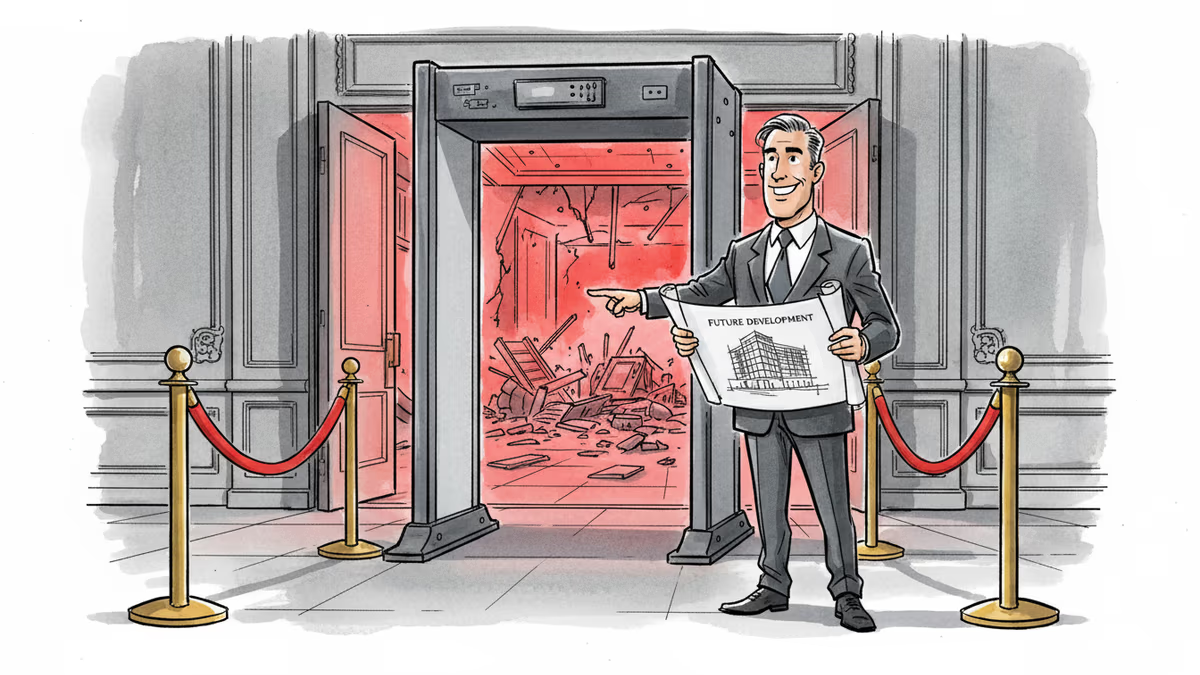
A gunman attacked a Secret Service checkpoint at the White House Correspondents' Dinner. Trump's first public reaction wasn't about security. It was about his $400M ballroom project.

Hours after an armed suspect attempted to breach the White House Correspondents Dinner, Trump used the security scare to publicly defend his White House ballroom project. What does that tell us?
Wisconsin Governor Tony Evers vetoed an age verification bill for adult sites, citing privacy concerns. With 25+ states going the other way, the debate cuts to the heart of online freedom vs. child protection.
FBI surveillance systems breached, North Korea steals $280M in crypto, Claude Code leaks malware, and a 22-year-old student helps take down a record botnet. This week in cybersecurity.
A gunman attacked a Secret Service checkpoint at the White House Correspondents' Dinner. Trump's first public reaction wasn't about security. It was about his $400M ballroom project.
Hours after an armed suspect attempted to breach the White House Correspondents Dinner, Trump used the security scare to publicly defend his White House ballroom project. What does that tell us?
Wisconsin Governor Tony Evers vetoed an age verification bill for adult sites, citing privacy concerns. With 25+ states going the other way, the debate cuts to the heart of online freedom vs. child protection.
FBI surveillance systems breached, North Korea steals $280M in crypto, Claude Code leaks malware, and a 22-year-old student helps take down a record botnet. This week in cybersecurity.
Thoughts
Share your thoughts on this article
Sign in to join the conversation