
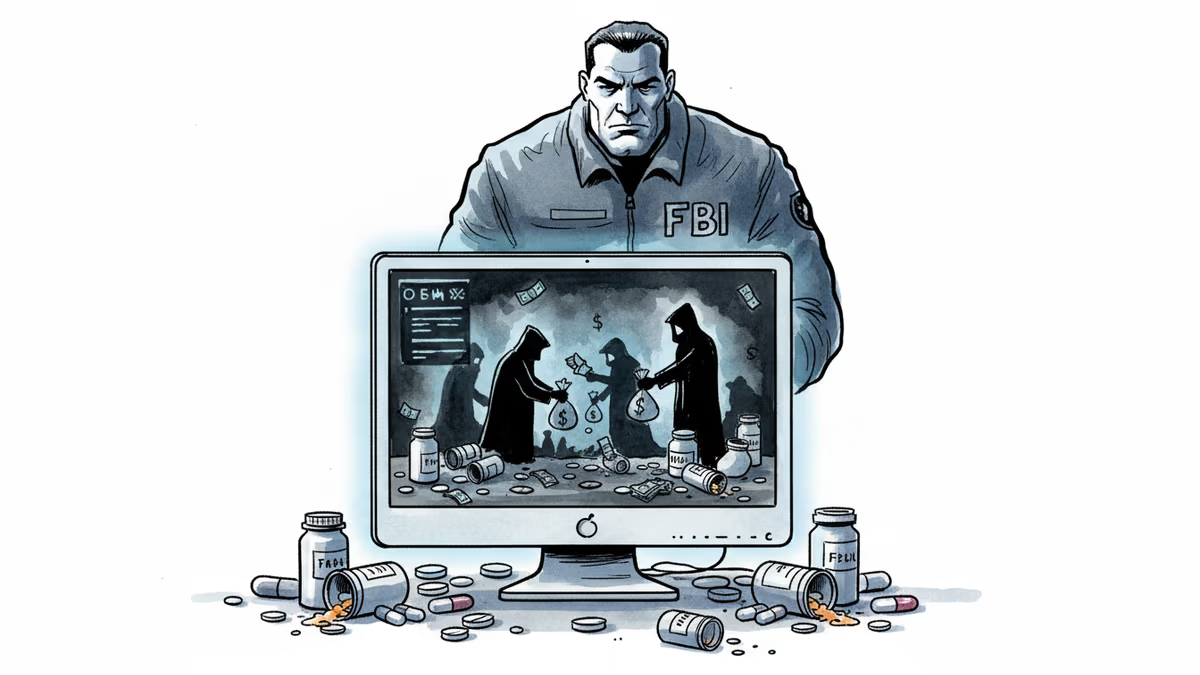
FBI Informant Helped Run $100M Dark Web Drug Market That Killed 27
Court filings reveal an FBI informant co-operated the Incognito dark web marketplace for nearly two years, approving fentanyl sales that led to multiple overdose deaths including a 27-year-old tennis player.
The Day $100 Million in Drugs Were Sold, the FBI Was Watching
In a Manhattan courtroom, Arkansas doctor David Churchill stood beside his wife, fighting back tears as he described finding his 27-year-old son Reed's body—half on the couch, half on the floor, "cold and dead and stiff" from a fatal dose of fentanyl disguised as oxycodone.
"As you might imagine, it was the worst day of my life," Churchill told the court.
Minutes later, however, came a revelation that would shake the foundations of how we think about law enforcement and digital crime: The dark web marketplace that sold the pills that killed his son had been co-operated by an FBI informant for nearly two years.
When the Government Becomes the Dealer
The Incognito marketplace wasn't just infiltrated by law enforcement—it was actively managed by them. Court filings reveal that an FBI "confidential human source" served as a full moderator with the power to remove vendors, settle disputes, and approve drug sales.
According to Lin Rui-Siang, the 25-year-old Taiwanese man sentenced to 30 years for running Incognito, the informant was far more than an undercover observer. "They were literally running the site," Lin told WIRED from jail. "They were running the day-to-day operations."
The informant's own communications with the FBI claimed oversight of 95 percent of the site's transactions. This wasn't passive surveillance—this was active participation in a drug empire that would ultimately kill at least 27 people.
Red Flags, Ignored
The most damning evidence lies in what happened when users complained about tainted drugs. In November 2023, one user reported that a vendor's pills had sent his mother to the hospital: "Someone almost died. Medical bills and the police. Not OK."
The FBI informant's response? A simple refund. The vendor stayed on the platform.

Days later, another user complained that the same vendor's pills "ALMOST KILLED ME." Again, no action. That vendor went on to complete over 1,000 more orders in the following months.
Most tragically, Lin had programmed an automated system to flag potential fentanyl sales based on keywords like "potent opioids." When the system flagged RedLightLabs—the vendor that would sell the pills that killed Reed Churchill—the FBI informant disregarded the warning less than a week before Churchill's death.
A Judge's Skepticism
"I'm somewhat skeptical that the government, having infiltrated this operation, had to let it go on for as long as it did," Judge Colleen McMahon said during Lin's sentencing hearing.
The prosecution defended the FBI's approach, arguing that the informant was necessary to identify Lin and permanently shut down the marketplace. Assistant US Attorney Ryan Finkel claimed the FBI had to maintain a "balance" between harm minimization and detective work.
But Judge McMahon wasn't buying the distinction between "moderator" and "administrator." "I don't care what his title was," she said. "He was an FBI asset."
The Father's Measured Response
David Churchill learned about the FBI informant's role only during the sentencing hearing—the first time he'd heard that a government agent had helped facilitate the sale of the pills that killed his son.
His response was remarkably restrained: "I don't want to throw the FBI under the bus. It won't bring Reed back. But maybe next time, they could be a little bit more aggressive in shutting things down."
Behind that measured tone lies a father's quiet devastation and a question that should trouble us all.
The Collateral Damage of Digital Justice
The Incognito case isn't unique. As law enforcement adapts to digital-age crime, the line between investigation and participation has blurred beyond recognition. FBI agents have run child exploitation sites to catch predators. They've operated hacking tools to identify criminals. They've maintained drug marketplaces to build cases.
Each time, the justification is the same: temporary harm to prevent greater harm. But who decides what constitutes "greater"? And who bears the cost when that calculation goes wrong?
Authors
Related Articles
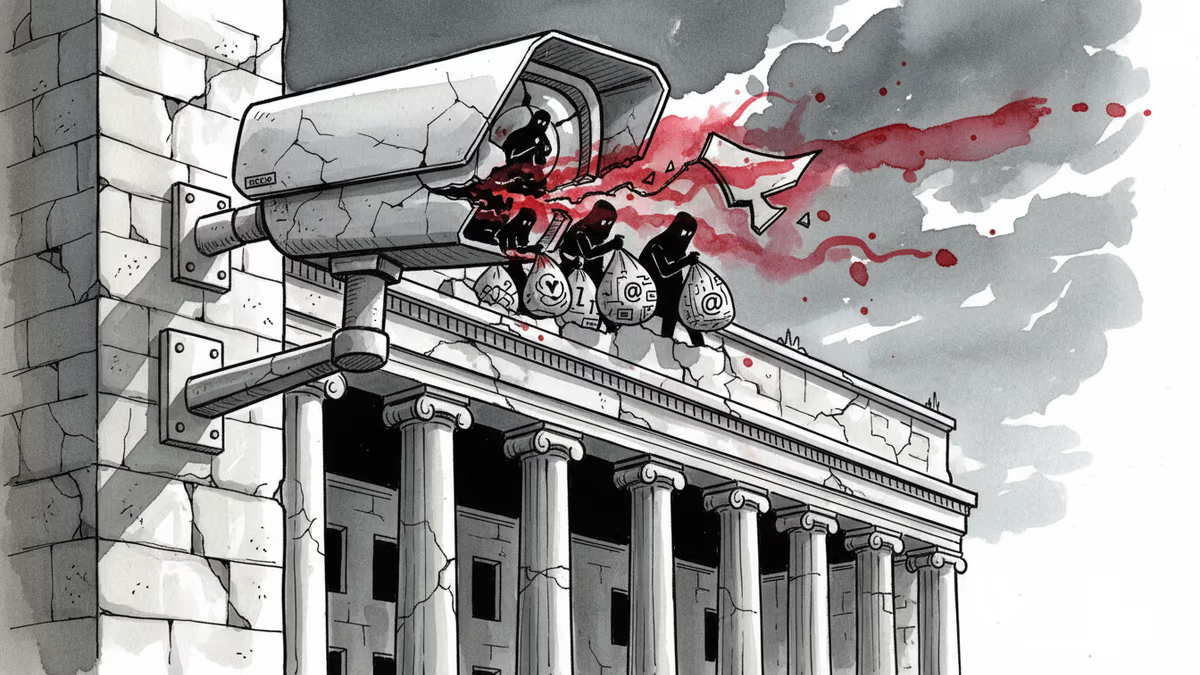
FBI surveillance systems breached, North Korea steals $280M in crypto, Claude Code leaks malware, and a 22-year-old student helps take down a record botnet. This week in cybersecurity.
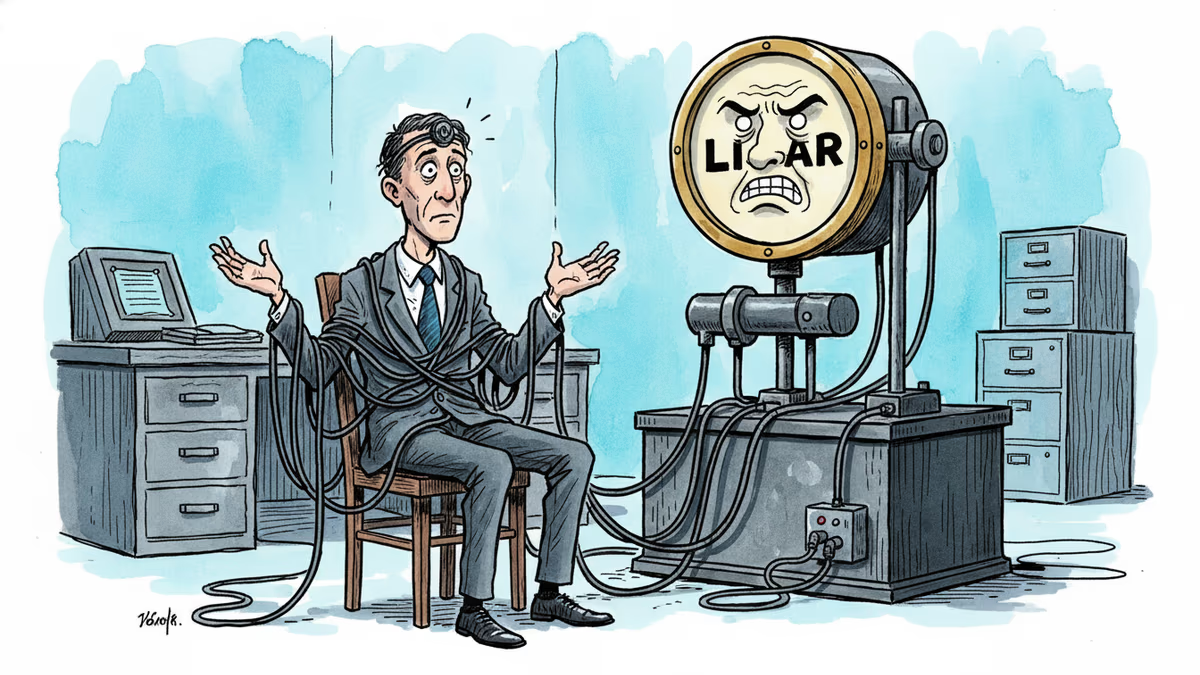
George Maschke passed 11 years of military security clearance, then failed an FBI polygraph. Decades later, the science still doesn't support the test—so why do agencies keep using it?
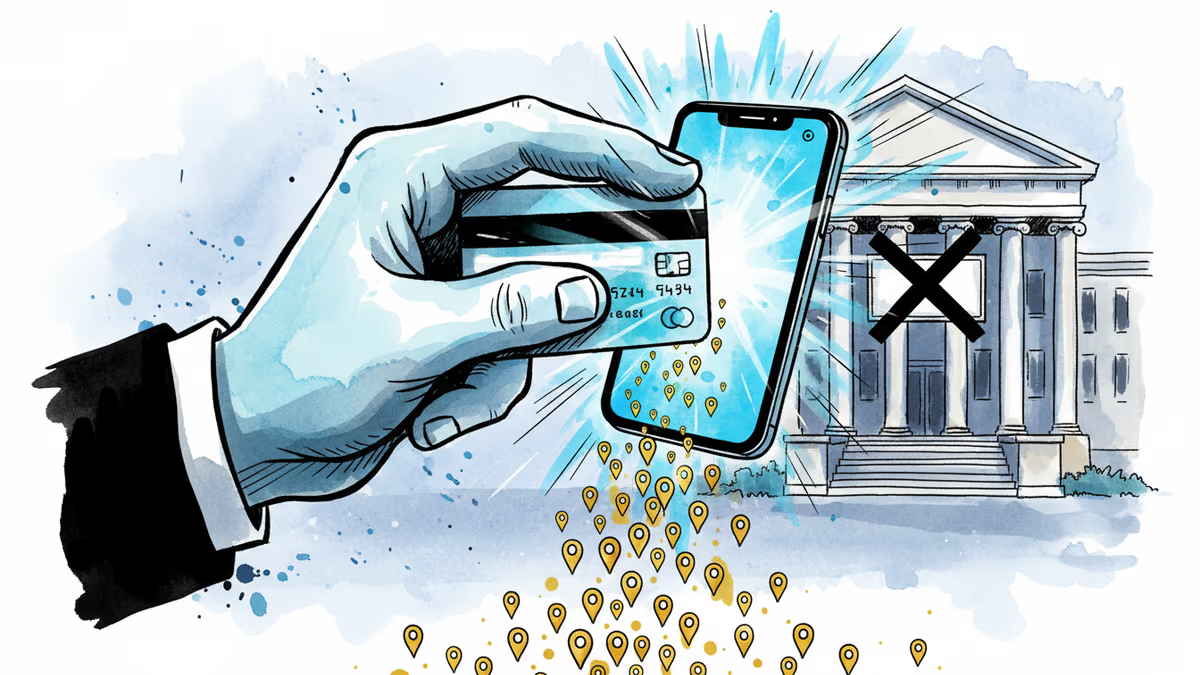
FBI Director Kash Patel confirmed the agency purchases Americans' location data from commercial brokers without a warrant. The admission raises urgent questions about the future of the Fourth Amendment.
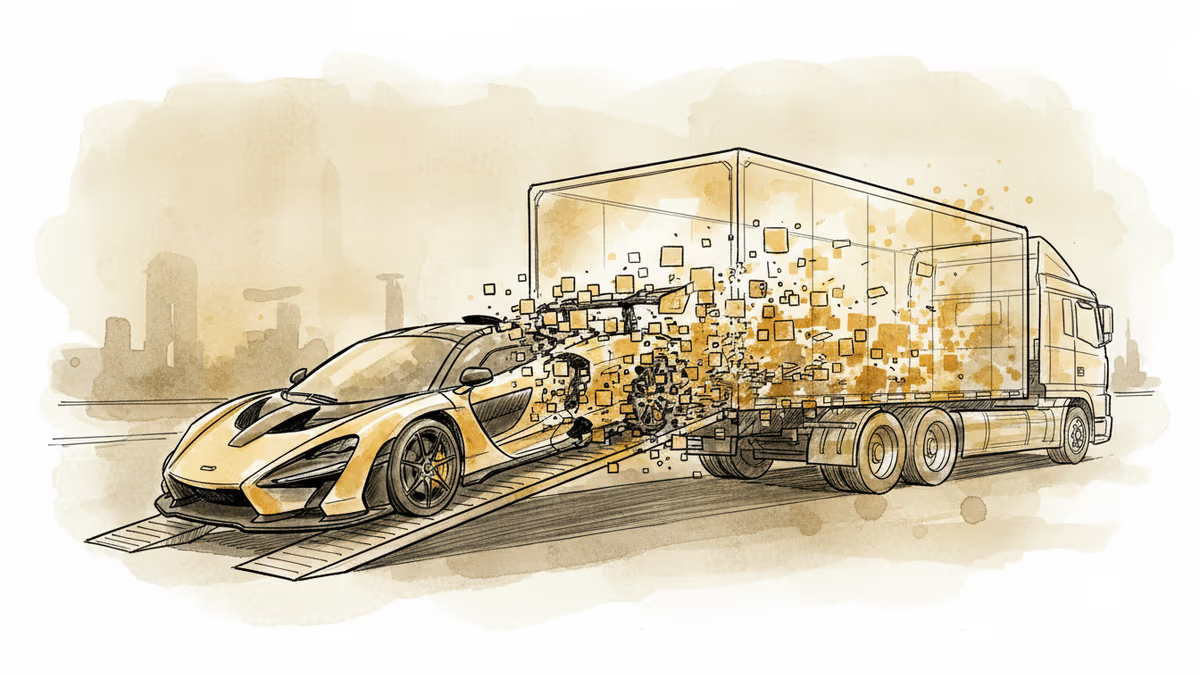
A sophisticated new form of organized crime is sweeping the globe, targeting luxury vehicles through transport fraud. Here's how high-end cars vanish without a trace.
FBI surveillance systems breached, North Korea steals $280M in crypto, Claude Code leaks malware, and a 22-year-old student helps take down a record botnet. This week in cybersecurity.
George Maschke passed 11 years of military security clearance, then failed an FBI polygraph. Decades later, the science still doesn't support the test—so why do agencies keep using it?
FBI Director Kash Patel confirmed the agency purchases Americans' location data from commercial brokers without a warrant. The admission raises urgent questions about the future of the Fourth Amendment.
A sophisticated new form of organized crime is sweeping the globe, targeting luxury vehicles through transport fraud. Here's how high-end cars vanish without a trace.
Thoughts
Share your thoughts on this article
Sign in to join the conversation