
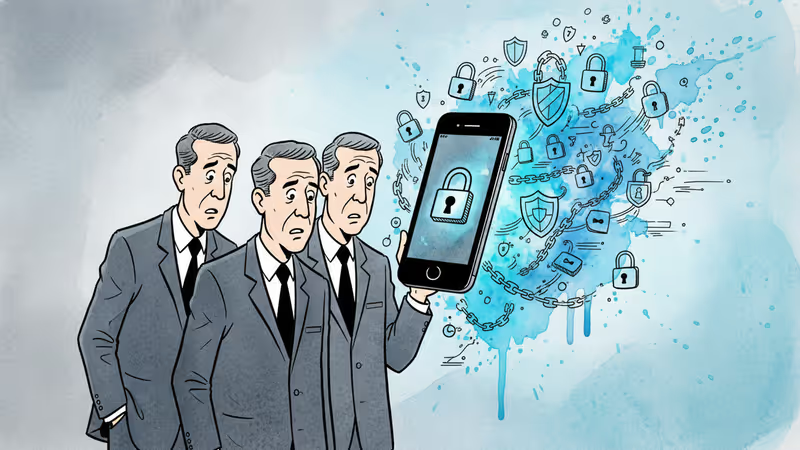
FBI Stumped by Apple's Lockdown Mode in Reporter's iPhone Seizure
FBI agents couldn't access a Washington Post reporter's iPhone due to Apple's Lockdown Mode during a classified leak investigation, highlighting the growing tension between privacy and law enforcement.
One iPhone has left the FBI scratching their heads. Despite seizing the device from Washington Post reporter Hannah Natanson's home on January 14th, federal agents still can't crack it open. The reason? Apple's Lockdown Mode was activated.
A Tale of Two Devices: MacBook Unlocked, iPhone Sealed
The contrast couldn't be starker. When FBI agents raided Natanson's Virginia home as part of a Pentagon contractor leak investigation, they made off with quite a haul: an iPhone 13, two MacBook Pros, a 1TB portable hard drive, a voice recorder, and a Garmin watch.
The MacBook Pro? Unlocked in seconds. Agents simply asked Natanson to place her finger on the device's fingerprint reader, and she complied. But the iPhone remained stubbornly sealed. With Lockdown Mode enabled, even biometric authentication becomes useless – only the passcode works.
This investigation stems from allegations that a Pentagon contractor illegally leaked classified information, with authorities examining whether Natanson received such materials. But what started as a routine digital evidence collection has become an unexpected showcase of consumer privacy technology.
When Consumer Protection Meets Federal Investigation
Apple introduced Lockdown Mode in 2022 with iOS 16, specifically targeting high-risk users like journalists, activists, and politicians who might face sophisticated digital threats. The feature essentially transforms an iPhone into a digital fortress, disabling most convenience features and all biometric unlocking methods.
But this case reveals an unintended consequence: consumer privacy tools are now capable of stymieing federal investigations in ways previously unimaginable. Traditional law enforcement assumed that with proper warrants, digital evidence would eventually be accessible. That assumption is crumbling.

The implications extend beyond this single case. If a feature designed to protect against foreign surveillance can also block domestic law enforcement, where does that leave the balance between privacy and security? The FBI has historically pushed for backdoors in encryption, but Lockdown Mode represents something different – a user-controlled shield that can't be easily compromised.
The Journalism Protection Paradox
For journalists, this creates a fascinating paradox. Press freedom advocates have long argued for stronger source protection, but they've typically relied on legal frameworks like shield laws. Now technology offers a more absolute form of protection – one that doesn't depend on courts or legislative goodwill.
Yet this same technology could complicate legitimate investigations. The Pentagon leak case involves potential national security violations, not just routine reporting. Should consumer devices be capable of completely blocking federal access, even with valid warrants?
Other tech companies are watching closely. Google, Microsoft, and Samsung all offer enterprise-grade security features, but none have quite matched Apple's consumer-focused approach to privacy-as-a-product. This case might encourage them to strengthen their own lockdown capabilities.
The Broader Digital Rights Battlefield
This standoff reflects a larger shift in the digital rights landscape. Privacy is no longer just about what data companies collect – it's about whether that data can be accessed at all, by anyone, for any reason.
European regulators have been pushing for stronger consumer protections, while authoritarian governments worldwide are demanding greater surveillance capabilities. American tech companies find themselves caught in the middle, with products that must work globally while satisfying contradictory demands.
The FBI's inability to crack this iPhone won't be the last such case. As more users adopt advanced privacy features, law enforcement agencies will need to adapt their investigative techniques. Some evidence may simply become inaccessible, forcing a fundamental rethink of digital forensics.
Authors
Related Articles
The FTC fined Cox Media and two ad firms $930,000 — not for actually eavesdropping on users, but for falsely claiming they could. The case raises uncomfortable questions about surveillance capitalism.
A Utah woman was sentenced to life in prison partly because of her Google searches and deleted texts. The Kouri Richins case reveals how digital footprints have become the courtroom's most reliable witness.
After 15 years of fragmented mobile messaging, Apple and Google are rolling out end-to-end encrypted RCS messaging between iPhones and Android devices. Here's what changed, why it took so long, and what it means for your privacy.
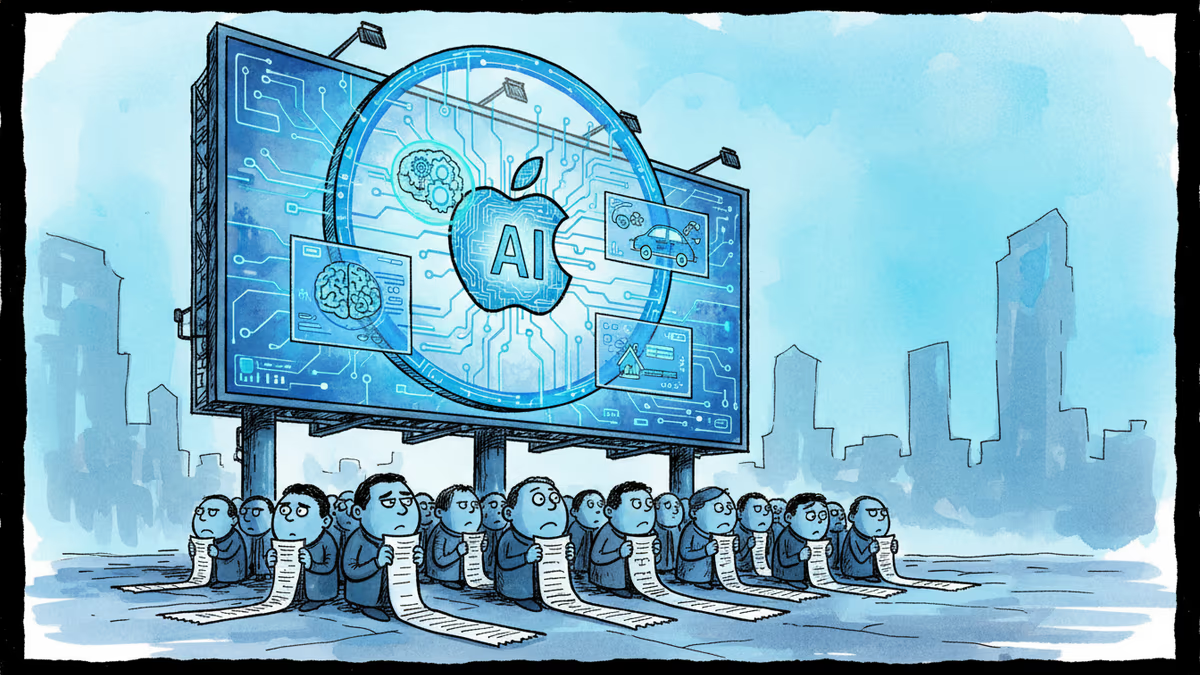
Apple agreed to pay $250 million to settle claims it misled iPhone 16 buyers about Apple Intelligence features. What this means for consumers, Big Tech marketing, and the AI industry.
The FTC fined Cox Media and two ad firms $930,000 — not for actually eavesdropping on users, but for falsely claiming they could. The case raises uncomfortable questions about surveillance capitalism.
A Utah woman was sentenced to life in prison partly because of her Google searches and deleted texts. The Kouri Richins case reveals how digital footprints have become the courtroom's most reliable witness.
After 15 years of fragmented mobile messaging, Apple and Google are rolling out end-to-end encrypted RCS messaging between iPhones and Android devices. Here's what changed, why it took so long, and what it means for your privacy.
Apple agreed to pay $250 million to settle claims it misled iPhone 16 buyers about Apple Intelligence features. What this means for consumers, Big Tech marketing, and the AI industry.
Thoughts
Share your thoughts on this article
Sign in to join the conversation