
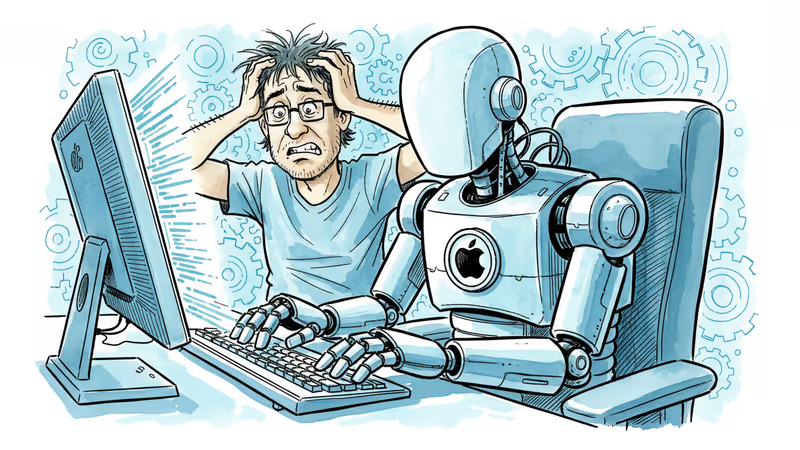
Apple Just Made AI Code for You—But Should It?
Apple's Xcode 26.3 integrates agentic AI coding tools from Anthropic and OpenAI, letting AI agents build, test, and fix code autonomously. What does this mean for developers?
Your next coding partner might not be human. Apple just released Xcode 26.3, integrating agentic AI tools that don't just suggest code—they write, test, and debug entire features autonomously while you watch.
What Just Happened
Apple's latest Xcode update brings Anthropic's Claude Agent and OpenAI's Codex directly into the company's official development environment. Unlike previous AI coding assistants that offer suggestions, these "agentic" tools can independently navigate projects, understand code structure, build features, run tests, and fix errors without constant human guidance.
The integration leverages the Model Context Protocol (MCP) to give AI agents deep access to Xcode's capabilities. Developers can now describe what they want in natural language—"add a camera feature using Apple's Vision framework"—and watch as the AI breaks down the task, researches Apple's documentation, writes the code, and verifies it works.
This isn't Apple's first AI coding experiment. Xcode 26 introduced basic ChatGPT and Claude integration last year. But the jump to agentic tools represents a fundamental shift from AI as assistant to AI as autonomous developer.
The Promise and the Process
The new workflow feels almost magical in its simplicity. Developers select their preferred AI model (GPT-5.2, Claude, or others), type their request in natural language, then watch as the agent methodically works through the task. Each step is visible—from documentation research to code changes to test results.
Apple emphasizes transparency throughout. Code changes are highlighted visually, and a project transcript shows exactly what the AI is thinking and doing. If something goes wrong, developers can revert to any previous milestone with a single click.

The company is betting this transparency will help newcomers learn coding by observing AI workflows in real-time. They're even hosting a live "code-along" workshop this Thursday, where developers can watch and learn alongside working AI agents.
Beyond the Hype: What This Really Means
This release signals Apple's recognition that AI-assisted development isn't just coming—it's here, and the company wants to control how it integrates with their ecosystem. By building agentic coding directly into Xcode, Apple ensures AI tools understand their latest APIs and follow their development best practices.
For the millions of developers building iOS and macOS apps, this could dramatically accelerate development cycles. Instead of spending hours implementing standard features, they can focus on unique user experiences while AI handles the boilerplate.
But the implications stretch beyond productivity. When AI can build and test code autonomously, what happens to junior developer roles traditionally focused on implementing straightforward features? And as AI agents become more capable, how do we ensure human developers maintain the deep understanding needed to architect complex systems?
The Bigger Questions
Apple's move reflects a broader industry shift toward AI agents that can perform complex, multi-step tasks independently. Microsoft's GitHub Copilot started with code suggestions. Replit and Cursor evolved toward more autonomous coding. Now Apple is bringing full agentic capabilities to their 20+ million registered developers.
This raises fascinating questions about the future of software development. Will we see a bifurcation between developers who work with AI agents and those who work alongside them? How will code quality and security evolve when much of the initial implementation happens without direct human oversight?
The integration also highlights Apple's strategic positioning in the AI wars. By partnering with both Anthropic and OpenAI while maintaining platform control, they're hedging their bets while ensuring their developer ecosystem remains competitive.
Authors
Related Articles
After 15 years of fragmented mobile messaging, Apple and Google are rolling out end-to-end encrypted RCS messaging between iPhones and Android devices. Here's what changed, why it took so long, and what it means for your privacy.
Apple agreed to pay $250 million to settle claims it misled iPhone 16 buyers about Apple Intelligence features. What this means for consumers, Big Tech marketing, and the AI industry.
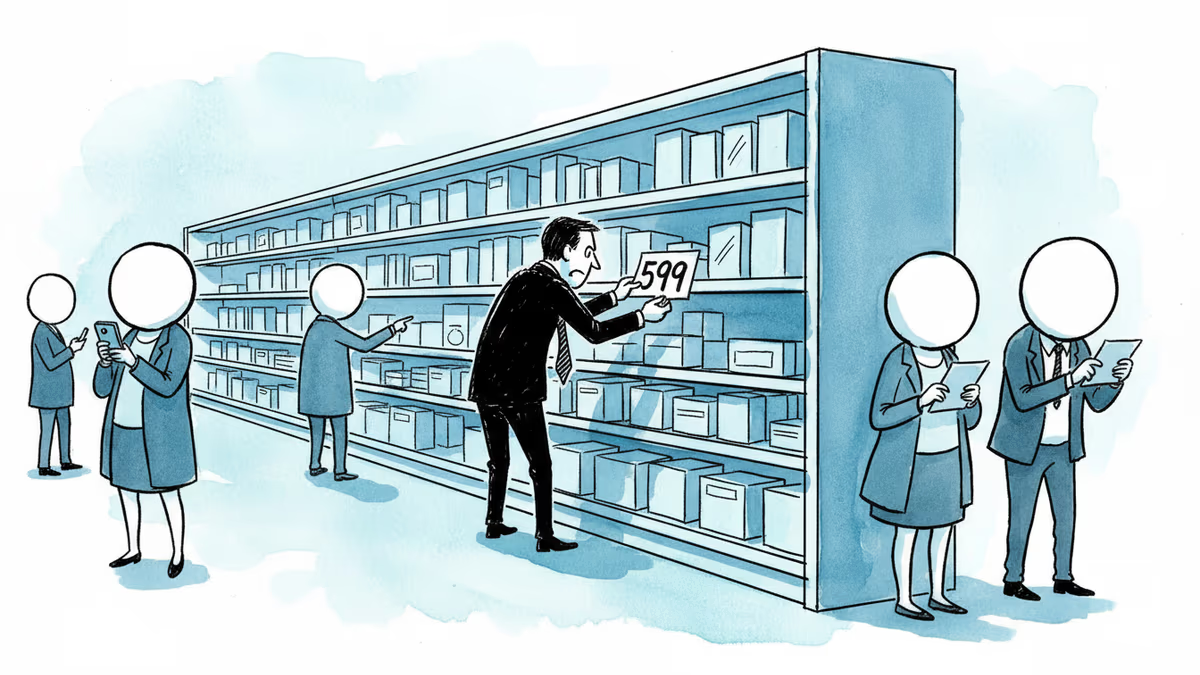
Apple quietly removed the entry-level $599 Mac Mini, raising the starting price to $799 — just one day after Tim Cook warned of chip supply constraints on the earnings call.
Apple names John Ternus, its hardware engineering chief, as the next CEO. The shift from operator to product person signals where Apple thinks its next decade of growth will come from — and raises real questions about what comes next.
After 15 years of fragmented mobile messaging, Apple and Google are rolling out end-to-end encrypted RCS messaging between iPhones and Android devices. Here's what changed, why it took so long, and what it means for your privacy.
Apple agreed to pay $250 million to settle claims it misled iPhone 16 buyers about Apple Intelligence features. What this means for consumers, Big Tech marketing, and the AI industry.
Apple quietly removed the entry-level $599 Mac Mini, raising the starting price to $799 — just one day after Tim Cook warned of chip supply constraints on the earnings call.
Apple names John Ternus, its hardware engineering chief, as the next CEO. The shift from operator to product person signals where Apple thinks its next decade of growth will come from — and raises real questions about what comes next.
Thoughts
Share your thoughts on this article
Sign in to join the conversation