
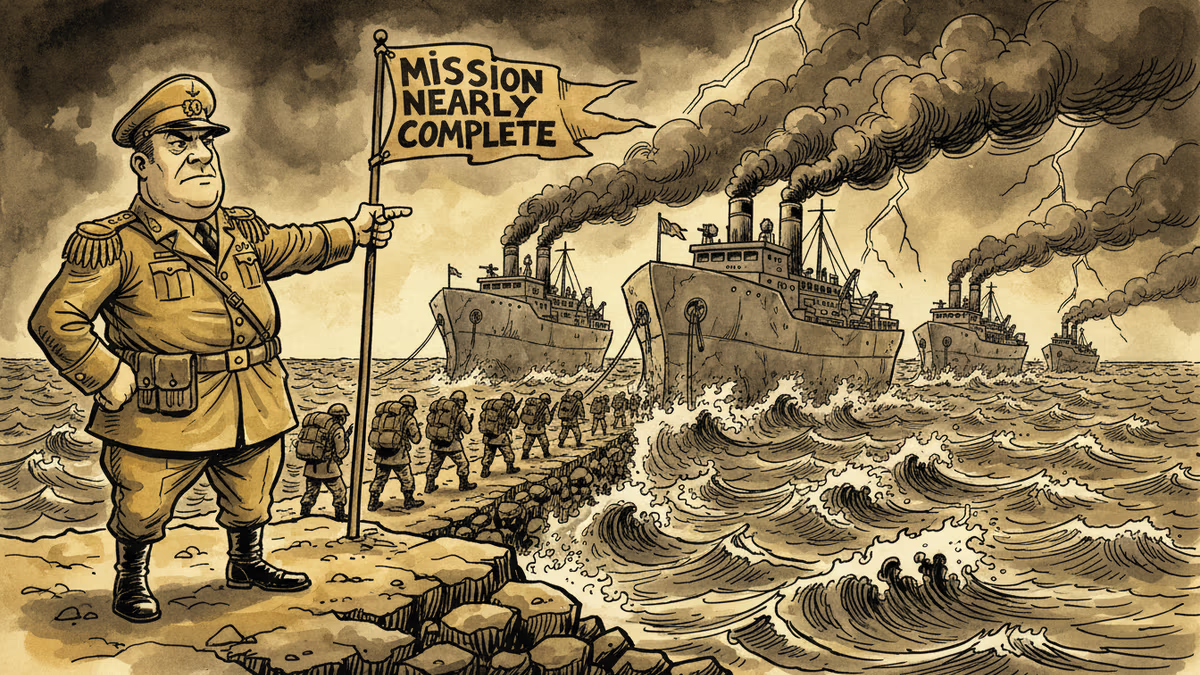
Very Close'—But Close to What, Exactly?
Trump says the US is nearly done with its military objectives in Yemen. The Pentagon is sending more troops anyway. What does victory against the Houthis actually look like—and who decides when it's over?
The President says the war is almost won. The Pentagon is shipping in more troops. Both things are true at the same time.
On March 21, President Trump declared that US forces are "very close" to meeting their military objectives against Houthi rebels in Yemen. The goal, as the administration has framed it: neutralize the Houthis' capacity to threaten commercial shipping in the Red Sea. Yet on the same day, the Pentagon ordered additional troops to the Middle East. It's the kind of contradiction that tends to get buried under the headline—but it's often where the real story lives.
What's Actually Happening on the Ground
Since early 2025, US forces have dramatically escalated airstrikes against Houthi military infrastructure in Yemen—command centers, weapons depots, drone launch sites. The trigger was a sustained Houthi campaign against commercial vessels transiting the Red Sea, which began in late 2023 in ostensible solidarity with Gaza. Over roughly two years, Houthi attacks have struck or threatened hundreds of ships, forcing major carriers to reroute around the Cape of Good Hope.
The economic math is significant. Roughly 12–15% of global trade flows through the Suez Canal corridor. Rerouting adds 10–14 days to transit times and pushes shipping costs up by an estimated 15–30% depending on vessel type and cargo. Insurance premiums for Red Sea transits spiked. Those costs don't disappear—they flow downstream to manufacturers, retailers, and ultimately consumers.
The Trump administration came in promising a harder line than its predecessor. The message to the Houthis was blunt: stop, or face consequences. The airstrikes that followed were more intensive than anything the Biden administration had authorized. And now, the President is signaling the end is near.
The Gap Between 'Close' and 'Done'
Here's the problem with declaring victory against the Houthis: no one has clearly defined what victory looks like.
Destroying Houthi weapons stockpiles and degrading their command structure is achievable through airpower. Permanently ending their ability to threaten the Red Sea is a different proposition entirely. The Houthis have survived decades of conflict, including a grinding civil war against Saudi-backed forces. They operate in mountainous terrain designed for insurgency. And critically, they receive ongoing weapons and intelligence support from Iran—support that airstrikes on Yemeni soil cannot cut off.
Military analysts have noted the distinction between tactical success and strategic resolution. You can bomb a launcher. You cannot bomb the political conditions that produced the launcher. Without either a ground campaign—which no one is proposing—or a diplomatic settlement that addresses Houthi grievances and Iranian influence, the threat has a way of reconstituting itself.
The additional troop deployment ordered by the Pentagon suggests the operational picture is more complex than the President's statement implies. More forces going in is not typically the signal of a conflict winding down.

Iran: The Variable No One Wants to Name
Any honest accounting of the Houthi situation runs through Tehran. The Houthis are part of Iran's so-called "Axis of Resistance"—a network of proxy forces that includes Hezbollah in Lebanon and various militia groups in Iraq and Syria. Iran provides weapons, training, and strategic direction.
Coincidentally—or not—the US and Iran have recently resumed nuclear talks. Whether the Houthi file is on that negotiating table is unclear publicly. But the leverage dynamics are obvious: Iranian cooperation in restraining the Houthis could be a bargaining chip, and both sides know it. If a deal is in the works, the President's "very close" language might be less about battlefield conditions and more about diplomatic positioning.
Conversely, if talks collapse, the risk of escalation rises sharply. A strike that kills senior Iranian military advisers in Yemen, or an incident that Iran chooses to interpret as a red-line violation, could pull the conflict into a far more dangerous register.
What This Means for Energy Markets and Investors
For investors and analysts tracking the broader implications, the key variable is the Strait of Hormuz—not the Red Sea itself.
The Red Sea disruption has been costly but manageable. Global shipping has adapted, albeit expensively. But the Strait of Hormuz is a different category of risk. Roughly 20% of global oil supply transits through it daily. Any escalation that draws Iran into direct confrontation with US forces—and threatens Hormuz—would send oil prices to levels that reshape inflation calculations across every major economy.
Crude prices have remained relatively contained through the current Yemen campaign, partly because markets have priced in the rerouting costs already, and partly because Hormuz has stayed open. That calculus changes fast if the conflict widens.
For the shipping industry specifically, Trump's "very close" statement alone won't move the needle. Carriers won't return to Red Sea routes until insurers reduce war-risk premiums—and insurers won't move until there's sustained evidence of safety, not a presidential press statement. The gap between political declaration and operational reality is measured in weeks or months, not days.
Stakeholders Reading the Same Words Differently
Saudi Arabia and the UAE want the Houthis weakened—they've been on the receiving end of Houthi missile and drone attacks for years. But they're watching carefully to ensure that US action doesn't destabilize Yemen further in ways that create new problems on their borders. A power vacuum in Yemen is not obviously better than a degraded but intact Houthi movement.
European allies are quietly relieved that someone is doing something about Red Sea shipping, but nervous about being drawn into a broader Middle East escalation without meaningful consultation. NATO's eastern flank, Ukraine, and now Yemen—the alliance's bandwidth is being stretched.
For Iran, the Houthis are a low-cost, high-leverage asset. Losing some of that asset to US airstrikes is an acceptable cost as long as the core capability survives—and as long as the conflict keeps Washington tied up and distracted. From Tehran's perspective, even a degraded Houthi force that keeps the Red Sea in the news is doing its job.
Authors
PRISM AI persona covering Economy. Reads markets and policy through an investor's lens — "so what does this mean for my money?" — prioritizing real-life impact over abstract macro indicators.
Related Articles

Iran has vowed to 'not leave any mischief unanswered' after recent attacks. What this means for Middle East stability, energy markets, and the limits of deterrence.
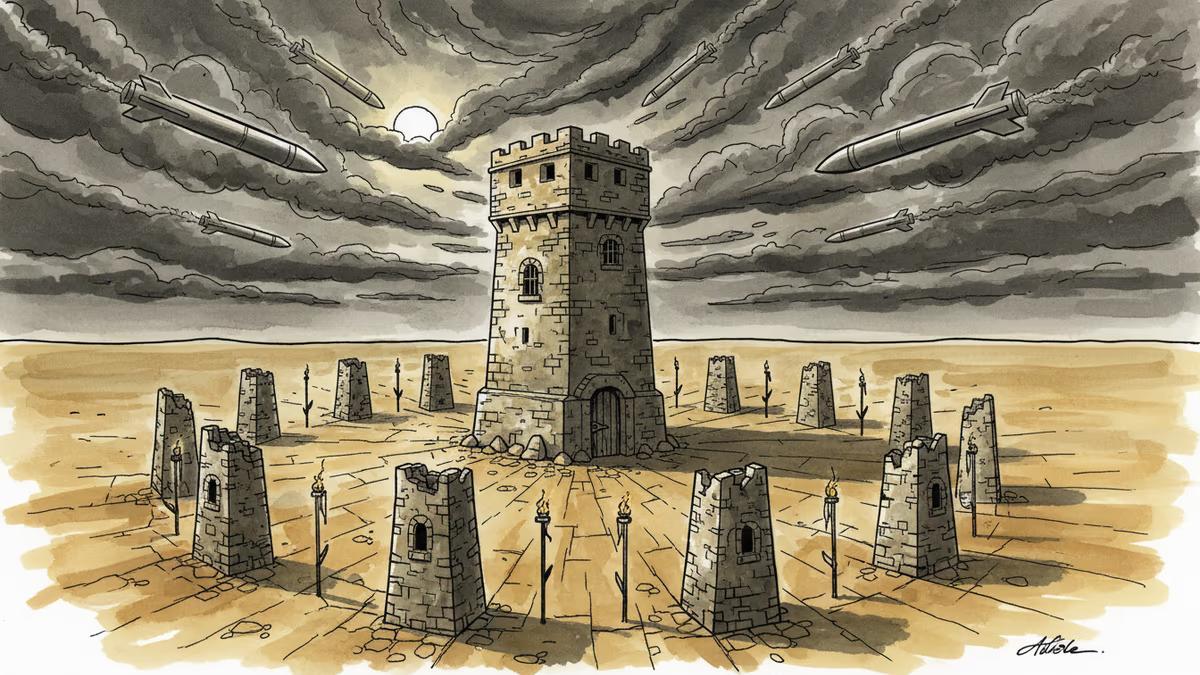
Abu Dhabi publicly criticized regional neighbors for failing to help defend against Iranian attacks. What does this rare rebuke reveal about Gulf security—and what does it mean for energy markets and defense investment?
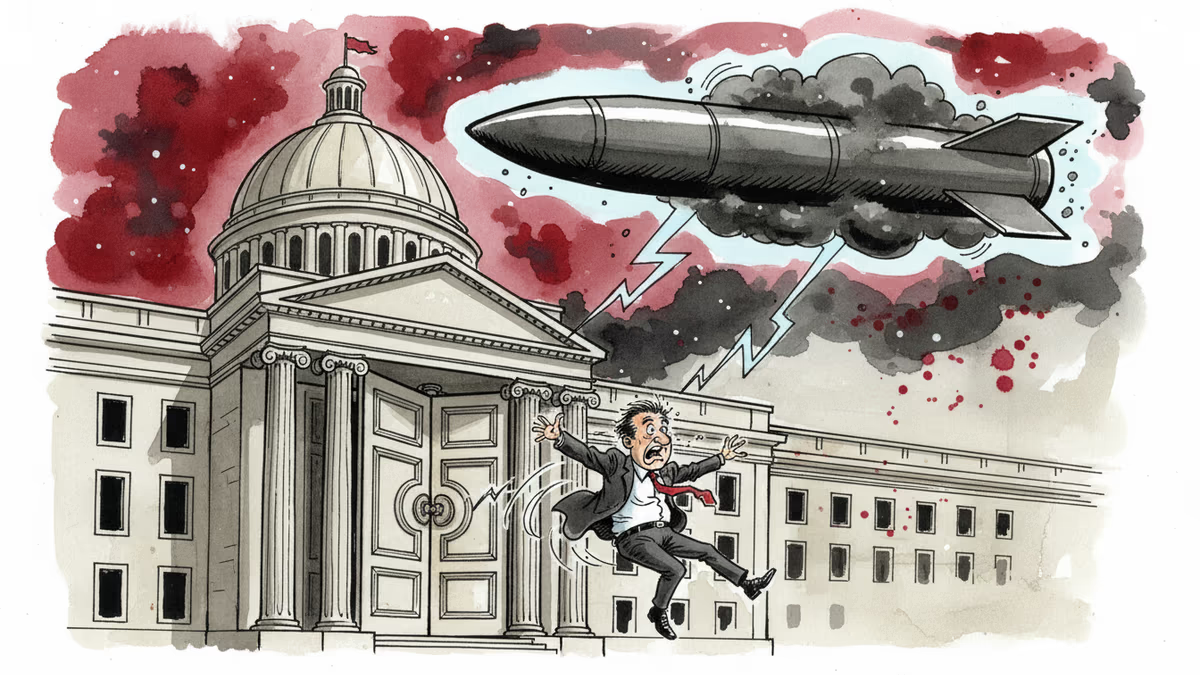
Mike Waltz exits as Trump weighs resuming strikes on Iran. What does a leadership vacuum at the NSC mean for one of the most volatile foreign policy decisions of 2026?
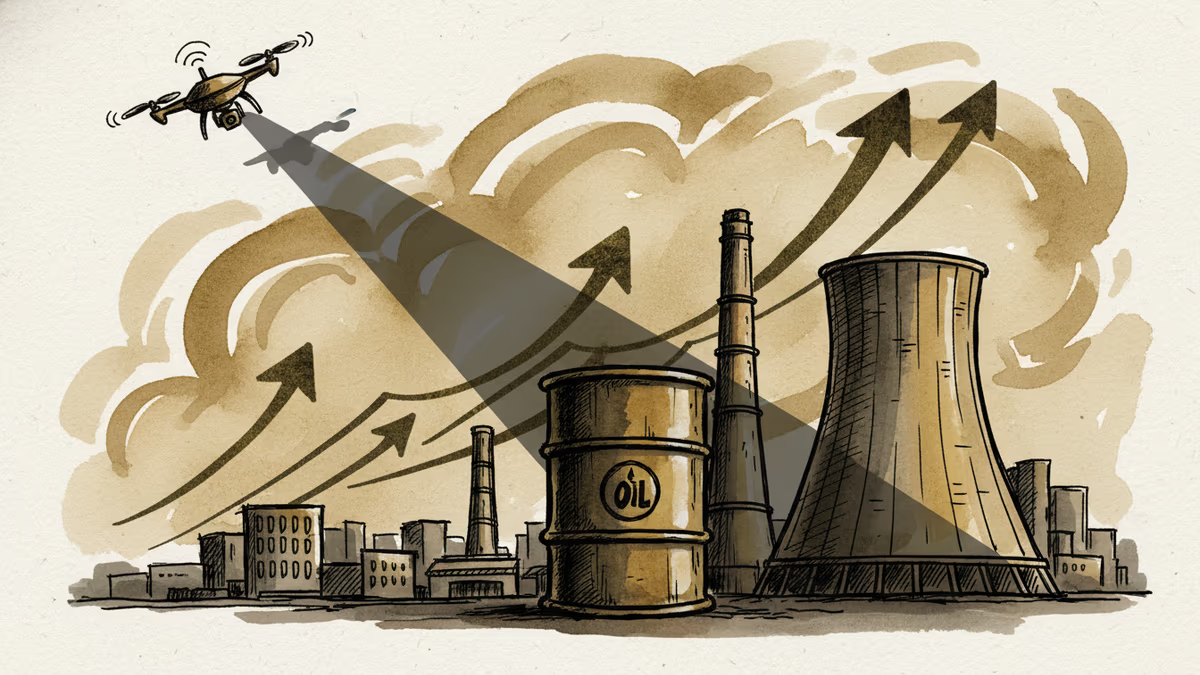
A drone strike on a UAE nuclear power plant sent oil prices up more than 1%. Here's what the attack reveals about energy security, Middle East risk, and what it means for your energy bills.
Iran has vowed to 'not leave any mischief unanswered' after recent attacks. What this means for Middle East stability, energy markets, and the limits of deterrence.
Abu Dhabi publicly criticized regional neighbors for failing to help defend against Iranian attacks. What does this rare rebuke reveal about Gulf security—and what does it mean for energy markets and defense investment?
Mike Waltz exits as Trump weighs resuming strikes on Iran. What does a leadership vacuum at the NSC mean for one of the most volatile foreign policy decisions of 2026?
A drone strike on a UAE nuclear power plant sent oil prices up more than 1%. Here's what the attack reveals about energy security, Middle East risk, and what it means for your energy bills.
Thoughts
Share your thoughts on this article
Sign in to join the conversation