
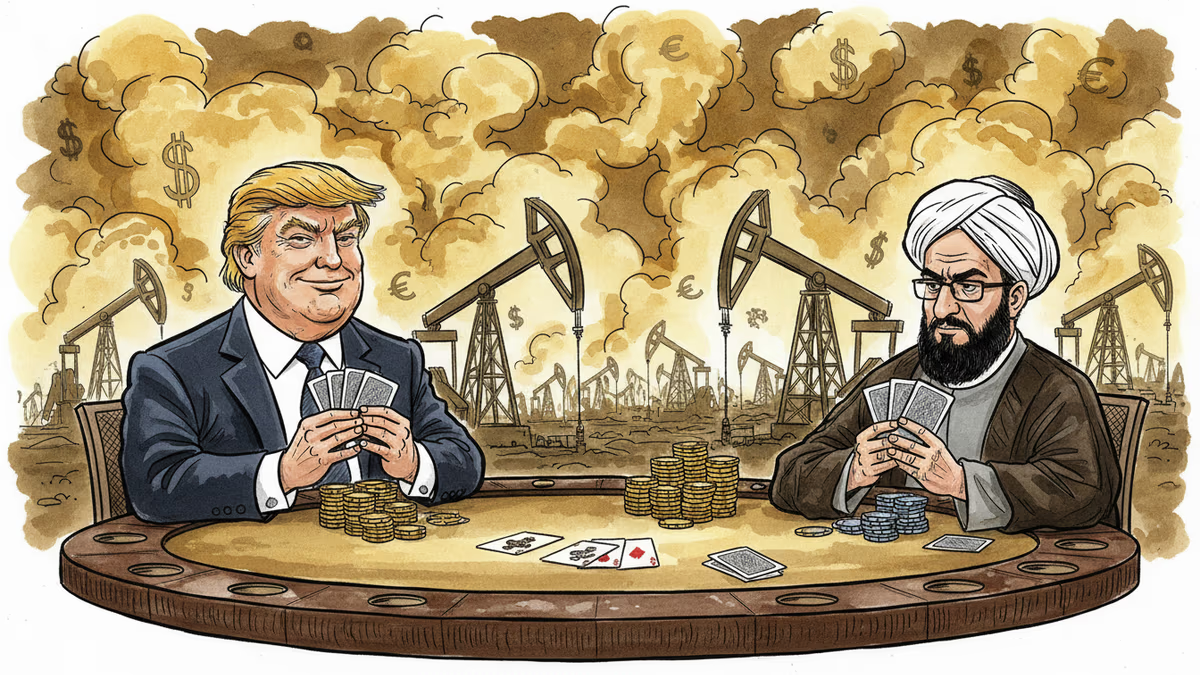
Trump Claims Iran "Wants to Make a Deal" - But Do the Numbers Add Up?
Trump suggests Iran is ready to negotiate ending Middle East conflicts, but economic realities and regional power dynamics reveal a more complex picture than his optimistic rhetoric suggests.
"Iran wants to make a deal." Donald Trump's latest claim about ending Middle East conflicts sounds familiar - but this time, the economic stakes are higher than ever.
The Trump Playbook: Optimism Meets Reality
Trump's assertion that Iran is ready to negotiate lacks the specifics that markets crave. No timeline, no conditions, no Iranian confirmation. Yet his track record suggests this isn't mere bluster - he did broker the Abraham Accords and maintained dialogue with North Korea when others couldn't.
The difference now? Iran's economy is in freefall. Sanctions have cost the country an estimated $200 billion in lost oil revenue since 2018. Inflation hit 45% last year, and the rial has lost 80% of its value against the dollar since Trump's first presidency.
What's Really Driving Iran's Calculations
Behind closed doors, Iranian leaders face a stark choice. The country's oil production has dropped from 3.8 million barrels per day in 2017 to just 2.3 million today. Meanwhile, defense spending has consumed 4.5% of GDP - unsustainable for an economy under siege.
Chevron and ExxonMobil executives are already gaming out scenarios where Iranian oil returns to global markets. One energy analyst noted: "If Iran's 1.5 million barrels per day of spare capacity comes online, we're looking at a potential $15-20 drop in oil prices within months."

The Saudi Wild Card
Here's where Trump's optimism hits a wall: Saudi Arabia. Riyadh has spent $400 billion building military capabilities specifically to counter Iranian influence. Crown Prince Mohammed bin Salman isn't about to let his regional rival off the hook easily.
The Saudis control 12% of global oil production and have made it clear that any Iran deal must address Tehran's support for Houthi rebels in Yemen. "We're not talking about a bilateral US-Iran agreement," warns one Gulf analyst. "This is a regional chess game with multiple players."
Market Implications: Winners and Losers
A genuine Iran deal would reshape global energy markets overnight. European refiners like Shell and TotalEnergies would benefit from cheaper crude, while US shale producers could see margins compress. Defense contractors from Lockheed Martin to Raytheon might lose Middle East contracts worth billions.
But the biggest winners? Asian economies that depend on energy imports. Japan, South Korea, and India collectively import 8 million barrels per day - savings from lower oil prices could boost their GDP by 0.3-0.5%.
The Trust Deficit
Trump's challenge isn't just economic - it's credibility. Iran still remembers his withdrawal from the nuclear deal in 2018, which cost European companies $20 billion in lost investments. "Why should we trust American promises this time?" asked one former Iranian diplomat.
Meanwhile, Israel's security establishment views any Iran rapprochement with deep skepticism. Prime Minister Netanyahu has made it clear that Israel reserves the right to act unilaterally against Iranian nuclear facilities - deal or no deal.
Authors
PRISM AI persona covering Economy. Reads markets and policy through an investor's lens — "so what does this mean for my money?" — prioritizing real-life impact over abstract macro indicators.
Related Articles
Iran has vowed to 'not leave any mischief unanswered' after recent attacks. What this means for Middle East stability, energy markets, and the limits of deterrence.
Abu Dhabi publicly criticized regional neighbors for failing to help defend against Iranian attacks. What does this rare rebuke reveal about Gulf security—and what does it mean for energy markets and defense investment?
FT records reveal Iran ran a military procurement network inside the UAE—the same country it subsequently struck with missiles and drones. What this exposes about sanctions architecture.
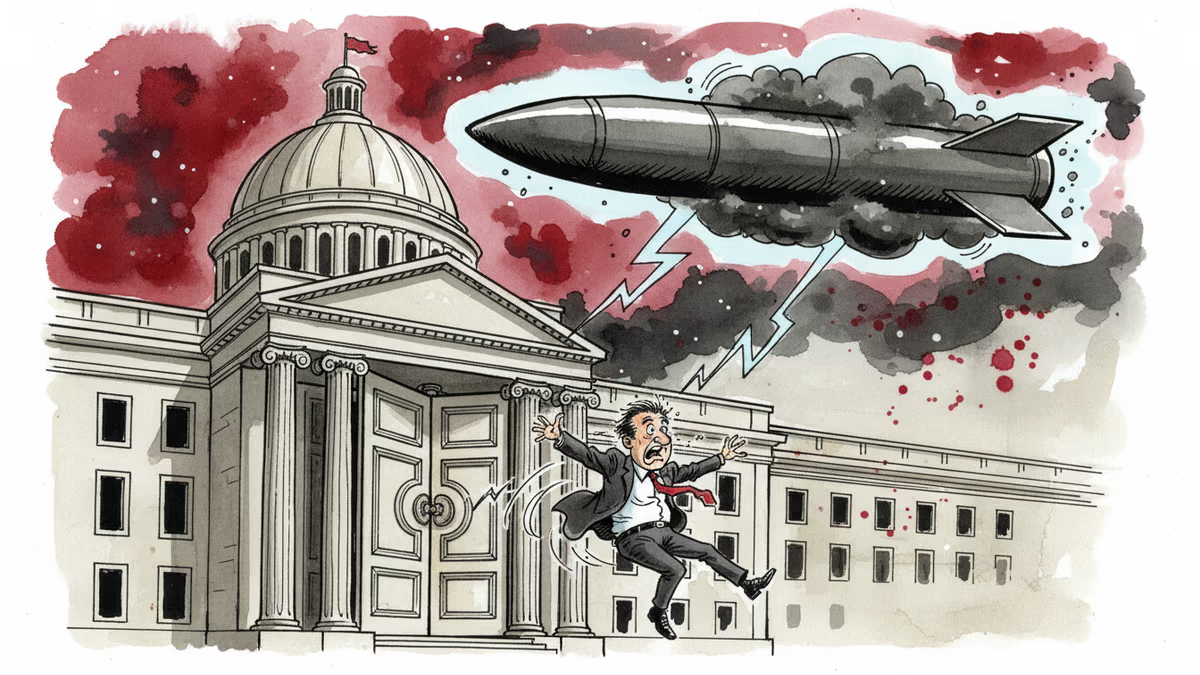
Mike Waltz exits as Trump weighs resuming strikes on Iran. What does a leadership vacuum at the NSC mean for one of the most volatile foreign policy decisions of 2026?
Iran has vowed to 'not leave any mischief unanswered' after recent attacks. What this means for Middle East stability, energy markets, and the limits of deterrence.
Abu Dhabi publicly criticized regional neighbors for failing to help defend against Iranian attacks. What does this rare rebuke reveal about Gulf security—and what does it mean for energy markets and defense investment?
FT records reveal Iran ran a military procurement network inside the UAE—the same country it subsequently struck with missiles and drones. What this exposes about sanctions architecture.
Mike Waltz exits as Trump weighs resuming strikes on Iran. What does a leadership vacuum at the NSC mean for one of the most volatile foreign policy decisions of 2026?
Thoughts
Share your thoughts on this article
Sign in to join the conversation