
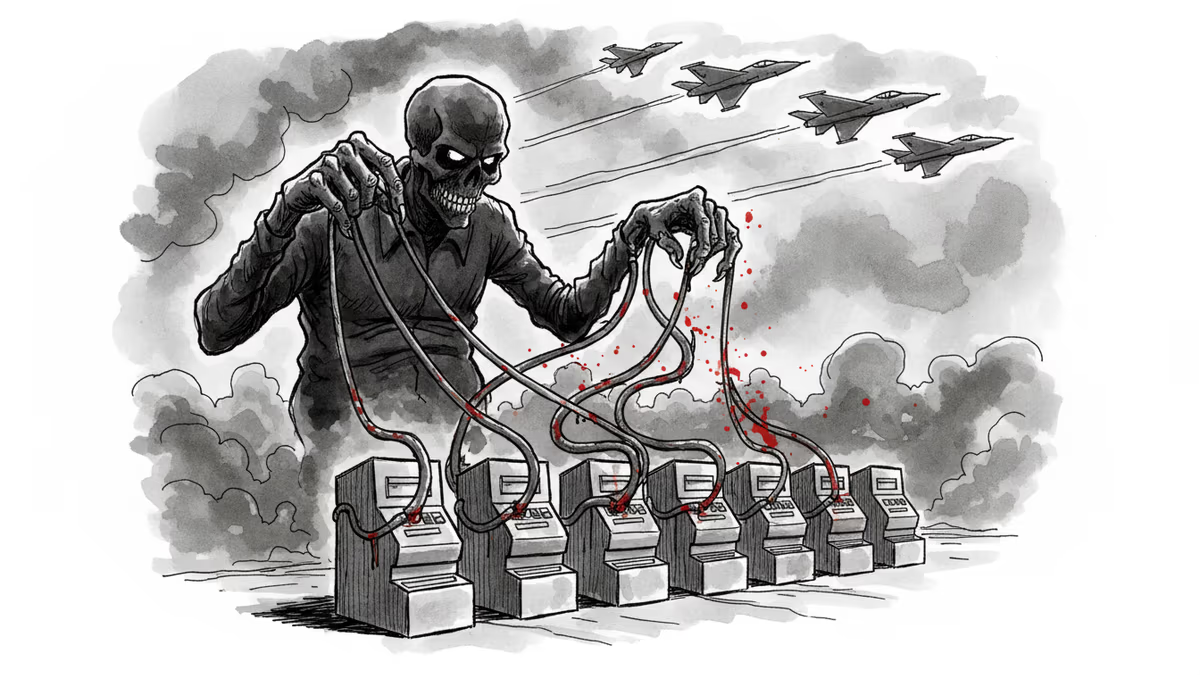
Trump Claims Iran Attack Was Payback for 2020 Election 'Rigging
President Trump linked military strikes on Iran to unverified conspiracy theories about 2020 election interference, raising concerns about foreign policy decisions based on debunked claims.
A Presidential Post at 2:30 AM That Changed Everything
At 2:30 AM Eastern time on Saturday, President Donald Trump announced on Truth Social that the US had joined Israel in attacking Iran. Two hours later, he posted something far more alarming: the claim that Iran's alleged interference in the 2020 election was part of the reason for the military strikes.
"Iran tried to interfere in 2020, 2024 elections to stop Trump, and now faces renewed war with United States," Trump wrote, linking to an article from Just the News, a pro-Trump outlet that offered no concrete evidence for its sweeping claims.
The White House hasn't responded to requests for comment about whether these unverified allegations actually influenced military decision-making. But the post represents a troubling new frontier: foreign policy justified by conspiracy theories.
The Conspiracy Theory Behind the Bombs
Trump's Iran claims aren't based on documented interference cases—they stem from an elaborate conspiracy theory promoted by Patrick Byrne, the former Overstock CEO who urged Trump to seize voting machines after 2020.
Byrne's theory goes like this: Venezuela created the voting software company Smartmatic decades ago to rig elections worldwide. Iran's role? Acting as the money launderer. "They keep certain payments that would reveal this operation out of the banking system, out of the Swift system so you can't see it," Byrne claimed in a 45-minute presentation posted to X in 2024.
When asked for evidence, Byrne didn't respond. Smartmatic has repeatedly denied all allegations and successfully sued right-wing outlet Newsmax for defamation.
Real Iranian Interference vs. Fantasy
Ironically, there have been actual documented cases of Iranian election interference—just not the kind Trump is talking about. In 2021, the Justice Department charged two Iranians for threatening US voters. In 2024, three Iranian government hackers were charged with compromising the Trump campaign.

But Trump's claims are entirely different, rooted in theories that have circulated among online conspiracy groups for years. These ideas recently reached Trump directly through Peter Ticktin, a lawyer who's known Trump since their days at New York Military Academy together.
The 17-Page Plan to Seize Elections
Ticktin emailed Trump a 17-page draft executive order that falsely claims the president can declare an emergency based on foreign election interference and seize control of US elections. Legal experts have dismissed the order as baseless, but Trump recently suggested he might bypass Congress to gain control over elections.
"There are many people within government who are looking at this and who are advocating for the executive order to be signed," Ticktin told WIRED, though he declined to name names.
This isn't just theoretical anymore. Since returning to office, Trump has already used debunked 2020 election theories to justify real actions—from raiding election offices in Fulton County, Georgia, to filing lawsuits over voter rolls.
From Tweets to Tomahawks
Now those same unverified theories are apparently informing military strikes. Trump was clear about Iran's role in 2024: "They tried twice," he told ABC on Sunday, referring to alleged assassination plots during his campaign. "I got him before he got me," he added, confirming reports that Iranian Supreme Leader Ayatollah Ali Khamenei was killed in the US-Israeli attacks.
The progression is stark: conspiracy theory → social media post → military action → presidential justification. Each step normalized the next.
The Dangerous New Normal
What makes this particularly concerning isn't just that a president is citing conspiracy theories—it's that he's using them to justify lethal force against another nation. The boundary between domestic political grievances and international military action has effectively disappeared.
Trump has spent years amplifying baseless claims about rigged elections. Now those same claims are being presented as casus belli—justification for war. The conspiracy theories that once lived in online forums and late-night social media posts have become foreign policy.
The stakes couldn't be higher. Wars have been fought over less, but rarely have they been justified by theories that exist primarily in the imagination of their believers.
Authors
Related Articles

Josh D'Amaro took over Disney with a bold Disney Plus vision. Days later, he's in a First Amendment fight with the Trump administration over The View. What does this mean for media freedom?
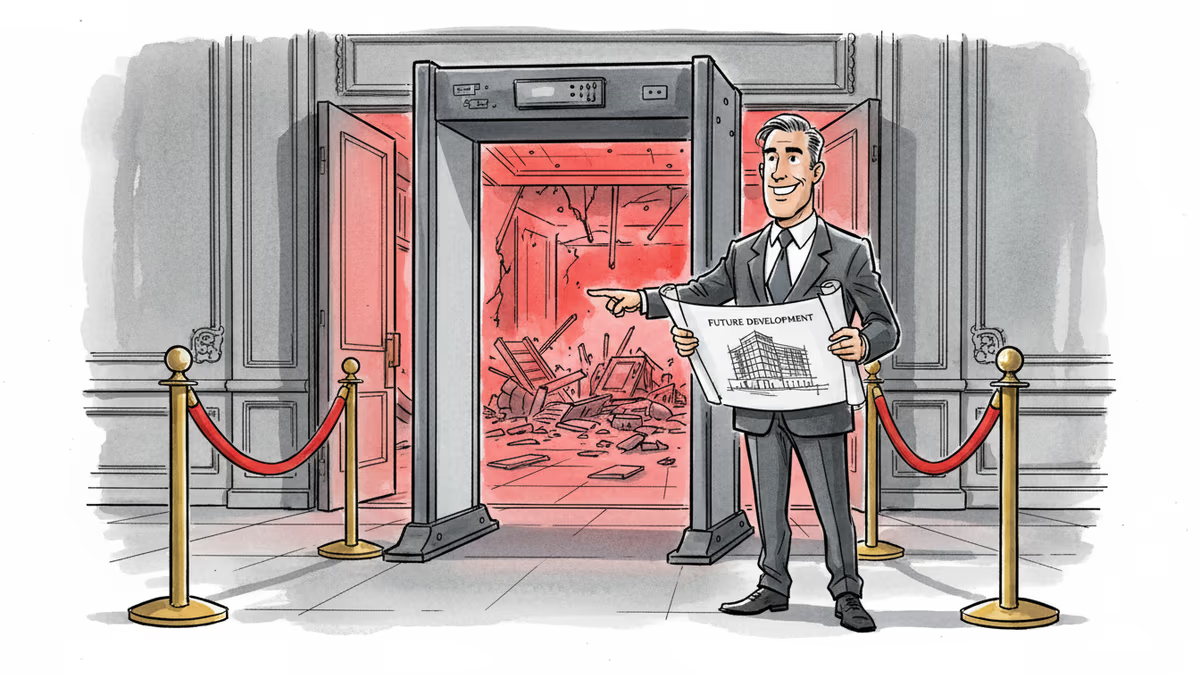
A gunman attacked a Secret Service checkpoint at the White House Correspondents' Dinner. Trump's first public reaction wasn't about security. It was about his $400M ballroom project.
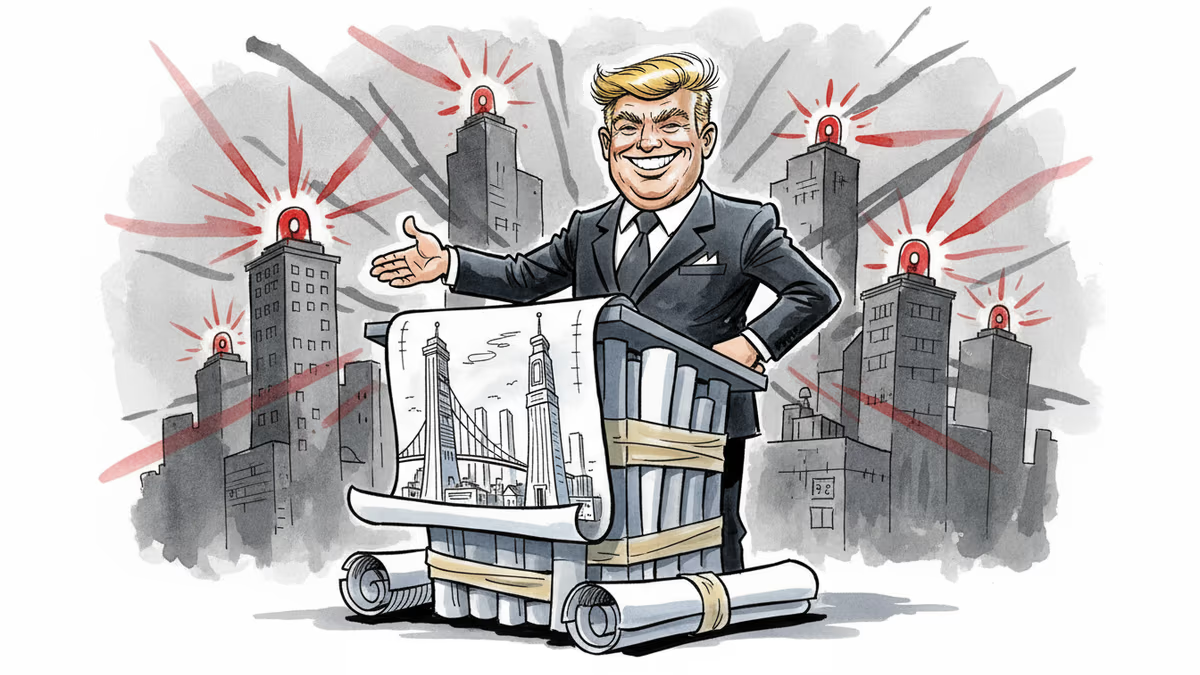
Hours after an armed suspect attempted to breach the White House Correspondents Dinner, Trump used the security scare to publicly defend his White House ballroom project. What does that tell us?

Scammers posing as Iranian authorities are demanding bitcoin and tether from ships near the Strait of Hormuz—exploiting the fact that Iran already does exactly this.
Josh D'Amaro took over Disney with a bold Disney Plus vision. Days later, he's in a First Amendment fight with the Trump administration over The View. What does this mean for media freedom?
A gunman attacked a Secret Service checkpoint at the White House Correspondents' Dinner. Trump's first public reaction wasn't about security. It was about his $400M ballroom project.
Hours after an armed suspect attempted to breach the White House Correspondents Dinner, Trump used the security scare to publicly defend his White House ballroom project. What does that tell us?
Scammers posing as Iranian authorities are demanding bitcoin and tether from ships near the Strait of Hormuz—exploiting the fact that Iran already does exactly this.
Thoughts
Share your thoughts on this article
Sign in to join the conversation