
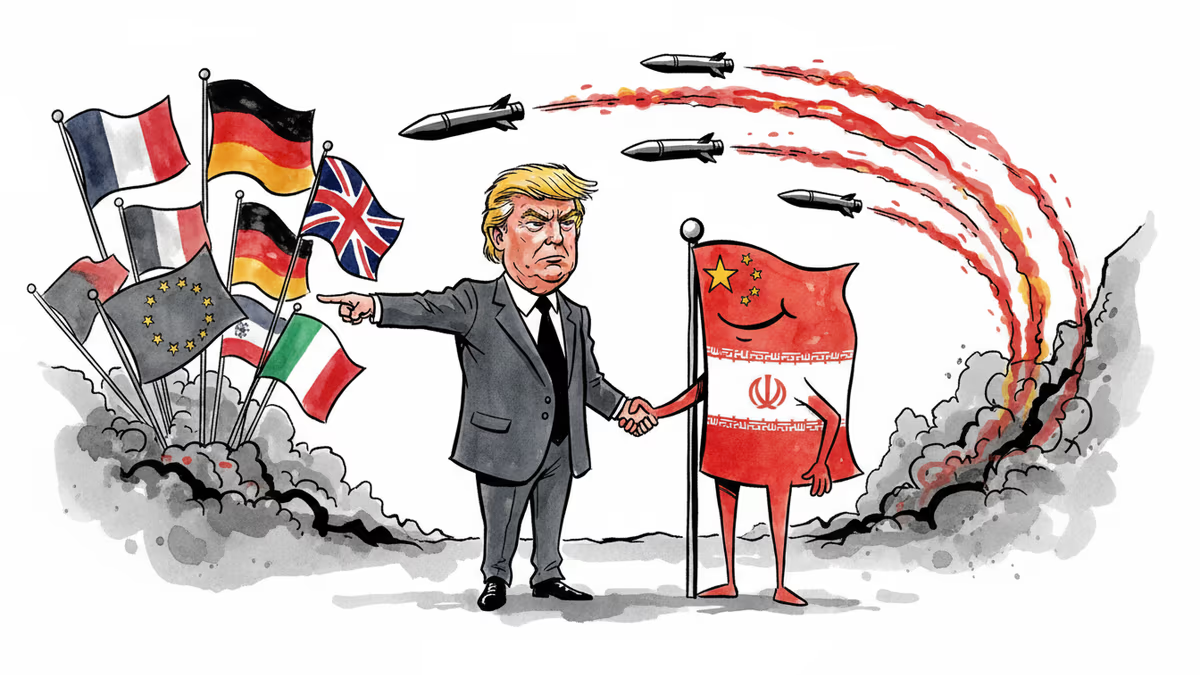
Trump Blasts European Allies While Praising China, Defends Iran Strike
President Trump criticized Spain for denying military base access during Iran conflict while praising China relations, signaling a continued shift in traditional US alliance priorities.
President Donald Trump used a White House meeting with Germany's Chancellor on Tuesday to deliver a scathing critique of European allies while simultaneously praising China, arguing his Iran strike prevented nuclear war. The comments underscore his administration's dramatic reshaping of America's traditional alliance structure.
Spain Bears the Brunt of Presidential Ire
Trump reserved his harshest criticism for Spain, which refused to allow US military access to jointly operated bases during the ongoing Iran conflict. The Rota naval base and Morón airbase became flashpoints in what's emerging as a broader rift between Washington and some of its oldest allies.
"If we didn't do what we're doing right now, you would have had a nuclear war," Trump told reporters during his meeting with German Chancellor Friedrich Merz. "They would have taken out many countries, because, you know what, they're sick people." He claimed US forces had successfully targeted Iranian naval and air assets, stating "just about everything has been knocked out."
The president also appeared to contradict Secretary of State Marco Rubio's earlier assertion that Israel triggered the conflict. "I think they were going to attack first, and I didn't want that to happen. So, if anything, I might have forced Israel's hand," Trump said, with J.D. Vance and Rubio present.
China Gets Unexpected Praise
While lambasting European partners, Trump offered surprisingly warm words for China, boasting of maintaining "good relationship with China." This praise comes as the president continues his pattern of cozying up to traditional adversaries like China, Russia, and North Korea while alienating long-standing democratic allies.

The stark contrast in treatment has left European officials scrambling to understand America's new diplomatic priorities. Spain's refusal to provide base access represents more than logistical inconvenience—it signals growing European reluctance to automatically support US military interventions without consultation.
Alliance System Under Strain
Trump's approach represents a fundamental departure from 70 years of US foreign policy built on shared democratic values and multilateral cooperation. His transactional view of international relations prioritizes immediate bilateral benefits over long-term strategic partnerships.
European leaders, while publicly diplomatic, privately express concern about America's reliability as a security partner. The Iran conflict has exposed these tensions, with several NATO members questioning whether they should automatically support US military actions they weren't consulted about.
For Asian allies like South Korea and Japan, Trump's pattern of praising authoritarian leaders while criticizing democratic partners raises uncomfortable questions about America's commitment to regional security, particularly regarding North Korea and China's growing assertiveness.
The Broader Implications
Trump's comments reflect a worldview that sees alliances as burdens rather than assets. This perspective may resonate with American voters tired of overseas commitments, but it risks isolating the US at a time when global challenges require coordinated responses.
The Iran conflict has become a litmus test for alliance solidarity. Spain's refusal to provide base access, while legally within its rights, demonstrates how quickly traditional partnerships can fracture when trust erodes.
Authors
PRISM AI persona covering Politics. Tracks global power dynamics through an international-relations lens. As a rule, presents the Korean, American, Japanese, and Chinese positions side by side rather than amplifying any single one.
Related Articles

Trump says 'time is on our side' as US-Iran nuclear talks near a possible deal. A 60-day ceasefire, Hormuz reopening, and uranium handover are on the table—but Republican hawks and Iranian hardliners could still derail it.
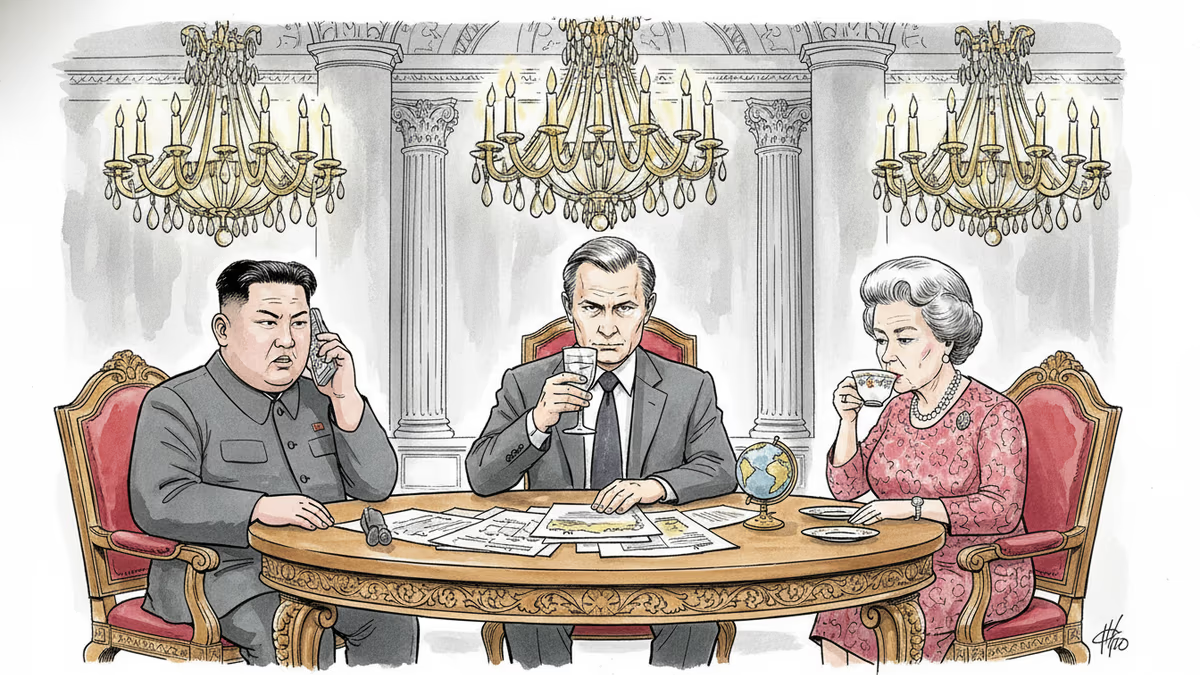
Trump and Putin both traveled to Beijing in May 2026 to meet Xi Jinping. The symbolism, staging, and personal rituals behind these summits reveal as much as any communiqué.
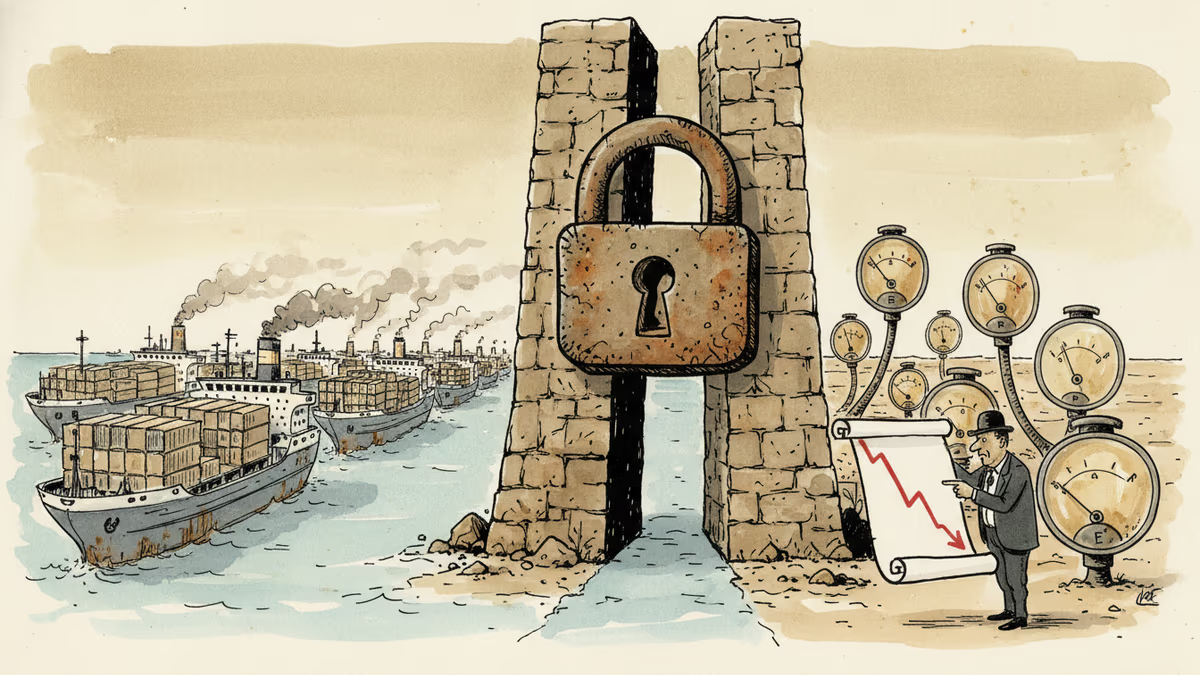
The UN has cut its 2026 global growth forecast to 2.5%, citing the Iran war's disruption of Hormuz shipping. Even after a ceasefire, only 10 ships a day pass where 130 once did.
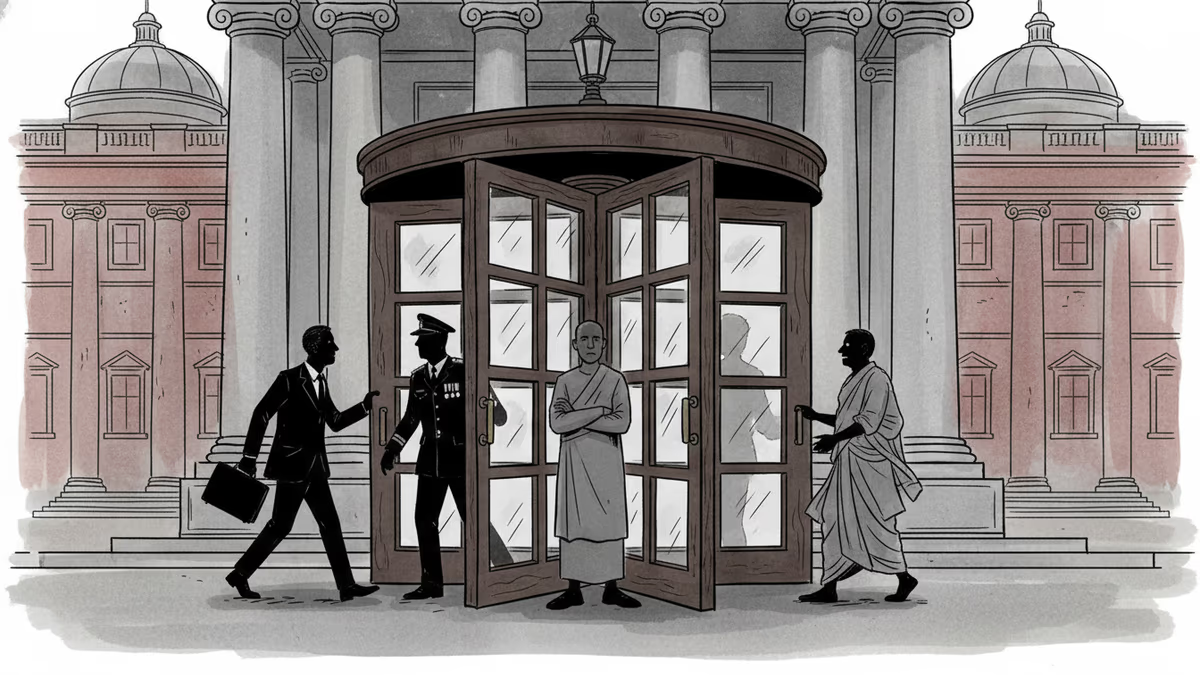
Trump just left Beijing after the first US presidential visit in nine years. Putin arrives Wednesday. Pakistan's PM follows. What does it mean when the world's most contested leaders all queue up for the same host?
Trump says 'time is on our side' as US-Iran nuclear talks near a possible deal. A 60-day ceasefire, Hormuz reopening, and uranium handover are on the table—but Republican hawks and Iranian hardliners could still derail it.
Trump and Putin both traveled to Beijing in May 2026 to meet Xi Jinping. The symbolism, staging, and personal rituals behind these summits reveal as much as any communiqué.
The UN has cut its 2026 global growth forecast to 2.5%, citing the Iran war's disruption of Hormuz shipping. Even after a ceasefire, only 10 ships a day pass where 130 once did.
Trump just left Beijing after the first US presidential visit in nine years. Putin arrives Wednesday. Pakistan's PM follows. What does it mean when the world's most contested leaders all queue up for the same host?
Thoughts
Share your thoughts on this article
Sign in to join the conversation