
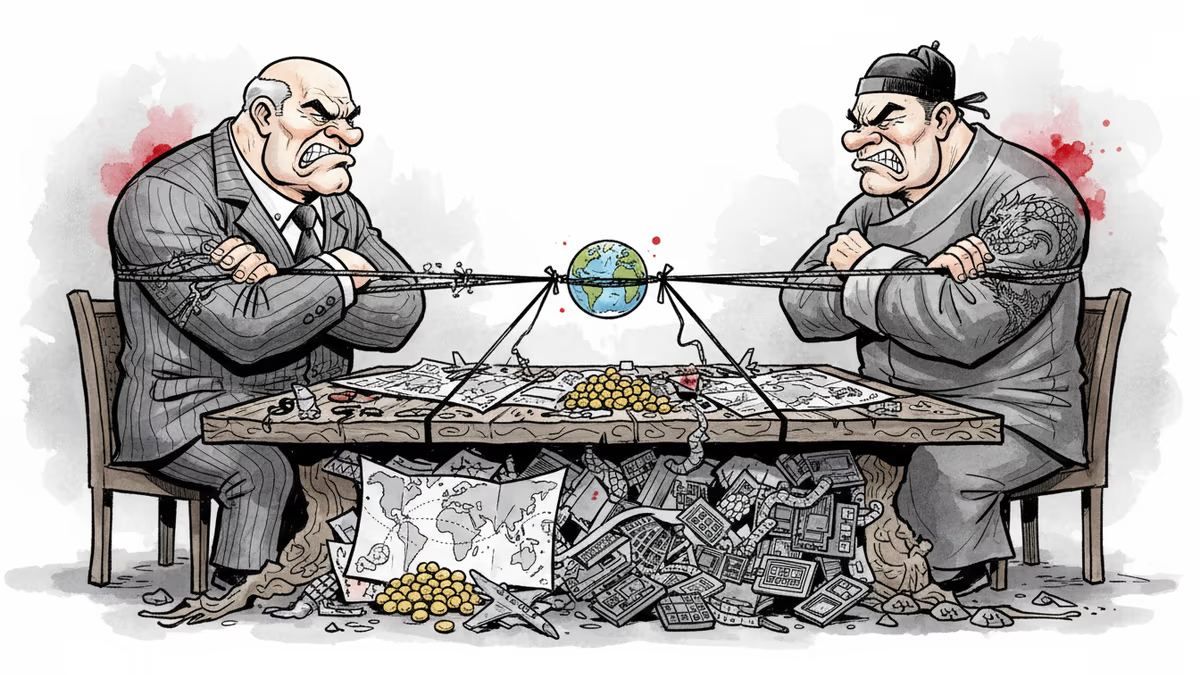
Trump in Beijing: Four Crises, One Table
Trump's first China visit since 2017 puts trade, the Iran war, Taiwan, and AI rivalry on the agenda with Xi Jinping. What each side wants—and what neither can afford to concede.
The last time Donald Trump set foot in Beijing, the iPhone X had just launched and Bitcoin was racing toward its first bubble peak. Nine years later, he's back—and the stakes are considerably higher.
Trump landed in the Chinese capital on Wednesday evening for a three-day visit, his first trip to China since November 2017. On Thursday, he sits down with Xi Jinping at the Great Hall of the People for what may be the most consequential bilateral summit of the year. The agenda reads like a greatest-hits of global instability: trade, the ongoing U.S.-Israeli war with Iran, Taiwan, and the accelerating race for AI supremacy.
Why This Summit, Why Now
The timing is not accidental. Trump faces U.S. midterm elections in November, and he needs wins that voters can feel. A Chinese commitment to buy more American soybeans, beef, and Boeing aircraft would play well in farm states and manufacturing corridors—the same constituencies that put him back in office. Trade, in this reading, is as much a domestic political instrument as a foreign policy one.
The broader context, however, is more urgent. Peace talks between Washington and Tehran over the Strait of Hormuz have stalled. The strait—through which roughly 20% of the world's seaborne oil passes—remains a chokepoint under threat. Trump needs an exit from a war that is dragging on, and China, as one of Iran's most significant economic partners, holds diplomatic leverage that the U.S. cannot replicate.
The two leaders last met in Busan, South Korea, on the sidelines of the APEC summit, where they agreed to a one-year trade truce: lower existing tariffs and a freeze on further restrictions, including China's curbs on rare earth exports. That truce is expiring. This summit is where the next chapter gets written—or doesn't.
Four Agendas, Four Fault Lines

Trade is the most transactional item on the table, and therefore the most likely to produce a headline agreement. Trump wants purchase commitments; China wants tariff relief and a loosening of technology export controls. Numbers can be negotiated. What can't be resolved in three days is the structural architecture underneath—trade deficits, state subsidies, the role of state-owned enterprises in global markets.
Iran and the Strait of Hormuz is where interests unexpectedly converge. China buys Iranian oil and cannot afford a prolonged disruption to Gulf shipping lanes. Beijing has already expressed anxiety about the conflict's economic ripple effects. If Trump asks China to use its influence in Tehran to broker a ceasefire or reopen the strait, Xi has something to offer—but he will price it accordingly.
Taiwan is the meeting's most volatile undercurrent. China regards the self-governing island as sovereign territory; the U.S. maintains its policy of strategic ambiguity while continuing arms sales and high-level contacts. Neither side can publicly move on this without domestic political cost. Expect careful language, not resolution.
AI and technology rivalry is the longest game on the agenda. Export controls on advanced semiconductors, AI model access, and data sovereignty are not trade disputes—they are competing visions of who controls the infrastructure of the next economy. A breakthrough here would be surprising. What matters is whether both sides signal a willingness to establish guardrails, or whether the decoupling continues to accelerate.
Some analysts also flag North Korea as a possible sidebar. Trump has repeatedly expressed interest in resuming diplomacy with Kim Jong-un, and China remains Pyongyang's most influential external actor. Whether Beijing chooses to activate that leverage—and at what price—is one of the summit's quieter variables.
What Each Side Can't Afford to Lose
For Trump, the optics of engagement matter as much as the substance. Arriving in Beijing signals that the world's two largest economies are talking rather than spiraling. But his base is watching for concessions. Any deal that looks like weakness on Taiwan or technology will face immediate backlash from both parties in Congress.
For Xi, the calculus is different. China's economy is navigating a prolonged property sector correction and deflationary pressures. A trade agreement that boosts exports and stabilizes commodity flows would be welcome. But Xi cannot be seen capitulating to American pressure—particularly on issues that touch Chinese sovereignty or national pride.
The rest of the world watches from a position of structured dependency. European governments, Southeast Asian economies, and Gulf states all have stakes in the outcome but no seats at the table. The Shenzhen APEC summit in November and the G20 in Florida in December will provide additional venues for follow-up—suggesting both sides are building a diplomatic runway, not just staging a one-off event.
This content is AI-generated based on source articles. While we strive for accuracy, errors may occur. We recommend verifying with the original source.
Related Articles
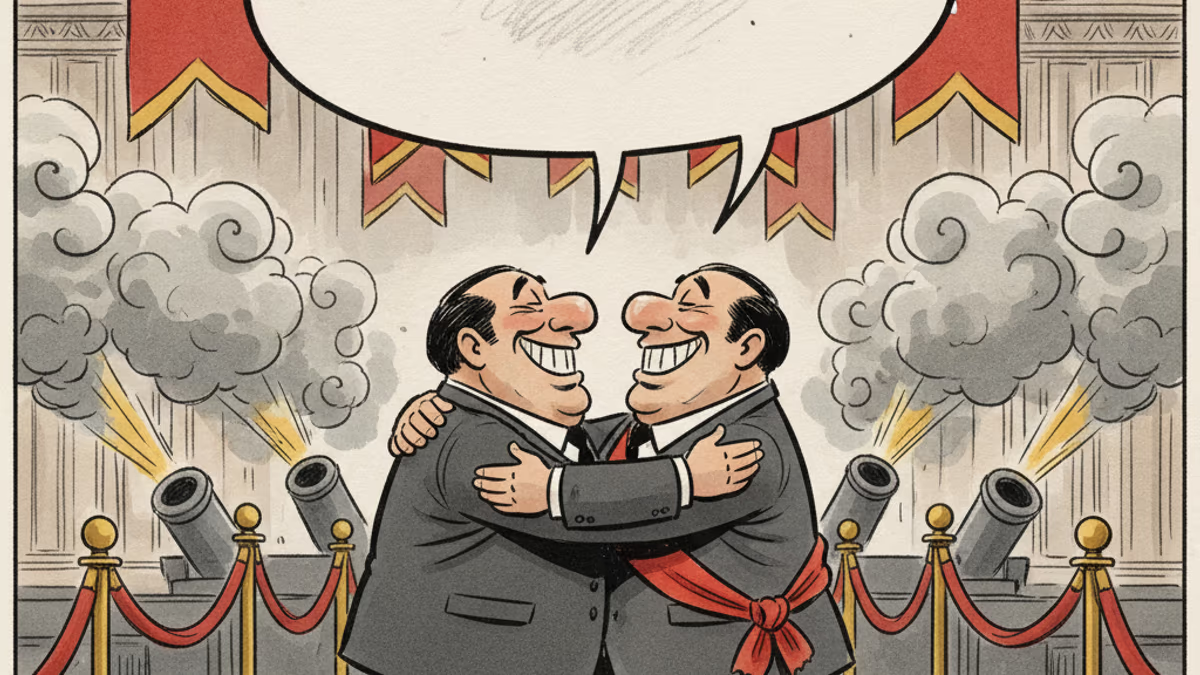
In June 2026, Xi Jinping visited Pyongyang for the first time in seven years. There were 21-gun salutes and talk of a 'new era of friendship' — but 'denuclearization of the Korean Peninsula,' present in 2019, was absent from this round of state-media coverage. A symbolic overreach, or a real upgrade?

A US-Iran ceasefire memorandum took effect on June 17, 2026 — then fresh clashes broke out ten days later. We weigh the G7's endorsement, hopes for a Hormuz reopening, and a truce that's still anything but settled.

Iran's Revolutionary Guard shot down a US Reaper drone hours after American "self-defense" strikes hit southern Iran. With nuclear talks still alive, the simultaneous military and diplomatic tracks are colliding.

Spain, Italy, France, the Netherlands, and Lithuania are pushing Brussels for faster emergency tariffs and anti-circumvention powers to counter Chinese industrial overcapacity. Here's what's at stake.
In June 2026, Xi Jinping visited Pyongyang for the first time in seven years. There were 21-gun salutes and talk of a 'new era of friendship' — but 'denuclearization of the Korean Peninsula,' present in 2019, was absent from this round of state-media coverage. A symbolic overreach, or a real upgrade?
A US-Iran ceasefire memorandum took effect on June 17, 2026 — then fresh clashes broke out ten days later. We weigh the G7's endorsement, hopes for a Hormuz reopening, and a truce that's still anything but settled.
Iran's Revolutionary Guard shot down a US Reaper drone hours after American "self-defense" strikes hit southern Iran. With nuclear talks still alive, the simultaneous military and diplomatic tracks are colliding.
Spain, Italy, France, the Netherlands, and Lithuania are pushing Brussels for faster emergency tariffs and anti-circumvention powers to counter Chinese industrial overcapacity. Here's what's at stake.
Thoughts
Share your thoughts on this article
Sign in to join the conversation