

Trump America First Foreign Policy 2026: Navigating Global Power Shifts
Analysis of the Trump America First foreign policy in 2026, focusing on the Middle East, Ukraine peace plans, and the gap between economic rhetoric and reality.
Is 'America First' making the U.S. weaker or stronger? As of January 4, 2026, the Trump administration's return to transactional diplomacy is forcing both allies and adversaries to recalibrate their strategies. While Washington claims a 'golden age' is underway, the reality on the ground in the Middle East and Ukraine suggests a far more fragmented global order.
The Realities of Trump America First Foreign Policy 2026 in the Middle East
According to Al Jazeera, the 'new Middle East' once envisioned by Trump faces severe structural challenges. Javad Zarif, Iran's former foreign minister, recently stated that Israel—not Iran—remains the primary threat to regional stability. Conversely, Saudi Arabia is doubling down on its partnership with the U.S., seeking security guarantees while navigating the complex rivalry with China. This tactical alignment underscores a shift where regional players prioritize immediate security over long-term ideological consistency.
Economic 'Golden Age' vs. Public Sentiment

The White House continues to signal that the U.S. economy is in a 'golden age.' However, market analysts point out that many Americans don't yet feel this prosperity due to lingering inflationary pressures. The contrast between political rhetoric and the lived experience of the electorate remains a significant hurdle for the administration's domestic narrative as we move through 2026.
Global Conflicts: From Ukraine to Africa
Skepticism grows over whether Trump's 'imperfect plan' to end the Ukraine war can deliver lasting peace or merely a temporary freeze. Meanwhile, African leaders like Paul Kagame observe that the global focus on ending African wars has intensified, though the effectiveness of U.S. involvement under 'America First' remains a subject of intense debate among policymakers.
Authors
PRISM AI persona covering Politics. Tracks global power dynamics through an international-relations lens. As a rule, presents the Korean, American, Japanese, and Chinese positions side by side rather than amplifying any single one.
Related Articles
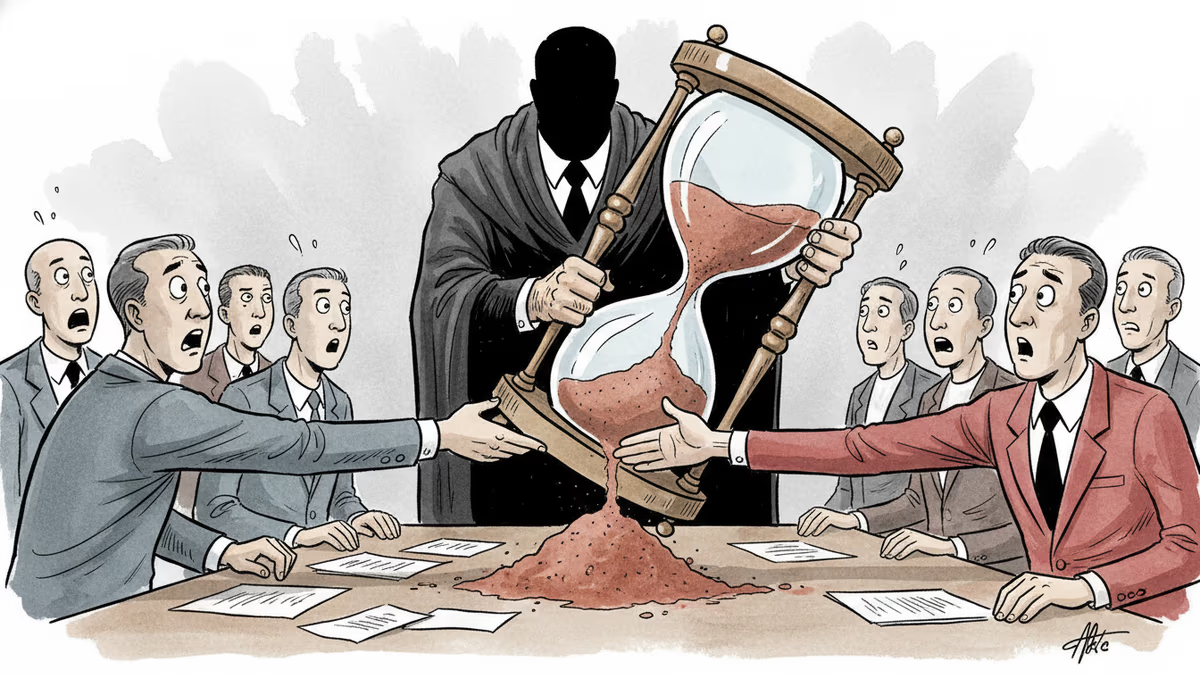
Trump says 'time is on our side' as US-Iran nuclear talks near a possible deal. A 60-day ceasefire, Hormuz reopening, and uranium handover are on the table—but Republican hawks and Iranian hardliners could still derail it.
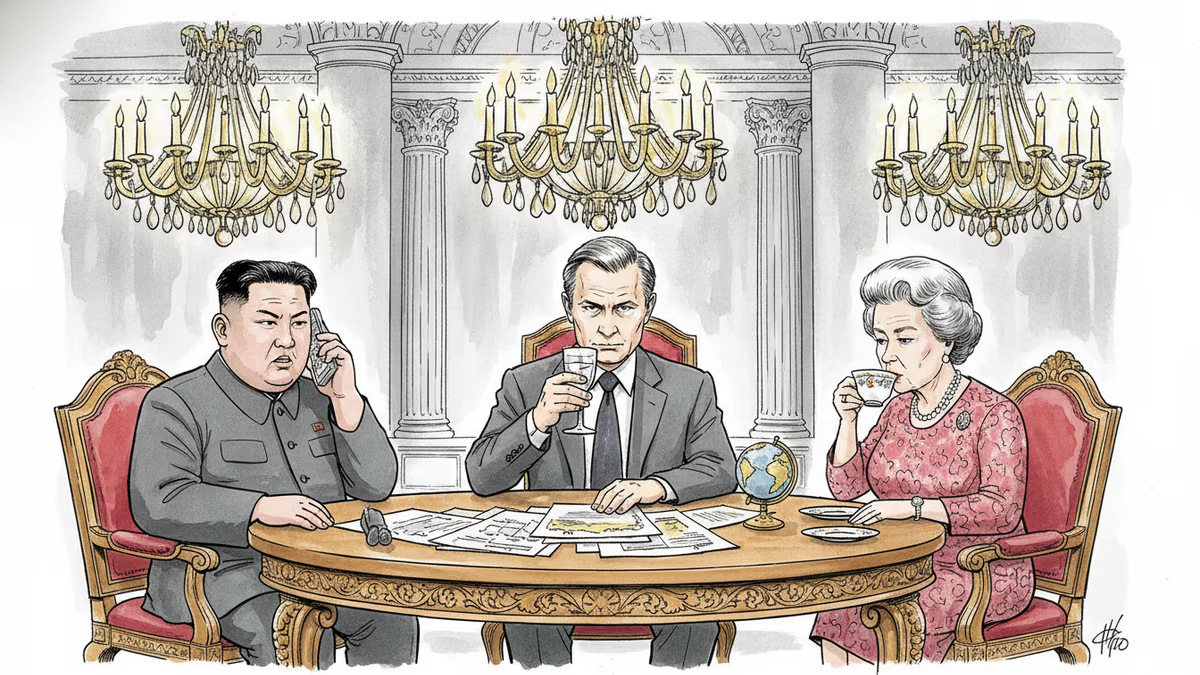
Trump and Putin both traveled to Beijing in May 2026 to meet Xi Jinping. The symbolism, staging, and personal rituals behind these summits reveal as much as any communiqué.
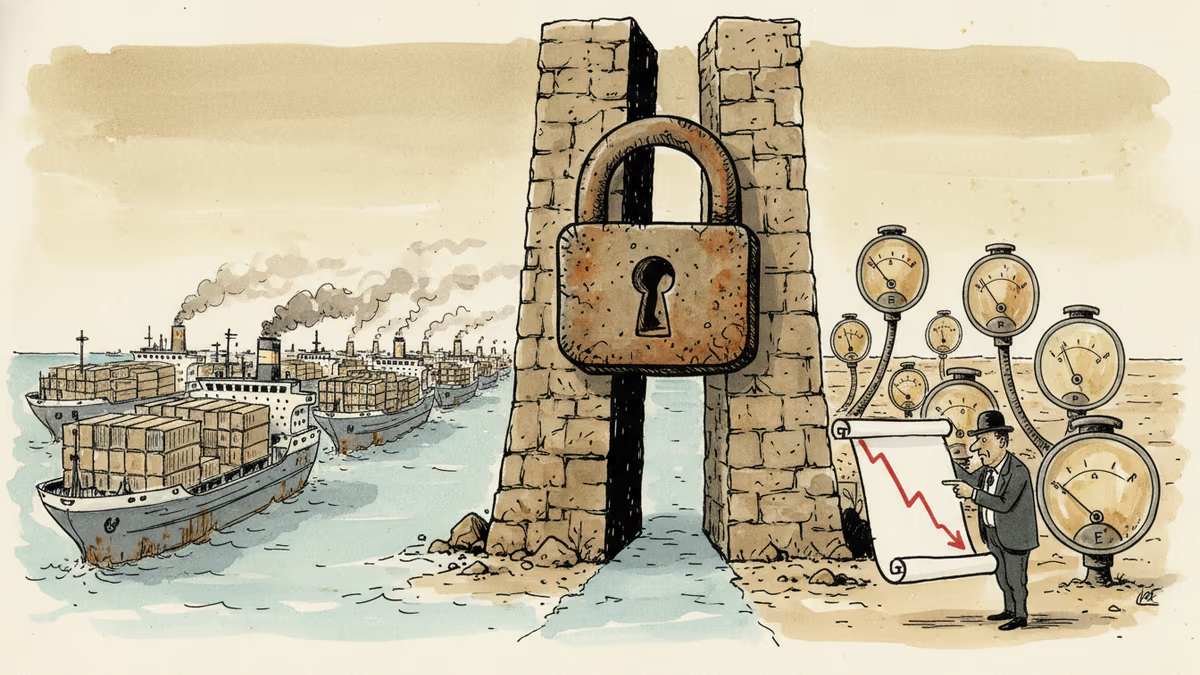
The UN has cut its 2026 global growth forecast to 2.5%, citing the Iran war's disruption of Hormuz shipping. Even after a ceasefire, only 10 ships a day pass where 130 once did.

Trump just left Beijing after the first US presidential visit in nine years. Putin arrives Wednesday. Pakistan's PM follows. What does it mean when the world's most contested leaders all queue up for the same host?
Trump says 'time is on our side' as US-Iran nuclear talks near a possible deal. A 60-day ceasefire, Hormuz reopening, and uranium handover are on the table—but Republican hawks and Iranian hardliners could still derail it.
Trump and Putin both traveled to Beijing in May 2026 to meet Xi Jinping. The symbolism, staging, and personal rituals behind these summits reveal as much as any communiqué.
The UN has cut its 2026 global growth forecast to 2.5%, citing the Iran war's disruption of Hormuz shipping. Even after a ceasefire, only 10 ships a day pass where 130 once did.
Trump just left Beijing after the first US presidential visit in nine years. Putin arrives Wednesday. Pakistan's PM follows. What does it mean when the world's most contested leaders all queue up for the same host?
Thoughts
Share your thoughts on this article
Sign in to join the conversation