
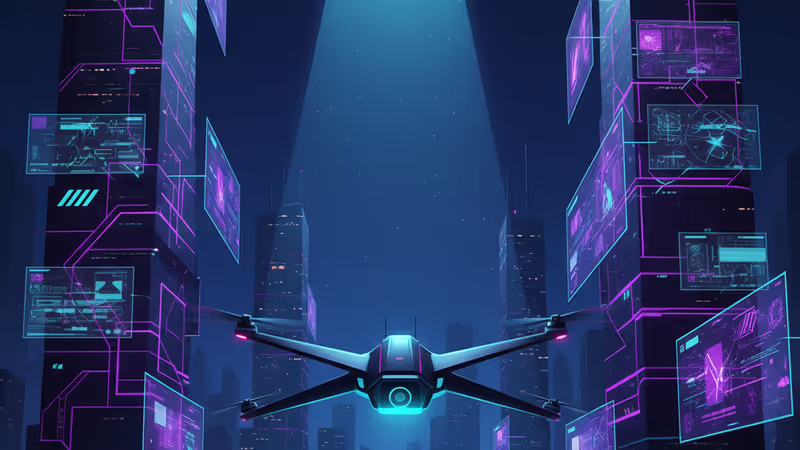
US Grounds Foreign Drones: FCC Bans All New Models, Dealing Blow to DJI
Citing national security, the U.S. Federal Communications Commission (FCC) has banned the sale of all new foreign-made drones, a move set to heavily impact market leader DJI.
A new wall is going up in America, but this one is in the sky. The Trump administration'sFederal Communications Commission (FCC) on Monday banned all new foreign-made drone models from distribution in the U.S., citing sweeping "national security concerns." The move is a direct strike against Chinese drone giant DJI, the dominant player in the global market, escalating the ongoing tech rivalry between the two nations.
The government stated that Americans who already own older foreign drone models will still be able to use them. However, the pipeline for new products has been officially severed.
The 'Unacceptable Risk' Argument
In a fact sheet, the FCC claimed that “criminals, hostile foreign actors, and terrorists” could exploit drones “to present new and serious threats to our homeland.” As a result, the agency updated its Covered List—a roster of products deemed to pose an “unacceptable risk to national security”—to include all “UAS and UAS critical components produced abroad.”

Following President Trump’s leadership, the FCC will work closely with U.S. drone makers to unleash American drone dominance.
DJI Fires Back: "A Disappointing Action"
The new rule is destined to strike a massive blow against DJI, widely considered the most popular drone brand for American consumers. According to TechCrunch, DJI expressed its disapproval of the decision in a statement.
“DJI is disappointed by the Federal Communications Commission’s action,” the company said, noting that no information was released about the evidence used to make the determination. “DJI products are among the safest and most secure on the market, supported by years of reviews conducted by U.S. government agencies and independent third parties.”
Authors
Related Articles
Josh D'Amaro took over Disney with a bold Disney Plus vision. Days later, he's in a First Amendment fight with the Trump administration over The View. What does this mean for media freedom?
A gunman attacked a Secret Service checkpoint at the White House Correspondents' Dinner. Trump's first public reaction wasn't about security. It was about his $400M ballroom project.
Hours after an armed suspect attempted to breach the White House Correspondents Dinner, Trump used the security scare to publicly defend his White House ballroom project. What does that tell us?
As Washington D.C. enters another political spring, the battle over Big Tech regulation is heating up — and the stakes extend far beyond Silicon Valley.
Josh D'Amaro took over Disney with a bold Disney Plus vision. Days later, he's in a First Amendment fight with the Trump administration over The View. What does this mean for media freedom?
A gunman attacked a Secret Service checkpoint at the White House Correspondents' Dinner. Trump's first public reaction wasn't about security. It was about his $400M ballroom project.
Hours after an armed suspect attempted to breach the White House Correspondents Dinner, Trump used the security scare to publicly defend his White House ballroom project. What does that tell us?
As Washington D.C. enters another political spring, the battle over Big Tech regulation is heating up — and the stakes extend far beyond Silicon Valley.
Thoughts
Share your thoughts on this article
Sign in to join the conversation