
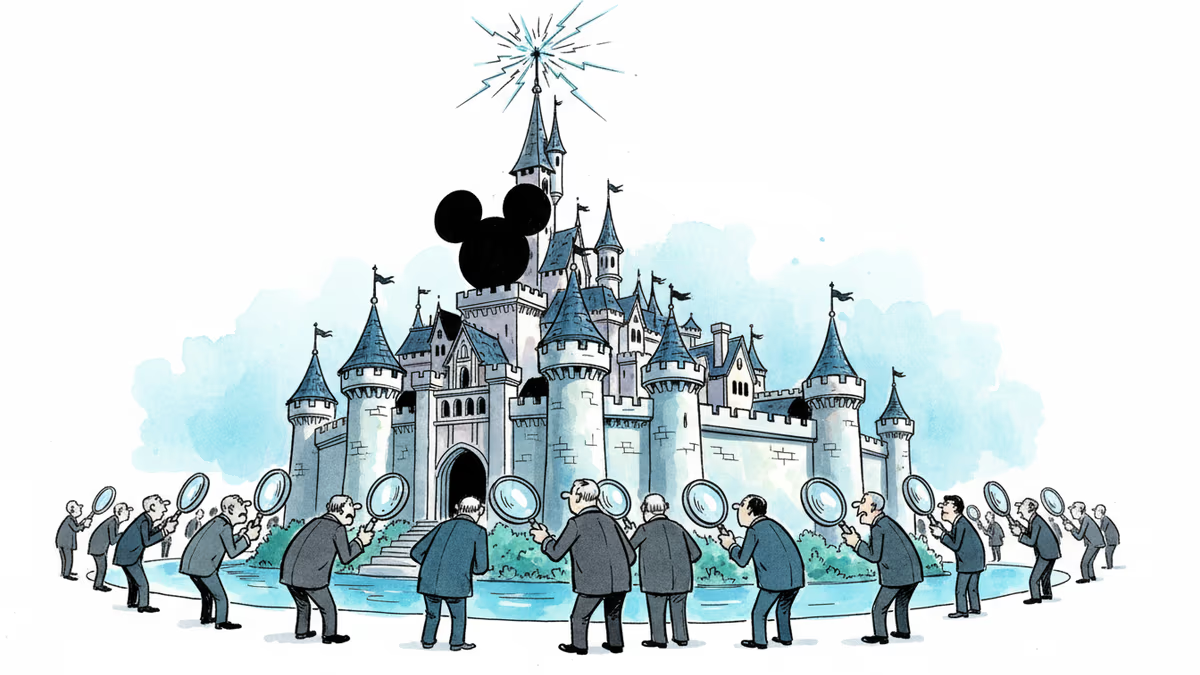
Disney's First Battle Under Its New CEO Wasn't About Streaming
Josh D'Amaro took over Disney with a bold Disney Plus vision. Days later, he's in a First Amendment fight with the Trump administration over The View. What does this mean for media freedom?
What's the fastest way to derail a new CEO's agenda? Hand them a First Amendment lawsuit in week one.
Josh D'Amaro had a plan. The newly appointed Disney CEO — promoted from running the company's parks division — spent last week pitching investors on turning Disney Plus into the company's "digital centerpiece." It was the kind of forward-looking narrative that new executives live for: a clean slate, a bold vision, a fresh chapter.
Then Friday arrived.
Disney-owned ABC formally accused the Trump administration of violating its First Amendment rights, citing an ongoing Federal Communications Commission (FCC) investigation into the long-running talk show The View. D'Amaro's streaming ambitions are now sharing the agenda with something considerably messier: a constitutional standoff with the federal government.
What's Actually Happening
The View is one of ABC's flagship programs — a panel-format talk show known for sharp political commentary, typically from a left-leaning perspective. It's been a thorn in conservative circles for years, and under the current administration, that friction has apparently reached a new level.
The FCC, which holds regulatory authority over broadcast licenses and content standards, opened an investigation into the program. The specifics of what triggered the inquiry haven't been fully disclosed, but ABC's legal response is unambiguous: the network argues the investigation itself constitutes government overreach designed to chill editorial speech — a textbook First Amendment claim.
The Trump administration's position, predictably, frames this as legitimate regulatory oversight. Two entirely different readings of the same set of facts, with a federal court likely to be the eventual referee.
The Uncomfortable Timing

D'Amaro's background is in theme parks — a business that runs on broad appeal, family friendliness, and political neutrality. Disney World and Disneyland don't thrive by alienating half their customer base. That instinct toward conflict-avoidance is baked into the parks DNA.
Which makes it notable that his first week as CEO ends with Disney choosing confrontation over accommodation. The company could have quietly cooperated with the FCC inquiry, managed the optics, and avoided a legal fight. Instead, it went public with a constitutional challenge.
That's not an accident. It's a signal — though whether it signals genuine principle or calculated brand positioning is a question worth sitting with.
The Broader Pattern
This isn't happening in isolation. Over the past several months, American media companies have been recalibrating their relationship with political power in visible ways. Meta rolled back its third-party fact-checking program. Several outlets have reportedly softened editorial stances on stories touching the administration. The calculation, for many, has been: the cost of friction outweighs the cost of restraint.
ABC's legal challenge cuts against that current. If the FCC can open investigations into specific programs — effectively using the license renewal process as leverage — the precedent extends well beyond The View. Any broadcaster with a news or opinion program that draws political displeasure would be operating under the same potential pressure.
For Disney investors, the picture is genuinely mixed. Prolonged legal battles distract management attention and carry real costs. Advertisers get skittish when controversy lingers. The Disney Plus growth story D'Amaro wants to tell becomes harder to tell cleanly.
For First Amendment advocates, though, the stakes are different. A major media conglomerate with the legal resources to fight — and the brand credibility to make the fight public — choosing to do so matters precisely because smaller broadcasters can't.
Who Wins What
The legal outcome is uncertain and likely distant. First Amendment cases involving broadcast regulation are technically complex, and the FCC's authority over licensed broadcasters has historically given it considerable latitude.
But the reputational and political dimensions will play out faster. Disney is betting that standing on editorial principle is worth the short-term turbulence. The administration is betting that regulatory pressure, even if ultimately unsuccessful in court, changes behavior in the industry more broadly.
Both bets can be partially right at the same time.
This content is AI-generated based on source articles. While we strive for accuracy, errors may occur. We recommend verifying with the original source.
Related Articles
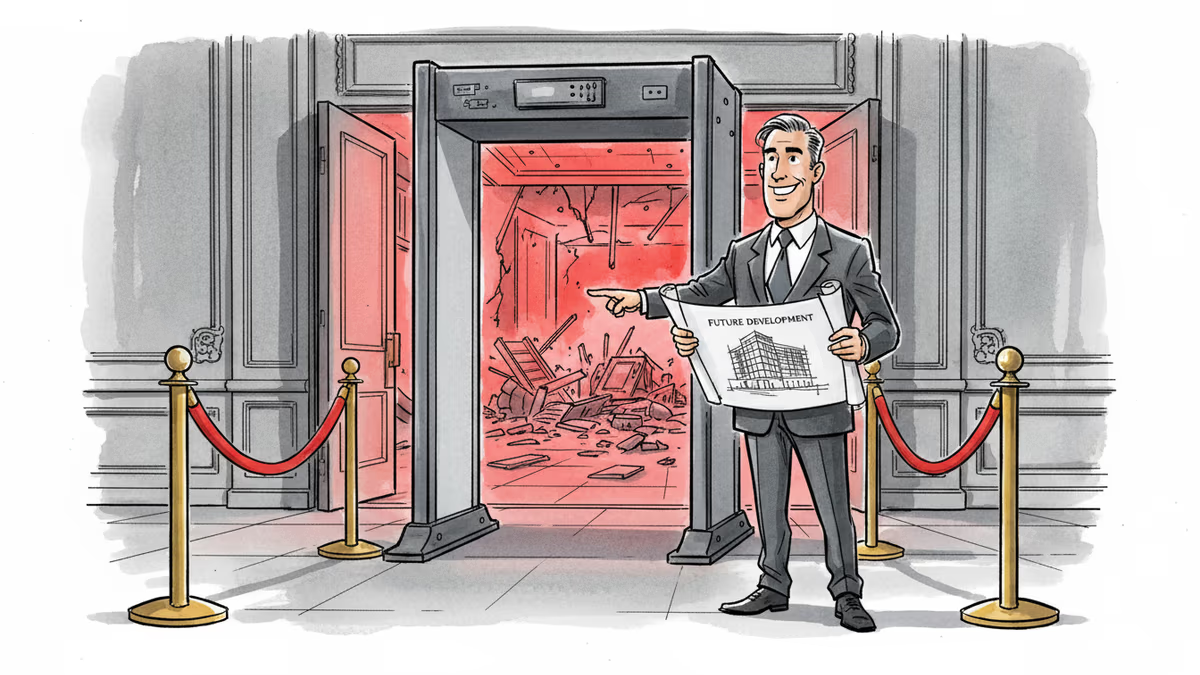
A gunman attacked a Secret Service checkpoint at the White House Correspondents' Dinner. Trump's first public reaction wasn't about security. It was about his $400M ballroom project.
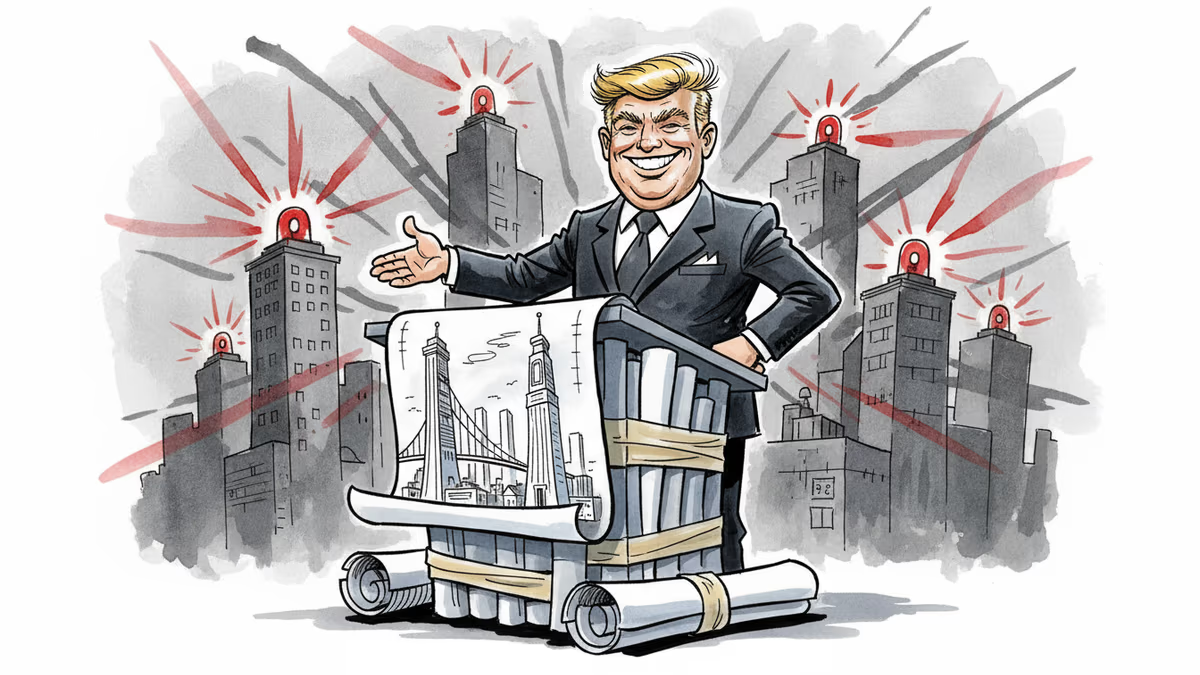
Hours after an armed suspect attempted to breach the White House Correspondents Dinner, Trump used the security scare to publicly defend his White House ballroom project. What does that tell us?
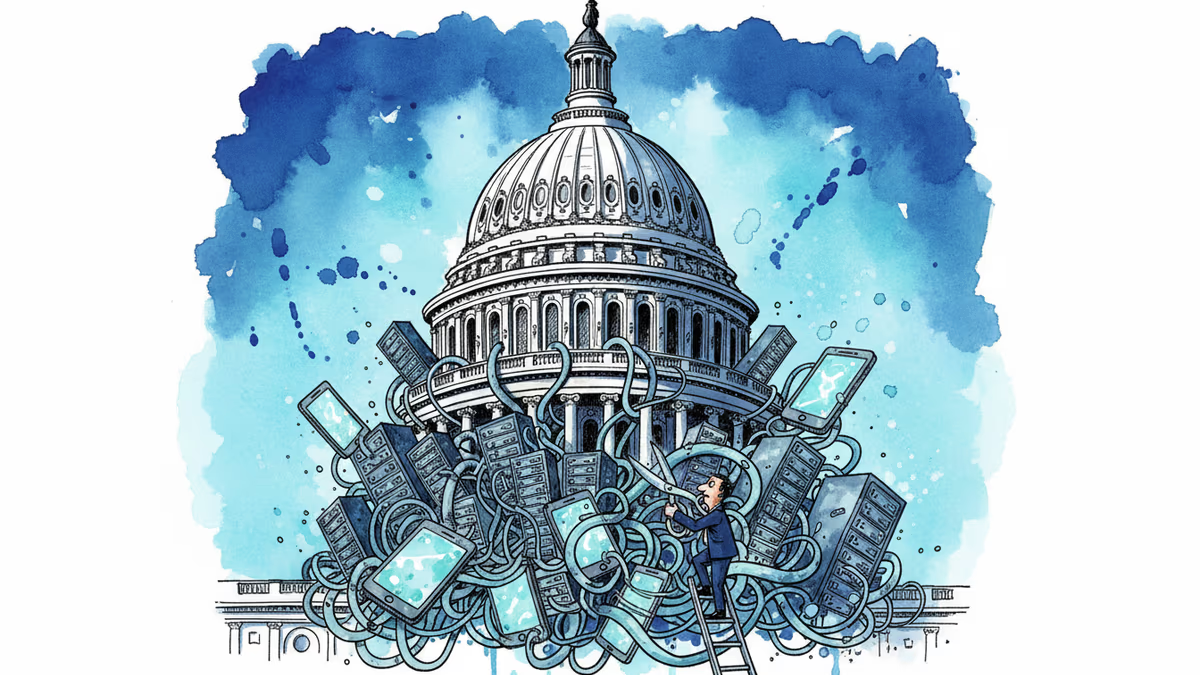
As Washington D.C. enters another political spring, the battle over Big Tech regulation is heating up — and the stakes extend far beyond Silicon Valley.
Every leading candidate to replace fired AG Pam Bondi has a history of promoting 2020 election denial. What happens when the nation's top law enforcement officer is chosen for their willingness to contest democratic outcomes?
A gunman attacked a Secret Service checkpoint at the White House Correspondents' Dinner. Trump's first public reaction wasn't about security. It was about his $400M ballroom project.
Hours after an armed suspect attempted to breach the White House Correspondents Dinner, Trump used the security scare to publicly defend his White House ballroom project. What does that tell us?
As Washington D.C. enters another political spring, the battle over Big Tech regulation is heating up — and the stakes extend far beyond Silicon Valley.
Every leading candidate to replace fired AG Pam Bondi has a history of promoting 2020 election denial. What happens when the nation's top law enforcement officer is chosen for their willingness to contest democratic outcomes?
Thoughts
Share your thoughts on this article
Sign in to join the conversation