
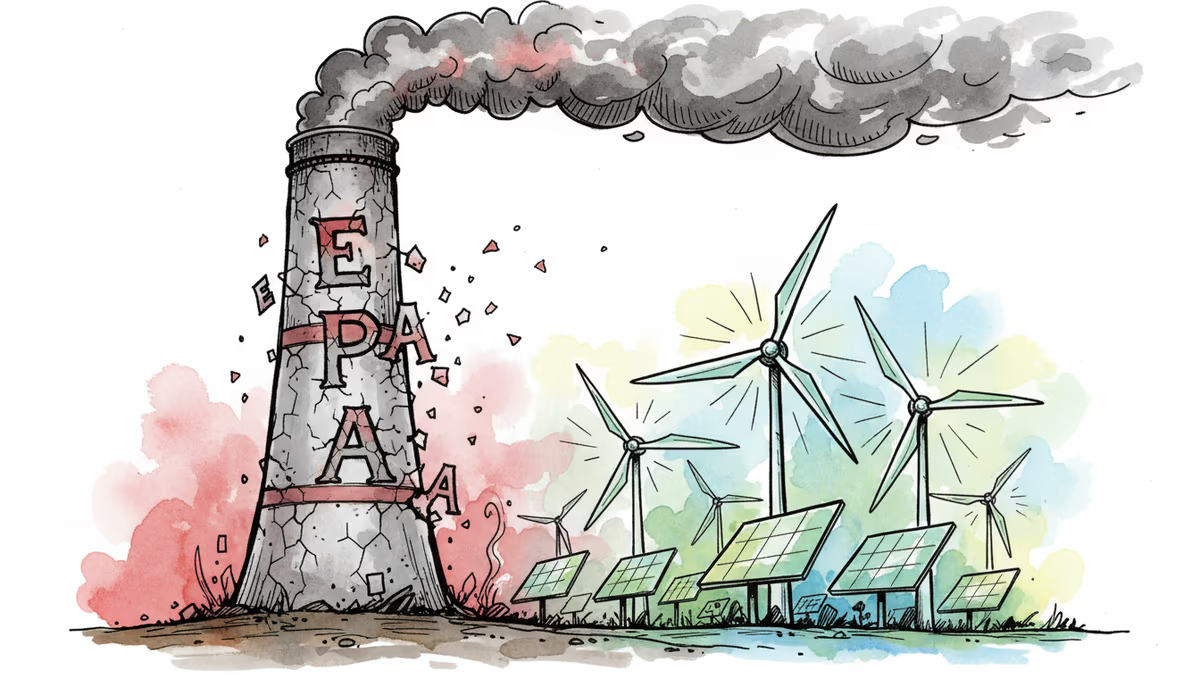
Trump's EPA Rollback: The 10% That Changes Everything
Trump administration repeals EPA's greenhouse gas endangerment finding after 17 years, slowing emissions decline by 10%. What this means for climate policy, business, and global markets.
When 17 Years of Science Gets Overturned in a Day
The EPA's greenhouse gas regulations just lost their foundation. After months of signals, the Trump administration officially repealed the 2009 "endangerment finding" – the scientific determination that greenhouse gases like carbon dioxide and methane threaten human health and welfare.
Led by EPA Administrator Lee Zeldin, this move will slow America's emissions decline by about 10%, according to Axios. That might sound modest, but in a global economy racing against climate deadlines, every percentage point matters.
Cars First, Everything Else Later
Right now, the new rule only affects car and truck tailpipe emissions. But this is clearly the opening move in a broader strategy. Power plants, industrial facilities, and other major emitters are likely next on the chopping block.
For automakers, the message is mixed. The rollback reduces immediate compliance costs, but it also creates uncertainty. Companies like Ford and GM have already invested billions in electric vehicle infrastructure. Do they slow down now, or continue betting on a global market that's still moving toward electrification?
Tesla finds itself in an interesting position – regulatory rollbacks might reduce pressure on competitors, but the company's brand is built on being ahead of the curve, not keeping pace with loosened standards.
The Economics of Environmental Rollback
Environmental groups are predictably outraged. "This action will only lead to more pollution, and that will lead to higher costs and real harms for American families," said Fred Krupp of the Environmental Defense Fund.

But here's the economic reality: unabated climate change could reduce global GDP by 17% by 2050 – that's about $38 trillion. In the U.S. alone, mortality rates could rise by 2%.
Industry reactions vary. Traditional manufacturers welcome reduced compliance costs, while clean energy companies worry about market signals. The twist? Renewable energy has become so cheap that market forces might continue driving the transition regardless of regulatory changes.
The Global Climate Chess Game
America's retreat from greenhouse gas regulation sends ripples worldwide. As the world's second-largest emitter, U.S. policy changes affect global climate negotiations and carbon markets.
European leaders, who've tied economic competitiveness to climate leadership, now face a dilemma: maintain ambitious targets while a major competitor loosens standards, or recalibrate their own policies?
China, the world's largest emitter, might see this as an opportunity to position itself as the global climate leader – a role with significant economic and diplomatic benefits.
The Market vs. Policy Paradox
Here's what makes this story fascinating: the market might not care about the regulatory rollback. Cheap renewables have dominated new electricity generation capacity for years. Consumer preferences are shifting. Supply chains are demanding sustainability credentials.
Apple, Microsoft, and other tech giants have committed to carbon neutrality regardless of federal policy. They're driven by investor demands, consumer expectations, and operational efficiency – not EPA regulations.
The question isn't whether the clean energy transition will continue, but whether American companies will lead it or follow from behind.
Authors
Related Articles

The Trump administration has gutted the DOJ's Voting Section, pushing out two dozen experienced lawyers and replacing them with loyalists. With 2026 midterms approaching, what does this mean for American democracy?
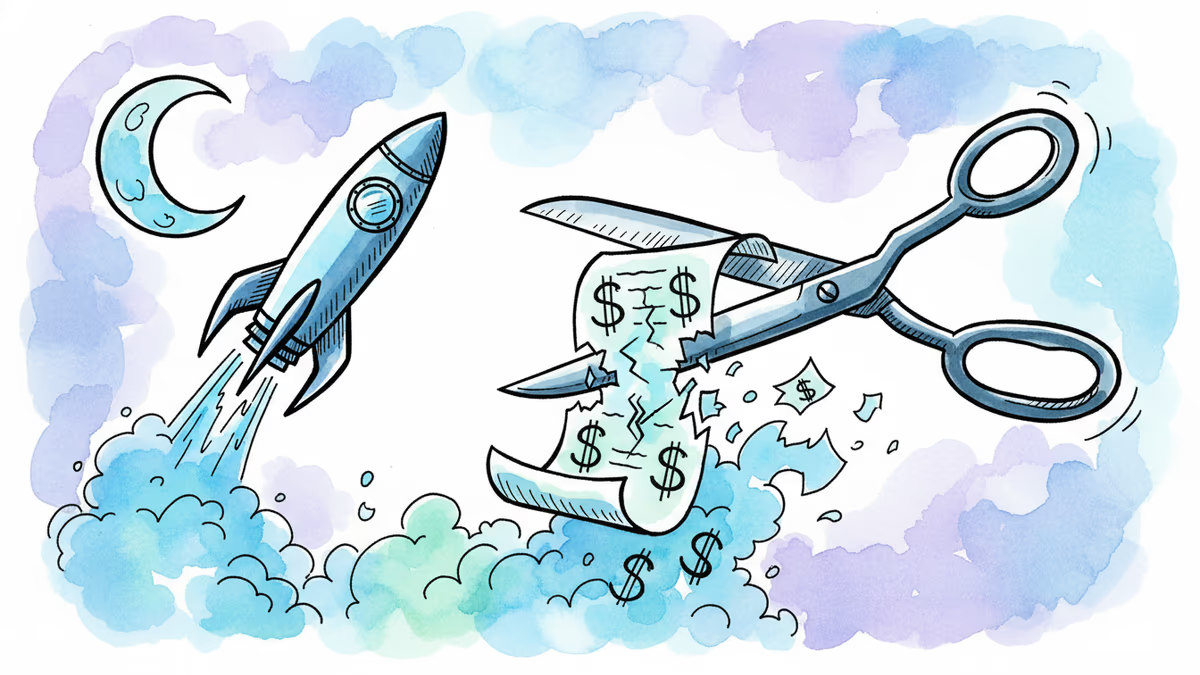
Two days after launching the first crewed lunar mission in over 50 years, the Trump administration proposed cutting NASA's budget by 23%. What does this mean for the future of space exploration?

A humanoid robot walked the White House red carpet with Melania Trump. It's a preview of an ed-tech vision that could reshape — or fracture — how children learn.
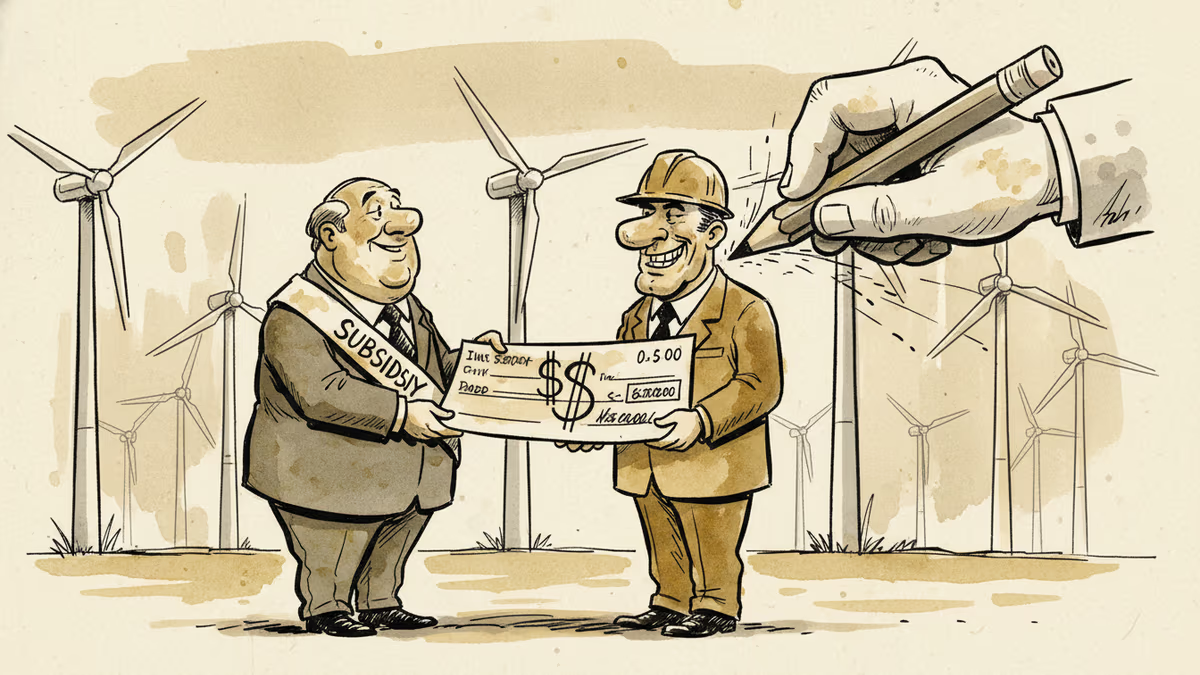
The Trump administration struck a deal to buy back offshore wind leases from TotalEnergies for $1 billion, redirecting that money into fossil fuel projects. What this means for energy markets, grid reliability, and the future of U.S. climate policy.
The Trump administration has gutted the DOJ's Voting Section, pushing out two dozen experienced lawyers and replacing them with loyalists. With 2026 midterms approaching, what does this mean for American democracy?
Two days after launching the first crewed lunar mission in over 50 years, the Trump administration proposed cutting NASA's budget by 23%. What does this mean for the future of space exploration?
A humanoid robot walked the White House red carpet with Melania Trump. It's a preview of an ed-tech vision that could reshape — or fracture — how children learn.
The Trump administration struck a deal to buy back offshore wind leases from TotalEnergies for $1 billion, redirecting that money into fossil fuel projects. What this means for energy markets, grid reliability, and the future of U.S. climate policy.
Thoughts
Share your thoughts on this article
Sign in to join the conversation