
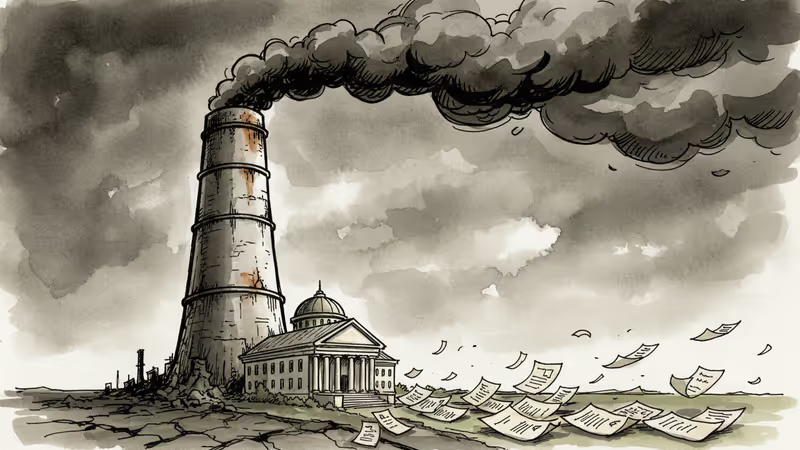
Environmental Enforcement Hits Historic Low Under Trump 2.0
EPA enforcement cases drop 76% in Trump's second term first year, falling far below even his first presidency. What this means for corporate accountability and environmental protection.
The numbers tell a stark story: just 16 civil environmental lawsuits filed by federal prosecutors in Trump's second term first year—a 76% plunge from Biden's inaugural year and an 81% drop from Obama's first 12 months.
This isn't just another policy shift. It represents the most dramatic retreat from environmental enforcement in modern American history, according to the Environmental Integrity Project's latest analysis of federal court and administrative data.
The Enforcement Collapse
When Trump first took office in 2017, his administration filed 86 environmental cases in year one—a significant decrease from Obama's127, but still maintaining some level of corporate accountability. Now, eight years later, that number has cratered to just 16 cases.
The Department of Justice, working on referrals from the Environmental Protection Agency, has essentially stepped back from pursuing polluters through the courts. This represents not just a policy preference, but a fundamental rewiring of how America approaches environmental law enforcement.
The data reveals a clear trajectory: Obama averaged over 100 cases annually, Trump's first term saw that drop to the 80s, Biden pushed it back above 60, and now Trump 2.0 has brought enforcement to historic lows.
Beyond the Numbers: What This Really Means

This enforcement drought comes at a curious time. Corporate America has spent the last four years adapting to stricter environmental standards, investing billions in cleaner technologies, and publicly committing to sustainability goals. Many companies now find themselves in a regulatory environment that's suddenly far more permissive than they'd prepared for.
For businesses that invested heavily in compliance during the Biden years, this creates an interesting competitive dynamic. Companies that spent millions upgrading facilities and processes now compete against those who may feel emboldened to cut corners, knowing enforcement is unlikely.
The timing also coincides with growing investor focus on environmental, social, and governance (ESG) criteria. While federal enforcement wanes, market pressures for environmental responsibility continue to intensify, creating a complex landscape where corporate behavior may be driven more by shareholders than regulators.
The Ripple Effects
State attorneys general are already signaling they'll fill the federal void. California, New York, and other blue states have ramped up their own environmental enforcement capabilities, creating a patchwork system where corporate environmental risk depends heavily on geography.
This shift also affects how companies calculate the cost-benefit analysis of environmental compliance. With federal penalties becoming statistically unlikely, the primary deterrent shifts from legal consequences to reputational and market risks.
International implications loom large as well. American companies operating globally still face strict environmental standards in Europe and other markets, while domestic operations enjoy unprecedented regulatory latitude. This could accelerate the trend of companies maintaining different environmental standards in different markets.
Authors
Related Articles

The Trump administration has gutted the DOJ's Voting Section, pushing out two dozen experienced lawyers and replacing them with loyalists. With 2026 midterms approaching, what does this mean for American democracy?
Two days after launching the first crewed lunar mission in over 50 years, the Trump administration proposed cutting NASA's budget by 23%. What does this mean for the future of space exploration?

A humanoid robot walked the White House red carpet with Melania Trump. It's a preview of an ed-tech vision that could reshape — or fracture — how children learn.
The Trump administration struck a deal to buy back offshore wind leases from TotalEnergies for $1 billion, redirecting that money into fossil fuel projects. What this means for energy markets, grid reliability, and the future of U.S. climate policy.
The Trump administration has gutted the DOJ's Voting Section, pushing out two dozen experienced lawyers and replacing them with loyalists. With 2026 midterms approaching, what does this mean for American democracy?
Two days after launching the first crewed lunar mission in over 50 years, the Trump administration proposed cutting NASA's budget by 23%. What does this mean for the future of space exploration?
A humanoid robot walked the White House red carpet with Melania Trump. It's a preview of an ed-tech vision that could reshape — or fracture — how children learn.
The Trump administration struck a deal to buy back offshore wind leases from TotalEnergies for $1 billion, redirecting that money into fossil fuel projects. What this means for energy markets, grid reliability, and the future of U.S. climate policy.
Thoughts
Share your thoughts on this article
Sign in to join the conversation