
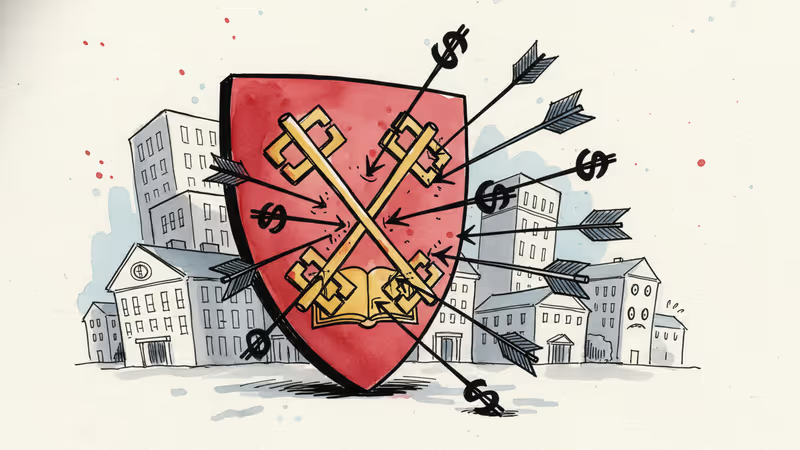
Harvard Beats Trump Administration in $2.2B Research Funding Fight
Harvard University successfully fought back against Trump administration's funding cuts and hiring controls, unlike most peer institutions. What does this victory reveal about university independence?
$2.2 billion in research funding frozen. Demands for control over hiring and admissions. Most universities would have negotiated. Harvard chose to fight—and won.
When Harvard Said No
The Trump administration's assault on universities found a particular target in Harvard. The attack came in waves: first, $2.2 billion in research money placed on hold, then a complete block on future funding. But the administration wanted more than just financial leverage—it demanded "intrusive control" over Harvard's hiring and admissions processes.
While peer institutions scrambled to find compromise, Harvard took a different path. The university filed a lawsuit, challenging the administration's actions head-on. The gamble paid off. Harvard not only won in court but secured the restoration of all frozen funds.
This wasn't just about money. It was about precedent. Would universities bow to political pressure, or would they defend their institutional autonomy?
The Settlement That Never Came
Despite Harvard's legal victory, the Trump administration refused to let go. The government continued pushing for some form of settlement agreement, claiming Harvard had created an environment where antisemitism could flourish. The back-and-forth became so predictable that journalists joked about The New York Times running monthly "settlement imminent" stories.

But Harvard's court victory had fundamentally shifted the power dynamic. In the latest round of negotiations, the administration dropped all demands for financial payments—a stark contrast to its approach with other universities. The Trump administration had extracted hundreds of millions from some institutions and demanded over $1 billion from UCLA.
The Price of Independence
Harvard's successful resistance raises uncomfortable questions for higher education. Why was Harvard able to fight back when others couldn't? The answer likely lies in resources and resolve.
Harvard's endowment of $53 billion provides a cushion most universities lack. Federal research funding, while significant, doesn't represent existential dependency for Harvard the way it might for smaller institutions. This financial independence translated into legal and political independence.
But there's more to it than money. Harvard's decision to fight required institutional courage—a willingness to risk everything on principle. How many university boards would authorize such a confrontational approach with the federal government?
What This Means for Academia
Harvard's victory sends ripples through higher education. It demonstrates that government pressure can be successfully resisted, but only under specific conditions. Universities with smaller endowments, greater federal dependency, or less legal firepower may find themselves with fewer options.
The case also highlights the politicization of university funding. Research grants, traditionally awarded based on merit and scientific value, increasingly carry political strings. This trend threatens the independence that universities need to pursue knowledge without fear of retribution.
For students and faculty, Harvard's stance offers both hope and concern. Hope that academic freedom can be defended, but concern about the resources required to mount such a defense.
Authors
Related Articles
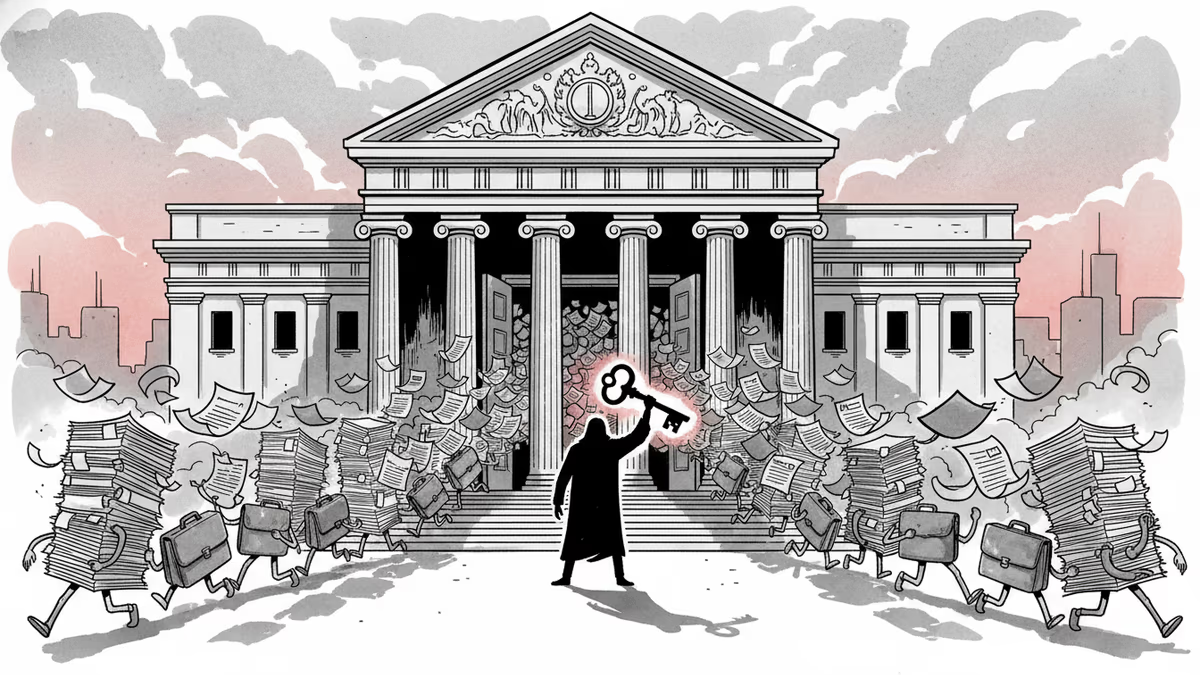
The Trump administration has gutted the DOJ's Voting Section, pushing out two dozen experienced lawyers and replacing them with loyalists. With 2026 midterms approaching, what does this mean for American democracy?
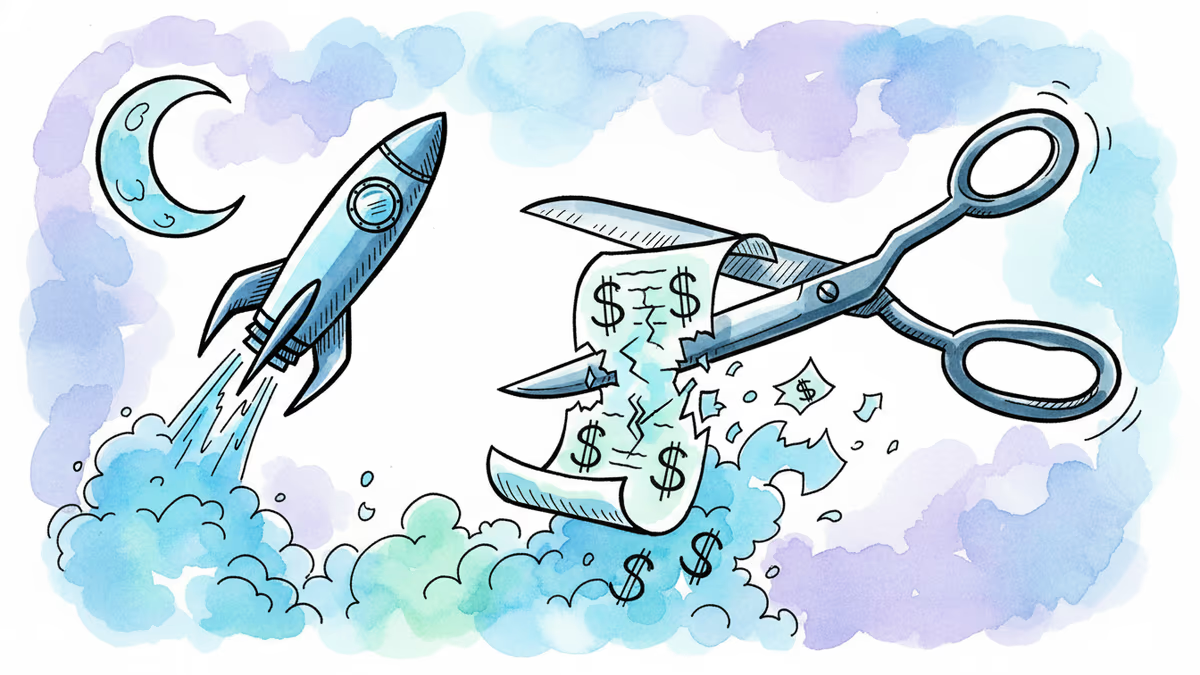
Two days after launching the first crewed lunar mission in over 50 years, the Trump administration proposed cutting NASA's budget by 23%. What does this mean for the future of space exploration?

A humanoid robot walked the White House red carpet with Melania Trump. It's a preview of an ed-tech vision that could reshape — or fracture — how children learn.
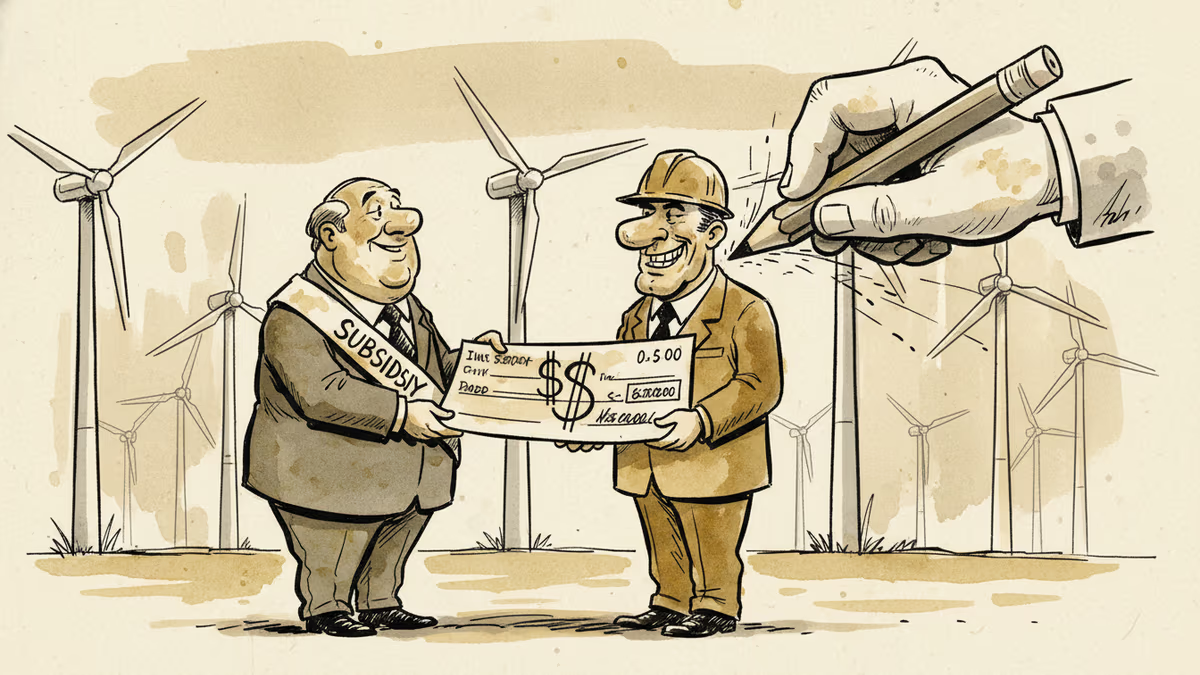
The Trump administration struck a deal to buy back offshore wind leases from TotalEnergies for $1 billion, redirecting that money into fossil fuel projects. What this means for energy markets, grid reliability, and the future of U.S. climate policy.
The Trump administration has gutted the DOJ's Voting Section, pushing out two dozen experienced lawyers and replacing them with loyalists. With 2026 midterms approaching, what does this mean for American democracy?
Two days after launching the first crewed lunar mission in over 50 years, the Trump administration proposed cutting NASA's budget by 23%. What does this mean for the future of space exploration?
A humanoid robot walked the White House red carpet with Melania Trump. It's a preview of an ed-tech vision that could reshape — or fracture — how children learn.
The Trump administration struck a deal to buy back offshore wind leases from TotalEnergies for $1 billion, redirecting that money into fossil fuel projects. What this means for energy markets, grid reliability, and the future of U.S. climate policy.
Thoughts
1 thoughts
Share your thoughts on this article
Sign in to join the conversation