
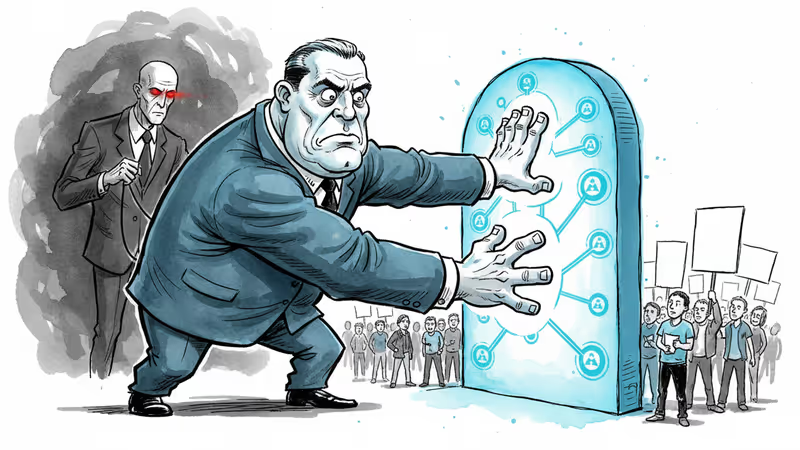
Meta Blocks ICE Agent Database After Trump's Return
Meta starts blocking links to ICE List, a site tracking immigration agents, raising questions about platform accountability and free speech under Trump 2.0
For more than six months, activists could freely share links to ICE List across Meta's platforms—a crowdsourced database tracking immigration enforcement agents. That changed this week, just days after Mark Zuckerberg sat prominently behind Donald Trump at the presidential inauguration.
Meta has begun blocking users from sharing links to the website, which compiles names of what it claims are Department of Homeland Security employees. The timing isn't lost on Dominick Skinner, ICE List's creator, who sees a direct connection between Zuckerberg's public embrace of the Trump administration and the sudden content restrictions.
"I think it's no surprise that a company run by a man who sat behind Trump at his inauguration, and donated to the destruction of the White House, has taken a stance that helps ICE agents retain anonymity," Skinner tells WIRED.
The Database That Went Viral
ICE List operates with a core team of five people and hundreds of anonymous volunteers who share information about ICE agents operating across the US. The site gained widespread attention earlier this month when it claimed to upload a leaked list of 4,500DHS employees, though analysis revealed the information came largely from public sources like LinkedIn profiles.
The project represents a growing movement among activists seeking to track and document the activities of Border Patrol and Immigration and Customs Enforcement agents, particularly as these agencies have "continued to terrorize immigrant communities and kill US citizens," according to Skinner.
But the Trump administration has pushed back hard against such efforts, threatening to prosecute those they claim are "doxing" ICE agents and pressuring tech companies to block crowdsourced tracking initiatives.
Inconsistent Enforcement Across Platforms
The blocking began Monday night, affecting Instagram, Facebook, and Threads—though curiously, links can still be sent through WhatsApp, another Meta-owned platform. The inconsistency extends to the explanations users receive when attempting to share the links.

Facebook initially labeled blocked posts as "spam," then shifted to citing unspecified "Community Standards." Threads simply makes links disappear with a terse "Link not allowed" notice. Instagram offers the vague explanation that certain activity is restricted "to protect our community."
When pressed for clarification, Meta spokesperson Andy Stone pointed to the company's policy about sharing personally identifiable information. Yet when challenged that ICE List's content doesn't appear to contain the specific information types listed in that policy, he pivoted to a different rule—one prohibiting "content asking for personally identifiable information of others."
The Accountability Question
This explanation puzzles Skinner, who notes that ICE List has been soliciting tips about agent identities for six months without issue. The sudden enforcement suggests something beyond routine policy application.
The broader context matters here. As immigration enforcement ramps up under the new administration, questions of accountability become more pressing. Traditional oversight mechanisms often fall short when it comes to tracking the actions of federal agents operating in communities across the country.
Crowdsourced databases like ICE List represent an attempt to fill that gap, using publicly available information to create transparency around government employees whose actions directly impact civilian lives. The approach mirrors similar efforts to track police officers and other public officials.
Platform Power in Political Context
Meta's decision highlights the immense power tech platforms wield over information flow, particularly during politically sensitive moments. The company's recent policy shifts—including ending fact-checking programs and loosening hate speech rules—signal a broader realignment with conservative priorities.
Yet this case presents a paradox. While Meta has embraced "free speech" rhetoric in other contexts, it's simultaneously restricting the sharing of information that activists argue serves the public interest. The selective enforcement raises questions about whose speech gets protected and whose gets suppressed.
The international implications are significant too. Meta's platforms serve as global communication infrastructure, meaning decisions made in Menlo Park affect accountability efforts worldwide. Other countries grappling with immigration enforcement and government transparency will be watching how this plays out.
Authors
Related Articles
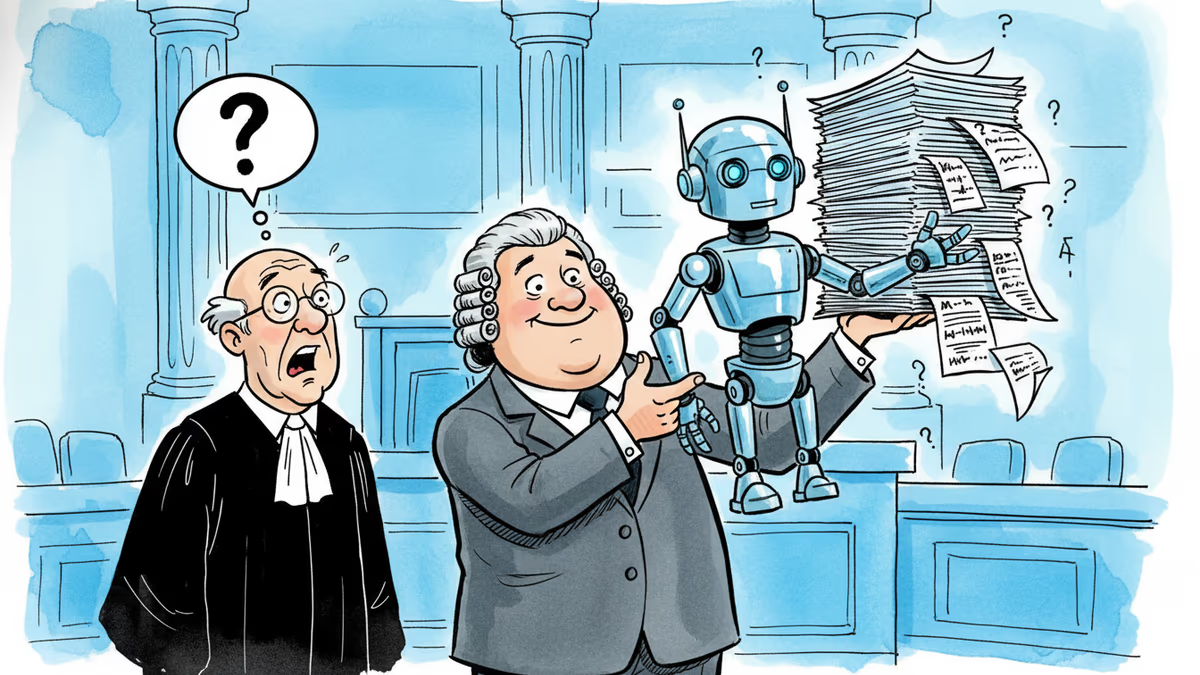
A law firm marketing itself on AI-powered legal success submitted fake citations in a federal appeal. Now its lawyers face sanctions — and the broader AI legal industry faces a credibility crisis.
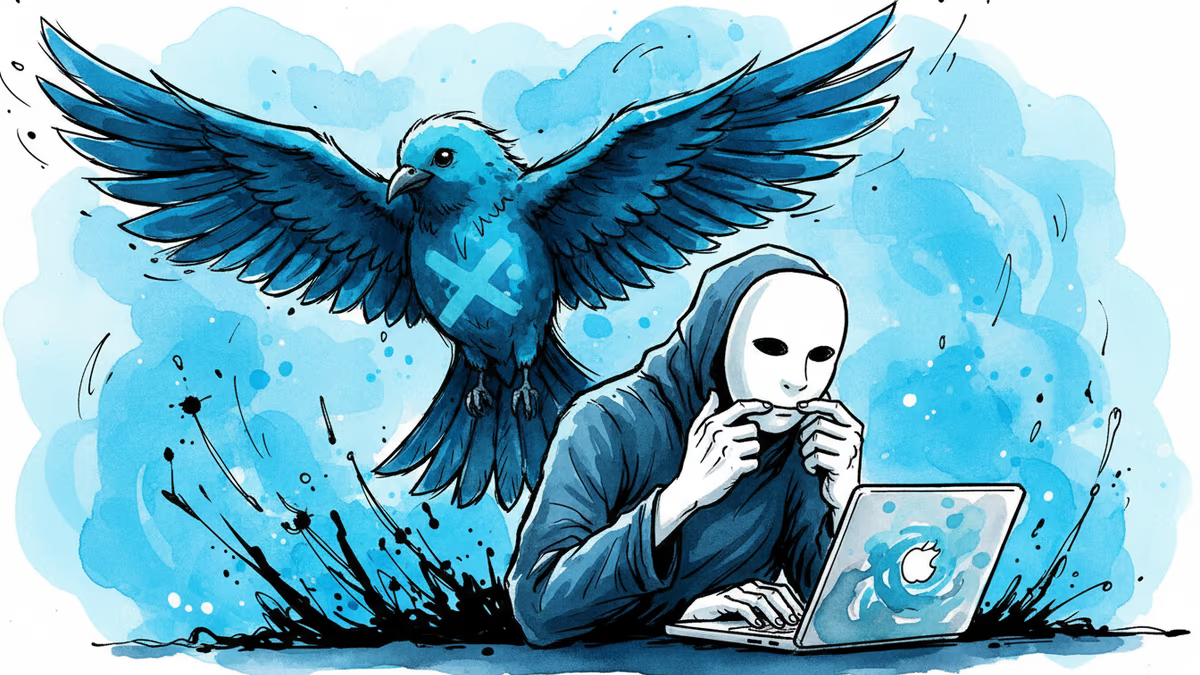
The Tate brothers are suing X to unmask anonymous accounts that criticized them. The case cuts to the heart of online anonymity, free speech, and who controls the cost of public criticism.
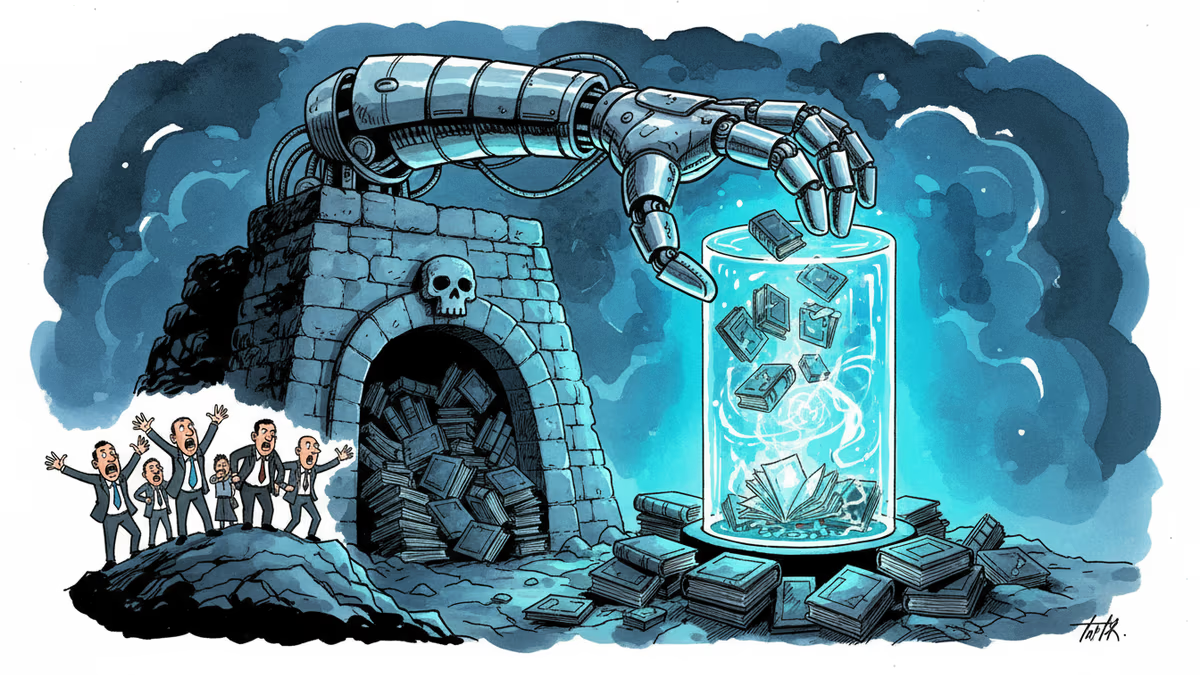
Five major publishers and author Scott Turow have filed a class action lawsuit against Meta, alleging the company used illegal pirate sites like LibGen to train its Llama AI models without permission.
New Mexico already won $375 million from Meta. Now it wants something harder to give: a court order forcing Facebook, Instagram, and WhatsApp to redesign themselves. A three-week trial starts Monday.
A law firm marketing itself on AI-powered legal success submitted fake citations in a federal appeal. Now its lawyers face sanctions — and the broader AI legal industry faces a credibility crisis.
The Tate brothers are suing X to unmask anonymous accounts that criticized them. The case cuts to the heart of online anonymity, free speech, and who controls the cost of public criticism.
Five major publishers and author Scott Turow have filed a class action lawsuit against Meta, alleging the company used illegal pirate sites like LibGen to train its Llama AI models without permission.
New Mexico already won $375 million from Meta. Now it wants something harder to give: a court order forcing Facebook, Instagram, and WhatsApp to redesign themselves. A three-week trial starts Monday.
Thoughts
Share your thoughts on this article
Sign in to join the conversation