
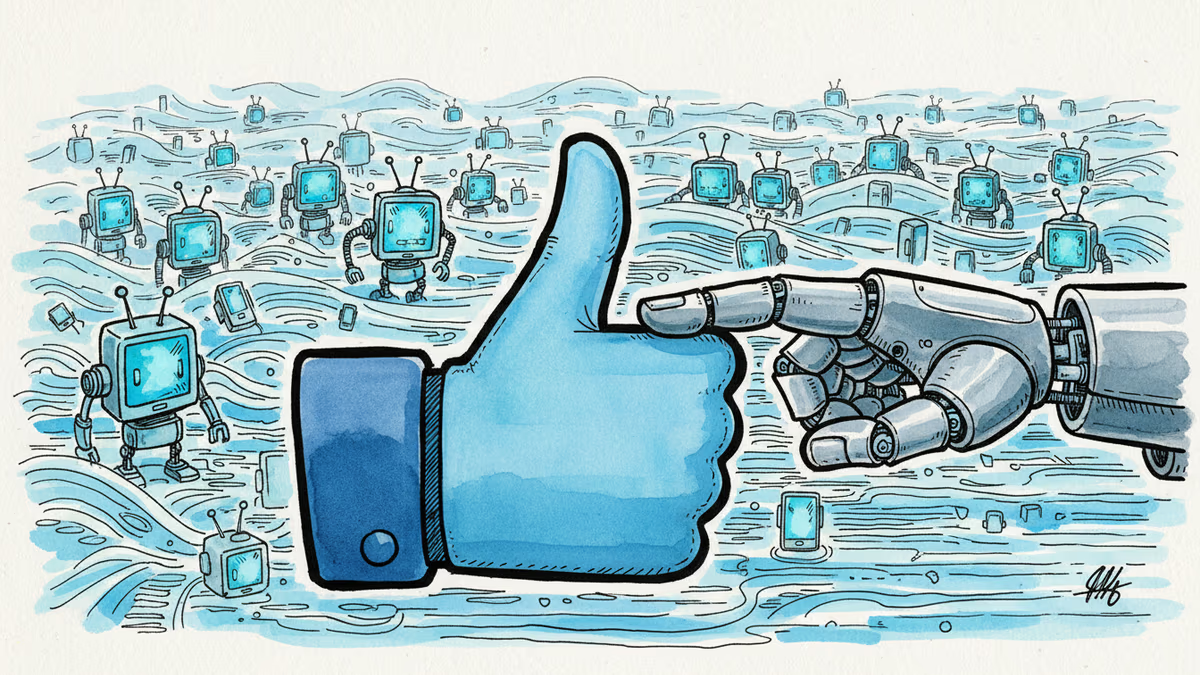
Meta Just Bought a Social Network Made Entirely of AI
Meta has acquired Moltbook, a simulated social network where AI agents interact with each other. Here's what that means for the future of social media, agentic AI, and your feed.
What if the most active users on your social feed aren't people at all?
Meta has acquired Moltbook — a simulated social network populated entirely by AI agents — and the deal says more about where social media is heading than any product launch in recent memory. Financial terms weren't disclosed. Moltbook creator Matt Schlicht and his business partner Ben Parr will join Meta Superintelligence Labs, the company's in-house AI research division.
What Moltbook Actually Was
Moltbook went viral just weeks ago, and for good reason. It wasn't a chatbot. It wasn't an AI assistant. It was a functioning social network where thousands of AI agents posted content, replied to each other, followed accounts, and formed relationships — all without a single human user in the loop. Think Reddit, but every account is an AI with its own persona, interests, and behavioral patterns.
The project caught fire in developer circles precisely because it demonstrated something most AI products haven't: agents that are aware of each other. Most AI tools today operate in silos. You use one, close it, open another. They don't know each other exist. Moltbook built a layer on top of that — what Meta's spokesperson described as "an always-on directory" connecting agents to one another. That phrase is the key to understanding why Meta wrote the check.
Why Meta Wants This
Meta has been explicit about its agentic ambitions. CEO Mark Zuckerberg has talked about AI agents becoming central to Meta's platforms — handling customer service for businesses, managing ad campaigns, eventually acting as companions or assistants within Instagram and WhatsApp. The missing piece has always been infrastructure: how do agents find each other, communicate, and coordinate at scale?

Moltbook built a working prototype of exactly that. Meta's statement called it "a novel step in a rapidly developing space" and promised "innovative, secure agentic experiences for everyone." That's corporate-speak for: we see something here that we want to own before someone else does.
The timing matters. Google is building out Agentspace. Microsoft has Copilot Studio. OpenAI is pushing toward multi-agent frameworks. The race isn't just about which AI model is smartest anymore — it's about who controls the connective tissue between agents. Meta, with over 3 billion monthly active users across its platforms, has an obvious distribution advantage if it can crack that problem.
Three Groups Watching This Closely
Developers are paying attention because an "always-on agent directory" inside Meta's ecosystem could become a major platform to build on — or a walled garden that locks them out. The open question is whether Meta publishes APIs or keeps this proprietary.
Advertisers and brands have reason to be both excited and nervous. If AI agents become active participants in social feeds — liking, sharing, commenting, even purchasing — the entire model of "reach real humans with ads" gets complicated fast. Who exactly is the audience when agents are in the room?
Regulators in the EU and US have already been scrutinizing Meta's AI data practices. A network of AI agents trained on Meta's vast user data, interacting with real people at scale, will almost certainly attract fresh attention from the FTC and the European Commission. Meta's inclusion of the word "secure" in its statement reads less like a feature and more like a preemptive legal buffer.
What Actually Changes for Regular Users
Not much tomorrow. But the direction is clear. Meta is building toward a future where your Instagram DMs might be handled by an AI agent acting on your behalf, where brand accounts are run by agents that negotiate with other agents, and where the line between human-generated and AI-generated content in your feed becomes functionally invisible.
Convenience will be the sell. Friction disappears when AI handles the routine. But the tradeoff — a feed where you can't easily tell who's human — is a meaningful one, and Meta has a mixed track record on transparency in this area.
Authors
Related Articles
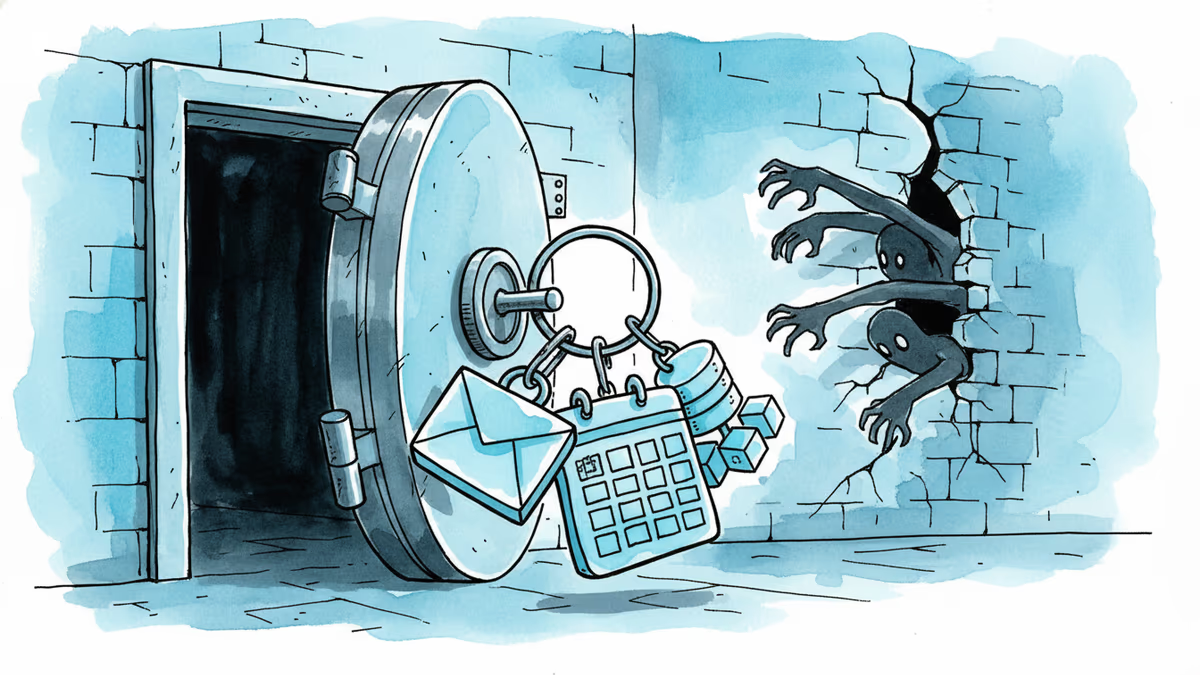
A critical vulnerability in Starlette—downloaded 325 million times per week—puts millions of AI agent servers at risk, exposing stored credentials for email, databases, and third-party services.

A small but growing group of developers has gone all-in on AI coding agents like Claude Code and OpenClaw. History suggests the rest of us won't be far behind.
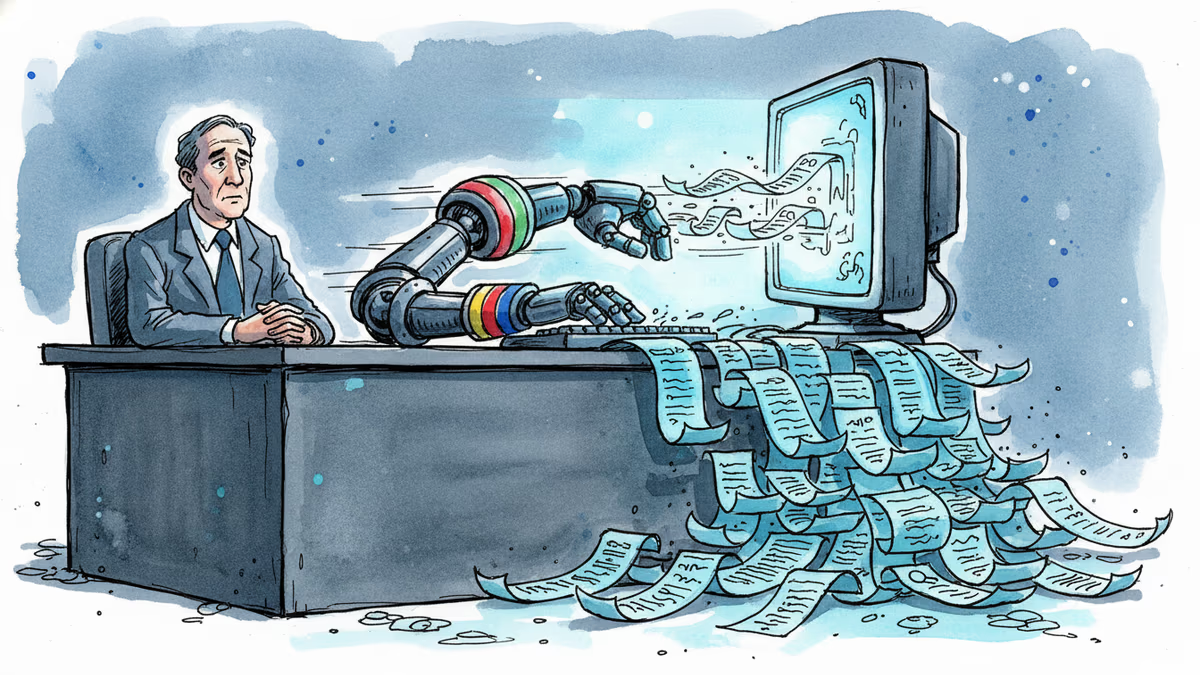
Google is building AI agents that search the web proactively, without user prompting. That's not just a product update — it's a fundamental shift in who controls the information you receive.
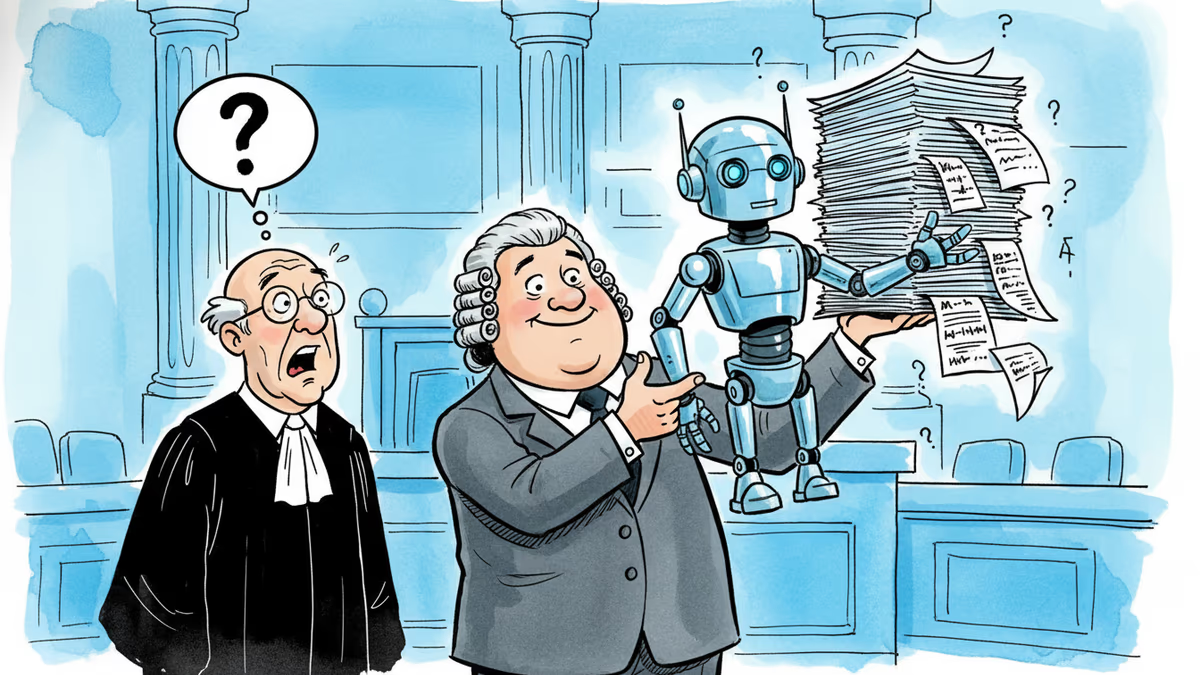
A law firm marketing itself on AI-powered legal success submitted fake citations in a federal appeal. Now its lawyers face sanctions — and the broader AI legal industry faces a credibility crisis.
A critical vulnerability in Starlette—downloaded 325 million times per week—puts millions of AI agent servers at risk, exposing stored credentials for email, databases, and third-party services.
A small but growing group of developers has gone all-in on AI coding agents like Claude Code and OpenClaw. History suggests the rest of us won't be far behind.
Google is building AI agents that search the web proactively, without user prompting. That's not just a product update — it's a fundamental shift in who controls the information you receive.
A law firm marketing itself on AI-powered legal success submitted fake citations in a federal appeal. Now its lawyers face sanctions — and the broader AI legal industry faces a credibility crisis.
Thoughts
Share your thoughts on this article
Sign in to join the conversation